Showing posts with label judgemental. Show all posts

Saturday, March 28, 2026

Love Learning vs Hate Learning


Learning Forward Saturday

To read and reflect on Chapter 3 of “Wanted Back-bencher Last-ranker Teacher” by Kavita Ghosh. Narrated by Brinda Ghosh and Sandeep Dutt

Key Takeaways

  • Create a “classroom without walls” by replicating the joy and positive social dynamics students show outside. This requires shifting from a rigid, fear-based environment to one that fosters engagement.

  • Prioritise patience over perception. Judgmental labels (e.g., “Supriya does not want to study”) are ineffective and disrespectful. Instead, treat students like your own children, focusing on their potential and providing support.

  • Understand the neuroscience of stress. Cortisol, the “stress hormone,” blocks memory and learning. Humiliation and fear create “test trauma,” which is a major barrier to student success.

  • Make reflection a daily habit. This is the core practice for professional growth, distinct from simple note-taking. Share thoughts in the WhatsApp group to build a reflective community.

Topics

The Problem: A Disengaged Classroom

  • The chapter’s protagonist, Roma, observed that her students were happy and well-behaved only outside the classroom.

  • Insight: This contrast signals a need to bring the positive energy and social dynamics of the outside environment into the classroom.

The Challenge: Judgmental Attitudes & Poor Performance

  • Roma’s class performed poorly on weekly tests:

    • 15 failed math

    • 10 had single-digit science scores

    • 8 performed miserably in social science

  • A former teacher, Sumita, dismissed these students with judgmental labels, blaming their personalities and past failures.

  • Principal’s Counter-Directive: “We don’t give up on our own children, so why give up on our students?”

    • Principle: Treat all students with the same patience and belief in their potential as you would your own children.

The Solution: Empathy & Brain Science

  • Roma’s past as a struggling student provided critical context for understanding her current students.

  • Neuroscience of Stress: Cortisol, the “stress hormone,” is released during stress and anxiety, blocking memory and learning.

    • This explains “test trauma” and why fear-based teaching is counterproductive.

  • Roma’s Experience: Humiliation from a teacher who publicly shamed her for a math failure created a lasting aversion to the subject.

    • Rule: Never humiliate students or publicly announce their marks.

Logistics & Future Sessions

  • Next Saturday (April 4): Guest speaker Rahul Chug (Learn PF app) will present to The Teachers Academy.

  • Saturday After Next (April 11): The group will resume reading Chapter 3.

  • Reflection: All participants are encouraged to share their reflections on today’s discussion via WhatsApp or email.

Next Steps

  • Brinda:

    • Coordinate with Rahul Chug for the April 4 presentation.

    • Share her LinkedIn post on “failure as a great teacher” with the group.

All Participants to share reflections on today’s discussion via WhatsApp or email.


Fathom AI-generated notes, read with care.

Saturday, November 12, 2022

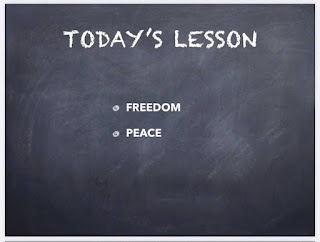
Freedom and Peace - Joy Of Learning Program Session 8

Freedom and Peace (Session 8 for the Happy Teachers JOL Cohort 2022)

Present: Anvesha Rana, Arav Agarwal, Guneet Kaur, Jugjiv Singh, Jyoti Tadiyal, Kunal Rajpurohit, Laxmi Kant Bhatt, Monisha Dutt, Mridula Renjit, Preeti Mahajan, Rishona Chopra and Roopa Bhattacharyya.


The takeaway from the learning session:

  1. Students need to understand what Freedom is in its true sense and how Freedom makes us different from animals, adding to our humanity. Freedom means to be able to do what we want but within the limit of the social fabric.

  2. Freedom is a state of mind where you have the right and Freedom to do what you can think of, but at the same time, we should remember that our Freedom should not disregard the rights of others. Freedom in its most proper form should not affect or alter the needs of others. 

  3. When we have to be culturally unique, some amount of Freedom takes courage to disregard the current norm and beliefs of society. मनुष्य स्वतंत्र जन्म लेता है परंतु सर्वत्र बंधनों में जकड़ा होता है।

  4. Freedom, to some extent, is contextual also; what a child is free to do in sports, period, may not be allowed in an academic one. We are born free, but the constraints that we allow are: 

  • Be non-judgemental and let others also be free 

  • Be responsible for your decisions, for your choices

  • Be clear about what you want to be free about 

  1. Humans do not need Freedom, but animals, birds and trees need Freedom. For example, if we keep an animal in a cage for some time, it will start feeling uncomfortable and making noise, but when we let it out, it will be happy. So, with Freedom comes joy and Peace. Facilitates individuals in realising their true selves and is crucial for pursuing happiness. 

  2. With great Freedom comes great responsibility, but to be free, you need to return to society in some way or another. Ask the students to do whatever they want in these margins for specific rules and regulations.                                                     

  3. Responsibility makes you accessible; let them ask, think, and do, but let them be themselves. Try to find out the problem, accept it wholeheartedly and work on it, giving Freedom to the children for their reflections. The definition of Freedom is ever-evolving. 

  4. Freedom of thought and Freedom of choice gives us confidence. The aim of Freedom should be to provide us with Peace. Freedom from disturbance, anxiety, war and distress, tranquillity. Peace makes us confident. तनावमुक्त, भयमुक्त वातावरण ही शांति प्रदान करता है।

  5. It's a feeling of pleasure, satisfaction, fulfilment and joy. Peace is Freedom from the noise and disturbance in our minds. Peace is to be in harmony with yourself, with everyone around you and with the entire world. "The more in harmony with yourself, the more joyful you are, and the more faithful you are. Faith is not to disconnect you from reality. It connects you to reality."— Paulo Coelho.                          

  6. Peace cannot come without Freedom, and Freedom cannot come without the ability to make your own decisions and choices. Nobody can give us Peace. It is something we create. Peace and Freedom are our choices, and we can be peaceful and free only by choosing to be. 

"I really loved and enjoyed today's session! Discussing Freedom and Peace has brought me a lot of joy and calmness. Looking at the current scenario and the kind of pressure that people of all age groups feel, trying to bring about Freedom and Peace in our lives and others is the need of the hour". - Guneet Kaur, Mussoorie Public School
- Big thank you, Anvesha Rana, for this report. Our Interns at My Good School do us proud.

Monday, April 13, 2020

Happiness and Tolerance - Penta BHIS

The key to happiness….is tolerance of those who do not do as you do. -Jeanette Winterson


I was taken aback to find my new grade 7 extremely judgmental. The students had been together since they were six years old. Yet, they constantly fought and complained about each other. Disturbingly, even the parents had nothing good to say about their ward’s classmates or their parents. A couple of weeks into this disquiet, I realised that the students found nothing good in each other and hence, were unhappy at being forced to study together.

On being called in to resolve yet another argument, I was bombarded by a litany of complaints – each one more upsetting than the other. I suggested that they have every right to voice their grievances, but it can only be done on one particular day. We decided on using the last period every Friday for this purpose. In the next two Fridays, the complaints were noted down religiously. But the children also realised that they were beginning to forget the nature of their complaint.

Now, I made a new suggestion. Before a child complained of anybody, he/she would be required to state one virtue of that person. There was a gradual, but visible, change in my class of tweens. Some did not complain as they did not want to state a virtue, while others identified the goodness in their fellow students before bringing up an issue. The class was beginning to see each other more as peers than as competitors. By the time the year was over, they had begun to accept each other’s differences, work out a solution suited to all and even found a sense of camaraderie.

had also learnt to accept them for who they were to find happiness as a mentor.

Penta @ Billabong High International School Thane
- Jeeji Sanjeev, Sanika Joshi, Arpita M G, Radhika Anand, Muskaan Menda, Supriya Karvankar & Bhavani Swamy 

Blog Archive