Showing posts with label class. Show all posts

Sunday, July 26, 2026

When You Grow Up, You Might Not Have A Job


Masterclass for Emerging Literacies

To discuss the future of work and AI’s impact on jobs.

Key Takeaways

  • AI’s Threat to Jobs: AI’s ability to hack human biology (emotions, decisions) and its non-human advantages (connectivity, updatability) threaten even creative and cognitive roles, not just physical ones.

  • The “Useless Class”: A new class of people may emerge who are economically redundant, not just from job loss but from a lack of emotional stamina to cope with constant retraining and career volatility.

  • The Human Edge: Jobs requiring complex motor skills, empathy (e.g., nursing, caregiving), and dealing with unforeseen scenarios are more resistant to automation.

  • New Session Format: The session is now a direct-link meeting with no registration, simplifying access. Recordings and notes are on the My Good School YouTube channel.

Topics

New Session Format

  • Access: Direct-link meeting, no registration required.

  • Rationale: To simplify access and focus on engagement over data collection.

  • Resources:

    • Recordings & Notes: My Good School YouTube channel.

    • Weekly Newsletter: GSI.in.

    • Certificates: Available for ₹3000 via separate registration.

The Future of Work (Chapter 2: 21 Lessons for the 21st Century)

  • The Automation Debate:

    • Pessimistic View: Automation will create mass economic redundancy.

    • Optimistic View: Automation will create more jobs, as in past industrial revolutions.

  • AI’s New Capabilities:

    • Hacking Humans: AI is learning to understand and manipulate human emotions and decisions by analysing biochemical patterns (facial expressions, voice, body odour).

    • Non-Human Advantages:

      • Connectivity: All AI units can be linked into a single network, enabling perfect coordination and communication.

      • Updatability: The entire network can be updated instantly with new information (e.g., traffic laws, medical research).

  • The “Useless Class”:

    • Problem: New AI-related jobs (e.g., data analysts) require high expertise, leaving unskilled workers behind.

    • Analogy: The 19th-century wagon driver became a taxi driver, but the horse was pushed out of the job market entirely.

    • Emotional Toll: Constant retraining and career volatility can lead to a “global epidemic of stress,” creating a class of people lacking the emotional stamina to cope.

Human-AI Collaboration & Competition

  • Collaboration: Humans can service and leverage AI, creating new roles (e.g., drone maintenance, data analysis).

  • Competition: AI’s rapid learning and creativity are surpassing human capabilities.

    • AlphaZero Example: In 2017, Google’s AlphaZero program learned chess from scratch in 4 hours and defeated Stockfish 8, the world’s computer chess champion.

    • Implication: AI is already demonstrating creativity that judges in human tournaments suspect is computer-generated.

Educational Framework: 4 C’s + 2 C’s

  • Traditional 4 C’s: Critical Thinking, Creativity, Collaboration, Communication.

  • Proposed 2 C’s: Character and Citizenship.

  • Rationale: The 4 C’s are tools for building Character (perseverance, resilience, honesty) and Citizenship (engaging with diverse values for sustainability). Without these foundational qualities, the 4 C’s are ineffective.

Next Steps

  • All Participants: Reflect on the key statements shared in the WhatsApp group and post comments.

  • All Participants: Review the session recording and notes on the My Good School YouTube channel.

  • All Participants: Join the next session on Saturday, August 1, at the bookmark shared in the WhatsApp group.

Wednesday, May 6, 2026

Friendship and Relationships in Education

Masterclass

To explore Adlerian philosophy on trust, confidence, and interpersonal relationships. Reading from the book The Courage To Be Happy by Ichiro Kishimi and Fumitake Koga.

Key Takeaways

  • Trust vs. Confidence: Work relationships are transactional (confidence-based), while friendships are unconditional (trust-based). Education’s goal is student self-reliance, which requires a trust-based “friend relationship” to foster courage.

  • The Social Mask: We wear a “social mask” to prevent conflict and protect others’ feelings. A true close friend is someone with whom we can remove this mask and be fully ourselves.

  • Active Confidence: Confidence is an active choice to believe in others, not a passive acceptance. It is the only way to build a connection, especially with those who resist.

  • Self-Acceptance Precedes Other-Acceptance: The ability to trust others stems from self-acceptance. Self-centeredness is a symptom of self-dislike, not self-love, and prevents genuine connections from forming.

Topics

Trust vs. Confidence in Relationships

  • Work Relationships: Transactional and conditional, based on confidence (e.g., a bank loan requires collateral).

  • Friend Relationships: Unconditional, based on trust and valuing a person’s inherent worth.

  • Education’s Goal: Student self-reliance.

  • Educator’s Role: Provide assistance toward self-reliance, which requires a trust-based relationship to foster student courage.

The Social Mask & True Friendship

  • We all wear a “social mask” to hide true feelings, preventing conflict and protecting others.

  • A close friend is someone with whom we can remove this mask and be completely frank, knowing the relationship will endure.

  • This certainty is rare, making such friends precious.

Active Confidence as a Choice

  • Confidence is an active choice to believe in others, not a passive acceptance.

  • It requires believing in the whole person, even when sceptical of their words.

  • Rationale: To get someone to believe in you, you must believe in them first.

  • Example: Parents who distrust their children find their arguments are met with resistance, as the children feel the underlying distrust.

Self-Acceptance as the Foundation for Trust

  • The ability to trust others stems from self-acceptance.

  • “Love thy neighbour as thyself” implies that self-love is a prerequisite for loving others.

  • Self-centeredness is a symptom of self-dislike, not self-love.

    • Anxiety about oneself prevents genuine concern for others.

  • Seeking worth through work recognition is a trap, as it’s based on competition and functional value rather than inherent worth.

Next Steps

  • Sandeep Dutt: Continue the masterclass next week, exploring the circumstances that led Adler to develop the concept of “community feeling.”

FATHOM AI-generated summary,

Saturday, April 25, 2026

The Teacher’s Role: Beyond Academics

Learning Forward Saturday

To discuss teacher empathy and student support using the book Wanted Back-bencher Last-ranker Teacher by Kavita Ghosh, chapter 4, “Affection vs. Rejection.” Chapter 4 of the book 

Key Takeaways

  • Empathy is the core challenge: The real work is reaching the vulnerable child behind disobedient behaviour, not just teaching the curriculum.

  • Prioritise relationships over academics: The sequence is Relationship → Reflection → Reading. A strong teacher-student bond is the prerequisite for effective learning.

  • Teachers must be counsellors: They are often the primary emotional support for students and parents facing crises, requiring strong character and peer support.

  • A school is a community: It must function as a supportive “village” where staff, parents, and even suppliers collaborate to ensure every child’s well-being.

Topics

The Teacher’s Role: Beyond Academics

  • Sunita’s reflection on comforting new students highlighted the teacher’s role as a “third mother” providing emotional security.

  • This emotional security is the foundation for learning, as it allows students to feel safe and overcome initial fear.

Case Study: Teacher Roma & Student Crises

  • The group read a chapter from “Affection vs. Rejection” about teacher Roma's support for students during family crises.

  • Ankush’s Parents’ Divorce:

    • Roma provided emotional support to Ankush’s mother, Maya Verma, during a parent-teacher meeting.

    • She advised Maya against moving to avoid adding more trauma to the children’s lives.

    • When Ankush refused to use his father’s name on his passport, Roma explained that a parent’s marital issues are separate from their love for a child.

  • Surya’s Parental Separation:

    • Surya’s assignment on “losing something valuable” revealed the deep trauma of his parents’ separation and his subsequent estrangement from his sister.

    • Roma felt helpless, but counsellor Uttara advised her that her role was to listen and be a supportive presence, while respecting personal boundaries.

Discussion: Empathy, Support, & Community

  • Empathy as a Prerequisite: Roma’s ability to empathise with Maya Verma was rooted in her own past experience supporting a friend (Suman) through a similar family crisis.

  • The “Village” Model: Brinda shared an example of a school community (teachers, bus driver, uniform supplier) collaborating to provide a scholarship student with free resources, demonstrating a collective commitment to supporting the student.

  • Peer Support is Essential: Sandeep stressed that teachers must support each other, acting as colleagues and counsellors, especially in schools without dedicated staff counsellors.

Learning Forward Community Resources

  • Sandeep shared community resources to extend this supportive environment:

    • Newsletter: gsi.in (Monday, 7 AM)

    • YouTube Channel: 10,000+ subscribers

    • LinkedIn Page: 10,000+ followers

    • Blog: 35 million+ views

  • Goal: Reach 10 million people by empowering attendees to be ambassadors for this philosophy in their own staff rooms.

Next Steps

  • Attendees:

    • Subscribe to the gsi.in newsletter for weekly insights.

    • Share th "Affection vs. Rejection” philosophy in staff rooms to foster a supportive culture.

    • Invite colleagues to the next “Learning Forward Saturday" session.

  • Fathom AI notes

Saturday, November 29, 2025

Learning Forward Saturday


ACTION ITEMS ✨

Run wrapper-label activity w/ Class 4; report to Neelashi next session

- Gulabee (2)

Run shop activity w/ Class 4; share photos w/ Neelashi

- Mamata devi

Run shop activity w/ Class 1; share photos w/ Neelashi

- Saroj

MEETING SUMMARY ✨

Review recent teaching experiences and introduce a new, immersive activity.

Key Takeaways

Active learning is effective: Teachers shared successful activities using manipulatives (math balls), real-world objects (English wrappers), and spontaneous "teacher moments" (a butterfly for Hindi).

Behaviour management requires empathy: understanding a child's home environment (e.g., a grandfather's language) is key to addressing disruptive behaviour constructively rather than through punishment.

"The Shop" activity integrates subjects: A new role-play activity was introduced to teach math (money), English (vocabulary), and Hindi (writing) through a single, engaging experience.

Topics

Weekly Activity Review

Teachers shared recent successes, highlighting the power of active learning.

- Gulabee (Class 4, English)

Activity: Collected wrappers to list product info (price, dates, slogan).

Insight: A disruptive Class 1 student was using language learned from a grandfather. The teacher's empathetic response fostered cooperation.

- Mamata (Hindi)

Activity: Used a live butterfly ("Titalia") to teach a poem, turning a spontaneous moment into a lesson on observation and vocabulary.

- Sunita (Class 1, English & UKG, Math)

English: Used animal masks and role-play to teach vocabulary and movement.

Math: Used balls as manipulatives to teach number concepts (e.g., 3 + 2 = 5), proving more effective than abstract methods.

- Saroj (KG)

Insight: A student memorised a complex Sanskrit slogan, demonstrating a high level of observation and active learning.

Behaviour Management & Teacher Role

  • Circle Time: A strategy was introduced to address misbehaviour by asking, "Why did you do it?" This prompts reflection and respect, shifting the dynamic from punishment to understanding.
  • Teacher as Facilitator: The teacher's role is to guide students, not just deliver content. This was demonstrated by Sunita's "What's in my hand?" game, which built student engagement and observation skills.

New Activity: "The Shop"

A multi-day role-play activity was introduced to integrate subjects through a fun, real-world scenario.

Setup (Days 1–4):

Students bring simple, inexpensive items from home (e.g., kitchen utensils, toys).

Students form groups to set up "shops" with their items.

Role-Play (Day 5):

Each student receives play money (e.g., ₹50).

Students act as customers and shopkeepers, negotiating prices and making purchases.

Learning Outcomes:

  • Math: Money management, addition, subtraction.
  • English: Vocabulary ("How much?"), singular/plural ("a ball" vs. "two balls").
  • Hindi: Writing and drawing about the shopping experience.
  • Teacher Role: Facilitate the activity, guide interactions, and ensure learning objectives are met.

Next Steps

  • All Teachers: Implement "The Shop" activity this week.
  • All Teachers: Share photos and experiences from the activity in the next session.
  • Gulabee: Report back on the wrapper-collecting activity.
  • Rahima: Test the "What's in my hand?" game.

Saturday, November 23, 2024

Reflections: Masterclass Saturday- 23rd November 2024

Chapter 2 -A Meeting of Mind
  1. Student-Centric or Teacher-Centric: Which school system is sound and why?
  2. Why do we require a tree house for education?
  3. Compare and contrast between A Tabula Rasa and A Child.
  4. Why is faith required in a relationship?
  5. What could be the risks and challenges in a school?
  6. What is a teacherly ability, and how will you use it in class?
  7. How has the education system changed over time in India?
  8. Your beliefs shape your reality- Comment
Looking forward to seeing your wonderful and thoughtful reflections!      
Email your reflections to mk@learningforward.org.in.

The Teacher's Academy (11/23/2024

Here are the essential action items from the Masterclass:
• All participants to read Chapter 1 of Shomie Das's book if they haven't already done so.
• All participants to join the Good Schools Alliance WhatsApp community if they haven't already.
• All participants are to reflect on the question "Why do we experiment with our teaching methodologies?" and share their thoughts in the WhatsApp group.
• Sunbeam Schools to prepare for upcoming visits from Jugjiv and Sandeep in December, including live YouTube sessions.
• All participants are to consider attending the next My Good School retreat in April.

छात्र-केंद्रित या शिक्षक-केंद्रित:

1. कौन सी स्कूल प्रणाली अच्छी है और क्यों?

2. हमें शिक्षा के लिए ट्री हाउस की आवश्यकता क्यों है?

3. ए टैबुला रासा और ए चाइल्ड के बीच तुलना और अंतर बताएँ।

4. रिश्ते में विश्वास क्यों ज़रूरी है?

स्कूल में क्या जोखिम और चुनौतियाँ हो सकती हैं?

5. शिक्षक की योग्यता क्या है और आप इसे कक्षा में कैसे इस्तेमाल करेंगे?

6. भारत में समय के साथ शिक्षा प्रणाली में क्या बदलाव आया है?

7. आपकी मान्यताएँ आपकी वास्तविकता को आकार देती हैं-
टिप्पणी करें।

Summary

Establishing a School and Success Factors
In the meeting, Sandeep discussed establishing a school in 2000, focusing on understanding what makes a school successful. They visited various schools, including The Doon School, founded by Satish Ranjan Das, to nurture future citizens of a free India. The Doon School's colonial architecture and atmosphere of industrious serenity left a lasting impression on everyone. They also reflected on the contrast between The Doon School's resources and their own school, which caters to more people with limited income and resources.

Exploring Collaboration With The Doon School
Naga and Raj, two young entrepreneurs, meet Shomie Das, the grandson of Satish Ranjan Das, who founded the prestigious The Doon School. Shomie Das was the former headmaster of The Doon School and is now helping establish new schools. His colonial-style house impresses them, which exudes an intellectual and cultured atmosphere despite not being ostentatious. The meeting piques their interest in collaborating with Das for their educational venture.

Building Relationships for School Support
The NP and Raj discussed their experiences with Shomie Das, who played a significant role in their journey to establish a school. Initially, Shomie hesitated to engage with them, but after several interactions and visits, he agreed to become an advisor. NP and Raj also shared their experience with Shomie Das, who was initially reluctant to join their project but eventually agreed after a visit. They emphasized the importance of personal interactions and visits in convincing these individuals to support their school project.

Promoters' Unique Skills and Partnership
NP and Raj shared their experiences, which differed from those of others they had met. Despite initial doubts about their ability to build a school, the speaker was impressed by their earnestness, dedication, and appetite for risk. The two individuals, Shomie and Raj, had a unique combination of skills, with Shomie being good at sizing up people and Raj being adept at picking up new ideas. The two also recounted a story that encapsulated their partnership, highlighting the importance of trust and belief in their success.

Trust as Core for Successful Learning
In the meeting, Sandeep discussed the importance of trust in education and how it can lead to successful learning. He emphasized that trust is the core for any learning to thrive. He shared an anecdote about how two young people trusted their gut and approached a consultant, Shomie, who eventually became a crucial figure in their educational journey. Sandeep also highlighted the significance of developing trust in a class, even in a virtual setting. Carol agreed with Sandeep's points, emphasizing that trust is essential for building relationships and sharing thoughts and feelings.

TheTeacherApp Development and Trust
Sandeep discussed the development of TheTeacherApp, which is now available on various platforms. The app, developed in collaboration with Bharti Airtel Foundation, will provide content and allow users to join webinars. Sandeep also shared his experience working with the Bharti Airtel Foundation, emphasizing the importance of trust, hard work, and expertise in achieving success. He used the example of building a treehouse in a school to illustrate this point. Initially seen as a joke, the treehouse symbolised the team's shared belief in education and commitment to creating a nurturing environment for children.

Exploring Good Schools and Teaching Methods
In the meeting, Sandeep discussed the concept of a good school, emphasizing the importance of nature, size, and nurturing relationships. He also reflected on the previous week's discussion about experimenting with teaching methodologies to cater to students' varied learning styles and intelligences. Carol agreed with these points and shared her experiences with parent forums and student feedback mechanisms. The team decided to meet every Saturday to discuss one chapter and create thought points, encouraging reflection and post-processing. The goal is to make the process easy and manageable for everyone.

Transition to Whatsapp and Retreats
Sandeep discussed the transition from Telegram to WhatsApp for communication within the Good Schools Alliance. He explained how to navigate the Whatsapp platform, including joining the Teachers Academy, contributing to the Joy of Giving project, and participating in the Impact team. He also mentioned the upcoming Good School Retreats, scheduled for November 14th and April 14th, which will celebrate the birthdays of Nehru and Ambedkar. Sandeep encouraged everyone to express their preference for communication through WhatsApp or Telegram, as the team aims to engage with all members effectively.

Admitting Participants and New Programs
In the meeting, Sandeep discussed admitting participants and the importance of maintaining a culture of trust and learning. He also introduced a new program for their visit in December, which includes a live master class on YouTube and a "My Good School" program. The aim is to benefit all Sunbeam schools, with the visit scheduled from the 12th to the 16th. Sandeep also mentioned that the broadcast will be hosted from Lahartara and Bhagwanpur, with each event having a different learning outcome. He encouraged the focus on late middle years and interns for the "My Good School" program and welcomed all teachers to participate.

Communication Shift and Upcoming Events
In the meeting, Manisha informed the team about a shift from Telegram to WhatsApp for communication and encouraged everyone to join the WhatsApp group. She also announced that December is the visitor's date, and the subsequent retreat is in April. Sandeep suggested that team members could post their thoughts and reflections on the flagship, and Manisha agreed to pick them up and post them. The conversation ended with no further questions or concerns raised.

AI-generated content may be inaccurate or misleading. Always check for accuracy. 

Please rate the accuracy of this summary in the comments.

Friday, May 5, 2023

Happiness and Tolerance - Prakriti RPKM


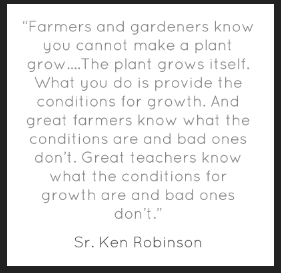
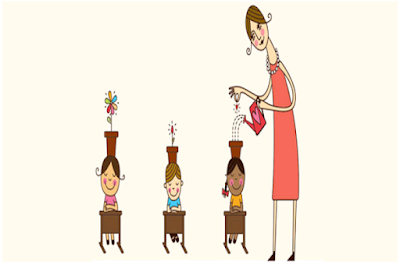
Great teachers know what conditions are required for the growth of their students and provide them efficiently.

SITUATION 1 – AN UNHAPPY STUDENT

Q1. HAVE WE DEALT WITH AN UNHAPPY STUDENT?

A1.YES

Q2. HOW WILL YOU DEAL WITH THE SITUATION?

A2. We as teachers face multiple challenges daily, but what we feel is the most difficult and unfortunate challenge is having unhappy students in our class. Firstly, we as teachers should be able to make out the unhappy students in the class and then try to find the reason behind the situation because we can reach the solution to the problem only by knowing the root cause of the problem. There might be multiple reasons behind this, just to mention a few:-
  1. The student might be new to the school.
  2. The student might be new to the class due to a change in the section.
  3. The student might be an introvert and needs help mixing up with the rest of the class.
  4. The student needs to be more active and able to cope with the syllabus.
  5. There might be some family problem which makes him distracted, tense and, in turn, unhappy.
  6. There might be some health-related issue which leads to a lack of concentration, and the child becomes dissatisfied and unhappy.
  7. The child is unhappy with the teacher’s behaviour and attitude, or let us take it the other way. The teacher is unhappy - they will then make unhappy students, and the class atmosphere will be whole negativity.
  8. Some other student of the school is troubling the child.
After knowing the exact reason for the unhappiness, the situation can be dealt with accordingly.

Q3. If it was a real-life situation, were you successful in helping him/her overcome his/her problem?

A3. We as teachers have encountered many such situations but let us proceed with one specific case to answer this question. There was a student of Class VII who remained absent frequently, and when asked about his reason for absence in the Parent Teacher Meeting, his mother informed the teacher that most of the time, he was unwilling to come to school, and she asked us to inquire about the same. On asking about his behaviour and overall routine at home, we concluded that the child was an introvert and most of the time preferred to stay alone, and due to this reason, he did not have any friends in the class. Since he remained absent most of the time, his work on all the subjects needed to be completed. When work was not submitted for correction on time, the teachers used to ask the reason and time, and again he used to get reminders to complete his work. 

His mother told us that he feels terrible when any teacher reminds him or gets angry with him, which would be a natural reaction of any teacher. After all, it is the duty and job of a teacher to keep a check on students’ work routines. We can clearly see his Introvert behaviour led to multiple reasons for his unhappiness. The first step was to make him comfortable in the class and bring him out of his introverted zone. We could do this successfully with the support of his classmates as well. We asked everyone in the class to give him company, keep him involved and not leave him alone. He was involved in class discussions to make him feel more confident and happy.

We, as teachers, gave him that assurance that you are capable and can do it by asking him the simplest of questions, which he could answer. No doubt the questions were simple but the amount of confidence they instilled in him was tremendous. He started liking the class and, in turn, his studies and eventually became regular at school. It was not a one or two-day process. It took time but gave us positive results.

Q4. What is your advice to educators who want to inculcate these values in their students?

A4. The famous proverb is, “You can’t make an omelette without breaking a few eggs”. That means it is impossible to do something good or accomplish an important task without encountering problems or making sacrifices. Being a teacher is not an easy task, and each day brings new challenges to be dealt with one at a time, patiently and calmly. Not every teacher needs to encounter similar problems. They might vary accordingly because no two individuals in this world are alike. Having said that, I don’t mean you will encounter zillions of problems. Issues are more or less common, and it is your way to deal with them by following some common set of rules.

We are teachers and clearly do not have a magic wand which can lead to a significant transformation in a jiffy! Keep working on the problem consistently, and you will surely get positive results. Lastly, to make the class happy, you must be satisfied because if you are unhappy, that will make the course painful.


SITUATION 2 – AN INTOLERANT CHILD

Q1. HAVE WE DEALT WITH AN UNHAPPY STUDENT?
A1. Yes, many times.

Q2. HOW WILL YOU DEAL WITH THE SITUATION?

A2. When dealing with an intolerant child, PATIENCE IS THE KEY. We have to patiently try to figure out the following two conditions:-

Condition 1 - Whether a particular student is showing such behaviour only under certain specific situations or people.

OR

Condition 2 - Whether his attitude is intolerant every time and with everybody.

How will we deal with Condition 1?
We will avoid such situations, people who make him restless and intolerant for the time being. We can only do that for a while. Once the student calms down and understands his/her behaviour, he/she will adapt to that situation/person. First, you have to calm him/her down. Then only he/she can understand and implement your instructions. This condition can be dealt with comparatively efficiently and in less time than Condition 2.

How will we deal with Condition 2?
If a child’s behaviour is intolerant every time and with everyone, then this is problematic, but of course, NOTHING IS IMPOSSIBLE. It requires a lot of input from the teacher in the form of time, energy and brain work. We need to understand the complete personality traits of that particular student to deal with him. We can explain better by taking an example – A patient visits the Doctor, and the Doctor asks about the problems and prescribes the required medicines. What if the patient is not ready to consider himself/herself a patient? The Doctor then has to deal with the situation entirely differently without making the patient feel like a patient. Similarly, if a student is intolerant, we must first make him feel normal without continuously highlighting the problem, which will worsen his attitude.

Q3. If it was a real-life situation, were you successful in helping him/her overcome his/her problem?

A3. Yes, we have encountered this problem in real life, and we were successful in minimising the problem. We will be dishonest if we say we completely eradicated the problem. Such problems need time, and they improve as the individual becomes more mature and capable of distinguishing between right/wrong and benefit/loss.

Q4. What is your advice to educators who want to inculcate these values in their students?

A4. Our advice to educators in situations like this will be to maintain patience and keep working on the problem. It is not easy to handle an intolerant student because you are not only taking care of the intolerant student, but you have to take care of the students/people towards whom that student is intolerant, as, at the end of the day, a teacher is responsible for the entire class. 

Let us put it like this for dealing with an intolerant student, you have to be tolerant towards many things. 

According to Helen Keller, ”The highest result of education is tolerance”.

With due credit to the author of the above lines, we as educators should add and read this quote like this:-
“The highest result of education is tolerance and the highest result of tolerance is quality education”.

Prakriti (Nature) @ RPK School Moradabad
Dhiraj Gupta, Naina Soni, Rekha Kapoor, Suman Singh, Sandeep Negi, Naushaba Sami and Isha Sharma.

Blog Archive