Showing posts with label situation. Show all posts

Sunday, November 2, 2025

Detach Yourself From Past Experiences - Read And Lead: Masterclass 2026

Reading the book The Courage To Be Disliked by Kishima and Koga with Gurdeep Kaur and Sandeep Dutt, on the 1st of November 2025.

From the session, I understood that when we avoid doing something due to insecurity or fear, we often deceive ourselves psychologically. Our mind and body are deeply connected, and such avoidance can manifest physically in the form of headaches, stomach cramps, or other discomforts.

In my personal experience, whenever I am afraid of doing something, I start shivering. I am usually aware of the reason behind this fear, which makes me realise that I need to consciously reframe my thoughts. By convincing myself with a strong and positive belief that "I am confident about this"—and truly feeling it rather than merely saying it—I can overcome the anxiety that holds me back.

I also learned that this practice can be applied to many situations in life. By detaching ourselves from past experiences and focusing on the present with confidence, we can develop greater emotional resilience and self-assurance.

Shalu Sharma
Sunbeam School Bhagwanpur

Our past does not control our present. We have the power to decide what meaning we give to our past experiences.

Change is always possible.
Everyone can change and become better — if they choose to.

Trauma is not the end. It may influence us, but it does not determine our future. We decide how to move ahead.

We often create excuses without realising it. Sometimes fear and anxiety are created by us to avoid things we don't want to do.

Anger can be a tool.
Often, we use anger to dominate others or force them to listen to us.

Happiness is a choice, not a gift.
We don't wait for happiness to come — we create it through our thoughts and actions.

Self-pity blocks growth.
When we continually feel inferior or compare ourselves, we stop recognising our own strengths.

Courage comes from accepting ourselves. Loving who we are — even if others disagree — is the real courage.

Akanksha Pandey, 
Sunbeam School Mughalsarai

Why not join us?

If you are a passionate educator, grab this opportunity, open to teachers and individuals who want to enjoy reading and reflection every Saturday at 5:30 PM, for only Rs 3000 annually.

Use the link to sign up for the Program.

Recording of the last book reading session

Tuesday, February 11, 2025

Heart Vs Mind - Sunbeam Suncity


Through the video HEART VS MIND, we have focused that how heart and mind often stand in contrast, representing emotion and reason. The heart symbolizes feelings, intuition, and passion, driving decisions based on love and desire. The mind, on the other hand, represents logic, analysis, and rational thinking, ensuring choices are made with careful consideration. While the heart may lead to impulsive yet fulfilling decisions, the mind focuses on practicality and long-term outcomes. Striking a balance between the two is key to making well-rounded choices in life. Too much reliance on the heart may lead to emotional turmoil, while excessive dependence on the mind can make life feel rigid and uninspired. The best decisions often come when the heart and mind work in harmony.


This will help individuals to manage his/ her work in day to day life and achieve the goal. Being an adult we start dealing things with the mind but being adolescent they use the heart as the frontal lobe of the brain is still in the process, this is the reason for the communication gap and anger issues in adolescents.

Hence, under such situations instead of being stern, rigid , not opening up to the children, we should display soft - power. Means we are supposed to be assertive and deal the situation with patience.

Mohini Rai 
Carol Henrick
Sunbeam Suncity 

Friday, December 20, 2024

Right Vs Wrong - Mizan Ali

Many a time children do not talk meaningfully at this age, the reason may be physical development, practical knowledge, and mental development are not able to connect because a part of the brain is still developing, so children are not so far-sighted in adolescence, they keep experimenting due to which sometimes they get into trouble. In such a situation, parents and teachers should understand the ups and downs of this age. 

Just like we become suspicious and cautious when we see even a slight change in our children's behaviour, likewise a teacher should also be careful in school. If we feel some change in a student's daily behaviour is required,  then we should take the child into our confidence and try to understand his mental state. It will be possible only when the student has faith in us so that if he goes into the wrong company due to a feeling of rebellion or pressure from classmates, we can rescue him from that situation and be a success.

Mizan Ali
Sunbeam Indiranagar

Sunday, June 18, 2023

Courage and Patience Part 1 - KNPS Phagwara


Composed by: Pooja Bawa <poojabawa96@gmail.com>

Assignment: Courage and Patience

Write/develop 2 Reflection pieces:

Think of two (2) situations where you as an educator were faced with (preferably real)/might face the challenge of dealing with:

1. A Fearful Student
2. An Impatient Student

How did/will you deal with the student?
A) If it was a real-life situation, were you successful in helping him/her overcome their problem?
B) What is your advice to educators who want to inculcate these values in their students?


Reflection Piece 1: Dealing with a Fearful Student

Situation:
During my time as an educator, I encountered a fearful student who was struggling to participate in class discussions and activities. The student appeared visibly anxious and hesitant to engage with peers and express his thoughts.

Recognising the importance of creating a safe and supportive learning environment, I prioritised addressing the student's fears and helping him overcome his challenges.

Approach:
First and foremost, I approached him with empathy and understanding. I had one-on-one conversations with him to understand his fears and concerns.

Outcome:
His confidence and active participation in class significantly improved. He began to offer insightful contributions during discussions and even volunteered to lead small group activities.

Advice to Educators:
To help fearful students overcome their challenges, educators should consider the following:
1. Foster a safe and supportive environment
2. Establish a personal connection
3. Gradual exposure and positive reinforcement
4. Encourage risk-taking and learning from mistakes

Reflection Piece 2: Dealing with an Impatient Student

Situation:
As an educator, I encountered an impatient student who consistently exhibited signs of impatience during class, often interrupting others and becoming frustrated when tasks required more time or effort than she anticipated.

Approach:
I began by having a private conversation with her to address her impatience. I wanted to understand
the underlying reasons behind her impatience and identify any specific triggers. To address these challenges, I implemented several strategies.

Courage propels us, like a wild hurricane. It fuels our dreams, empowers us to soar, To conquer mountains, and unlock every door.

With courage as our ally, we face the unknown, Embracing challenges, seeds of greatness sown. For in every heart, there lies a flame untamed, Waiting for courage to ignite, unashamed.

Post by Chahat Sharma <chaahatsharma2@gmail.com>

---
Courage and patience are two sides of a coin,
Together they make a person who can join,
The fight for what is right and true,
And wait for the right time to pursue it.

So, be brave and patient, my friend,
And never let your spirit bend.
For courage and patience will see you through,
And lead you to a life that's bright and new.

Poem by Vandana Sharma <vandnasharma144@gmail.com>

Friday, May 5, 2023

Happiness and Tolerance - Prakriti RPKM


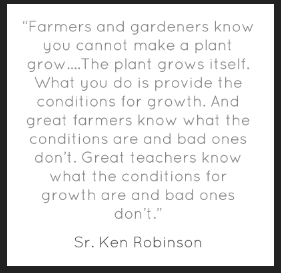
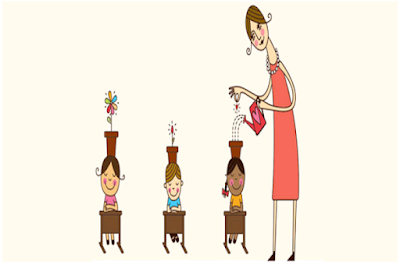
Great teachers know what conditions are required for the growth of their students and provide them efficiently.

SITUATION 1 – AN UNHAPPY STUDENT

Q1. HAVE WE DEALT WITH AN UNHAPPY STUDENT?

A1.YES

Q2. HOW WILL YOU DEAL WITH THE SITUATION?

A2. We as teachers face multiple challenges daily, but what we feel is the most difficult and unfortunate challenge is having unhappy students in our class. Firstly, we as teachers should be able to make out the unhappy students in the class and then try to find the reason behind the situation because we can reach the solution to the problem only by knowing the root cause of the problem. There might be multiple reasons behind this, just to mention a few:-
  1. The student might be new to the school.
  2. The student might be new to the class due to a change in the section.
  3. The student might be an introvert and needs help mixing up with the rest of the class.
  4. The student needs to be more active and able to cope with the syllabus.
  5. There might be some family problem which makes him distracted, tense and, in turn, unhappy.
  6. There might be some health-related issue which leads to a lack of concentration, and the child becomes dissatisfied and unhappy.
  7. The child is unhappy with the teacher’s behaviour and attitude, or let us take it the other way. The teacher is unhappy - they will then make unhappy students, and the class atmosphere will be whole negativity.
  8. Some other student of the school is troubling the child.
After knowing the exact reason for the unhappiness, the situation can be dealt with accordingly.

Q3. If it was a real-life situation, were you successful in helping him/her overcome his/her problem?

A3. We as teachers have encountered many such situations but let us proceed with one specific case to answer this question. There was a student of Class VII who remained absent frequently, and when asked about his reason for absence in the Parent Teacher Meeting, his mother informed the teacher that most of the time, he was unwilling to come to school, and she asked us to inquire about the same. On asking about his behaviour and overall routine at home, we concluded that the child was an introvert and most of the time preferred to stay alone, and due to this reason, he did not have any friends in the class. Since he remained absent most of the time, his work on all the subjects needed to be completed. When work was not submitted for correction on time, the teachers used to ask the reason and time, and again he used to get reminders to complete his work. 

His mother told us that he feels terrible when any teacher reminds him or gets angry with him, which would be a natural reaction of any teacher. After all, it is the duty and job of a teacher to keep a check on students’ work routines. We can clearly see his Introvert behaviour led to multiple reasons for his unhappiness. The first step was to make him comfortable in the class and bring him out of his introverted zone. We could do this successfully with the support of his classmates as well. We asked everyone in the class to give him company, keep him involved and not leave him alone. He was involved in class discussions to make him feel more confident and happy.

We, as teachers, gave him that assurance that you are capable and can do it by asking him the simplest of questions, which he could answer. No doubt the questions were simple but the amount of confidence they instilled in him was tremendous. He started liking the class and, in turn, his studies and eventually became regular at school. It was not a one or two-day process. It took time but gave us positive results.

Q4. What is your advice to educators who want to inculcate these values in their students?

A4. The famous proverb is, “You can’t make an omelette without breaking a few eggs”. That means it is impossible to do something good or accomplish an important task without encountering problems or making sacrifices. Being a teacher is not an easy task, and each day brings new challenges to be dealt with one at a time, patiently and calmly. Not every teacher needs to encounter similar problems. They might vary accordingly because no two individuals in this world are alike. Having said that, I don’t mean you will encounter zillions of problems. Issues are more or less common, and it is your way to deal with them by following some common set of rules.

We are teachers and clearly do not have a magic wand which can lead to a significant transformation in a jiffy! Keep working on the problem consistently, and you will surely get positive results. Lastly, to make the class happy, you must be satisfied because if you are unhappy, that will make the course painful.


SITUATION 2 – AN INTOLERANT CHILD

Q1. HAVE WE DEALT WITH AN UNHAPPY STUDENT?
A1. Yes, many times.

Q2. HOW WILL YOU DEAL WITH THE SITUATION?

A2. When dealing with an intolerant child, PATIENCE IS THE KEY. We have to patiently try to figure out the following two conditions:-

Condition 1 - Whether a particular student is showing such behaviour only under certain specific situations or people.

OR

Condition 2 - Whether his attitude is intolerant every time and with everybody.

How will we deal with Condition 1?
We will avoid such situations, people who make him restless and intolerant for the time being. We can only do that for a while. Once the student calms down and understands his/her behaviour, he/she will adapt to that situation/person. First, you have to calm him/her down. Then only he/she can understand and implement your instructions. This condition can be dealt with comparatively efficiently and in less time than Condition 2.

How will we deal with Condition 2?
If a child’s behaviour is intolerant every time and with everyone, then this is problematic, but of course, NOTHING IS IMPOSSIBLE. It requires a lot of input from the teacher in the form of time, energy and brain work. We need to understand the complete personality traits of that particular student to deal with him. We can explain better by taking an example – A patient visits the Doctor, and the Doctor asks about the problems and prescribes the required medicines. What if the patient is not ready to consider himself/herself a patient? The Doctor then has to deal with the situation entirely differently without making the patient feel like a patient. Similarly, if a student is intolerant, we must first make him feel normal without continuously highlighting the problem, which will worsen his attitude.

Q3. If it was a real-life situation, were you successful in helping him/her overcome his/her problem?

A3. Yes, we have encountered this problem in real life, and we were successful in minimising the problem. We will be dishonest if we say we completely eradicated the problem. Such problems need time, and they improve as the individual becomes more mature and capable of distinguishing between right/wrong and benefit/loss.

Q4. What is your advice to educators who want to inculcate these values in their students?

A4. Our advice to educators in situations like this will be to maintain patience and keep working on the problem. It is not easy to handle an intolerant student because you are not only taking care of the intolerant student, but you have to take care of the students/people towards whom that student is intolerant, as, at the end of the day, a teacher is responsible for the entire class. 

Let us put it like this for dealing with an intolerant student, you have to be tolerant towards many things. 

According to Helen Keller, ”The highest result of education is tolerance”.

With due credit to the author of the above lines, we as educators should add and read this quote like this:-
“The highest result of education is tolerance and the highest result of tolerance is quality education”.

Prakriti (Nature) @ RPK School Moradabad
Dhiraj Gupta, Naina Soni, Rekha Kapoor, Suman Singh, Sandeep Negi, Naushaba Sami and Isha Sharma.

Wednesday, May 3, 2023

Happiness and Tolerance - Aadhya RPKM


Dealing with Challenging Students

How did / will you deal with the student?

A) If it was a real-life situation, were you successful in helping him/her overcome their problem?

B) What is your advice to educators who want to inculcate these values in their students?

Scenario 1: An Unhappy Student

A) Our comments: We did not encounter such a situation.

B) Our Comments: If you have an “Unhappy Student” to tackle, there is no cut-and-dried formula to address such a situation. However, our group believes that under-noted suggestions may be of much help in coping with such students.

Our advice to Educators:

a) Try to ascertain the reasons for the unhappiness

b) If necessary, the parents may be contacted or counselled.

c) Motivational and appreciative words soothe the feelings

d) Make the student involved in some physical form of activities

e) Development of hobbies and creation of interest in reading books etc. are of much help also.

Scenario 2: An Intolerant Student

A) Our comments: We did not encounter such a situation.

B) Our Comments: Intolerant students are like a bull in a china shop and must be handled carefully and cautiously.

Our advice to Educators:

a) An intro with the class teacher, classmates and parents may give the insight to tackle with.

b) Motivational and appreciative words soothe the feelings

c) Make the student involved in outdoor sports activities which vent his complicated feelings for others.

d) Importance of sharing with friends and involvement in group activities to be encouraged and closely monitored with timely intervention wherever necessary would be helpful.

 Aadhya (Victorious) at RPK School Moradabad.

Deepa Khanna, Rachna Bisht, Asma, Farida, Sushma Paul, Kulmeet, Jaswant and Sunanda

Wednesday, November 30, 2022

Freedom and Peace - Laxmi Kant Bhatt


Freedom
is a state of independence where you can do what you like without restrictions. Moreover, it can be called a state of mind where you have the right and freedom to do what you think.

Here are the three instances where I felt that more freedom at my disposal would have allowed me to realise my potential better:

Instance 1 – When I was in grade 9th. or 10th. I was in my school volleyball team. Volleyball was my passion. In addition to Volleyball, I also liked playing cricket. Once there was an actual interschool event, cricket. I wanted to participate in that competition as I loved playing cricket and wanted my skills to be enhanced. But the team was already selected without any selection. I went to the coach to give me a chance and prove that I was worthy of playing for the team, but the coach trusted the captain and did not give me a chance to prove myself. Hence, I was ignored and not allowed to enhance my skills.

Instance 2 – I wished to learn to drive a car as a teenager. Those days it was rare for people to drive cars. Only trained people could do it. I could not learn how to navigate the car as I could not find anyone who could have taught me. My parents were also very possessive in matters like these and never allowed me to go and learn how to drive from a stranger. Therefore, I could not learn how to drive a car which created a phobia in my head, and I had trouble learning how to drive in my thirties.

Instance 3 - I wanted to take my career to a higher level by going abroad. I received a call from a good and well-known school from abroad. My mother used to live alone then, so I had to compromise the opportunity for my mother. As she was an old woman and needed constant support and someone to look after her, and being the only child, I had to stay.


Peace
cannot be kept by force. It can only be achieved by understanding – Albert Einstein.

Peace may have different meanings for everyone, but to me, it means learning how to deal with a conflict in a way that doesn't put anyone's rights over others. It is learning how to resolve a dispute without destroying an individual's respect and reputation. We should encourage students to work peacefully and respectfully. If you have an annual event like a poetry recitation, musical or an act, then you should appoint the theme of 'Peace' and challenge students to find stories, poems and songs about peace. They can also make posters and paint pictures of peace and what it means to them. It can be beneficial and teach students how to maintain peace and live equally and supportively.

L.K.BHATT
THE DOON GIRLS' SCHOOL

Wednesday, June 15, 2022

Courage and Patience - Jyoti Tadiyal & Laxmi Kant Bhatt

Joy Of Learning Cohort 2022


 विषय भय से भरा हुआ विद्यार्थी & एक अधीर विद्यार्थी

प्रस्तावना विद्यार्थी जीवन अनेक प्रकार के रंगों से भरा है। इसमें हर कदम पर उत्साह है, उमंग है, खुशियां है। कुछ नया सीखते जाने की ललक है। परंतु इस सफर में कुछ ऐसे भी मोड़ आते हैं जब भय और अधीरता विद्यार्थी के भीतर दिखने लगती है।

( क) भय से भरे विद्यार्थी भय मानव जीवन का एक आवश्यक अंग है। नौ रसों में एक यह भी है। मेरी कक्षा में अक्सर ऐसी स्थिति आ जाती है, जब एक बच्चा डरा हुआ लगता है। कारण विषय का सही ज्ञान न होना। इनके डर को दूर करने के लिए सबसे पहले वार्तालाप का स्तर बढ़ाया गया। अलग से समझाया गया। और कक्षा में विशेष ध्यान दिया गया। प्रश्न पूछने का तरीका सरल बनाया गया। जिससे उसका भय दूर हो गया। इस बीच इस बात का विशेष ध्यान रखा गया कि बाकि विद्यार्थी अपने आप को उपेक्षित महसूस न करें। धीरे धीरे परिस्थितियों में सुधार आ गया और अब सभी उसकी प्रशंसा करते हैं।

(ख) एक अधीर विद्यार्थी कक्षा की एक बालिका अत्यन्त अधीर है। जिस कारण वह अनेक बार उपहास का पात्र बन जाती है। मैंने उसे समझाया कि इस प्रकार का व्यवहार सही नहीं है। आपके अंदर योग्यता है परंतु जल्दीबाजी करने से वह दिख नहीं पाती। इसलिए किसी भी काम को ठंडे दिमाग से सोच विचारकर करो। धैर्य न होने से आपका व्यक्तित्व खराब हो रहा है। आप उत्तेजित न हुआ करें हम आपके साथ हैं। इस प्रकार के परामर्श से विद्यार्थी के व्यक्तित्व मे सुधार देखा गया। 

उपसंहार इस प्रकार एक अध्यापिका के रूप में विद्यार्थियों के साथ परामर्श बहुत आवश्यक है। भय और अधीरता स्वाभाविक लक्षण हैं। जिनका निदान प्रेम और विश्वास है।

धन्यवाद

प्रेषक ज्योति तड़ियाल        लक्ष्मीकांत भट्ट

विद्यालय द दून गर्ल्स स्कूल।

Saturday, June 12, 2021

Freedom and Peace - Reena Gusain

C:\Users\DELL\AppData\Local\Temp\Rar$DIa0.844\WhatsApp Image 2021-05-17 at 15.58.43.jpeg

"Peace is the result of retraining your mind to process life as it is, rather than as you think it should be," by Wayne W. Dyer, which means accepting the situation as it is rather than conflicting, disagreeing or revolting against it. So we can embrace it and find peace in it.  As we all know, humans are destined for hard work, accept challenges, remain competitive and enthusiastic for the future. But in this process of moving ahead, some people find peace in achieving the goals, but some may not. It may differ from person to person. Peace gives the utmost pleasure, which we humans have to find out in all situations. No matter how successful, how rich you may become but peace cannot be compromised, and if one does so, then both body and mind have to pay the consequences. Nobody can bring peace, but we ourselves should take the initiative to build peace. 


C:\Users\DELL\AppData\Local\Temp\Rar$DIa0.012\WhatsApp Image 2021-05-17 at 15.58.43 (1).jpeg'May we think of freedom, not as the right to do as we please, but as the opportunity to do what is right' well said, Peter Marshall.  The concept of freedom may also differ according to their mindset and situation faced by people. But the perfect freedom can be said that making best to the opportunity given in a situation. With power, there comes responsibility; therefore, with freedom, there comes the ability to explore new boundaries, but to an extent, it does not hamper other’s freedom. For example, cutting down forests may be freedom for mankind, but it is just hampering their natural habitat for other creatures. 

So with this, we may conclude by saying what peace is to the mind. Freedom is to the soul.

Reena Gusain
The Doon Girls School

Friday, January 8, 2021

Patience - Prerna Rathod

Courtesy: wayneelsey.com
Patience is the trait to accept delays, problems or suffering without becoming angry or annoyed with anyone.

When you decide to do something different, it is only patience that gives you an inner strength to move on and stand against all odds. It brings an inner peace into your life. It makes you an optimism person and above all, it helps you to deal with stress and difficult situation. It helps you to remain healthy and stress-free.
 
Patience is that value that helps us to stand or remain calm in all situations in spite of any difficulty or problems. It helps us when we are trying to overcome our fears or maybe we trying to do something different from others. Patience is one value that has a positive influence in your life and helps you to achieve success in life.

I would like to end with a quote by Joyce Meyer “Patience is not the ability to wait, but the ability to keep a good attitude while waiting”. 

Prerna Rathod
The Fabindia School 
prd@fabindiaschools.in

Tuesday, July 7, 2020

Responsibility and Cooperation - Jitendra Suthar

When we say a person is responsible and very cooperative, it means that a person has the quality of
being kind to others. With the aim of helping everyone and not making others feel any kind of pressure is said to be a responsible person.

We all have two such unsung heroes in our life, who are responsible and kind at the most. First is the person who works hard to fulfil our dreams keeping all his dreams aside. That’s our father. Another one is the person who works hard to make us ready for the future, ready to fight any situation we are in, who always stands by us, who can never be biased. Yes, that’s our teacher.

Our both these heroes take our responsibility to shape us for the upcoming challenges. No matter what situations they are, they will always be cooperative to us. Even if situations are not in their control, they won’t let us feel so, wearing a smile starts working in a normal mood. 
  
A father, who always stays with the thought of how he can give more to his child or his family, never stops working with all the responsibility. A teacher goes through a lot of pressure but never ever let these things affect teaching in the classroom and he is the most polite person we ever meet in our education time. 

It is said “After your parents, it is your teacher who always thinks good for you” – Truly being in such a professional will be a proud moment for everyone.

Jitendra Suthar
The Fabindia School
jsr@fabindiaschools.in

Wednesday, April 29, 2020

Quarantine, No It's Family Time- Prerna Rathod

Why are we calling it quarantine, this is indeed our family time. I know that some of us are not at our homes, but at least you have a family. This is the time when you should spend some time with your family, do some productive work, develop new skills within you, follow your passion, etc.

We should not consider this as a punishment for us, instead should understand that this is the time when our Mother Earth is healing itself. We should be happy, as, in this era of busy lives, we took a pause to relive our moments which we might have missed sometimes due to the stress or burden of our work. This time is indeed a boon for those children who were far away from their homes for the purpose of studying, or job and might just go back home for some time and just got that much time to live happily with their family.

Like we are familiar, every coin is born with its pros and cons, so does this situation of COVID-19. On the one hand, some people are in their homes and are safe with their families. On the other hand, there are some people who have stuck away from their homes due to the complete lockdown of the nation, or some people are fighting for life with COVID-19. We should be thankful for our heroes who are out on the roads to guide and save us(Police and News Reporters), who are working hard with their duties to save our lives(Doctors), etc. We should be thankful to our Government who controlled this situation at the very starting point only.

In this difficult time, we should follow the guidelines that are given to us, we should randomly call a person (friend or relative) who is far from home, we should help the needy, most of all we should respect people who are taking measures to deal with this situation and help them with what is possible for us.

I would like to end with the lines of a song:
"Jo saath de de saara India,
Fir muskurayega India,
Fir jeet jayega India,
Jo saath de saara India."

Prerna Rathod
The Fabindia School

Wednesday, April 15, 2020

Happiness and Tolerance - Bloom BHIS

It was a glorious day as the golden sun shone brilliantly in the sky. I had butterflies in my stomach as today I was going to try and experience something new. I was going to meet my crazy bunch of students online after quite some time.

Suddenly, everything came to a halt.  The school was called off, and all of us are caged at our home.

The clock showed 11:00 am, and most of them were there in front of me adjusting their cameras and headphones. I absolutely had no idea how this online session will turn out and how they would react or adapt in a completely new set up of classroom.

I started the session by wishing them good morning to which they responded back with a broad smile which lifted my mood and made me happy. To break the ice, I asked, "How are you coping with this sudden change in life? "

All of them had their views to share, but I was amazed by the answer given by Vyomi. She said, "Though I am not allowed to move out of my house, I cannot play with my friends, I cannot call them at my home, but this is the need of the hour and to overcome this situation and fight against this highly contagious coronavirus this is the only way out." On the contrary, she was happy that she is helping her mum in her household chores and learning new skills.

I was elated by her answer. Suddenly, 9-year-old Vyomi seemed like an adult and mature to me.  She has beautifully coped up with this current situation and has shown a lot of maturity and tolerance in her behaviour.

Her words made me happy and made me realise that if this young one can show so much maturity, then we adults too can emulate her. It was terrific talking with all of them and my students. Today taught me that it is in our hands to be happy in any situation.

Bloom @ Billabong High International School Thane
Priya Wagle, Manjit Kaur, Manisha Joshi, Rinku Lapasia, Sharanjeet Sandhu, Ranjana Solanki

Wednesday, March 4, 2020

Courage and Patience- Optimizers SHS

Courage Leads To Self Confidence 

Courage works as a booster and strengthens our self-confidence. It protects us from difficulties and challenges and prepares us to face situations by using the armour of courage. It also enables us to try out new things and make us adventurous.

This is a story of a little boy David who was feeling very bored as his parents were not at home one afternoon. So, he decided to go and watch a cricket match. He left his dog Snoofy in the house.

Just after David left the house a thief entered the house through the open window and started searching all the rooms. He stole all the valuables and when he was about to leave, he saw Snoofy standing in front of him and growling. 

Snoofy was in bad temper and was about to bounce on the thief when suddenly David returned home.
He said Snoofy to calm down and handed over the thief to the police.

It is important to teach the value of courage to the students because it helps them to believe in themselves and to overcome fear. It encourages them to take risks and give them the strength to handle tough situations and do the right things.

Patience- A powerful Weapon

Patience is not the ability to wait, but the ability to keep a good attitude while waiting.

The importance of patience should be realized by every individual. Patience in life can make us reach out for the stars, with patience we can avoid making any hasty decisions.

Life is not about living in the future or the past but accepting the present moment. Patience is a quality of waiting calmly without complaining. It helps us to be empathetic and makes us tolerant. It is a powerful weapon which helps us to fight against our negative emotions like - anger, frustration, irritation and arrogance.

Patience is a skill that can be learned and needs constant nurturing. We should learn how to cultivate the practice of patience to benefit relationships with ourselves, others and every area of life.

➽"Patience is bitter,
but its fruit is sweet."➽

- Rosa Rai<rosarai2020@gmail.com> for Optimizers at Sacred Heart School, Siliguri

Sunday, January 19, 2020

Affection Vs Rejection post by Helpful Icons

A school is a place where multiple emotions and behaviours are reflected and experienced by the educators and the students.  Every situation in a classroom and school leads to an expression of affection or rejection. These words are simple and make a great meaning when educators reflect on them. This time the focus of the article is on the key responsibilities that the Educators have. The first role of the educators is to see the children through different lenses and recognise their unique traits and accept them with their individual characteristics and abilities. This in itself will change the picture of the classroom and the situations that take place in the class.

The next responsibility as an Educator is to accept all the children with love. The love that the Educators show to the students develops trust between them and the students. It is because of this trust that students share various problems, issues and concerns with the educators because they know that they will be accepted with everything. These two responsibilities can bring in a great change in the development of the child. However, if the above responsibilities of we the educators are not recognised then we tend to take our children on the path of rejection. For example, if the whole class is expected to follow the things just like the best student in the class and not as individuals, it will create great dissatisfaction amongst the pupils. With this dissatisfaction, some children will automatically be left behind as through this mass approaches the individuality of a child is not accepted by the Educator.

It’s time that we all start reflecting on the day to day activities and the situation’s in the classroom and connect with our children in a way that they feel acknowledged, appreciated and accepted the way they are and develop a growth trajectory that makes our children a champion with the core values of acceptance and love.

“We can live without religion and meditation but we cannot survive without affection”

- Helpful Icons, The Iconic School Bhopal

Friday, June 15, 2018

Aysha Tak: नर हो न निराश करो मन को

मनुष्य विवेकशील प्राणी होने के कारण सृष्टि के अन्य प्राणियों में सर्वश्रेष्ठ  है। केवल मनुष्य ही ऐसा प्राणी है , जिसमें चिंतनशीलता, क्षमता तथा आत्मविश्वास जैसे गुण हैं। वह अपने परिश्रम, कर्मशीलता तथा इच्छाशक्ति के बल पर असंभव को भी संभव करने की क्षमता रखता है| 

जब मनुष्य कठिन परिस्थियों में भी अपना धैर्य खोए बिना, अपनी दृढ़ता को बनाए रखता है। इसलिए बाधाएँ उसके सामने घुटने टेक देती है। क्योंकि तुम - ' नर हो न निराश करो मन को, समझो न अलभ्य किसी धन को।' जीवन में कभी - कभी असफलताएँ भी आती  है। कभी - कभी कठिनाईयाँ हमारा मार्ग रोकने का प्रयास करती हैं। ऐसी परिस्थियों में आत्मविश्वास रखना चाहिए।  यदि मनुष्य असफलताओं से घबराकर निराश होकर बैठ जाता, तो कभी भी सफल नहीं होता|

सीखने के नियमो के आधार पर व्यक्ति असफलताओं से ही सीखता है। हमें इस विषय पर विचार करना चाहिए कि असफलताएँ एक चुनौती है उसे हमें स्वीकार करना चाहिए तथा उन असफलताओं के कारण को समझ कर उनमें सुधार करना चाहिए। ऐसा करने से वह कभी निराश नहीं होगा । हमारा मार्ग असफलता से सफलता की ओर होना चाहिए न की चिंता या निराशा होना चाहिए। किसी भी प्रकार की असफलता पर चिंता नहीं बल्की चिंतन करना चाहिए । जिससे सदैव सफलता के मार्ग पर चला जा सकता है।

Educator - Aysha Tak, The Fabindia School, Bali

Blog Archive