Showing posts with label world. Show all posts

Tuesday, July 14, 2026

Reading the World Before Facing It: Is Your Child Ready to Face the World?


Learning Forward Retreat, 14-16 July 2026, at the Fig Tree Cottage in Dehradun

We are delighted to host educators from Sunbeam Schools - Suncity, Bhawanpur, Lahartara and Varuna; and the Aasara Trust for an immersive learning experience. Discover more at www.LFIN.Academy.

Having seen many kids grow up in a residential educational setting. As an educator myself, I wonder whether we prepare our children only to score high marks or to face the world outside.

Is Your Child Ready to Face the World? by Dr Anupam Sibal gave me ample time to think about this subject.

The most important thing about this book was that it took us from academic excellence to character excellence in a refreshing way. In times when we measure success by marks and ranks alone, this book reminds us of the significance of humility, courage, compassion, gratitude, honesty, and forgiveness in life.

I was impressed by the chapter titled Humility because it showed that, regardless of how much we know, there is still more to learn and someone from whom we can learn. This helps us educators stay open to new thoughts and perspectives.

Handling Pressure is a particularly relevant topic in today’s world. It reinforced my belief that resilience and emotional well-being should be considered equally important as the quality of performance at school.

Among all the chapters, Making Mistakes and Accepting Flaws impressed me the most. We tend to teach our kids to aim for excellence, but it is rarely achieved that way. One learns by making mistakes, analysing them, and trying again.

Chapters on Compassion, Giving, and Making Others Happy made me realise that our ultimate goal as educators is not to make kids more knowledgeable and successful academically, but to make them better people. The intelligence will open many doors, but only your attitude towards other people will show how you use them. But I think the most important message the book conveyed to me was expressed in the chapters on Gratitude and Forgiveness. In a world where everyone tries to acquire something, gratitude shows how much we can appreciate what we have, and forgiveness frees us from hate and anger. As an educator, I understood that our ultimate goal is not just to teach children to pass exams, but also to prepare them for their lives and relationships with others.

If I were to summarise my learning from this book in one sentence, it would be:

The world does not merely need successful individuals; it needs compassionate, resilient, honest, and responsible human beings.

Reading this book has strengthened my belief that the real purpose of education is not simply to help children make a living, but to help them make a life.

And perhaps that is the true answer to the question the book asks:

Is our child ready to face the world?

The answer depends not only on what they know, but on who they become.

out preparing for life.

 - Deeba Naqvi, Apeksha Malviya and Anurag Khanna from Sunbeam Group of Educational Institutions, Varanasi, and Manisha Bhandari from the Aasara Trust at Dehradun.

Wednesday, June 10, 2026

Who is Right?


I was reading the final chapter of The Courage to Be Happy by Ichiro Kishimi and Fumitake Koga, when my son, who was watching True Detective on Netflix, paused the serial and said, "Listen to this dialogue. Rust Cohle, a character in the series, says, “I think human consciousness is a tragic misstep in evolution.”

He continued, "The problem with people is that they are too self-aware.”

We know we will die. 
We worry about the future. 
We regret the past. 
We compare ourselves with others. 

“That's why human beings suffer."

I smiled, and he looked at me curiously. I read aloud from the book I was reading: "The world is simple, and life is too. Keeping it simple is difficult." I said, "Isn't life simple? It's the meaning we attach to it that makes it complicated. 

Take this example. Someone criticizes me. The criticism is the event. 

Then my mind starts creating stories: 
'They hate me.' Everyone thinks I am incompetent.' 'I am not good enough.' The event was simple. The interpretation became complicated." 

"That's not simple," he interrupted. "People get hurt." 

"Yes," I replied, "people do get hurt. Pain is real." I continued, "A dog gets wet in the rain and moves on. A human gets wet in the rain and thinks: 'Why does this always happen to me?' 'My day is ruined.' 'Nothing ever works out.' The rain is the same. The experience becomes different because of the meaning we give to it." 

He immediately replied, "That's exactly what the dialogue means when it says consciousness is a tragic misstep in evolution. 

“Animals don't think like that. Humans do. Consciousness causes suffering." After saying that, he returned to watching his serial. 

As I returned to my book, I realised that perhaps the philosopher and the character in the serial were asking the same question but arriving at different answers. 

The character in the serial sees consciousness as the source of suffering. The philosopher in the book sees consciousness as the source of freedom. A few minutes later, I withdrew to my book, and he withdrew to his serial. 

Yet, in our own ways, both of us were thinking about the same thing—human consciousness. So, who is right? 

Perhaps both are. Consciousness gives us the ability to suffer, but it also gives us the ability to rise above suffering. It can trap us in fear, but it can also help us choose courage. It can make us anxious about life, but it can also help us find meaning in it. Perhaps happiness begins when we find the courage to use our consciousness not to dwell on fear, but to choose love, and to choose life. 

The world is simple. Life is too. Keeping it simple is difficult. 

As we wrapped up The Courage to Be Happy in our Masterclass, I realised that the most meaningful learning often happens outside the pages of a book—in conversations, in questions, and sometimes in an unexpected dialogue between a mother reading a book and a son watching a serial. The book may have ended, but the reflection continues.

- Gurdeep Kaur

Saturday, December 21, 2024

What Makes a School?- Chandrani Singh


A school is more than just a building; it is a vibrant community where learning, growth, and development occur. At its core, a school is where students, teachers, and staff unite to explore ideas, share knowledge, and nurture skills.

The foundation of any good school lies in its ability to provide a safe, inclusive, and supportive environment for students. It fosters curiosity and encourages creativity, making it a space where children can grow intellectually, emotionally, and socially. A dedicated team of teachers plays a critical role in shaping young minds, acting as guides and mentors who inspire a love for learning.

In addition to academic subjects, schools cultivate values such as teamwork, discipline, respect, and empathy, helping students become responsible citizens. Extracurricular activities, sports, and creative arts add to the richness of school life, ensuring the holistic development of each child.

A school is not just about imparting knowledge but about building character, fostering relationships, and equipping students with the skills they need to navigate the world confidently. It is a place where dreams are nurtured, and the future is shaped.

Monday, November 18, 2024

My Good School Retreat 2024 - JDS School

The first Retreat we attended was a wonderful experience. It illuminated all aspects of learning, exploration, and giving. It was exhilarating to witness a blend of three distinct cultures from Varanasi, Punjab, and Meerut coming together to showcase their unique ideals. The reality of diversity was undoubtedly at its peak during the retreat. The high standards set by our chairman, Mr. Sandeep, along with Mr. Amit, Mr. Jugjiv, Mr. Assad, Mrs. Manisha, Mr. Devgan, Ms. Feroza, and many others who motivated both students and teachers, left a lasting impact. The efforts of these remarkable individuals know no bounds. I am deeply grateful to all these nation builders who, in their own way, are supporting A FA. Thank you for the warm hospitality.

Suman Jhakar
Jhamku Devi School

Sunday, January 15, 2023

Thoughtfulness and Understanding - Rishona Chopra


Thoughtfulness and Understanding are deeply related. Thoughtfulness creates Understanding. Understanding a person is essential in a classroom, for a teacher to child and a child to the teacher. Children need to understand their peers and teachers.

We all have this mutual respect for the class teacher in our class. Although we sometimes do trouble her, sometimes we love her a lot. On her birthday, we make cards and give out toffees to the entire class in happiness! When absent, the whole class expects her to be unwell, and we make a big get well soon card for her. The entire class's Understanding of their teacher creates a togetherness, and the teacher's Understanding of the children is unique. She cares for us, has fun with us, and is something we could never repay. 

Not just within a classroom, but thoughtfulness for animals, your parents, your friends and any person in the world. Even giving water to a dog, opening the door for a child, and pointing that someone's shoelaces are untied. It all counts and shows your thoughtfulness. Thoughtfulness for mother nature. If thoughtfulness existed for everyone and everything, everything would be a whole deal better.

Thoughtfulness is just when a thought comes to you to care for someone. Just simply that thought creates Understanding. A little consideration, and a little review for others, make all the difference.

"A thought of kindness, 
A thought of caring,
Just that one thought creates an Understanding.
And understanding leads to Empathy."

Rishona Chopra
Grade VI
Gyanshree School

Wednesday, November 30, 2022

Freedom and Peace - Laxmi Kant Bhatt


Freedom
is a state of independence where you can do what you like without restrictions. Moreover, it can be called a state of mind where you have the right and freedom to do what you think.

Here are the three instances where I felt that more freedom at my disposal would have allowed me to realise my potential better:

Instance 1 – When I was in grade 9th. or 10th. I was in my school volleyball team. Volleyball was my passion. In addition to Volleyball, I also liked playing cricket. Once there was an actual interschool event, cricket. I wanted to participate in that competition as I loved playing cricket and wanted my skills to be enhanced. But the team was already selected without any selection. I went to the coach to give me a chance and prove that I was worthy of playing for the team, but the coach trusted the captain and did not give me a chance to prove myself. Hence, I was ignored and not allowed to enhance my skills.

Instance 2 – I wished to learn to drive a car as a teenager. Those days it was rare for people to drive cars. Only trained people could do it. I could not learn how to navigate the car as I could not find anyone who could have taught me. My parents were also very possessive in matters like these and never allowed me to go and learn how to drive from a stranger. Therefore, I could not learn how to drive a car which created a phobia in my head, and I had trouble learning how to drive in my thirties.

Instance 3 - I wanted to take my career to a higher level by going abroad. I received a call from a good and well-known school from abroad. My mother used to live alone then, so I had to compromise the opportunity for my mother. As she was an old woman and needed constant support and someone to look after her, and being the only child, I had to stay.


Peace
cannot be kept by force. It can only be achieved by understanding – Albert Einstein.

Peace may have different meanings for everyone, but to me, it means learning how to deal with a conflict in a way that doesn't put anyone's rights over others. It is learning how to resolve a dispute without destroying an individual's respect and reputation. We should encourage students to work peacefully and respectfully. If you have an annual event like a poetry recitation, musical or an act, then you should appoint the theme of 'Peace' and challenge students to find stories, poems and songs about peace. They can also make posters and paint pictures of peace and what it means to them. It can be beneficial and teach students how to maintain peace and live equally and supportively.

L.K.BHATT
THE DOON GIRLS' SCHOOL

Saturday, November 12, 2022

Freedom and Peace - Rishona Chopra

Freedom as we know, of course, is the joy of feeling free & and doing what we want, to simply have freedom. We can do what we want, but freedom has its own limits. It's not that we cut the wings on the bird, but it's like a summer-adapted bird goes to Antarctica. Can it? It might die... Similarly, freedom is to have the initial and foremost rights and the right to do good deeds, not bad ones.

When someone says, "you are not good at drawing at all. I am much better." These things hurt us, and then when people say things that hurt us, they capture our thoughts. We usually start criticizing ourselves. Their thoughts about us capture our thoughts. What people say about us is not necessarily who we are. 

We are who we think we are, so if we start thinking about ourselves as someone else thinks, our thoughts are not free. We are not free at all. So people can say what they want to, of course, if they say something we must see if what they are saying is true but if not then don't think about what they say because if your mind doesn't have free thoughts, then you are not free and if you are not free then how will you be happy and if you are not satisfied then how will you feel peace and if you have no peace then you don't have a wonderful, happy and peaceful life. And I'm sure all of us want a happy life. Don't we?

Freedom in the classroom is quite essential; the Montessori teaching style aims to make the child more thoughtful and independent. Freedom for thought and doing. In the book "Lord Of The Flies" a group of boys are left alone on an island for the first few days the enjoy, but after a few days, they need someone to guide them. So freedom doesn't just depend on you but the proper process with which we need some guidance.

Freedom and peace are pretty related; peace starts when space starts. Peace, in my opinion, is something you can't describe. It's a feeling of pleasure, satisfaction, fulfilment and joy. Peace is freedom from the noise in our minds. Today let us pledge, "Let there be peace on Earth, and let it begin with me". "The more in harmony with yourself, the more joyful you are, and the more faithful you are. Faith does not disconnect you from reality; it connects you to reality." — Paulo Coelho Rishona Chopra Grade VI Gyanshree School

Wednesday, August 10, 2022

SCOOREVIEW - My Good School, by ScooNews Aug 2022

Does your school empower every individual?
If you are at school, we help you experience the joy of learning; for those who did not enjoy school, it is essential to realise that learning is natural for the brain. Just as the heart keeps beating as long as we live, the brain keeps learning.

The book, podcast, app and much more!
At My Good School, children develop critical thinking and communication skills, preparing them to face the world. They experience values and virtues working with mentors and peers. #JoyOfLearning

Why should you join My Good School?

"Improves confidence in speaking, helps improve listening skills and reading fluency, teaches time management - balancing schoolwork and My Good School. JOL (Joy Of Learning) helps us in academics; we feel more confident while performing in a play or giving a speech. Everyone quickly finds the pleasure and joy of learning in an open, adaptable environment". - Rishona Chopra, Grade 6 Gyanshree School "I love being an intern at My Good School, which gives me a lot of opportunities to learn. I like making posters and writing blogs which helped me enhance my writing skills and creative skills. I learn about life values like compassion, giving, and never giving up hope. I enjoy meeting many interns from other schools, picking up other skills, and being mentored by teachers. As an intern, I can explore so many things which are helping me to find my strengths. I am thankful that I got this internship opportunity at 10".

- Arav Agarwal, Grade 6 Billabong Thane


My Good School is Phygital (physical plus digital), a marketing term that combines digital experiences with physical ones. The GSA member schools emphasise service, Skill, Sport and Study. We Focus on the 6 C's: 1 Critical thinking; 2 Creativity; 3 Collaboration; 4 Communication; 5 Character; and 6 Citizenship. The "My Good School" designation shows the school's value on professional learning and student achievement.


Sunday School!

Experience the joy of reading, listening to heartwarming stories and connecting with young people from schools worldwide —every Sunday in English and Hindi on Google Meet. The once-a-week school, 30 minutes open forum; 60 minutes English and 60 minutes Hindi, follow up on the Telegram App. The pure joy of learning, no compulsion to attend!

Joy Of Learning
The Joy Of Learning Program and the Sunday School is a much-loved innovation of the  Learning Forward India Foundation; the foundation also has a well-established Internship Program, Space Program, Well-being Program, Sports Program and a Happy Teachers Program.

Good Schools Alliance

Schools and stakeholders empower young people. Programs Partners and Members Schools collaborate for service, skill, sport and study; add value to the school curriculum and spread the joy of learning.

  • Empower every individual at your school

  • Encourages students to become involved in activities beyond just study; this helps develop confidence, knowledge and networks.

  • Experiential learning is a critical factor in progressing successfully through adolescence.

  • Education empowers students by creating an environment for their personal and social development.


The story of My Good School started with the need for a balanced curriculum that ensured diversity, inclusion and belonging for every child at The Fabindia School; the school emphasises a holistic approach to education, offering extensive extra-curricular programs along with comprehensive academic courses. Our focus on happy teachers and the joy of learning became a story in itself!


My Good School - the book, podcast, App and school - give us a reason to celebrate the joy of learning and help us look at learning from every child's perspective. Today, the learning process has become far more democratic, and the role of the teacher has evolved from one who provides knowledge to a person who co-creates learning for every individual, with the child at the epicentre. The philosophy of My Good School gained global recognition with the publication of the book.


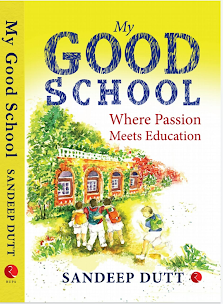
My Good School Where Passion Meets Education was published amid the pandemic by Rupa Publications 2021. This perhaps helped us all to look at a deeper understanding of a school, as the NEP 2022 has challenged the old style of teaching and learning. This book will help educators, school administrators and management and will change the future of learning.


A BOOK FOR ANYONE AND EVERYONE ASSOCIATED WITH SCHOOLS AND SCHOOLING.

The book is for parents to select the school for their child, as the choice can have a lifelong impact on the child's growth and personality.


A guide for you to look beyond that high-rise building and those perfectly manicured lawns—to go deeper in your search for your good school. It will encourage you to observe, question, evaluate, and choose a school that will truly prepare your child for a life beyond the campus, a life beyond theory.


This book will help educators, school administrators, and management build and rebuild such institutions and change the future of learning.


Enriched with the knowledge, experience and, most importantly, the wisdom of The Doon School alumnus and school improvement coach Sandeep Dutt, this book will encourage conversations around our education system and help shape the future of education.


"Sandeep is a passionate educator. He has dedicated his life to making the greatest impact on the greatest number of people." - William Nanda Bissell, Chairman of the Board, Fabindia.


"This book is almost like a conversation where a concerned parent, a well-intentioned teacher, and an entrepreneur who is aware of the reality of education today discuss everything from the what, the why and the how of teaching to what it will take to redefine education and learning." - Arvind Passey, Blogger and columnist The Education Post.


Listed in Top 10 Non-Fiction Bestsellers for 2021 by Booknerds.


Amazon lists the book in the top 100 non-fiction books.


At the Learning Forward India Foundation, passionate educators love to help schools deliver better, focusing on community learning programs for students and teachers to help take learning forward. You, too, can experience the joy of learning simply by enrolling at My Good School! #JoyOfLearning #HappyTeachers #MyGoodSchool Find out more at www.SchoolEducation.com

This post is courtesy the ScooNews Magazine, reproduced from page 122 of the August Sixth Anniversary Special Edition.

Monday, July 18, 2022

Transforming School Curriculum: Empowering Learning for Life


Why you should attend?

Transforming School Curriculum: Empowering Learning for Life
ScooNews Global Educators Fest 2022 #SGEF2022

The 4th edition of ScooNews Global Educators Fest shall revolve around the theme ‘Transforming School Curriculum: Empowering Learning for Life’, where we shall brainstorm on new priorities, pedagogies, technologies, spaces, and assessment strategies.

We think the most significant step the Indian education ecosystem needs to take today is to leap from a textbook setting to the real world. Only then the students will be able to see practical applications of classroom concepts and retain their learning for life.

ScooNews Global Educators Fest 2022 #SGEF2022 will be held at:
Jaipur Marriott Hotel, Ashram Marg, Near Jawahar Circle, Jaipur.
https://globaledfest.com/

#SGEF2022 #Scoonews #HappyTeachers #MyGoodSchool 

Saturday, July 2, 2022

Honesty and Respect In The Classroom - Rishona Chopra


Honesty and Respect are two equally essential values that go hand in hand. Respecting these two values in the classroom and trying to inculcate them is vital. 

Honesty is being true to ourselves. We can lie to the world but not ourselves and deceive ourselves when we lie to others and think we have fooled them. We can lie to others but not to ourselves. The trust that one builds on the other is because we will be honest with them. We often lie to fit in the society, but that is not needed; we should be who we are. 

Being bullied by children in class, is quite common but we should never lie about ourselves to be like them and fit in their company, if you are the odd one out, it doesn't matter because being odd or unique is a good thing and that is also the reason why I personally like odd numbers.

You would have often heard people say they don't get into trouble when they do something wrong and tell the truth, but I think that's not how it works. Like in stories, it says that we did a bad thing, said the fact and got chocolate, but those are not practical. We should always be honest, but not necessary to help us escape trouble. We still might face the consequence, so we should not be honest, thinking it will get us out of trouble. Accept your mistake and improve. Even if your teacher doesn't appreciate you when you are honest and gives you a scolding for what you did, be happy because, on the inside, the teacher would be equally happy that you told the truth.

Respecting others in the classroom is very important. Respecting your teachers, colleagues, and peers is excellent. Honesty is based on truth and the ability to respect yourself and others.

Respect is earned, Honesty is appreciated, Love is gained, and Loyalty is returned.

Rishona Chopra
Grade VI
Gyanshree School

Sunday, March 13, 2022

Forgiveness - Sunita Mehta


The community reading program helps inspire you by reading and reflecting, sharing examples of where children and adults in real life are using values and is very useful to stimulate discussion and philosophical debate. The Joy Of Reading Program is only one part of our Life Skills Program - Reading, Speaking and Writing.

On Sunday mornings at 11.00 AM, you can join us for live reading sessions. Best you attend with a copy of the book and experience the Joy of Reading.  #ReadToLead 

Forgiveness Chapter 18, narrated by Sunita Mehta, Headmistress Gyanshree School Noida, India

Sunday, February 6, 2022

Giving - Sunita Mehta

Dr Anupam Sibal Through his experience as a father, paediatrician and Group Medical Director of Apollo Hospitals Group, Dr Anupam Sibal outlines his approach to effectively getting through to children and mastering the art of parenthood. Focusing on the different values and qualities that make a good person, Dr Sibal has a hands-on approach to instil each in a child. Is Your Child Ready To Face The World? Focusing on the different values and qualities that make a good person, Dr Sibal has a hands-on approach to instil each in a child. Exploring the crux of parenting, this book asks and answers whether your child is ready to face the world.

Abstract Dr Noella Pereira
Dr Anupam Sibal's book titled "Is Your Child Ready To Face The World?" is an inspirational compilation of important values that we need to teach our children. It instils in us the importance of imbibing these values ourselves before teaching them to our children. It emphasizes the need to be humble, compassionate, forgiving, honest, grateful, and most importantly being the change that we would like to see in others. Dr Sibal through his experiences as a paediatrician and father, masters the art of conveying each virtue to his son. This book teaches us lessons for life. A must-read for all individuals wishing to make a change in today's world.

18 Chapters: 1. Humility; 2. Beating The Odds; 3. It's Never Too Late; 4. Courage; 5. Handling Pressure; 6. Making Mistakes Accepting Flaws; 7. Be A Dreamer; 8. Finding Your Calling; 9. Compassion; 10. Making Others Happy; 11, Never Give Up Hope; 12. Determination; 13. Giving; 14. Be The Change; 15. Gratitude; 16. Goals; 17. Honesty; and 18. Forgiveness.


Giving
Chapter 13, narrated by Sunita Mehta, Headmistress Gyanshree School Noida, India

Monday, January 31, 2022

Determination - Mahvesh Zaidi


Is Your Child Ready To Face The World?
By Dr Anupam Sibal

Professional Learning Program (PLP)
Dr Anupam Sibal highlights the role of values in education and how the life skills program prepares educators and young people for the world.

The World Ready Professional Learning Program of Learning Forward India explores the Values that help every individual prepare for life. This program inspires you by using examples of where values are already being used by children and adults in real life and shares practical tools to stimulate discussion and philosophical debate. #WorldReady

You can buy a copy of the book "Is Your Child Ready To Face The World?

18 Chapters
1. Humility; 2. Beating The Odds; 3. It's Never Too Late; 4. Courage; 5. Handling Pressure; 6. Making Mistakes Accepting Flaws; 7. Be A Dreamer; 8. Finding Your Calling; 9. Compassion; 10. Making Others Happy; 11, Never Give Up Hope; 12. Determination; 13. Giving; 14. Be The Change; 15. Gratitude; 16. Goals; 17. Honesty; and 18. Forgiveness.

Saturday, January 15, 2022

Making Others Happy - narrated by Bharti Rao


Dr Anupam Sibal
Through his experience as a father, paediatrician and Group Medical Director of Apollo Hospitals Group, Dr Anupam Sibal outlines his approach to effectively getting through to children and mastering the art of parenthood. Focusing on the different values and qualities that make a good person, Dr Sibal has a hands-on approach to instil each in a child.

Is Your Child Ready To Face The World?
Focusing on the different values and qualities that make a good person, Dr Sibal has a hands-on approach to instil each in a child. Exploring the crux of parenting, this book asks and answers whether your child is ready to face the world.

Abstract
Dr Noella Pereira
Dr Anupam Sibal's book titled "Is Your Child Ready To Face The World?" is an inspirational compilation of important values that we need to teach our children. It instils in us the importance of imbibing these values ourselves before teaching them to our children. It emphasizes the need to be humble, compassionate, forgiving, honest, grateful, and most importantly being the change that we would like to see in others. Dr Sibal through his experiences as a paediatrician and father, masters the art of conveying each virtue to his son. This book teaches us lessons for life. A must-read for all individuals wishing to make a change in today's world.

18 Chapters: 1. Humility; 2. Beating The Odds; 3. It's Never Too Late; 4. Courage; 5. Handling Pressure; 6. Making Mistakes Accepting Flaws; 7. Be A Dreamer; 8. Finding Your Calling; 9. Compassion; 10. Making Others Happy; 11, Never Give Up Hope; 12. Determination; 13. Giving; 14. Be The Change; 15. Gratitude; 16. Goals; 17. Honesty; and 18. Forgiveness.

Making Others Happy
Chapter 10, narrated by Bharti Rao, Vice Principal at The Fabindia School Bali, Rajasthan, India.

---

Send in a voice message: https://anchor.fm/learningforward/message
Support this podcast: https://anchor.fm/learningforward/support

Tuesday, June 1, 2021

Be a Giver, not a Taker - Swabhi Parmar

Courtesy: www.medium.com
Though it’s easier to be a taker than a giver, giving is far more gratifying than taking. Because we were meant to be creators – like the Divine architect in whose image we are created. We are charged with the responsibility to initiate, be proactive, build, and change the world in which we live. That is why we are inherently wired to be givers, not takers. And that is why we feel more fulfilled and accomplished when we give. We primarily take (more than giving) in our early years, as we are provided for by our parents. But that is only in our formative years, when we are being trained and educated, preparing and shaping us to become true givers. It is like a student who must first absorb the wisdom of his teachers before he becomes a teacher himself (and even as you become a teacher and giver yourself, you always remain a student).

Happiness lies in the domain of givers, not takers. Takers are people who, when working with others, try to get as much out of that interaction for their benefit and give back as little as they can in return. In their view, this is the quickest way to success. On the other hand, Givers go out their way to help others either by mentoring, sharing their insights, or lending a hand when possible without seeking anything in return. 

Swabhi Parmar
The Fabindia School 
spr@fabindiaschools.in

Saturday, December 19, 2020

My Good School - Where Passion Meets Education

A BOOK FOR ANYONE AND EVERYONE ASSOCIATED WITH SCHOOLS AND SCHOOLING.

This book is for parents to select the school for their child, as the choice can have a lifelong impact on the growth and personality of the child.

A guide for you to look beyond that high-rise building and those perfectly manicured lawns—to go deeper in your search for your good school. It will encourage you to observe, question, and evaluate, and choose a school that will truly prepare your child for a life beyond the campus, a life beyond theory, a life beyond algebra.

This book will help educators, school administrators and management to build and rebuild such institutions and change the future of learning.

Enriched with the knowledge, experience and, most importantly, the wisdom of The Doon School alumnus and school improvement coach Sandeep Dutt, this book will encourage conversations around our education system and help shape the future of education in the world.

THREE KEYS

• The author, Sandeep Dutt, is an alumnus of the Doon School and he has decades-long experience of working with schools to improve their outlook in qualitative terms.

• With the New Education Policy coming in, education has again become a focus area for our country.

This book caters to a wide audience—from parents to teachers to school management.

Inside the book

Section I The What, the Why and the How of Teaching

  1. Why go to school?
  2. Quality in education
  3. How your child learns the best
  4. Performance scores must be honest
  5. People, process and outcomes
  6. Choice of curriculum
  7. Building schools with quality
  8. Fun in learning, learning is fun
  9. Life is parenting
  10. An eager child or an enthusiastic teacher?
  11. Why teachers are averse to change


Section II Redefining Education and Learning

  1. Reading at the heart of education
  2. Innovation and design
  3. The art of writing in school
  4. The Annual Day at school
  5. Schools must provide knowledge, not mere information
  6. Value of liberal arts education
  7. Humanity must learn humanities
  8. New teaching and learning approaches
  9. Freedom to perform


Section III Lessons for Life

  1. What education does
  2. School bell: The first lesson in time management
  3. Going to school
  4. Learning: From isolation to collaboration
  5. Teachers travel with you all your life
  6. Personal and social development at school
  7. Real-world learning
  8. Today is the day when you define for yourself


Section IV School Leadership

  1. Leadership begins and ends at the top
  2. Principal as the chief learning leader
  3. Student leader: Mentor or monitor?
  4. Smart teachers make smart classes
  5. Conclusion: My Good School—where passion meets education

ABOUT THE AUTHOR

SANDEEP DUTT is a school coach, bookseller, runner, mountaineer and social entrepreneur. His work for the International Award for Young People (IAYP) has been widely acknowledged all over the world. As a social entrepreneur, Sandeep works to empower young people and has been a mentor for many. His mission is to ‘help schools deliver better’ with a focus on building professional learning communities at schools. Find out more about the author https://sdutt.com/

Get. your author-signed copies only from The English  Book Depot
ISBN 978-93-90547-40-1
Price Rs 295.00 - By Post, Free Delivery in India only
All earning from the book will go the Learning Forward India Foundation

Pay with

Friday, July 24, 2020

Ready to Login?

My Good School is now OPEN, would you like a Login button on your school website?
My Good School empowers students by creating an environment for personal and social development of an individual. Experiential learning is made possible through activities beyond just study, this brings to life learning that would otherwise be theoretical and uncoordinated. #MyGoodSchool

Thursday, July 9, 2020

Unity and Caring - Monika Vaishnav

Unity is togetherness or the feeling of oneness.  When we help, listen, support and cooperate with each other, we can easily achieve our goals.  Unity is where, when we have different opinions about different things but still, we understand the differences and respect and appreciate it and stand by each other. 

Unity gives us the strength to do any task, it doesn't matter how difficult it is. When we get something by doing it alone, that will make us happy but when we achieve something in a group or team, that makes us happier. Our happiness and joy of success will be increased as we can see the same smile on everyone's face in a team and even if we fail to get something we worked for, unity decreases our sadness and develops hope among us.  A person can work hard and gain his personal goals but when we want something for the whole community or country, we need to be united and deal with the things unitedly. 

Unity helps a person to think more as we instead of I. It helps us to become more polite in life and let
down our egos. It is easy to make decisions when we are united. We need unity everywhere whether it is about a family, school, class, hospital, country etc.  Unity leads to cooperation, understanding and coordination and without it, we can't work together. We must have a strong connection and trust to be untied. It belongs to equality which makes us stronger and gives equal opportunity to all. 

Caring is one of the purest forms of expressing love and respect.  Whom we love or respect, we care for that person without expecting anything in return.  It is the willingness to do something happily for someone not by force. If we care for anyone whether at home or workplace, we will also be looked after by them but we can't ask anyone to care for us as it is an internal feeling that makes a person help or do something for someone. Caring makes us more humble and kind towards anyone. It gives energy to any relationship and makes it stronger.  A caring person is more responsible and satisfied in life.

Children learn how to care for others from their surroundings, so we should take care of them when they are with us and make them understand how important it is to take care of our dear ones and our surroundings because that is necessary to create a healthy and happy environment for us.  Looking at this modern era, we must make our children understand how much they are looked after by their parents  and they should take care of them when they really need it. We all can't ignore nature, we must care for the animals and the environment around us for a better world. We can say caring is another word for humanity. 

Monika Vaishnav
The Fabindia School
mvv4fab@gmail.com

Saturday, May 30, 2020

How HundrED Ambassadors in India have Supported Learning during Lockdown

The Indian school system is one of the largest in the world, with 247+ million learners and 9+ million teachers across 1.5+million schools. On Monday, March 16th, 2020 the Indian Government announced the closure of all educational institutions and the implementation of a 21-day nation-wide lockdown. For many, classes and examinations have been suspended until further notice. Depending on how long the current lockdown lasts there will be an impact on the duration of the academic year, which will in turn severely impact students, as the planned syllabus will have to be covered over a shorter period of time.
Unlike urban communities where schools have already adopted remote learning solutions, there is limited access to dedicated devices, amongst peri-urban and rural community stakeholders. Lack of connectivity and tech-savviness is posing major roadblocks in the transition to online learning. The expected impact on local communities if the lockdown continues and schools remain closed for a longer period will be harder to combat due to the inherent challenges in these areas, such as limited access to dedicated devices for students, low technology readiness of school staff who often have had limited exposure to online tools and methods of delivery and teaching. 
Below you will find three examples of initiatives our HundrED Ambassadors and Innovators have taken to help combat the disruptive effects of the COVID-19 pandemic in India. 

Learning Forward India, a professional learning community-led by Sandeep and Devanjali Dutt is helping galvanise their community to handle the social and emotional connect on the ground in the lockdown. Devanjali shares, 
"Before the COVID-19 Crisis, Professional Learning seemed a drag and most teachers were not finding the necessary space and time to look at their personal and social development needs. Today, as we do not have formal school, the focus is on their skill development, they need a plan for the day and look forward to a structured approach. The Joy Of Learning Program (our flagship offering) was built to help teachers at this hour of crises, with a focus on the values that will help children be prepared for the future, overcome the social upheaval, and learn to appreciate the community as well as the environment. "
Learning Forward has taken this lockdown as an opportunity to coach teachers. Multiple studies reveal that teachers’ capacity building strategies enhance students’ performance. Supporting teachers positively also furthers the growth of other key stakeholders, such as students and parents, within learning communities. As a professional learning organisation supporting nearly 400 members and five schools, Learning Forward has taken the following steps:
  • Delivering support modules to coach and enable teachers to overcome their tech roadblocks by offering sessions on using various tools and applications 
  • Offering their flagship professional development programs across 11 sessions of both structured training sessions and self-directed professional learning with increasing amounts of self-directed time as they progress from week to week. 
  • Providing regular webinars and short sessions on defined themes chosen by the target group to support them in their individual learning journeys. 
  • Hosting short remote group sessions to take on assignments and discuss solutions to chosen in-class scenarios.  
  • Conducting dedicated one on one sessions for school leaders/principals to mentor and guide them in the task of remotely managing teaching and non-teaching staff. 
  • Sharing best practices and inspirational stories across social platforms to applaud and recognise steps taken by their target communities to fight the on-ground impact of the pandemic
Read more

Sunday, May 24, 2020

Happiness and Tolerance - Joy Of Learning


Joy Of Learning (JOL) explores twenty-two values that can be taught through schools. In this episode, Sandeep Dutt and Kalyani Chaudhuri share the joy of learning with a focus on Happiness and Tolerance. This program will inspire you by using examples of where the values are already being used by children and adults in schools and share practical tools to stimulate discussion and philosophical debate. It will also help people to take stock of their values and how they wish to lead their life. #HappyTeachers

https://www.brewingknowledge.com/JoyOfLearning

Blog Archive