Showing posts with label critical. Show all posts

Wednesday, July 22, 2026

My Reflection for the Emerging Literacies Session 18th July 2026

Emerging Literacies Masterclass is hosted every Saturday at 5:30 PM by Sandeep Dutt.


The world has moved from a set menu to a buffet menu. Today, there are countless options before us in all the spaces, be it education, careers, technology, and life itself. But the future does not belong to those who have the most options. It belongs to those who can evaluate, prioritise, and make wise choices. 

In a world of abundance, the ability to choose well is more valuable than the abundance of choices itself. Critical thinking, self-awareness, decision-making, discernment, and adaptability are no longer optional; these are essential life skills.

- Khushi Kumari, Lotus Petal Foundation 

Quick Recap:

The Saturday Emerging Literacy Masterclass, led by Sandeep, focused on a group reading and discussion of Yuval NoahHarari’ss book “21 Lessons for the 21st Century,” specifically the chapter on the crisis of liberalism. Sandeep recapped the previous session and shared updates on the Learning Forward Retreat. The discussion explored the challenges facing the liberal story, including the rise of nationalism, the role of technology, and the concept of a “liberal buffet” where countries pick and choose elements of liberalism. Panellists Gurdeep and Khushi shared their reflections, with Khushi asking about the phrase “people vote with their feet.” Sandeep emphasised the importance of critical thinking, communication, collaboration, and character in preparing students for the future. The session also highlighted the programs under the Good School Alliance, including the Teachers Academy and the Emerging Literacy Project. Dr Deep Khare praised the initiative, emphasising the value of comprehension and reading for understanding. The conversation ended with a reminder about the resources available on the My Good School YouTube channel.

Saturday, January 25, 2025

Concept to Creation - Masterclass 25th January 2025


Q1. Life rarely moves in a straight line. How can teachers support students in adapting to new environments or systems, drawing parallels to the resilience demonstrated by the founders in navigating different cultural contexts?

Q2. The situation where "all that mattered was how to crack the test, and learning was secondary" has been described. Does this still prevail today? How can educators balance the focus on exam preparation with fostering a genuine love for learning?

Q3. "You are a respected teacher, but everybody makes fun of you. Still, you have always remained cheerful." As a unique teacher, how do you maintain positivity and resilience in the face of criticism or challenges? What strategies do you use to stay focused on your purpose as an educator despite external opinions, and how can this help you inspire your students?

Q4. Like the founders of Vikas Junior Residential College, you strive to create a unique environment in your classroom. How do you differentiate your teaching to inspire critical thinking and creativity in your students?

Monday, January 13, 2025

And the Sky is Grey: A Journey Through the 10 Cs

Reflection
Webinar 1 of 51 #2025
Chapter 9:Ten on Ten from Shomie Das: A Man Who Saw Tomorrow by Naga Tummala 

One bright day, I was substituting for a junior class and enjoying the playful chatter of curious minds. To spark a conversation, I asked them a simple question:

“What is the colour of the sky?”

Without hesitation, the students replied, “The sky is blue.”

But one student, sitting quietly at the corner of the classroom and looking outside the window, said, “Ma’am, the sky is grey. Look outside, it’s grey, not blue.”


His answer surprised me. Most children would confidently say “blue,” but this child saw the world differently. Intrigued, I asked, “Why do you think the sky is grey?”

His curiosity sparked the moment when our journey through the Ten Cs began. His willingness to question his observations is a powerful reminder of how curiosity drives learning.

I explained, “The sky is grey because of dust and pollution.”


At that moment, the child was learning science, processing observations, and critically analysing the world around him. Critical thinking was in action.


Our conversation was a two-way exchange, during which we listened and understood each other. Communication is more than just speaking—it’s about listening with empathy and responding thoughtfully.


His honest response showed real courage. Despite knowing most people say the sky is blue, he wasn’t afraid to share what he saw. Encouraging such honesty and bravery helps create a safe learning environment.


I used an analogy to make the idea more relatable: “Think of the sky as a mirror reflecting sunlight, but dust and pollution change its appearance.” Creativity helps simplify complex ideas and makes learning more memorable.


That student chose to share his observation, and I decided to explore it further with him. This is the power of choice in learning—when students feel empowered, they take ownership of their curiosity.


The exchange was also a collaborative effort. He asked. I explained, and together we discovered something new. 


While there wasn’t direct competition in this story, there was an inherent drive to learn and grow, which reflects healthy competition in its true sense.


During our discussion, I tied the grey sky to the topic of pollution—an opportunity to talk about responsible citizenship and how our actions impact the environment.


His perspective was respected throughout the conversation, and no one laughed at his observation. Instead, he was guided with care and compassion, fostering a supportive and trusting learning environment.


A Journey of Learning

So, what is the colour of the sky? A child's simple observation of a grey sky became a powerful lesson in the Ten Cs. The sky may have been grey that day, but the lessons we learnt were bright and clear.


Gurdeep Kaur

The Teacher’s Academy

GK@LearningForward.org.in

Saturday, January 11, 2025

Ten on Ten: Masterclass Saturday 11th January 2025

Webinar 1 of 51 #2025

Chapter 9:Ten on Ten from Shomie Das: A Man Who Saw Tomorrow by Naga Tummala 

Curiosity

  1. How do you inspire curiosity in your students? Share an example of a lesson or activity encouraging them to ask more questions and explore independently.
  2. Some students struggle to ask questions, while others are overly dependent on your guidance. How would you create a classroom environment that nurtures curiosity in all learners?

Creativity

  1. How do you integrate creativity into your teaching methods to make learning engaging and impactful?

Critical Thinking

  1. What strategies do you use to help students develop critical thinking skills? Share an example of how you assess their growth in this area.
  2. A group discussion in your classroom evolves into a debate about a current social issue. How would you guide students to analyse the diverse perspectives while respecting others' opinions critically?

Choice

  1. Your students feel overwhelmed by multiple projects and assignments. How would you teach them to make informed choices about managing their time and resources effectively?

Communication

  1. Reflect on how you foster effective communication in your classroom. What role does active listening play in your interactions with students?
  2. Some students hesitate to participate in discussions or group work due to language barriers or shyness. What strategies can you use to ensure inclusive communication? How do you model clear and empathetic communication in your teaching?

Candor and Courage

  1. How do you encourage students to be honest and brave in sharing their thoughts and taking risks in their learning journey?

Collaboration

  1. You are planning a cross-disciplinary project with teachers from other subjects, but there are disagreements about goals and responsibilities. How would you collaborate effectively to align goals and divide responsibilities?
  2. How do you teach students the value of teamwork and the skills required for successful collaboration?

Competition

  1. How do you promote healthy competition to motivate students without fostering stress or negative feelings?
  2. A class competition creates tension among students. How can you redesign the competition to focus on personal growth and team spirit rather than just winning?

 Citizenship

  1. What practices do you implement to instil a sense of responsible citizenship and community service in your students?
  2. Your school is organising a community outreach program. How would you teach students the value of active citizenship through this initiative? How can you connect citizenship lessons to everyday classroom activities?

Compassion

  1. A student in your class struggles with personal issues that affect their performance and behaviours. How would you show compassion while maintaining classroom discipline? How can you embed lessons of empathy and compassion into your curriculum to help students develop these traits?
Please email your Reflections to Gurdeep Kaur at GK@LearningForward.org.in. For assistance, you may contact her on WhatsApp (only for teachers who have registered for the masterclass and are on a paid plan through the school or self).

Friday, January 19, 2024

School! A New Vision - Ankit Khare


A School serves as a multifaceted institution that contributes to the holistic development of individuals and prepares them for active participation in society.

Here are several vital aspects that define a school's purpose:

  1. Education and Learning: The primary purpose of a school is to provide education and facilitate learning. Students attend school to acquire knowledge, skills, and competencies in various subjects.

  2. Socialisation: School is where students interact with peers, form friendships, and learn social skills. It is an environment where they engage with a diverse community, promoting tolerance and understanding.

  3. Preparation for the Future: Schools aim to prepare students for future challenges in higher education and the workforce. They equip students with the skills and knowledge necessary for success in their chosen paths.

  4. Cultural and Civic Education: Schools contribute to cultural literacy and civic education. Students learn about their culture, history, and societal responsibilities, fostering a sense of belonging and civic engagement.

  5. Critical Thinking and Problem-Solving: Schools provide an environment where students can develop the necessary thinking skills and the ability to solve problems. They are encouraged to question, analyze information, and think independently.

  6. Character Building: Character education is an essential aspect of schooling. Schools often emphasize honesty, respect, responsibility, and perseverance to help shape students' character.

  7. Creativity and Innovation: A school is a space that encourages creativity and innovation. Through various subjects, projects, and extracurricular activities, students have opportunities to express themselves and explore their creative potential.

  8. Inclusion and Diversity: Schools strive to be inclusive and celebrate diversity. They provide equal opportunities for students from different backgrounds, fostering an environment of acceptance and understanding.

https://hi2ankitkhare.blogspot.com/2024/01/school-new-vision.html Ankit Khare

Thursday, January 18, 2024

Sunbeam School, Varanasi

Wednesday, August 10, 2022

SCOOREVIEW - My Good School, by ScooNews Aug 2022

Does your school empower every individual?
If you are at school, we help you experience the joy of learning; for those who did not enjoy school, it is essential to realise that learning is natural for the brain. Just as the heart keeps beating as long as we live, the brain keeps learning.

The book, podcast, app and much more!
At My Good School, children develop critical thinking and communication skills, preparing them to face the world. They experience values and virtues working with mentors and peers. #JoyOfLearning

Why should you join My Good School?

"Improves confidence in speaking, helps improve listening skills and reading fluency, teaches time management - balancing schoolwork and My Good School. JOL (Joy Of Learning) helps us in academics; we feel more confident while performing in a play or giving a speech. Everyone quickly finds the pleasure and joy of learning in an open, adaptable environment". - Rishona Chopra, Grade 6 Gyanshree School "I love being an intern at My Good School, which gives me a lot of opportunities to learn. I like making posters and writing blogs which helped me enhance my writing skills and creative skills. I learn about life values like compassion, giving, and never giving up hope. I enjoy meeting many interns from other schools, picking up other skills, and being mentored by teachers. As an intern, I can explore so many things which are helping me to find my strengths. I am thankful that I got this internship opportunity at 10".

- Arav Agarwal, Grade 6 Billabong Thane


My Good School is Phygital (physical plus digital), a marketing term that combines digital experiences with physical ones. The GSA member schools emphasise service, Skill, Sport and Study. We Focus on the 6 C's: 1 Critical thinking; 2 Creativity; 3 Collaboration; 4 Communication; 5 Character; and 6 Citizenship. The "My Good School" designation shows the school's value on professional learning and student achievement.


Sunday School!

Experience the joy of reading, listening to heartwarming stories and connecting with young people from schools worldwide —every Sunday in English and Hindi on Google Meet. The once-a-week school, 30 minutes open forum; 60 minutes English and 60 minutes Hindi, follow up on the Telegram App. The pure joy of learning, no compulsion to attend!

Joy Of Learning
The Joy Of Learning Program and the Sunday School is a much-loved innovation of the  Learning Forward India Foundation; the foundation also has a well-established Internship Program, Space Program, Well-being Program, Sports Program and a Happy Teachers Program.

Good Schools Alliance

Schools and stakeholders empower young people. Programs Partners and Members Schools collaborate for service, skill, sport and study; add value to the school curriculum and spread the joy of learning.

  • Empower every individual at your school

  • Encourages students to become involved in activities beyond just study; this helps develop confidence, knowledge and networks.

  • Experiential learning is a critical factor in progressing successfully through adolescence.

  • Education empowers students by creating an environment for their personal and social development.


The story of My Good School started with the need for a balanced curriculum that ensured diversity, inclusion and belonging for every child at The Fabindia School; the school emphasises a holistic approach to education, offering extensive extra-curricular programs along with comprehensive academic courses. Our focus on happy teachers and the joy of learning became a story in itself!


My Good School - the book, podcast, App and school - give us a reason to celebrate the joy of learning and help us look at learning from every child's perspective. Today, the learning process has become far more democratic, and the role of the teacher has evolved from one who provides knowledge to a person who co-creates learning for every individual, with the child at the epicentre. The philosophy of My Good School gained global recognition with the publication of the book.


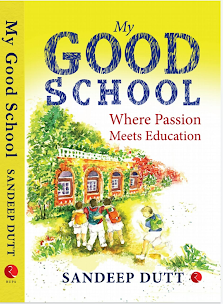
My Good School Where Passion Meets Education was published amid the pandemic by Rupa Publications 2021. This perhaps helped us all to look at a deeper understanding of a school, as the NEP 2022 has challenged the old style of teaching and learning. This book will help educators, school administrators and management and will change the future of learning.


A BOOK FOR ANYONE AND EVERYONE ASSOCIATED WITH SCHOOLS AND SCHOOLING.

The book is for parents to select the school for their child, as the choice can have a lifelong impact on the child's growth and personality.


A guide for you to look beyond that high-rise building and those perfectly manicured lawns—to go deeper in your search for your good school. It will encourage you to observe, question, evaluate, and choose a school that will truly prepare your child for a life beyond the campus, a life beyond theory.


This book will help educators, school administrators, and management build and rebuild such institutions and change the future of learning.


Enriched with the knowledge, experience and, most importantly, the wisdom of The Doon School alumnus and school improvement coach Sandeep Dutt, this book will encourage conversations around our education system and help shape the future of education.


"Sandeep is a passionate educator. He has dedicated his life to making the greatest impact on the greatest number of people." - William Nanda Bissell, Chairman of the Board, Fabindia.


"This book is almost like a conversation where a concerned parent, a well-intentioned teacher, and an entrepreneur who is aware of the reality of education today discuss everything from the what, the why and the how of teaching to what it will take to redefine education and learning." - Arvind Passey, Blogger and columnist The Education Post.


Listed in Top 10 Non-Fiction Bestsellers for 2021 by Booknerds.


Amazon lists the book in the top 100 non-fiction books.


At the Learning Forward India Foundation, passionate educators love to help schools deliver better, focusing on community learning programs for students and teachers to help take learning forward. You, too, can experience the joy of learning simply by enrolling at My Good School! #JoyOfLearning #HappyTeachers #MyGoodSchool Find out more at www.SchoolEducation.com

This post is courtesy the ScooNews Magazine, reproduced from page 122 of the August Sixth Anniversary Special Edition.

Blog Archive