Showing posts with label ready. Show all posts

Tuesday, July 14, 2026

Reading the World Before Facing It: Is Your Child Ready to Face the World?


Learning Forward Retreat, 14-16 July 2026, at the Fig Tree Cottage in Dehradun

We are delighted to host educators from Sunbeam Schools - Suncity, Bhawanpur, Lahartara and Varuna; and the Aasara Trust for an immersive learning experience. Discover more at www.LFIN.Academy.

Having seen many kids grow up in a residential educational setting. As an educator myself, I wonder whether we prepare our children only to score high marks or to face the world outside.

Is Your Child Ready to Face the World? by Dr Anupam Sibal gave me ample time to think about this subject.

The most important thing about this book was that it took us from academic excellence to character excellence in a refreshing way. In times when we measure success by marks and ranks alone, this book reminds us of the significance of humility, courage, compassion, gratitude, honesty, and forgiveness in life.

I was impressed by the chapter titled Humility because it showed that, regardless of how much we know, there is still more to learn and someone from whom we can learn. This helps us educators stay open to new thoughts and perspectives.

Handling Pressure is a particularly relevant topic in today’s world. It reinforced my belief that resilience and emotional well-being should be considered equally important as the quality of performance at school.

Among all the chapters, Making Mistakes and Accepting Flaws impressed me the most. We tend to teach our kids to aim for excellence, but it is rarely achieved that way. One learns by making mistakes, analysing them, and trying again.

Chapters on Compassion, Giving, and Making Others Happy made me realise that our ultimate goal as educators is not to make kids more knowledgeable and successful academically, but to make them better people. The intelligence will open many doors, but only your attitude towards other people will show how you use them. But I think the most important message the book conveyed to me was expressed in the chapters on Gratitude and Forgiveness. In a world where everyone tries to acquire something, gratitude shows how much we can appreciate what we have, and forgiveness frees us from hate and anger. As an educator, I understood that our ultimate goal is not just to teach children to pass exams, but also to prepare them for their lives and relationships with others.

If I were to summarise my learning from this book in one sentence, it would be:

The world does not merely need successful individuals; it needs compassionate, resilient, honest, and responsible human beings.

Reading this book has strengthened my belief that the real purpose of education is not simply to help children make a living, but to help them make a life.

And perhaps that is the true answer to the question the book asks:

Is our child ready to face the world?

The answer depends not only on what they know, but on who they become.

out preparing for life.

 - Deeba Naqvi, Apeksha Malviya and Anurag Khanna from Sunbeam Group of Educational Institutions, Varanasi, and Manisha Bhandari from the Aasara Trust at Dehradun.

Saturday, April 5, 2025

Back To The Future: Masterclass Saturday April 5, 2025


๐Ÿ“š Masterclass  ๐Ÿ“š
An insightful Masterclass Session where we delve into Chapters 23, 24 and 25, completing the last section of the book with a Deschool the Roadmap, and reading the reflections of Raj and Naga from Shomie Das The Man Who Saw Tomorrow by Naga Tummala

๐Ÿ“… Date: April 5, 2025
๐Ÿ•  Time: 5:30 - 6:15 PM
๐Ÿ“ Venue: The Teachers Academy

Partake in our engaging discussion to explore how we can rethink traditional education and create meaningful learning experiences. #LearningForwardIndia #BookDiscussion #ShomieDas #DeschoolTheRoadmap ๐Ÿš€

The questions:

Q1. Suppose traditional schooling were to be redesigned from the ground up. What would your ideal learning ecosystem look like—spaces, roles, routines, and relationships—that foster curiosity, collaboration, and academic growth?
(You may choose to illustrate your ideas by sketching your vision of the "Future Classroom.")

Q2. How can schools foster a culture where parents and teachers collaborate effectively to support a child's holistic development rather than just academic success?

Q3. How can schools integrate humanities subjects effectively into a predominantly science-oriented curriculum to ensure students develop a well-rounded understanding of the world?

Q4. As an educator, what teaching strategies would you use to balance structured instruction with experiential, self-directed learning while ensuring students still develop foundational academic skills?

Wednesday, August 10, 2022

SCOOREVIEW - My Good School, by ScooNews Aug 2022

Does your school empower every individual?
If you are at school, we help you experience the joy of learning; for those who did not enjoy school, it is essential to realise that learning is natural for the brain. Just as the heart keeps beating as long as we live, the brain keeps learning.

The book, podcast, app and much more!
At My Good School, children develop critical thinking and communication skills, preparing them to face the world. They experience values and virtues working with mentors and peers. #JoyOfLearning

Why should you join My Good School?

"Improves confidence in speaking, helps improve listening skills and reading fluency, teaches time management - balancing schoolwork and My Good School. JOL (Joy Of Learning) helps us in academics; we feel more confident while performing in a play or giving a speech. Everyone quickly finds the pleasure and joy of learning in an open, adaptable environment". - Rishona Chopra, Grade 6 Gyanshree School "I love being an intern at My Good School, which gives me a lot of opportunities to learn. I like making posters and writing blogs which helped me enhance my writing skills and creative skills. I learn about life values like compassion, giving, and never giving up hope. I enjoy meeting many interns from other schools, picking up other skills, and being mentored by teachers. As an intern, I can explore so many things which are helping me to find my strengths. I am thankful that I got this internship opportunity at 10".

- Arav Agarwal, Grade 6 Billabong Thane


My Good School is Phygital (physical plus digital), a marketing term that combines digital experiences with physical ones. The GSA member schools emphasise service, Skill, Sport and Study. We Focus on the 6 C's: 1 Critical thinking; 2 Creativity; 3 Collaboration; 4 Communication; 5 Character; and 6 Citizenship. The "My Good School" designation shows the school's value on professional learning and student achievement.


Sunday School!

Experience the joy of reading, listening to heartwarming stories and connecting with young people from schools worldwide —every Sunday in English and Hindi on Google Meet. The once-a-week school, 30 minutes open forum; 60 minutes English and 60 minutes Hindi, follow up on the Telegram App. The pure joy of learning, no compulsion to attend!

Joy Of Learning
The Joy Of Learning Program and the Sunday School is a much-loved innovation of the  Learning Forward India Foundation; the foundation also has a well-established Internship Program, Space Program, Well-being Program, Sports Program and a Happy Teachers Program.

Good Schools Alliance

Schools and stakeholders empower young people. Programs Partners and Members Schools collaborate for service, skill, sport and study; add value to the school curriculum and spread the joy of learning.

  • Empower every individual at your school

  • Encourages students to become involved in activities beyond just study; this helps develop confidence, knowledge and networks.

  • Experiential learning is a critical factor in progressing successfully through adolescence.

  • Education empowers students by creating an environment for their personal and social development.


The story of My Good School started with the need for a balanced curriculum that ensured diversity, inclusion and belonging for every child at The Fabindia School; the school emphasises a holistic approach to education, offering extensive extra-curricular programs along with comprehensive academic courses. Our focus on happy teachers and the joy of learning became a story in itself!


My Good School - the book, podcast, App and school - give us a reason to celebrate the joy of learning and help us look at learning from every child's perspective. Today, the learning process has become far more democratic, and the role of the teacher has evolved from one who provides knowledge to a person who co-creates learning for every individual, with the child at the epicentre. The philosophy of My Good School gained global recognition with the publication of the book.


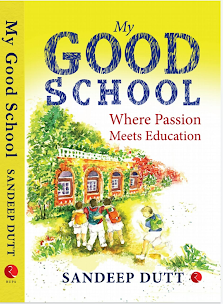
My Good School Where Passion Meets Education was published amid the pandemic by Rupa Publications 2021. This perhaps helped us all to look at a deeper understanding of a school, as the NEP 2022 has challenged the old style of teaching and learning. This book will help educators, school administrators and management and will change the future of learning.


A BOOK FOR ANYONE AND EVERYONE ASSOCIATED WITH SCHOOLS AND SCHOOLING.

The book is for parents to select the school for their child, as the choice can have a lifelong impact on the child's growth and personality.


A guide for you to look beyond that high-rise building and those perfectly manicured lawns—to go deeper in your search for your good school. It will encourage you to observe, question, evaluate, and choose a school that will truly prepare your child for a life beyond the campus, a life beyond theory.


This book will help educators, school administrators, and management build and rebuild such institutions and change the future of learning.


Enriched with the knowledge, experience and, most importantly, the wisdom of The Doon School alumnus and school improvement coach Sandeep Dutt, this book will encourage conversations around our education system and help shape the future of education.


"Sandeep is a passionate educator. He has dedicated his life to making the greatest impact on the greatest number of people." - William Nanda Bissell, Chairman of the Board, Fabindia.


"This book is almost like a conversation where a concerned parent, a well-intentioned teacher, and an entrepreneur who is aware of the reality of education today discuss everything from the what, the why and the how of teaching to what it will take to redefine education and learning." - Arvind Passey, Blogger and columnist The Education Post.


Listed in Top 10 Non-Fiction Bestsellers for 2021 by Booknerds.


Amazon lists the book in the top 100 non-fiction books.


At the Learning Forward India Foundation, passionate educators love to help schools deliver better, focusing on community learning programs for students and teachers to help take learning forward. You, too, can experience the joy of learning simply by enrolling at My Good School! #JoyOfLearning #HappyTeachers #MyGoodSchool Find out more at www.SchoolEducation.com

This post is courtesy the ScooNews Magazine, reproduced from page 122 of the August Sixth Anniversary Special Edition.

Sunday, March 13, 2022

Forgiveness - Sunita Mehta


The community reading program helps inspire you by reading and reflecting, sharing examples of where children and adults in real life are using values and is very useful to stimulate discussion and philosophical debate. The Joy Of Reading Program is only one part of our Life Skills Program - Reading, Speaking and Writing.

On Sunday mornings at 11.00 AM, you can join us for live reading sessions. Best you attend with a copy of the book and experience the Joy of Reading.  #ReadToLead 

Forgiveness Chapter 18, narrated by Sunita Mehta, Headmistress Gyanshree School Noida, India

Sunday, February 6, 2022

Giving - Sunita Mehta

Dr Anupam Sibal Through his experience as a father, paediatrician and Group Medical Director of Apollo Hospitals Group, Dr Anupam Sibal outlines his approach to effectively getting through to children and mastering the art of parenthood. Focusing on the different values and qualities that make a good person, Dr Sibal has a hands-on approach to instil each in a child. Is Your Child Ready To Face The World? Focusing on the different values and qualities that make a good person, Dr Sibal has a hands-on approach to instil each in a child. Exploring the crux of parenting, this book asks and answers whether your child is ready to face the world.

Abstract Dr Noella Pereira
Dr Anupam Sibal's book titled "Is Your Child Ready To Face The World?" is an inspirational compilation of important values that we need to teach our children. It instils in us the importance of imbibing these values ourselves before teaching them to our children. It emphasizes the need to be humble, compassionate, forgiving, honest, grateful, and most importantly being the change that we would like to see in others. Dr Sibal through his experiences as a paediatrician and father, masters the art of conveying each virtue to his son. This book teaches us lessons for life. A must-read for all individuals wishing to make a change in today's world.

18 Chapters: 1. Humility; 2. Beating The Odds; 3. It's Never Too Late; 4. Courage; 5. Handling Pressure; 6. Making Mistakes Accepting Flaws; 7. Be A Dreamer; 8. Finding Your Calling; 9. Compassion; 10. Making Others Happy; 11, Never Give Up Hope; 12. Determination; 13. Giving; 14. Be The Change; 15. Gratitude; 16. Goals; 17. Honesty; and 18. Forgiveness.


Giving
Chapter 13, narrated by Sunita Mehta, Headmistress Gyanshree School Noida, India

Monday, January 31, 2022

Determination - Mahvesh Zaidi


Is Your Child Ready To Face The World?
By Dr Anupam Sibal

Professional Learning Program (PLP)
Dr Anupam Sibal highlights the role of values in education and how the life skills program prepares educators and young people for the world.

The World Ready Professional Learning Program of Learning Forward India explores the Values that help every individual prepare for life. This program inspires you by using examples of where values are already being used by children and adults in real life and shares practical tools to stimulate discussion and philosophical debate. #WorldReady

You can buy a copy of the book "Is Your Child Ready To Face The World?

18 Chapters
1. Humility; 2. Beating The Odds; 3. It's Never Too Late; 4. Courage; 5. Handling Pressure; 6. Making Mistakes Accepting Flaws; 7. Be A Dreamer; 8. Finding Your Calling; 9. Compassion; 10. Making Others Happy; 11, Never Give Up Hope; 12. Determination; 13. Giving; 14. Be The Change; 15. Gratitude; 16. Goals; 17. Honesty; and 18. Forgiveness.

Saturday, January 15, 2022

Making Others Happy - narrated by Bharti Rao


Dr Anupam Sibal
Through his experience as a father, paediatrician and Group Medical Director of Apollo Hospitals Group, Dr Anupam Sibal outlines his approach to effectively getting through to children and mastering the art of parenthood. Focusing on the different values and qualities that make a good person, Dr Sibal has a hands-on approach to instil each in a child.

Is Your Child Ready To Face The World?
Focusing on the different values and qualities that make a good person, Dr Sibal has a hands-on approach to instil each in a child. Exploring the crux of parenting, this book asks and answers whether your child is ready to face the world.

Abstract
Dr Noella Pereira
Dr Anupam Sibal's book titled "Is Your Child Ready To Face The World?" is an inspirational compilation of important values that we need to teach our children. It instils in us the importance of imbibing these values ourselves before teaching them to our children. It emphasizes the need to be humble, compassionate, forgiving, honest, grateful, and most importantly being the change that we would like to see in others. Dr Sibal through his experiences as a paediatrician and father, masters the art of conveying each virtue to his son. This book teaches us lessons for life. A must-read for all individuals wishing to make a change in today's world.

18 Chapters: 1. Humility; 2. Beating The Odds; 3. It's Never Too Late; 4. Courage; 5. Handling Pressure; 6. Making Mistakes Accepting Flaws; 7. Be A Dreamer; 8. Finding Your Calling; 9. Compassion; 10. Making Others Happy; 11, Never Give Up Hope; 12. Determination; 13. Giving; 14. Be The Change; 15. Gratitude; 16. Goals; 17. Honesty; and 18. Forgiveness.

Making Others Happy
Chapter 10, narrated by Bharti Rao, Vice Principal at The Fabindia School Bali, Rajasthan, India.

---

Send in a voice message: https://anchor.fm/learningforward/message
Support this podcast: https://anchor.fm/learningforward/support

Sunday, September 8, 2019

The Value Of Values #22Values


The Value Of Values Program is an extended and profound learning experience that immerses members in a model of inquiry and problem-based learning. Staff members work collaboratively to gain knowledge to solve significant student learning problems in their schools. #22Values #HappyTeachers 
Your partner for school improvement

Monday, May 20, 2019

Is Your Child Ready To Face The World?

They say you can fail at anything, but not at parenting. And that’s true, to a degree because life is topsy turvy for most of us and nobody really seems to have found the perfect formula to hold it all together. But we got to try. There are no two ways about it.

Which is why this book–Is Your Child Ready To Face The World?– by Professor Anupam Sibal, Senior Pediatrician and Group Medical Director, Apollo Hospitals Group, seems all the more relevant, today. In this handy parenting Bible, he guides us through these troubled waters, with aplomb and elan.

A strict sermon? No.

An easy flowing conversation? Yes.

The first time I met Dr Sibal was many years ago, when I was a junior reporter in the features department of the Hindustan Times newspaper, Delhi. And while health was never one of my beats (it was largely glamour and lifestyle), I jumped at a chance to do something different.

Its been more than a decade since that article was published and in all the years that I have known him, I have always been struck by his extremely good manners and humility and the desire to help. This book exemplifies all that he is about, both as a person and as a professional.

Here, he reminds us of one of the basic tenets of parenting that we all know but usually sidelines such as talk to your child, listen to him/her and spends time with them. Despite his hands-on approach, he, however, never diminishes the important role of the mother in raising the child.

To know more, of course, you have to read his book that was first published in 2015 and went on to become a national bestseller.

While most parenting books sermonise and make us feel inadequate, this book not only tugged at my emotions but also inspired me to become a better parent the moment I started reading it. Simply, because it’s inspirational, aspirational and yet not so far fetched that we can’t do it. So, while we draw from the pool of resources that our parents bequeathed us with, it is more important to not get overwhelmed and trust your own instincts as you parent your child.

In a nutshell, these are the values I learnt. Be a friend. Listen. Guide. Encourage. Never impose your will; instead, create a want or a need in the child so that he or she will do all it requires to achieve goals; for it must be their dreams and not yours that they will work towards. Throughout the book, Dr Sibal talks about great personalities like Lincoln, Obama, Mother Teresa, Sachin Tendulkar and many more to drive home a point on his son’s young impressionable mind. He also uses his own personal examples and people around him to reinforce the values.

While, at many times, we feel that we are getting a peek into this very personal relationship as Dr Sibal, the father talks, guides and explains things to his son Devaang, we can also feel the many influences that have made him into such a successful person. The struggles are normal, one that every parent would identify with.

Getting inside a child's head is not easy but once they allow you in; you stay there and help them to take flight. Lead by example, not by words. Walk the talk is the motto; all made easy in the book in the form of 18 virtues that we need to inculcate.

And most importantly it’s never too late to create a bond. Never so late that you give up. Like Amitabh Bachchan, in his foreword says, “It is all about mindful parenting.”

Post Courtesy: Tashneem Ali & Dr Anupam Sibal
Is Your Child Ready to Face the World?
Author: Dr Anupam Sibal
Penguin Books (Rs 250)
The book is available at The English Book Depot. Order by email sales@ebd.in
Website: www.ebdbooks.com
Call Manish Chhetri on +91 135 2655192 for assistance

AUTHOR TALK

Q. Dr Sibal, do tell us about your growing up years…

A. I grew up in Srinagar, Jammu & Kashmir. My father served in the Indian Army and my mother is a homemaker. Being the only child, I have shared some great moments with my cousins and my childhood was filled with picnics, shikhara rides and outings.

My favourite memories, however, are having a great time each summer with a house full of guests from all over the country and abroad. With my mother, I could take a lot of liberties. With my father, I needed to be careful as he tried to instil a sense of discipline. Here, I would like to mention a couple of life lessons that my father taught me that shaped my thinking, “Never believe anything you hear about yourself unless it is said to your face’, ‘Always try to share others’ sorrows; sharing their joy is optional.’

Q. You cite a lot of examples of great men in the book….you are a voracious reader I presume. What advice would you give parents who don’t have such a store of information?

A. Children need to be interested in what a parent is trying to get across. To capture their imagination, one needs to weave a discussion that they would find exciting. One way to do this is to use examples of well-known people that the child might be interested in. Examples from history and incidents that a child might have witnessed can be used. The key is to structure the engagement around the child’s interest. Children are remarkably perceptive. Their eyes keenly observe, ears intently listen and minds keenly process what their environment has to offer. These experiences at a young age leave a lifelong impression.

This is something parents should never forget. Jim Hansen said so rightly, “They (your children) don’t remember what you try to teach them. They remember what you are.” As the child gets older a meaningful dialogue should commence instilling values. Movies, visits to museums, books, magazines, and numerous activities (sports, family outings) can provide the stage for this dialogue. And these days, with the internet at hand, a lot of information is just a click away.

Q. Was there any time when you felt you were failing as a parent?

A. Let me here quote from my book, “When it comes to being a father, it really doesn’t matter whether you are the CEO of a Fortune 500 corporation, a sports star, an army officer, an engineer, a farmer or an information technology professional. For your child, you are just a father. Nothing more, nothing less.” And yes, there were many moments when I felt I was failing as a parent. Finding time in a packed day is a challenge for every parent. I just needed to remind myself that I had to find the time. I needed to adapt and be flexible to generate extra time while doing everything else.

As I look back, I do have the satisfaction of having tried, despite my shortcomings; having tried to discharge my duty as a father to prepare him to face the world. As a doctor, with emergencies to handle, night calls, hospital rounds on holidays and Sundays, finding the time was not easy.

Q. A lot of parents I know, feel a lot of guilt at not doing enough. Parents of special needs kids, like myself who have to balance two kids with different sensibilities. What advice would you give us?

A. Parenting is always tough. The thought of shouldering the huge responsibility of parenthood can be daunting. Undoubtedly, it is more challenging when you are a parent of a child with special needs. We must however always remember that as parents we give a 100% and that’s what counts. Guilt has no role to play in parenting. And here I give some tips from my book.

Accept the fact that ‎when we are not perfect how can we expect our children to be perfect. We need to accept the mistakes our children make and their flaws with grace.
Don’t expect your child to live your dreams. Every child has his or her own dreams.
Understand what makes your child happy. Once you discover that, and you start doing things that make your child happy, the relationship will become very positive.

Q. Lastly, will there be a sequel to this book? Perhaps written by your son Devaang, as to what he felt about your extremely intelligent and friendly parenting style?

A. I like your idea. As of now, I am looking at the opportunities for getting the book translated into other languages. I have been giving talks in schools and speaking at educational conferences. I would like to interact with educationists as much as I can. The idea is to reach a large cross-section of parents to be able to make a small difference.

I have no idea if Devaang, my son, who is currently doing an MBA at Columbia Business School, New York, would like to write a book. I also do not know how he found my parenting style.

But if there’s something I can say, it is that my son and I are best friends for life.

Published by Tashneem Ali Journalist. A new writer of fiction. Blogger. Reader. Poet. Chef. Music lover. Photographer. Singer.

Dr Anupam Sibal and Sandeep Dutt are the mentors for the My Good School Program, they have the most wonderful association of Professional Learners who have worked together for over five years to help build the first of its kind Professional Learning Association in India. Visit the website www.LearningForward.Org.IN.

Tuesday, November 20, 2018

Lucy Crehans: Five Principles for High-Performing, Equitable Education Systems

Principle 1: Get Children Ready for Formal Learning
Enhance children's social and pre-academic skills through rich environments and playful learning before age six, rather than requiring specific academic outcomes from them.

Principle 2: Design Curricula Concepts for Mastery (Context for Motivation)
A good national/provincial curriculum should be:
Minimal - Focusing on fewer topics, but in greater depth.
High-level - Clear on what concepts and skills are required, without prescribing context or pedagogy.
Ordered - Organising concepts in a logical order, based on research into how children learn.

Principle 3: Support Children to Take On challenges, Rather than Making Concessions
Delay selecting children into different schools based on ability until age 15 or 16.
Teach children in a mixed ability classes until 15-16.
Provide small, flexible group support from qualified professional before/after lessons.

Principle 4: Treat Teachers as Professionals
Require prospective teacher to undergo a rigorous teacher training programme of at least a year, which is recognised by a professional body and includes the study of pedagogical content knowledge.
Ensure newly-qualified teachers have a reduced teaching load and time with a dedicated mentor who also has a reduced load. Encourage teachers to plan and evaluate lessons in small teams, so that all teacher are pedagogically supported and learn from one another.

Principle 5: Combine School Accountability with School Support (Rather Than Sanctions):
Monitor school performance at a local or national level using school-level data or irregular national assessments.
Make use of or create a network of successful former school leaders, to visit schools regularly and provide practicing school leaders with advice, support, and connections.
Incentivize demonstrably good teachers and middle leaders to work in struggling schools, and provide pedagogical leadership to other staff.

What top-performing systems understand is that when schools are underperforming it is often because of the teachers within them last the knowledge, expertise or capacity to make that change, and so they support them in whatever way is required to make the school better for the children.
- Clever Lands: Lucy Crehan
As a teacher in an inner-city school, Lucy Crehan was exasperated with ever-changing government policy claiming to be based on lessons from ‘top-performing’ education systems. She resolved to find out what was really going on in the classrooms of countries whose teenagers ranked top in the world in reading, maths and science.

Thursday, June 7, 2018

Hamani Singh: Is your child ready to face the world?

I have gone through the book " Is your child ready to face the world?" Written by Dr Anupam Sibal and the main theme that runs through the book is "how does one prepares his child to face various challenges of this crucial world". Talking about good and bad and giving him freedom to take the decision is one of the best way I feel. In today's time it's very difficult to communicate with a generation that does not have time to hear anyone.

Every chapter is explained with examples from the lives of people who started like small and went on to become great men and women.
As a mother i daily face challenges while dealing with my child. Through this book i got to learn that parenting essentially  needs upbringing your child from infancy to adulthood in such a way that their  emotional and intellectual development go hand in hand in a proper and balanced way.  However, it is easier said than done. 

The book is characterised by a smooth flow of thoughts, simple language with interesting  examples and inspirational thoughts. I feel this book is not only for parents but also for would be parents and non parents.

Himani Singh
Caring Icons
The Iconic School, Bhopal

Shivani Kanoongo: Is Your Child Ready To Face The World?

This inspiring book by Dr Anupam Sibal should be every parent's go-to in this world of advancement and technology. The children these days have become so sensitive that it has become a difficult task for people to be good parents. They hide behind the latest technology which makes conversing with them very difficult. A regular conversation between any two people is very important for a healthy relationship and a relationship as sensitive as that of a parent and his/her child is the most important one.

Dr Anupam Sibal with his hard work and with his great parent instinct has tried helping other parents who face issues with their children to see a new outlook to pursue them.

Being a mother myself I understand how important it is for your child to learn good values which is beautifully portrayed in this book and for this you have to become your child's friend. Your children should not feel targeted at any point in their life when you help them in growing. Dr Anupam Sibal has taken his own son to provide all of us with an example of his ideas, where he also became a part of his son Devaang's world of technology, which helped them to connect better.

It's always a two-way effort. In a relationship, people have to meet midway and the same has to be done with your children. Help your children to achieve their goals in their way while guiding them in choosing the correct path and following it with ease.

In the end, I would like to say that this book should be read by every parent and even young adults to become a part of their children's lives and understanding them better and building a very healthy relationship with them.

Shivani Kanoongo
Responsible Icons
The Iconic School, Bhopal

Wednesday, June 6, 2018

Kya apka baccha duniya Ka samna krne ko tyyar hai?

Please note the post is in Hinglish, a blend of Hindi and English, in particular, a variety of English used by speakers of Hindi, characterized by frequent use of Hindi vocabulary or constructions.

Dr. Sibal ki es kitab ko pad kr mai ne ye mahsus kiya ki ache mata pita banna ek kaushal hai, jo samay ke saath viksit hota hai. Aaj ki duniya mai bahutere electronic upkrno ke prbhaw ki wajh se bacchon pr dawab bahut bad jata hai esliye unke saath samwad krna aur taalmel bithalna behad mushkil ho jata hai. Aaj kl mata pita me liye ak hi waqt pr teen teen jimedariyan sambhalna mushkil ho gaya hai - roji roti kamana, pariwar ki dekhbhaal krna aur mandali se jude kaam krna. Eske bawzud maa pita waqt nikal kr apne bacchon ki madad kre. Jisse humare bacche apne sathiyon ka dawab, parikshaon aur pareshaniyo ka datkr mukabla kr sake.

Ek mata pita hone ke naate mai ye manti hu ki mitti ka dher dhikne mai kisi kaam ka nahi lagta, magar wahi mitti agar kisi hunarmand kumhar ke haath aa jae, to wah use dhal kr ak khubsurt bartan tyyar kr sakta hai, mata pita bhi bhi jub apne bacchon ke charitr ko dhal kr unhe Acha ensan banne mai madad dety hai, to samaj ko bahut fayda hota hai.

Jaese mitti ka bartan tyyar krna koi asan kaam nahi wese hi all bacche ki parwarish krke use ak bharosemand aur samjhdaar ensan banana bhi asan kaam nahi.

Aur ant mai yahi kahna chahungi ki aesa badlaw ettfak se nahi balki prayas se ata hai.
Thank you, 
Bhawna Sharma, Helpful Icon
The Iconic School, Bhopal

Friday, September 1, 2017

Making Our Students Future Ready

There is an ongoing debate within the Education Think Tank as how and what can make our students ready for the future. Our education system is still based on the models that worked in past.

In today’s fast and unpredictable world, it is not possible to list the type of jobs which will exist few years hence. What is relevant today might not be relevant 4-5 years from now. So, the big question all the stake holders and educators in schools, face today is how do we make sure our students are ready for the future in this ever-changing scenario.

With disrupting innovations like Uber, Air BnBs and much more it is not possible to prepare them for certain types of jobs. So, we as educators should make sure they have a certain skill set which will help them live, learn and work in this complex world.

  • Collaboration is something which is to my mind first. In today’s hyper connected world students can learn a lot by collaborating with each other across cities or countries as physical boundaries do not matter much. They gain a deeper insight into other places or culture; their day to day issues and challenges. To understand and navigate through the cultural nuances of other students is a great learning and teaches them to look at the bigger picture of solving global issues/problems. It is good for students to team up with other pupils beyond their comfort zones, forcing them to adjust in their thoughts and actions, in turn widening their own horizons.
  • Resilience teaches them to bounce back after making mistakes. The educators need to create a culture in their classrooms where failures are taken in a stride, as a part of the learning process. Once the students are not afraid to make mistakes, their learning takes a big leap giving them a high dose of confidence and self-esteem.
  • Teaching students to think helps them to develop critical thinking skills. It’s time we cultivate curious classrooms. In a typical classroom where the number of students is usually large, the teacher invariably does not like to answer too many questions coming from students. The reason usually is lack of time and sometimes lack of intent.  A sense of wonder is missing in our students. A good question forces us to think. Learning begins with a question! Using 5 W’s (who, what, where, why, when) and H(how) with any topic can make learning more meaningful and engaging.
  • Good communication skills can enable our students to convey their thoughts and ideas successfully beyond their classrooms. In the current scenario where social media plays a significant role, being able to communicate effectively to the right audience is the key. 
  • Being creative enables them to have fun while learning. Making connections to the real world and finding out of the box solutions enable our students to adapt easily to something unexpected. It allows them to be more flexible and open to learning.
I firmly believe that students with these range of skills and competencies will be able to navigate our ever-changing environment successfully. 
~ Jyoti Chaba is a Tech Enthusiast, Education Evangelist & Founding Partner, De Pedagogics. Her email id is Jyotichaba@hotmail.com

Friday, July 15, 2016

Is Your Child Ready To Face The World?

“Is your child ready to face the world?” by Anupam Sibal is an effective book not only from parent’s point of view but from teacher’s point of view also. This book has changed my thought process. On reading the whole book I felt that in order to imbibe qualities like humanity, courage, determination, making others happy etc. in our students, we should be ready to CHANGE and also help our students to change and most importantly in a POSITIVE WAY. 

It is very true that what we put into the minds of our children today is what they are going to give back to the world tomorrow. As a teacher we are responsible for how the child will influence the future of the world. Being a teacher while dealing with our students we should be humble and polite, so that our children can observe humility in their earlier stage as humility paves the way for other virtues. 

This book created a clear and beautiful picture about how to deal with student’s problems. We should teach our students to identify or observe those persons who have overcome challenges of life rather than to come with excuses. For doing this we should appreciate their good works and actions also. In today’s world when there is too much competition, we should not add more pressure on students rather we should help them to deal with it by creating friendly atmosphere with other students. If we do comparison or being judgmental we cannot build a strong teacher-student relationship. We should not impose our ideas on students. They should adopt the field in which they are interested and dreamed of. 

Although this book is written from the point of view of a father and teacher is also like parent to students. I have written my thoughts as a teacher that I learned from this book. Giving examples of real life situations is the best method to make the picture clear to students. I hope to give these virtues to my students, so that they become ready to face the world.

~ Payal Sharma, a teacher at the DBN Amarvilla School, Jammu
Email: psa.av@dbntrust.in

Tuesday, July 5, 2016

Is Your Child Ready To Face The World?

"The best teachers are those who show you where to look, but don't tell you what to see." 
~Alexandra K.Trenfor
A passionate teacher is to be someone in love with the field of knowledge, deeply stirred by issues and ideas that challenge our world, drawn to the dilemmas and potentials of the young children who come to class each day. 

Teachers must be passionate about their field of knowledge and issues facing the children. Teachers must create strong relationships with their students, respect, requirements and create a classroom environment that promotes interest, and provide students opportunities to take ownership of their learning. This can be cultivated by involving students in the design of collaborative projects that both requirements and address student interests and concerns. Teachers need to give students meaningful challenges in the classroom rather than rote or mechanical activities. A passionate teacher has a combination of essential qualities like being accountable, adaptable, caring, compassionate, cooperative, creative, dedicated, empathetic, determined, forgiving, generous, inspirational, fearless, organised, passionate, patient, resilient, resourceful, joyful, kind, trustworthy and a continuous learner. 
A great teacher communicates and networks with the students since that provides a natural support system to students who share similar passions. A passionate teacher can pull the best out of every student. 
A teacher must inspire them to become better students and optimise their time in the classroom. A passionate teacher takes an equal interest in all students and helps turn them into the best versions of themselves.A great teacher makes connections that will potentially last a lifetime. A teacher must understand that each student is different, and it is imperative to embrace those differences that often make them exceptional. A passionate teacher not only teaches students the required curriculum but essential life skills as well. They can take a variety of styles and mould them into their unique style to meet the needs of the students at any given time. 

Teachers should incorporate humour and storytelling in their lessons which will keep students interested in learning.A good teacher should show an interest in their students' lives outside of school, talk to them about their interests and extra-curricular activities that they participate in. One should be considerate while assigning homework .Think about the extracurricular activities occurring on that particular day and try not to overburden the students.

Go the extra mile, communicate with parents. Teachers must be innovative motivators capable of getting even the most reluctant learners to be successful. They should make goal setting a component of their instruction. Encourage ambitious students to set higher goals and help students that lack the confidence to set smaller obtainable goals that will build a foundation for success. Teachers provide character education. They must include character education within their curriculum. The teacher should lead this cause by example to the same character or principles that they work to instil in their students. In this way, a passionate teacher can make a child ready to face the world.     

"It is the supreme art of the teacher to awaken joy in creative expression and knowledge." Albert Einstein

A good teacher is like a candle: It consumes itself to light the way for others.

Is Your Child Ready To Face The World? - Dr Anupam Sibal
The book was recommended holiday reading for the school staff at DBN Schools in Jammu.
This review is written by Girja Koul and you may write to her by email gkl.av@dbntrust.in .

Tuesday, June 7, 2016

Beating The Odds

My Comments post reading the second chapter of the book 'Is your child ready to face the world?'  By Dr Anupam Sibal.

Beating the odds means creating the school with a soul. As an educator or teacher, we need to ask ourselves, why we became teachers? What do we want from our students?  Do we want them to be efficient test-takers or do we want them to be filled with the wonder of learning? An education for the child is complete when each child is provided with the tools to reach his or her full potential. As teachers, we are not accountable to the people but to the students or kids. Thus, we need to create a school with a soul. 

I mean a school with soul is one where all staff members work from their heart and keep the child at the centre of the curriculum. Our challenge is that we all must do our part. In my opinion, we can change our school, the challenge is to dedicate ourselves to creating soulful school but truly touch hearts and educate minds. Then we can say our child is ready to face the world. An effective teacher must have formal teacher training, hold some certification and hold high expectations for themselves and their students, dedicate extra time to instructional preparation and reflection, and see teaching as and art. Believe all students can succeed, help students make connections between community, nation, world and self. 

Teaching from the perspective of pulling knowledge out instead of 'pushing in knowledge'. There is the need for extended interaction beyond the classroom. Demonstrating a connect with all students, encouraging a community of learners, encouraging students to learn collaboratively, viewing knowledge critically, teaching content with passion, helping students develop necessary skills,  seeing excellence as complex but taking account of student diversity and differences. Frequent instruction in skills and strategies, masterful classroom management, positive classroom climate and activities that are appropriate, meaningfully and challenging. This will make the child ready to face the world.

- Girja Koul, is a teacher at the DBN Amarvilla School in Jammu, her email is gkl.av@dbntrust.in

Blog Archive