Showing posts with label self. Show all posts

Friday, May 2, 2025

How To Build Every Individual's Self-esteem

Brewing Knowledge Fridays (05/02/2025): Sandeep and Manisha discussed the importance of Friday sessions and Sandeep's book "My Good School," which celebrates children's strengths and achievements in education. They emphasised the need to shift from rote learning to more active and meaningful learning methods, stressing the importance of empowering students with critical thinking skills and life lessons. The discussion also covered the significance of self-dedication, collaboration, and contribution in education and the importance of building a professional culture in schools and preparing for upcoming reading sessions.

Next steps

• Minakshi to train teachers on meaningful learning, associative learning, and active learning techniques.

• Manisha will share the knowledge pyramid graphic with all participants in the WhatsApp group.

• All participants must type one word they absorbed from the session in the chat box.

• All participants must present their school names in the chat box.

• Manisha or Minakshi will insist that participants share what they learned from the WhatsApp Brewing Knowledge group session.

• All teachers should consider implementing rewards for identity discovery, collaboration, and contribution at their school's annual day.

Summary

Friday Sessions and "My Good School

Sandeep and Manisha discussed the importance of the Friday sessions and the significance of the book "My Good School" by Sandeep. Manisha emphasised that the book is close to their hearts and helps them connect with their experiences. Sandeep then began reading the chapter "Annual Day at School" from the book, explaining the method of reading and using a reading sheet. He also mentioned that the book is interconnected with his other writings and that the chapter they were reading was first published years ago.

Celebrating Children's Strengths and Achievements

Sandeep emphasised the importance of celebrating children's strengths and achievements, notably through annual events like the annual day at school. He highlighted the significance of showcasing creativity, connecting with the community, and building self-esteem in children. Sandeep also stressed the need to involve all stakeholders in these events, including parents and alumni. He suggested that schools should provide opportunities for children to excel in various areas, such as service, skill, study, and sport, and that these achievements should be recognised and celebrated.

Celebrating Children's Successes Throughout the Year

Sandeep discussed the importance of celebrating children's successes throughout the year, not just during events. He emphasised that every teacher should find a reason to celebrate one child each day. Minakshi expressed her school's enthusiasm for learning English, despite not fully understanding the content. Sandeep also mentioned the role of music in their activities.

Empowering Young Minds Through Knowledge

Sandeep discussed the importance of knowledge acquisition in education, emphasising the need to move beyond mere information sharing. He highlighted the need for a shift from rote learning to meaningful, associative, and active learning methods. Sandeep also stressed the importance of empowering young people with thinking abilities and life skills. He encouraged teachers to adopt these new learning methods and recognise the power of knowledge in shaping future generations.

Empowering Students Through Active Learning

Sandeep discussed the importance of individual growth and vision in education. He emphasised the need for schools to change and empower students to think analytically, rather than just processing data. Sandeep also highlighted the need for schools to move away from rote learning and towards more active learning. He used the example of the Fab India School to illustrate these points, noting that the school had faced resistance to efforts to improve teaching performance and was now moving towards more active learning.

Emphasising Self-Dedication and Collaborative Learning

Sandeep discussed the importance of self-dedication, collaboration, and contribution in education. He suggested that schools reward students for these qualities, rather than just academic achievements. Sandeep also emphasised the need for a structured learning program to help teachers become self-directed and collaborative learners. He highlighted the importance of building a professional culture in a school, which is a complex and slow process. Sandeep also stressed the significance of collaborative learning and knowledge assimilation, and encouraged thinking about life lessons and soft skills students should learn in school.

Upcoming Reading Session Discussion

Sandeep led a discussion on the upcoming reading session, scheduled for the 9th of May. He emphasised the importance of cross-referencing and asked for any questions about the reading material. Sandeep also encouraged participants to share their schools in the chat box to better understand the group's composition. The conversation ended with Sandeep asking participants to type a word they remembered from the session in the chat box.

AI-generated content may be inaccurate or misleading. Always check for accuracy.

Saturday, April 5, 2025

Back To The Future: Masterclass Saturday April 5, 2025


๐Ÿ“š Masterclass  ๐Ÿ“š
An insightful Masterclass Session where we delve into Chapters 23, 24 and 25, completing the last section of the book with a Deschool the Roadmap, and reading the reflections of Raj and Naga from Shomie Das The Man Who Saw Tomorrow by Naga Tummala

๐Ÿ“… Date: April 5, 2025
๐Ÿ•  Time: 5:30 - 6:15 PM
๐Ÿ“ Venue: The Teachers Academy

Partake in our engaging discussion to explore how we can rethink traditional education and create meaningful learning experiences. #LearningForwardIndia #BookDiscussion #ShomieDas #DeschoolTheRoadmap ๐Ÿš€

The questions:

Q1. Suppose traditional schooling were to be redesigned from the ground up. What would your ideal learning ecosystem look like—spaces, roles, routines, and relationships—that foster curiosity, collaboration, and academic growth?
(You may choose to illustrate your ideas by sketching your vision of the "Future Classroom.")

Q2. How can schools foster a culture where parents and teachers collaborate effectively to support a child's holistic development rather than just academic success?

Q3. How can schools integrate humanities subjects effectively into a predominantly science-oriented curriculum to ensure students develop a well-rounded understanding of the world?

Q4. As an educator, what teaching strategies would you use to balance structured instruction with experiential, self-directed learning while ensuring students still develop foundational academic skills?

Wednesday, May 3, 2023

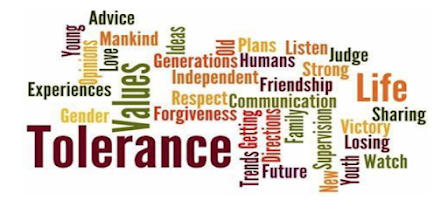
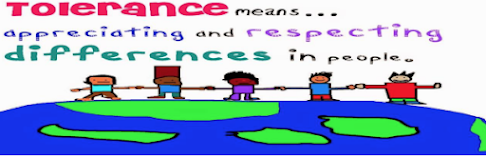
Happiness and Tolerance - Ashtalakshmi RPKM

Image copied from www.dreamstime.com

Dealing with hate and intolerance in the classroom is a crucial issue for teachers, as it can negatively impact the learning environment and the well-being of all students.

Teachers should establish clear expectations and guidelines for behaviour in the classroom, including a zero-tolerance policy for hate speech or discriminatory behaviour.  

Address incidents promptly: When an incident of hate or intolerance occurs, it's essential to address it promptly and directly with the students involved. This can be done privately or in front of the class, depending on the situation.

Encourage dialogue and understanding: Teachers should create a safe space for students to have open and respectful conversations about sensitive issues. Encouraging dialogue can build empathy and understanding among students.

Model respectful behaviour: Teachers should model respectful behaviour in the classroom and avoid making insensitive or discriminatory comments themselves.

Involve parents and school administrators: In severe incidents of hate or intolerance, it may be necessary to involve parents and school administrators to provide additional support and resources.

Addressing hate and intolerance in the classroom requires a proactive and ongoing effort from teachers, students, and the wider school community. By promoting respect and understanding and responding promptly and appropriately to incidents.


Once, I encountered an intolerant student who often showed verbally and physically abusive behaviour. My classroom's atmosphere was deteriorating because of him. He used to cry whenever I addressed his problem but would not say anything. He used to seek attention. Whatever the situation was, he wanted to be the talk of the class. From my experience, I suspected that he quest for validation and attention from everyone.

Upon meeting his mother, I got to know about his family's condition that his father is suffering from cancer, due to which he's often neglected by his family. He subconsciously chased attention so much that the consequences didn't matter. I started motivating him to give his best and made sure to constantly hear his heart out. Within a few days, he started showing improvement. So, there's always a reason behind everything, and we should pay more attention to the journey and how we can change someone's behaviour rather than just the outcome. The classroom should be a place where each student should feel safe and appreciated.

When talking to an agitated student:
  • Introduce yourself if you still need to learn the student.
  • Maintain a calm and reassuring voice. 
  • Speak calmly, but only do some of the talking. 
  • Allow the student to vent.
  • Ask questions; this shows that you are concerned. 
  • When asking questions, use the student's name.
  • Listen carefully to the student's concerns and take them seriously. 
  • Paraphrasing what the student says can help show that you are listening.
  • If emotions escalate, acknowledge them. "I can see that you're angry about the ..."
  • Maintain appropriate eye contact. 
  • A direct and uninterrupted stare may feel threatening to the student.
  • Be natural in your gestures and speaking tone.

Tolerance Requires Virtue
Tolerance, in and of itself, is not a virtue. If a student tolerates drinking and driving, his tolerance is not virtuous. Tolerance is neutral. Tolerance derives its value from what the student takes and how the student expresses his tolerance and intolerance. This involves character.

When a student uses a racial slur, his problem is not a lack of tolerance but a lack of kindness and a problem with pride (the root of belief in racial superiority). When a student makes fun of a classmate's point of view during a class discussion, his problem isn't a lack of tolerance but a lack of courtesy.

When one student spits on another student because he thinks his schoolmate is gay, tolerance isn't the issue so much as self-control. Proper tolerance is the outgrowth of moral character qualities such as kindness, patience, courtesy, humility, love, self-control, and courage. Even intolerance should be expressed through these qualities.

Students need to be taught that tolerance arises from character. If they don't understand this, they will think they are being tolerant when they are actually only expressing indifference ("whatever") or apathy ("who cares?"), or even recklessness ("Why not?"). Improperly taught "tolerance education" can disarm students of their proper convictions.

When students are happy, they are better able to solve problems, they are more open to critical thought and reasoning, their focus is more in tune, and their ability to retain and recall information is heightened. A happy child is likelier to be motivated at school, collaborate and build friendships with classmates, and troubleshoot and solve social and academic dilemmas. Biologically, happiness and other emotions are critical in cognitive functionality and processing.

Teachers need the knowledge to teach successfully in different areas, for example, feedback and praise, handling mistakes, student questions, and clearly structured lessons. Also, areas reducing anxiety, motivation, humour, and active learning time are essential for teachers.

Praise is most effective when it is sincere and natural. They should use appropriate gestures and actions to accompany them. Teachers should motivate the students so that the students are more likely to pay attention. To be respectful towards the children is also very important. To react positively to wrong answers is a way to teach simply. The relationship between students and their parents is necessary. Students like it when the teacher uses their names. The classroom climate is so important. Creating a positive classroom climate is why children like to go to school and want to learn.

Ashtalakshmi @ RPK School Moradabad
Ritu Goyal, Poonam Sharma, Meenakshi, Sonia Gupta, Tabinda Jabeen, Charu Sharma and Krishangi Sharma.

Thursday, March 17, 2022

On Education and Social Media

The meeting of education and social media has an immense value for teachers, especially as a resource for lesson ideas and connecting with like minds to share experiences. This has been especially true during the COVID-19 pandemic, as teachers have been able to share best practices about remote learning. However, like every part of the internet, it has its unproductive side.

When I dig too deep into Education Twitter, I mostly experience it the way I experience looking at a feed of people's perfect lives, children, pets, homes, and vacations. I'm left with the feeling there's no way I'd be able to live up to the standard I'm seeing. Or I just know in my gut there's more than meets the eye to what's being peddled in 140 characters or a carefully crafted image. These posts on teaching can also feel disorienting when I'm not clear if the motivation is to help teachers and students or to cultivate one's personal brand.

The emergence of "Edu-Twitter' can be as agitating as any other part of social media, and it never hurts to look from a distance or find balance in the way I am using it.

It is important for me to be clear-headed and constructive in my engagement with what's shared about teaching online. If I engage during times of stress, I am likely to see other teachers' posts through the lens of unhealthy comparison, envy, or criticism - three very unproductive emotions to carry back to my students.

Reflection: It's no secret that social media can be toxic, but its best attributes can be life- and world-changing in their ability to inspire the greater good. Today I will look for ways to participate in and draw from ongoing conversations about teaching in a way that I believe will benefit my students and me most.

For All You Do
Self-Care and Encouragement for Teachers
Peter Mishler

Saturday, February 12, 2022

Be The Change - Sunita Mehta


This episode has been published and can be heard everywhere your podcast is available.
My Good School presents Joy Of Reading.
The community reading program helps inspire you by reading and reflecting, sharing examples of where children and adults in real life are using values and is very useful to stimulate discussion and philosophical debate. The Joy Of Reading Program is only one part of our Life Skills Program - Reading, Speaking and Writing.
On Sunday mornings at 11.00 AM, you can join us for live reading sessions. Best you attend with a copy of the book and experience the Joy of Reading.  #ReadToLead
Post the session; the readers may want to reflect and share real-life experiences. Our blog www.JoyOfLearningDiaries.com helps them express themselves in writing, audio, video, graphic, poetry, or how they experience the joy of learning.
Dr Anupam Sibal Through his experience as a father, paediatrician and Group Medical Director of Apollo Hospitals Group, Dr Anupam Sibal outlines his approach to effectively getting through to children and mastering the art of parenthood. Focusing on the different values and qualities that make a good person, Dr Sibal has a hands-on approach to instil each in a child. Is Your Child Ready To Face The World? Focusing on the different values and qualities that make a good person, Dr Sibal has a hands-on approach to instil each in a child. Exploring the crux of parenting, this book asks and answers whether your child is ready to face the world.
Abstract by Dr Noella Pereira
Dr Anupam Sibal's book titled "Is Your Child Ready To Face The World?" is an inspirational compilation of essential values that we need to teach our children. It instils in us the importance of imbibing these values before introducing them to our children. It emphasizes the need to be humble, compassionate, forgiving, honest, grateful, and, most importantly, the change we would like to see in others. Through his experiences as a paediatrician and father, he masters the art of conveying each virtue to his son. This book teaches us lessons for life—a must-read for all individuals wishing to make a change in today's world.
18 Chapters
1. Humility; 2. Beating The Odds; 3. It's Never Too Late; 4. Courage; 5. Handling Pressure; 6. Making Mistakes Accepting Flaws; 7. Be A Dreamer; 8. Finding Your Calling; 9. Compassion; 10. Making Others Happy; 11, Never Give Up Hope; 12. Determination; 13. Giving; 14. Be The Change; 15. Gratitude; 16. Goals; 17. Honesty; and 18. Forgiveness.
Be The Change
Chapter 13, narrated by Sunita Mehta, Headmistress Gyanshree School Noida, India

Sunday, March 22, 2020

Rajeshree Shihag: Date with Self

Social interactions have its ups and downs and can impact self-esteem. But solitude has invaluable benefits.  Solitude gives us the opportunity to discover our self, it also allows you to recharge.

We live in a “go! go! go!” society. One that seems to have trouble slowing down. Fortunately, or unfortunately we have received this opportunity to rejuvenate and indulge in self-care activities.

Solitude Fosters Self-awareness and Self-care.

To experience solitude, set aside time, as if you were going on a date. If you can stay at home; maybe on Sunday, 22nd March and spend that day with yourself, that would be a great idea!

“A Date with Self”, let’s find solitude at home; express gratitude for yourself, your home, the people in your life. Make a list of your positive qualities. An exercise in solitude reveals to us treasures within us, treasures that can be uplifting and healing. 

A small list of things we can do for self-care:
·      Read
·      Draw/paint/colour
·      Paint your nails
·      Follow a Skin/ Haircare routine.
·      Cook or bake
·      Watch TV
·      Do yoga
·      Pick up a new hobby

Be alone. It’s good for you. You deserve to know yourself better. Don’t save these things for your downtime; instead, flag off Sunday, 22nd March as self-care day, “A date with the self”.

- Rajeshree is Principal at The Fabindia School

Thursday, April 11, 2019

Rajashree Rao: What is Your Value Worth?

“Try not to become a man of success, but a man of real value” It is my belief that success follows those who value not only themselves but others too for who they are. Never let someone who doesn’t know you tell you how much you are worth. I learnt something compelling today. I have been connecting with people with whom I thought I could explore potential collaboration/opportunities to work together. When I reached out to someone with excellent credentials and is supposedly working on the so-called hashtagsocialimpact of “Doing Good,” found in reality did not even live those words. I was asked to share my plans that are confidential to my upcoming venture. It was that moment I realised how everyone tries to value another individual. What they seem to have forgotten is to be “Good.” One needs to live the words that they preach to this world. Moreover, they should never treat others in the way they don’t want to be treated. It was then my preceptor’s words were ringing the bell, “Be your good self." It is easy said, than done. Living these lessons learnt and setting an example for others to follow is when you will truly learn to hashtagempathize with this world. hashtagWalktheTalk. “Your Value doesn’t decrease based on someone’s inability to see your Worth”

Rajashree Rao

ThoughtLeader |AI, Cloud, BlockC, IoT, IIoT, SmartCities, AV IStrategy/ConsultantILeadership
LinkedIN
hashtagRAJPEPTALKS

Sunday, December 30, 2018

Ajay Vijayvargi: Courage To Teach


Parker Palmer gives out a very strong message about the intricacies of the process of teaching for the teachers who are involved in the process of nation-building. Palmer advocates that a good teacher requires self-knowledge i.e. a sufficient and in-depth knowledge about the subject he/she ought to teach. This is because in the entire process of teaching and learning, it is the subject which is the most important part and both the teacher and the students are placed around it.

Palmer says that web-based learning should be introduced which connects the teacher, student and the subject in a more efficient manner rather than a top-down unidirectional model. The teacher should avoid the courage model and go for a fractional knowledge. The most important thing required is that education should be progressive and holistic. The teacher should aim to avoid the possibility of apparent differences between the methodology employed in teaching and the educational perspective and for achieving the best output a good teacher should look for ways to connect with student, subject and even colleagues because it is a powerful strategy to advance the entire learning process and a little effort in this direction can do great and insightful justice in the life of a teacher and the student equally.

More videos Courage to Teach - Videos of Parker Palmer
Ajay Vijayvargi, Dean Learning Forward at The Fabindia School, avi4fab@gmail.com

Friday, December 28, 2018

Learning Forward India Academy: Your PLP, Your Way!

Is the Learning Forward India (LFIN) Academy right for you?


The Academy is custom-built for each participant or team to match your needs. Are you ready to:
  • Construct knowledge and develop strategies to overcome challenges and improve educator practice?
  • Become the professional learning subject-matter expert for your organisation?
  • Implement professional learning in your environment that ultimately increases student achievement?
  • Engage fully during learning sessions and do the job-embedded homework?
  • If you answered yes to any of the above questions, Learning Forward's Academy is right for you.
Benefits to Academy participants
  • In India we share 3 years of learning with educators from around the world;
  • Experience 11-15 face-to-face, team-based learning days for in-depth instruction and to build relationships and foster community;
  • Attend the Learning Forward India Retreat and be inspired by, and network with, industry experts and peers;
  • Participate and collaborate by phone and virtually to extend learning and for continuous process improvement;
  • Receive ongoing support from an experienced coach who is also an Academy graduate;
  • Gain access to resources, relationships and real results with a complimentary Learning Forward membership for three years—to advance your professional learning journey; and
  • Celebrate successful completion with formal graduation at Learning Forward's Annual Retreat.
Connect with Sandeep Dutt, our School Coach 

Friday, January 26, 2018

Self Organised Learning Environments - SOLE


A MUST WATCH VIDEO - one peaceful hour!
The Future Of Learning Sugata Mitra
Published on Jan 17, 2018
Since the 1990s, experiments with children's education takes us through a series of startling results – children, in groups, can form 'self organising systems' that results in emergent learning, they can achieve educational objectives on their own, can read by themselves. Finally, the most startling of them all: Groups of children with access to the Internet can learn anything by themselves. The mechanism of this kind of learning seems similar to the appearance of spontaneous order, or 'emergent phenomena' in chaotic systems. 
From the slums of India, to the villages of India and Cambodia, to poor schools in Chile, Argentina, Uruguay, the USA and Italy, to the schools of Gateshead and the rich international schools of Washington and Hong Kong, Sugata's experimental results show a strange new future for learning. 
Using the 2013 TED Prize, he has built seven 'Schools in the Cloud', where Self Organized Learning Environments (SOLEs) and a 'Granny Cloud' of mediators over the Internet, interact with unsupervised children. The results of this three-year study are not yet fully analysed but Sugata will present some of the preliminary findings. 
We begin to see some glimpses of what schools should be for and what curricular, pedagogic and assessment changes will be required in the future.
Speaker:
Sugata Mitra
Professor and Principal Research Investigator at the School of Education, Communication and Language Sciences at Newcastle University, UK

Learning Forward...your partner for school improvement

Transforming professional learning, 
increasing educator capacity, 
and improved student achievement.
Better teaching
Stronger leadership
Improved systems

Blog Archive