Showing posts with label motivation. Show all posts

Friday, May 8, 2026

My Village, My Problem. And I Am The Solution

Read and Lead 
To read from Every Last Girl by Safeena Husain and discuss the Educate Girls campaign’s growth and strategy.

Key Takeaways

  • Volunteer Growth: Educate Girls’ volunteer force, “Team Balika,” grew from 140 in 2009 to over 1,000 in three years, defying scepticism from government officials and new recruits.

  • Intrinsic Motivation: Volunteers are driven by personal stories of educational struggle, adopting the motto “My Village, My Problem. And I Am The Solution.”

  • Movement Building: The campaign built a powerful movement by connecting volunteers, providing training, and fostering a shared identity, which transformed individuals into local leaders.

  • Strategic Pivot: A “geographical lottery” of out-of-school girls prompted a strategic pivot to data-driven targeting, moving from “carpet bombing” to focusing resources on high-need “hotspots.”

Topics

The “Geographical Lottery” & Strategic Pivot

  • Problem: A 2017 analysis revealed a “geographical lottery” in Jhadol Block, where a highway acted as a stark dividing line for girls’ education.

    • South Side: Villages had hundreds of out-of-school girls.

    • North Side: Villages had few to none.

  • Inefficiency: The “carpet bombing” approach wasted resources by deploying full programs in villages with no out-of-school girls.

  • Solution: A meeting with data expert Dr Neal Shah prompted a strategic pivot.

    • Goal: Use data to find high-need “hotspots” faster.

    • Rationale: The problem is uneven, requiring targeted intervention to maximise impact.

Team Balika: Growth & Motivation

  • Growth: The volunteer force grew rapidly, from 140 in 2009 to over 1,000 in three years, becoming an “army of gender champions.”

  • Scepticism: The growth defied naysayers, including a district education officer who claimed, “Nobody believed that the early success... would really be something we could deliver at scale.”

  • Motto: The volunteers’ shared experience led to the motto, “My Village, My Problem. And I Am The Solution.”

  • Personal Stories: The author’s own story—being saved from marriage by an aunt (“Aunt Mahe”) who championed her education—mirrored the volunteers’ motivations.

Volunteer Transformation & Movement Building

  • Personal Gains: Volunteering provided significant personal benefits for Team Balika members.

    • Anisha Kumari: Gained mobility and social interaction, escaping the “bat and broom” dichotomy.

    • Babu Lal: A housebound young man with a disability, found belonging and purpose.

    • Farzana: Transformed from shy to a respected leader, completing her 10th-grade exams after an 8-year gap specifically to join the team.

  • Movement Building: The campaign fostered a movement by connecting volunteers across villages.

    • Methods: Regular meetings, training, and a help desk.

    • Outcome: A strong sense of belonging and collective action.

    • Symbol: A simple logo (a girl with red pigtails) on uniforms became a badge of honour.

Next Steps

  • Group: Continue reading the book next Thursday.

  • Pushpita & Akanksha: Invite more students to the reading session.

  • Brinda: Explore contacting Educate Girls to express appreciation.

Saturday, January 3, 2026

Education Research and Teacher Professional Development

Learning Forward Saturday

To review education research and motivate teacher professional development.

Key Takeaways

Research-Backed CPD: The session drew on findings from a multi-partner study (Tata Trust, HP Foundation, etc.) to establish that continuous professional development (CPD) is a research-backed necessity, not merely a school mandate.

Classroom Gaps: The study identified key gaps: inactive print materials (73% of classrooms), rigid seating (73%), and limited use of home languages (9%), despite high teacher proficiency (73%).

Feedback & Differentiation: Teachers' current feedback is often superficial (e.g., "Good"), and differentiation is rare (30% of teachers). The research recommends targeted strategies like flexible grouping and scaffolded tasks.

Oral Language Focus: The study found that language teaching relies on rote copying. The group discussed shifting to open-ended questions that require inference and prediction to develop critical thinking.

Topics

Motivation for Professional Development

The session's goal was to shift the perception of Learning Forward Saturday from a mandatory event to a research-driven necessity for improving teaching.

The discussion focused on a study by partners including Tata Trust, HP Foundation, and Quality Education Support Trust to provide an evidence-based foundation for this work.

Classroom Environment & Interaction

Findings:

Print-rich materials are common but often at inaccessible heights.

Seating is rigid (73% in rows/columns), limiting interaction.

Student talk is minimal, with few opportunities for free conversation.

Home languages are rarely used (9% of teachers), hindering comprehension.

Recommendations:

Place print materials at eye-level and use them actively.

Adopt flexible seating to foster collaboration.

Strengthen teacher-child relationships to build student confidence.

Consistently use home languages to improve participation.

Discussion:

Brinda noted the NEP also recommends using mother tongue for clarity.

The group agreed immersive language exposure is more effective than translation.

Brinda shared a personal anecdote of a child learning four languages simultaneously through immersion.

Lesson Planning & Delivery

Findings:

Teachers rarely monitor work during tasks.

Feedback is superficial and lacks guidance for improvement.

Questioning is often whole-class, eliciting choral responses.

Differentiation is rare (used by only 30% of teachers).

Recommendations:

Use regular observation to identify errors and adjust instruction.

Provide specific, actionable feedback with clear steps for improvement.

Use varied checks for understanding (e.g., asking individuals to explain).

Implement targeted strategies like flexible grouping and scaffolded tasks.

Discussion:

Sunita shared a feedback system using "Good," "Very Good," and "Increase Effort" stamps.

Brinda stressed the need for clear instructions to prevent misunderstandings.

Manjula suggested seating struggling students at the front for more attention.

Brinda advised investigating the root cause of learning difficulties and challenging bright students to prevent boredom.

Neelashi suggested having students create puzzles to develop problem-solving skills and foster compassion.

Language Teaching Practices

Findings:

Oral language activities rarely use real-life experiences or open-ended questions.

Decoding instruction is unsystematic.

Independent reading lacks teacher guidance (only 18% of teachers provide it).

Writing tasks are mostly rote copying (blackboard/textbook).

Recommendations:

Connect oral language activities to familiar contexts.

Use open-ended questions to encourage prediction, inference, and deeper thinking.

Discussion:

The group defined open-ended questions as those with no single "right" answer, requiring students to explain their reasoning.

Minakshi gave an example: "Why do we need to study school?" vs. a closed question like "Is this right or wrong?"

Next Steps

Neelashi: Share the research document link with all teachers.

Neelashi: Schedule the next session to continue the discussion.

Minakshi: Share the "Kachua and Khargosh" (Tortoise and Hare) story video with the group.

Saturday, December 6, 2025

Understanding Learning Through Productive Failure - Ravi Prakash


Topic – Summary of the Chapter "Remaining Learning" from the Book Productive Failure by Manu Kapur

Introduction
The chapter "Remaining Learning" from Manu Kapur's book Productive Failure highlights that learning is not limited to memorising information. Instead, it is a complex process influenced by environment, experience, memory, prior knowledge, and the context in which learning is applied.

1. Learning and Memory
The chapter explains that human learning is deeply connected to the way our memory works.
We often forget things because our memory depends on retrieval—the ability to recall information when needed.

Forgetting, however, is not always negative.

Through retrieval practice—recalling information repeatedly—both memory strength and long-term retention improve.

Thus, forgetting can actually support learning when students practice recalling and applying what they have learned.

2. Role of Prior Knowledge
Another important idea in the chapter is the role of prior knowledge.
Sometimes we fail to understand new concepts because we lack the foundational knowledge required to connect or make sense of the latest information.
When there is no meaningful link between old knowledge and new learning, the learning remains incomplete.

This shows that understanding can only occur when new ideas build on what the learner already knows.

3. Importance of Context and Transfer
The chapter also highlights the concept of transfer—the ability to apply learned knowledge in new situations.

A transfer is successful only when the context in which learning takes place and that in which it is applied are similar.

If the learning and application environments differ too much, it becomes difficult for learners to apply what they have learned.
Therefore, learning must be connected to real-life or relatable situations to ensure successful transfer.

Conclusion
The "Remaining Learning" chapter emphasises that learning is a holistic process shaped by memory, retrieval practice, environment, prior knowledge, and context. It teaches us that effective learning is not about remembering everything, but about understanding how information connects, how it is applied, and how it is retained over time.

This chapter is extremely valuable for understanding the psychology of learning and for helping teachers design more meaningful learning experiences.

Topic – "Effect" from the Book Productive Failure by Manu Kapur

Introduction
The chapter titled "Effect," from Manu Kapur's book Productive Failure, explains the strong connection between human knowledge and the effect of that knowledge. The chapter emphasises that learning is not only a cognitive process but is also profoundly influenced by emotions, interest, motivation, and engagement.

1. Relationship Between Knowledge and Effect
The chapter highlights that knowledge and effect work as complementary factors in learning.
Mental processes such as thinking, memory, reasoning, and analysis become active while understanding any concept.

However, the depth and quality of learning depend strongly on emotional factors such as interest, desire, motivation, and engagement.

Thus, effective learning requires both cognitive and affective involvement.

2. Problem-Solving and the Cliffhanger Effect
The chapter explains that when individuals attempt to solve a problem, they try multiple strategies.
Often, they fail to reach the correct solution, creating a sense of incompleteness or a cliffhanger.
This sense of incompleteness increases curiosity and motivates the learner to try again.

This repeated effort leads to deeper and more meaningful learning, which is the core principle of Productive Failure.

3. Role of Interest, Emotion, and Motivation
Using examples from TV advertisements, the chapter shows that emotions and interest play a crucial role in attracting individuals to any task.

When a person performs an activity with genuine interest, enthusiasm, and motivation, their performance and learning outcomes improve significantly.

Conclusion
Chapter 5, "Effect," is highly valuable for understanding human behaviour, learning about psychology, and the process of problem-solving. It shows that learning is not just about gaining knowledge, but also about curiosity, motivation, emotional engagement, and repeated attempts. Productive Failure brings these elements together to foster deeper, more meaningful learning.

Topic – The Role of Awareness in Productive Failure

Introduction
Productive Failure is a learning design in which students are first encouraged to attempt challenging problems on their own before receiving instruction. This approach helps learners recognise the limitations of their existing knowledge and naturally prepares them for deeper learning. In his book, Manu Kapur highlights awareness as one of the most significant mechanisms of Productive Failure.

Concept of Awareness
According to the chapter, awareness is a state in which students realise that their current knowledge, understanding, or strategies are not sufficient to solve a given problem.

This realisation leads students to understand that they need to learn more, their existing strategies are incomplete, and they require guidance or additional information to move forward.

When students recognise they cannot fully solve the problem, it awakens a strong desire to learn, reflect, and seek new knowledge. This awareness prepares them to absorb the teacher's explanations more attentively and meaningfully.

Role of Awareness in the Teaching–Learning Process
Teachers can effectively leverage this awareness to create more profound, more meaningful learning experiences. For example, students are given complex problems to attempt on their own.

While struggling, they identify gaps in their understanding.

When the teacher later provides structured guidance, students understand and retain it much better.
This entire process promotes reflective thinking, analytical skills, and deep conceptual understanding.
Thus, learning becomes more lasting and meaningful rather than superficial.

Conclusion
In Productive Failure, awareness acts as a powerful mechanism that drives students toward genuine learning. Manu Kapur's emphasis on awareness shows that when students recognise their limitations, they become more motivated to learn and engage deeply with new ideas.

Awareness not only helps students understand what they do not know but also encourages them to actively seek knowledge and improve their thinking.

Submitted by:
Ravi Prakash
Sunbeam Gramin School

Sunday, November 30, 2025

The Importance of Regular Practice in Building Strong Concepts - A Study on Student Performance Improvement- Faizan Ahmad

Introduction

Regular practice is one of the most important habits that helps students build strong
concepts and improve their academic performance. When students practice regularly, they
develop a better understanding of topics, remember information longer, and become more
confident in solving problems. In this assignment, we will explore how regular practice
helps students learn better, what stops them from practising, and what methods work best
for improvement.

Background of the Study
In Indian schools, especially for Class 9 and Class 10 students preparing for board exams,
many students struggle with weak concepts and poor marks. A big reason for this is that
students do not practice enough during the learning process. They often wait until exams
are near before starting to study seriously. This habit creates stress and anxiety.
Students today face many distractions like mobile phones, social media, and games, which
take away their study time. Teachers and parents see that students who practice daily score
better marks and understand topics more clearly than those who study only before exams.
However, many students don't realise the true power of regular practice. They think
studying for long hours just before exams is enough.
But research shows that when students practice a little bit every day, they learn better and
remember longer. This method is called "spaced learning" or distributed practice. Students
who follow this method get better results in exams, feel less stressed, and develop a real
interest in the subjects they study.

What is Regular Practice and Why Does It Matter
Regular practice means studying and solving problems a little bit every day, not just
studying hard once or twice a week. It means doing homework on time, solving extra
questions, and reviewing what you learned in class regularly.
Regular practice matters because:
• It helps the brain store information in long-term memory
• It builds confidence when solving questions
• It reduces exam anxiety and stress
• It helps students find weak areas and improve them
• It improves thinking skills and problem-solving ability

How Regular Practice Helps Students Learn Better
When students practice regularly, many good things happen. First, practising the same
concept many times helps the brain understand it deeply. Second, when a student practices
daily, they spot their mistakes early and can correct them. Third, regular practice builds a
learning habit and makes studying feel normal, not boring. Finally, students who practice
daily often feel ready for exams and score better marks.
Teachers have noticed that students who solve practice questions every day perform much
better in exams compared to students who don't practice regularly. Regular practice also
helps students become faster in solving questions, which is very important in timed exams.

Common Problems That Stop Students from Practising
Several things stop students from practising regularly:
• Laziness and lack of motivation: Many students feel too lazy to study every day
• Too much distraction: Mobile phones and games take away study time
• Feeling bored: Solving the same type of questions feels boring to many students
• Lack of proper guidance: Some students don't know which questions to practice
• Pressure and fear: Some students fear making mistakes and avoid practice

Ways to Make Practice Better and More Effective
Here are some simple but powerful methods that help students practice better:
• Make a study schedule: Plan fixed times for study every day
• Start with easy questions: Begin with simpler questions and gradually move to
harder ones
• Keep mistakes in a notebook: Write down your mistakes to learn from them
• Take short breaks: Study for 25–30 minutes, then take a 5-minute break
• Practice different types of questions: Don't repeat only one type of question
• Ask teachers for help: When stuck, ask teachers instead of giving up
• Review what you learned: Read through your notes again after some days

[Results and Benefits of Regular Practice]
Students who follow the habit of regular practice see clear results. Their marks improve,
they understand concepts better, and they feel more confident. They also report feeling less
stressed during exams. Moreover, regular practice helps students develop good learning
habits that help them throughout their lives, not just in school.

Suggestions for Teachers and Parents
Teachers and parents can help students practice regularly by:
• Giving homework that is meaningful and not too much
• Praising students when they practice regularly
• Creating a study-friendly environment at home and school
• Helping students understand why practice is important
• Making practice sessions fun and interesting

Conclusion

In conclusion, regular practice is very important for learning and improving marks. When
students practice every day, even for a short time, they learn better, remember longer, and
feel more confident. By understanding the benefits of practice and removing the obstacles
that stop them, students can develop strong concepts and achieve better results. Regular
practice is not just about passing exams—it's about building a foundation for lifelong
learning.

By Faizan Ahmad
Sunbeam School Varuna

Thursday, October 16, 2025

Understanding Productive Failure: A Reflective Insight into Manu Kapur’s Concept - Faizan Ahmad

Introduction

The concept of Productive Failure, introduced by Dr Manu Kapur, emphasises how learning can be made deeper and more meaningful when students are allowed to struggle and explore solutions before being taught the correct ones. Instead of seeing failure as negative, this approach treats it as a valuable part of the learning process. The idea encourages learners to think critically, connect ideas, and build understanding through active engagement and reflection.

Literature Review

1. Productive Failure Defined: Productive Failure is a learning design where students first attempt to solve complex problems without direct instruction. Through this process, they generate different ideas and learn from their initial failures.

2. Theoretical Background: Kapur’s approach draws from constructivist theories, suggesting that knowledge is actively built by the learner. It aligns with Vygotsky’s idea of the “Zone of Proximal Development”, where struggle leads to growth.

3. Role of Failure in Learning: The key idea is that not all failures are harmful — when structured properly, they can enhance understanding and strengthen cognitive skills.

4. Teacher’s Role: The teacher guides students after their exploration phase by helping them consolidate concepts, correct misconceptions, and connect their ideas to the correct solution.

Hypotheses

5. Students who engage in productive struggle before receiving instruction develop a deeper conceptual understanding.

6. Failure, when guided and reflected upon, improves long-term retention and problem- solving ability.

7. Teacher scaffolding after exploration enhances conceptual clarity.

8. Classrooms encouraging curiosity and questioning result in better learner engagement.

9. Reflection on errors promotes metacognitive growth and self-regulated learning.

Research Methodology

10. Research Design: Classroom-based experimental approach, where students first explore

a problem before being given formal instruction.

11. Sample: Students from classes VIII to X were involved in guided problem-solving

activities.

12. Data Collection: Observations, written reflections, and short post-lesson assessments were used to measure conceptual understanding and student engagement.

Findings

13. Initial Struggle Leads to Deeper Thinking: Students initially found the tasks challenging,

but their discussions showed strong conceptual reasoning and creativity.

14. Reflection Consolidates Learning: When the correct solution was discussed after

exploration, students could connect their attempts with the final concept more

effectively.

15. Engagement and Collaboration Increased: Group problem-solving made students more

active and motivated to share their ideas.

16. Failure Became Positive: Students began to see mistakes not as setbacks but as stepping stones to understanding.

Implications

17. Promotes Active Learning: Teachers should create opportunities for exploration and struggle before direct teaching.

18. Redefines Failure: Failure should be presented as a constructive and essential part of learning.

19. Encourages Reflective Practice: Reflection sessions after problem-solving enhance understanding and self-awareness.

20. Supports 21st Century Skills: Builds critical thinking, collaboration, and resilience among students.

21. Teacher’s Role as a Facilitator: Teachers act as guides who design meaningful challenges and provide feedback at the right time.

Results

22. Learners who experienced productive failure developed stronger conceptual understanding.

23. Student motivation and participation improved noticeably.

24. The classroom environment became more open and inquiry-driven.

Conclusion

The concept of Productive Failure emphasises that meaningful learning often begins with confusion and struggle. When students are given the space to fail productively and later guided through reflection and discussion, they develop a deeper understanding, confidence, and resilience. This approach transforms both teaching and learning into a more dynamic, student-centred process.

References

Kapur, M. (2023). Productive Failure. New York: Wiley.
Vygotsky, L. S. (1978). Mind in Society: The Development of Higher Psychological Processes.
Harvard University Press.

By – Faizan Ahmad
Sunbeam School Varuna, Varanasi

Friday, September 5, 2025

The Lamps That Never Burn Out 🍵

Teachers are like candles—burning themselves so others can have light.

They guide, scold, inspire, and yes—nag a little too (all in the same period!).

And today, on Teacher’s Day, we celebrate that spirit—with flowers, speeches, and the occasional mysterious box of chocolates no one is quite sure about.

Some teachers truly shine. Their classes feel alive, their words echo for years, and their presence leaves footprints on our hearts, not just chalk dust on the board.

They are the ones who turn history into a story, maths into magic, and science into wonder. The ones who remind us that learning is not just about marks—but about curiosity, courage, and character.

It only takes one such teacher to change the course of a life.
We all remember “that one teacher” who believed in us before we believed in ourselves.

So today, when we say “Happy Teacher’s Day,” let’s mean it for all those who still dare to inspire, despite the system, the syllabus, and the stress.

Because education doesn’t thrive on numbers or ranks—it thrives on the spark of a few shining lamps who refuse to let their light go out.

To them, the true teachers, we owe more than words.
They don’t just teach lessons—they remind us how powerful one bright flame can be in a room full of shadows.

Happy Teacher’s Day. 🌟

With gratitude for the genuine lamps of learning,
Manisha Khanna
 ✨


Wednesday, January 15, 2025

Reflections from the 2024 Masterclass - Ankit Verma

What makes a school?
A school is more than just a building with classrooms; it's a place where dreams are nurtured, and personalities are shaped. In the context of the book Wanted Back Bencher and Last Ranker Teacher, a school is defined by its diverse students, each with unique strengths and challenges. The story highlights how a supportive teacher can turn the so-called "Back-Bencher" into a star, emphasizing the importance of encouragement and understanding in education. A genuine school is a space for growth, where students and teachers learn from each other, overcoming obstacles and celebrating achievements together.

War vs Peace 
A school is more than just a place for academic lessons; values are instilled, friendships are formed, and future leaders are shaped. In the context of the book Wanted Back Bencher and Last Ranker Teacher, a school is portrayed as a space where every student, regardless of rank or behaviour, has the potential to thrive. The story focuses on the transformative journey of a "Back-Bencher," often overlooked in a classroom, and how an understanding and patient teacher can spark a change. The teacher, who is willing to go beyond textbooks, believes in the unique capabilities of each student, fostering a sense of worth and belonging. This relationship is at the heart of what makes a school truly special. A school is not just about grades; it's about creating an environment where students feel valued, supported, and encouraged to reach their fullest potential.

Love Learning Vs Hate Learning 
Love and hatred towards learning can shape a student's school experience. When students love learning, they are excited to explore new subjects, ask questions, and engage in discussions. This enthusiasm fuels curiosity and helps them succeed academically. In contrast, when learning is hated, it feels like a chore. Negative experiences, like boring lessons or lack of encouragement, can lead to disengagement and low motivation. In a classroom, a teacher plays a vital role in nurturing the love for learning by making lessons interactive, relatable, and fun. Students who feel supported and inspired will likely embrace challenges and enjoy their educational journey. A school environment that fosters a love for learning helps students excel academically and equips them with the skills to continue learning beyond the classroom. A positive mindset makes all the difference in the world of education.

Affection vs Rejection 
Affection versus rejection plays a crucial role in shaping a student's experience in the classroom, as highlighted in the book Wanted Back Bencher and Last Ranker Teacher. Affection in a classroom environment creates a sense of belonging and motivation. Even struggling students feel valued and empowered to improve when teachers show care and encouragement. On the other hand, rejection—whether through neglect, harsh criticism, or indifference—can profoundly affect a student's self-esteem and willingness to participate. The story of the "Back-Bencher" and the "Last-Ranker" emphasizes how affection from a dedicated teacher can transform these students, helping them rise above their challenges. In a school, fostering an atmosphere of support and empathy is essential, as it encourages students to open up, engage, and develop their potential. Affection nurtures growth, while rejection stifles it, making a difference in a student's journey.


Ankit Verma 
Sunbeam School Varuna
Masterclass 2024 Cohort

Friday, September 27, 2024

Love Learning VS Hate Learning - Carol Henrick

Education is not the filling of a pail, but the lighting of a fire.

As a teacher, the experience of nurturing students’ minds can be both rewarding and challenging. One of the most significant aspects that impacts classroom dynamics and learning outcomes is the students' attitude towards learning—whether they love learning or hate learning. As educators, understanding and addressing these attitudes can transform the learning environment and foster better educational growth.

Students who love learning bring a positive energy into the classroom. Their curiosity is palpable, and they eagerly engage with new ideas, explore unfamiliar topics, and ask thoughtful questions.

From my experience, when students love learning, they take ownership of their education. These students are not just passive recipients of information but active participants in the learning process. They are more likely to persevere through challenges, show resilience when faced with difficult concepts, and apply critical thinking to problem solving.

For a teacher, fostering this love of learning is a key goal. It involves creating a classroom culture where curiosity is encouraged, mistakes are seen as learning opportunities, and individual achievements are celebrated.

On the other hand, some students come to the classroom with an aversion to learning. These students may have had past negative experiences, such as failure, embarrassment, or a lack of support, that have soured their view of education. When students hate learning, they may become disengaged, exhibit disruptive behavior, or put minimal effort into their work. From a teacher’s perspective, reaching these students requires patience, empathy, and creative strategies.

Students who hate learning, the challenge often stems from a sense of fear or frustration. They might feel overwhelmed by academic expectations, or they may not see the relevance of the subject matter to their own lives. As a teacher, the task is to break down these barriers by making learning feel approachable and meaningful.

Such students' find motivation when a teacher or mentor encourages them with positive feedback, making them feel successful in small steps. This builds confidence and turns frustration into enjoyment. Building strong teacher-student relationships can help these students shift their mindset from dread to curiosity.

As educators, we must acknowledge the diverse backgrounds students come from, which may influence their attitudes towards learning. Socioeconomic challenges, home life, peer pressure, and prior academic experiences, all play a role in shaping whether a student loves or hates learning. Recognizing these factors allows teachers to adapt their teaching strategies and support each student's unique needs.

The goal for every teacher is to cultivate an environment where all students feel valued, supported, and encouraged to grow.  Ultimately, the most fulfilling aspect of teaching is witnessing the transformation when a student who once hated learning begins to develop a sense of curiosity and excitement. It is a powerful reminder that with patience & understanding even the most reluctant learners can develop a love for learning.

As teachers, it is our duty to ensure that no student is left behind and that every learner is given the opportunity to find their own passion for knowledge.

“A successful teacher is one who can empathize with struggling students & willing to walk the extra mile to imbue in students the skill to ' scrap, survive and succeed'.

Ms. Carol Henrick
Sunbeam Suncity

Friday, July 26, 2024

Love Learning Vs Hate Learning - Suparba Roy Choudhary

Love Learning VS Hate Learning


Love Learning

Suppose that there is a student who enjoys learning as someone who tends to a well-grown garden. They get up in the morning with much zeal and water the plants, pull out the weeds and watch the flowers grow. This gardener chooses gardening to satisfy his/her activities, improve every season, and be happy when the garden grows.

Curiosity and Enthusiasm: Like a gardener waiting for a new flower to bloom the student has the curiosity and interest for new learning.

Growth Mindset: The gardener comprehends that not all the plants will grow right away and this implies the patience that a student has to embrace when facing the challenge.

Persistence: As a problem-solver, the gardener attempts to solve a specific problem, and even if he/she makes a mistake, he/she adjusts. Likewise the student, the action gets through difficulty and modifies its learning patterns.

Hate Learning

Now, let us imagine a student who does not like studying; he or she would be like a person who would be coerced into cleaning a room he or she has no interest in. They view it as a burden, feel fear towards it and offer the least effort in order to complete it. It is as if the room is never cleaned, and the task seems almost like a punishment. 

Lack of Motivation: Similar to the unwillingness to clean a room that the student doesn’t consider important, they do not feel any desire to learn the content.

Fixed Mindset: This person might think that their room will never remain clean, just like the student who perceives difficult tasks as threats rather than opportunities for improvement or success. 

Avoidance and Procrastination: Similarly to another behaviour where the person does not clean up until the last moment, the student puts off studying and ends up stressed and not comprehensively informed. 

Engagement: Autotelic learners are those students who embrace the material, contribute to the learning process, and look for more knowledge. Any person who does not love learning always withdraws and loses out on gaining more knowledge.

Achievement: Interest in learning is associated with better academic performance and overall job satisfaction. Basically, hate learning leads to poor performance and a negative perspective towards learning. 

Long-term Success: Passion for learning results in perpetual learners who are committed to enhancing their knowledge and personal growth. On the other hand, a non-interest or even disgust for education hinders individual and career advancement. 

In a nutshell, loving learning turns the pros & cons of education into a pleasant and rewarding experience, while hating learning makes it an unpleasant task.

Suparba Roy Choudhary 
Sunbeam School, Lahartara

Tuesday, October 10, 2023

Humility and Appreciation - Samridhi RPKM

When someone has humility, it means that they have a humble or modest view of themselves. In other words, they don’t think they’re the centre of the universe.

A famous quote about humility reads, “Humility is not denying your strengths, humility is being honest about your weaknesses.” Our students can do a self-reflection exercise on humility by journaling about their strengths, weaknesses, and humility.

We can give our students a lesson on intellectual humility. This humility type is the acknowledgement that you don’t know everything. Developing this type of humility can be especially important for our students who are constantly expanding their knowledge.

Be an example of humility: As in anything, our students will imitate our behaviour. The more we can live in a humble way, the more our students will absorb from us.

We can build our students up and teach them where their true value lies: most of the time, when students are looking for attention, it is because they are not receiving enough feedback or positive attention. The more that we can give them honest, positive feedback, the better. 

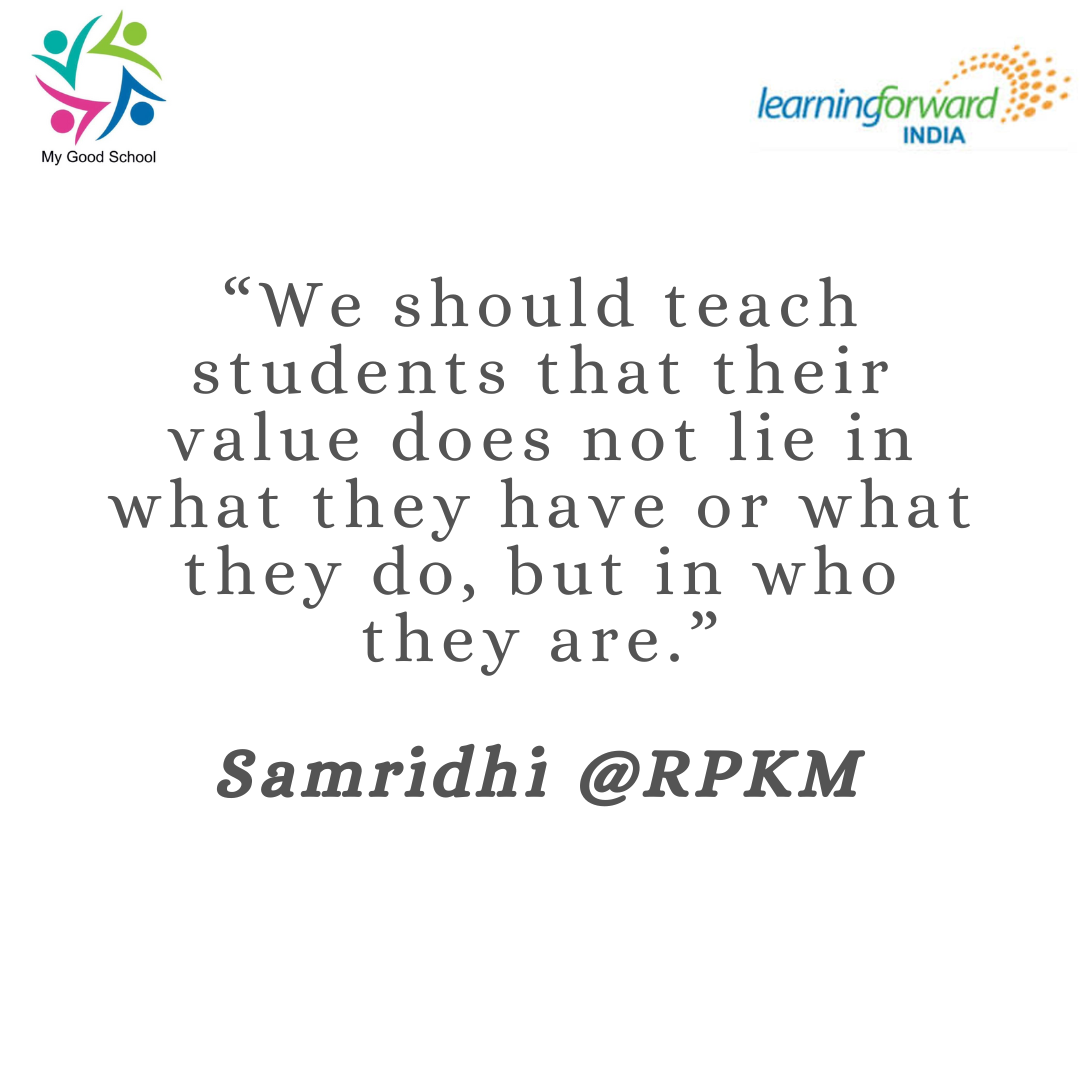
Also, teach them that their value does not lie in what they have or what they do, but in who they are. This way, we can teach our students the truth about themselves. Coach them on how to respond to praise. Just as we teach them to say “Please” and “Thank you,” we need to teach students the appropriate, humble response to praise. The more prepared they are, the more graciously they can respond.

Don’t confuse “humility” with “humiliation.” Try not to humiliate the students. Humiliation does not help, since it is something that can hurt a child rather than help teach the lesson of humility. If the students need correction, be sure to correct them, but in a way that is as loving, patient and personal as possible. This can help prevent the harm and resentment that intentional humiliation breeds.

We need to teach our students to serve. Among the many activities we do with our students are some that imply service. There are so many ways we can serve, and so many people that need simple acts of service: the poor, the elderly, family members, friends or classmates. If you are able to incorporate various “service projects” into your life, service will become a habitual behaviour for your students, and they will be more sensitive and open to the needs of others.

Appreciation is the act of recognizing and valuing someone's efforts, qualities, or achievements. In the classroom, it can be a powerful tool for fostering a positive learning environment and encouraging student growth. 

Here's how we can use it in the classroom:

  • Encourage Effort: Appreciate students for their hard work and perseverance, even if they haven't achieved perfect results. This motivates them to keep trying.
  • Recognize Achievements: Celebrate students' successes, both big and small. Acknowledge their accomplishments to boost their self-esteem.
  • Feedback: Provide specific and constructive feedback, highlighting what students did well. This reinforces positive behaviour and helps them understand their strengths.
  • Peer Appreciation: Encourage students to appreciate each other's contributions, creating a supportive and inclusive classroom atmosphere. Appreciation can have a significant positive impact on students in various ways:
  • Motivation: When students feel appreciated for their efforts and achievements, it can boost their motivation to excel academically and socially.
  • Self-esteem: Genuine appreciation can help students develop healthy self-esteem, as they learn to value themselves and their abilities.
  • Engagement: Students who receive recognition for their contributions tend to be more engaged in the learning process and are more likely to participate actively in class.
  • Confidence: Appreciation can build students' confidence in their abilities, making them more willing to take on challenges and persevere through difficulties.

Teachers play a crucial role in showing appreciation towards students. Here are ways in which teachers can effectively express appreciation:

  • Celebrating diversity: Recognize and appreciate the diverse backgrounds, experiences, and talents that each student brings to the classroom.
  • Positive reinforcement: Use positive reinforcement techniques to reward good behaviour and academic achievements.
  • Open communication: Keep the lines of communication open, allowing students to express their thoughts, concerns, and ideas freely.
  • Empathy: Show empathy and understanding towards students' challenges and difficulties, offering support and encouragement.
  • Surprise gestures: Occasionally, surprise students with small gestures of appreciation, such as handwritten notes or awards for outstanding performance.

By actively practising these strategies, teachers can create a classroom environment where students feel valued and appreciated, which can have a profound impact on their motivation, self-esteem, and overall learning experience.


Samridhi @ RPK Moradabad

Seema Kulshreshtha, Rakhi Gupta, Saraswati, Gurpreet, Meeta Gulati, Anju Gupta, Saloni.

Thursday, March 17, 2022

On Education and Social Media

The meeting of education and social media has an immense value for teachers, especially as a resource for lesson ideas and connecting with like minds to share experiences. This has been especially true during the COVID-19 pandemic, as teachers have been able to share best practices about remote learning. However, like every part of the internet, it has its unproductive side.

When I dig too deep into Education Twitter, I mostly experience it the way I experience looking at a feed of people's perfect lives, children, pets, homes, and vacations. I'm left with the feeling there's no way I'd be able to live up to the standard I'm seeing. Or I just know in my gut there's more than meets the eye to what's being peddled in 140 characters or a carefully crafted image. These posts on teaching can also feel disorienting when I'm not clear if the motivation is to help teachers and students or to cultivate one's personal brand.

The emergence of "Edu-Twitter' can be as agitating as any other part of social media, and it never hurts to look from a distance or find balance in the way I am using it.

It is important for me to be clear-headed and constructive in my engagement with what's shared about teaching online. If I engage during times of stress, I am likely to see other teachers' posts through the lens of unhealthy comparison, envy, or criticism - three very unproductive emotions to carry back to my students.

Reflection: It's no secret that social media can be toxic, but its best attributes can be life- and world-changing in their ability to inspire the greater good. Today I will look for ways to participate in and draw from ongoing conversations about teaching in a way that I believe will benefit my students and me most.

For All You Do
Self-Care and Encouragement for Teachers
Peter Mishler

Tuesday, July 27, 2021

Be Your Own Motivation - Monika Vaishnav

Do not give up in any situation,
Fight with it and be your own motivation.
Accept the truth, accept what you are,
Then you will gain confidence every hour.
Life is always full of opportunities,
Start your day with little activities.
Do not bother about what people say,
Do something that makes your day.
Value the life and make it meaningful,
Spread love and make it colourful.
Think positive, and you'll find something new,
Your view will be changed for what you already knew.
Live the life the way you want to live,
Give happiness how much you can give.
There will be sorrows, there will be frustration,
Handle things the way you could become an illustration.
Forget the past, forget what have you lost,
Or else your future has to pay the cost.
If you try, you will definitely see a ray of hope,
God never gives troubles without giving a scope.
Break the mental walls and do what you want,
It's your life; you can write it in any font.
Work on making the best version of yours,
It's only your willpower, no other cures.
Live the way, you can be an inspiration,
Listen to your heart and be your own motivation
- Monika Vaishnav
The Fabindia School
mvv@fabindiaschools.in


Monday, July 26, 2021

Be a Dreamer - Prakash Dangi

Everyone has a dream in his life which they want to achieve when they grow up. Some kids want to become rich to buy anything ande want to be a doctor, lawyer, or engineer. But only you know that for achieving these goals, you have to work hard and stay attentive to them. In this essay on my dream, we will discuss the basic things that will help achieve my dream.

Some dream requires time, and they follow a process without following it you cannot achieve that dream.

1. Staying Motivated
Lack of motivation is one of the main causes that force a person to leave his dream behind. So, staying motivated is also part of the goal. And if you can’t stay positive, then you won’t be able to achieve the dream. There are many people out there that quit the journey of their dreams mid-way because they lack motivation.

2. Keep Remembering Goal
For completing the dream, you have to keep your dream in mind. And remind this dream daily. There come hard times when you feel like quitting. At those times, just remember the goal. It helps you stay positive. And if you feel like you messed up big times, then start over with a fresh mind.

3. Take Some Breaks
Working towards your goal does not mean that you work day and night without stopping. Apart from that, due to continuous efforts, people soon start to become de-motivated. So, taking a break will help your body and mind. For doing so, take a break in between your schedule for some time and Take Some Breaks.

4. Don’t Hesitate to Make Mistakes
We human beings fear making mistakes but e forget an important point that is a mistake that that helps us learn. Whenever you make a mistake, you face a tough time, but these tough times helps you to polish yourself and be more determined.

Prakash Dangi
pda@fabindiaschools.in
The Fabindia School

Sunday, March 7, 2021

HOPE FOR THE BEST - Byju Joseph

Being human beings there are lots of dreams which we want to fulfil in our life. We want them to fulfil at the earliest. But in reality, sometimes we fail to achieve them yet there are so many opportunities. It is because of lack of attention and hard work. Former President of our country APJ Abdul Kalam says,
“Dream, Dream Dream, Dreams transform into thoughts and thoughts result in action.” We are thinking beings. So think more and then all possible ways will surely open for us and do work hard accordingly. Napoleon Bonaparte says, Nothing is impossible; there are ways that lead to everything, and if we had sufficient will we should always have sufficient means. It is often merely for an excuse that we say things are impossible.”

The very first thing is to believe and have patience for it. Everything has a perfect timing to happen. But before that we lose our hope, we doubt on ourselves and that is what it kills our belief at first hand. Never underestimate ourselves. We are always more than what we think. Everything lies within us, first we need to seek it within ourselves and we will find everything which is needed for us whether it is the strength, love, motivation, courage or the power. No one else could ever give us like we give it to ourselves.

There is nothing wrong in having high ambitions, along with that we must have a strong faith to achieve them. The power is always within us. We just have to realise and make use of it. It is true that our thinking makes our reality. So always try to find something positive in everything, we need to focus on the brighter side and then the negativity will blur out. Hope for the best and work for the best.

BYJU JOSEPH
The Fabindia School
bjh@fabindiaschools.in

Blog Archive