Showing posts with label group. Show all posts

Friday, July 17, 2026

The Retreat was a treat!


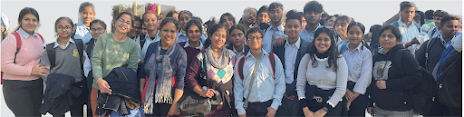
Over three days of The Learning Forward Retreat, I had the opportunity to spend time with teachers and educators from different schools from different backgrounds and experiences, we were brought together by three simple ideas 3Rs

Reading, Reflection, and Relationships

Our journey began with reading the book, Is Your Child Ready to Face the World? during the YES Workshop, we explored chapters on humility, honesty, goals and other values. Every teacher had a different story to tell and reflected on their years of teaching and listening to these experiences made me realise that a book is never read in the same way by two people as they had their teaching reflections, and i had reflections from my student life, The discussions encouraged me to pause and ask questions like, do my actions match my values?

Coming to the second day, it was dedicated to reflection where we all worked together to create flip charts based on our learning from the book and being together, it may sound like a simple activity, but what stood out to me was seeing teachers become students again. We spent time deciding how to present our ideas, discussing colours, drawings, words, and layouts.

I had fun watching experienced educators carefully sketching, colouring, and debating which illustration would best match a sentence. It reminded me that creativity doesn't belong only to children, sometimes adults just need the opportunity to use it again. We listened to one another, and built on each other's ideas. We didn’t do reflection alone but together.

The final day was about relationships, we visited Aasraa Trust, a shelter home for underprivileged children. It was a chance to connect with people whose lives are very different from ours. Spending time with the children reminded me that everyone carries struggles we cannot immediately see yet despite those challenges, they welcomed us with warmth, curiosity and joy.

The retreat also helped me build relationships with the educators around me. Whether it was chatting over lunch, exchanging ideas after a session, and thats how every conversation added a new perspective and every person had something valuable to teach.

As I look back on these three days, I realise that the three Rs are deeply connected. Reading opened my mind,  reflection helped me understand what I had learned, and relationships gave those lessons a human meaning.

- Sneha, The English Book Depot

Sunday, June 21, 2026

Copy or Not to Copy & Fear vs Courage

 Learning Forward Saturday

Continue reading “Wanted Back-bencher and Last-ranker Teacher” and discuss its themes.

Key Takeaways

  • Roma’s Strategy: To motivate her difficult class for a presentation, Roma shared her own past struggles with stage fright and low confidence. This humanised her, building trust and showing that overcoming fear is possible.

  • Cheating Dilemma: A student’s detailed advice on how to cheat effectively prompted a discussion on integrity, highlighted by Roma’s decision to refuse a leaked exam paper in high school.

  • Public Speaking as a Skill: Roma reframed the upcoming assembly as a crucial opportunity to develop critical thinking, verbal skills, and confidence, directly addressing students’ anxieties.

  • The “Air Hostess” Experiment: To cure her stage fright, Roma applied for an air hostess job. She passed the interview by mastering facts, proving that deep knowledge, not a memorised script, is the key to confident communication.

Topics

Context: “Wanted Back-bencher and Last-ranker Teacher” by Kavita Ghosh

  • The group is reading a book about Roma, an unconventional teacher who joined the profession for a certification, not by choice.

  • The book’s title comes from a school advertisement, reflecting Roma’s non-traditional background.

Chapter: To Copy or Not to Copy

  • During exams, students asked if Roma ever cheated.

  • Roma admitted to being caught once, prompting a student (Jeevan) to offer detailed advice on how to cheat effectively.

  • The Dilemma: Roma’s best friend, Rubina, offered her a leaked Class 12 board exam paper.

  • The Decision: Roma refused to look at the paper, choosing integrity over a guaranteed high score.

  • The Outcome: She never regretted the decision, finding deep satisfaction in earning her marks honestly.

  • Invigilation Tactic: Roma used a non-confrontational approach during an exam, returning dropped papers to students without accusation.

    • Rationale: This gave students the “benefit of the doubt” while subtly signalling she was aware of their attempts to cheat.

Chapter: Fear vs Courage

  • Staff Room Discussion: A colleague (Sumita) expressed doubt that Roma’s difficult class could deliver a successful assembly presentation.

    • Topic: “A Leader knows the Way, Goes the Way, and Shows the Way” (John C. Maxwell).

  • Student Anxiety: Roma’s students were anxious, recalling a “disastrous” presentation last year that left them feeling ridiculed and humiliated.

  • Roma’s Framing: Roma reframed public speaking as a vital life skill for:

    • Developing critical thinking

    • Fine-tuning verbal and non-verbal skills

    • Overcoming stage fright

  • Roma’s Personal Story: To build trust, Roma shared her own history of stage fright.

    • The Failure: At 15, she froze during an inter-school debate, unable to recall her prepared speech.

    • The Experiment: To overcome this, she applied for an air hostess job.

      • Method: She mastered all facts about the airline and aviation industry.

      • Result: She passed the interview, proving that deep knowledge, not a memorised script, builds confidence.

    • The Insight: Public speaking is about connecting with people using relevant information, not just delivering a speech.

  • Arctic Air Interview: Roma later faced a group discussion (GD) for a corporate internship.

    • Topic: “Women deprive men of jobs.”

    • Challenge: She had to navigate a competitive environment with 35 other applicants, including university debaters.

Next Steps

  • Participants: Reflect on personal experiences with public speaking or integrity and share them with the group.

  • Group: Meet next Saturday at the same time to continue reading.

  • Group: Note the time change for the session after schools reopen in July.

Saturday, May 9, 2026

Understanding the Teen Brain

Learning Forward Saturday

Discussing effective strategies for managing adolescent peer pressure and behaviour. Reading from the book Wanted Back-bencher and Last-ranker Teacher by Kavita Ghosh.

Key Takeaways

  • Redirect Peer Influence: The goal is to redirect peer influence toward positive outcomes, not to eliminate it. This leverages the group dynamic as a powerful tool for good.

  • Build Trust: A teacher’s trust is a more powerful motivator than punishment. Students will protect a trusted teacher from disappointment, creating a stronger foundation for discipline.

  • Understand the Teen Brain: Teenagers are hardwired for risk-taking. Their logical reasoning develops by age 15, but impulse control and resistance to peer pressure don’t mature until age 25.

  • Use “Gentle but Firm” Tactics: Effective discipline requires firmness without anger. Teacher Roma’s strategy of linking a class privilege (the football match) to the task of finding a hidden shoe successfully unified the group in resolving an issue.

Topics

The Problem: Adolescent Peer Dynamics

  • Social Grouping: By 9th grade, students form defined groups for survival, as isolation makes them targets for bullying.

    • Nerds: Academic students.

    • Cool Kids: Popular students.

    • Goons/Troublemakers: Instigate mischief but also protect their group.

  • Vulnerability of Isolated Students: Students outside a group are blamed for everything, excluded from activities, and lack support.

    • Example: Ankush, a shy student, was bullied and excluded from group projects.

  • Peer Loyalty & Fear: Students protect group members from consequences, fearing retribution if they inform on others.

    • Example: Shreyas shielded his attackers (Romy, Jeevan, Ajit) after being dragged by the neck.

The Solution: Teacher Roma’s Approach

  • Context: Roma’s class was delaying a football match to hide a shoe Romy had hidden after pouring water on it.

  • Strategy: Roma used the class’s desire to watch the match as leverage.

    • Tactic: She refused to let the class leave until the shoe was found, threatening to make them study British rule instead.

    • Outcome: The class, including the goalkeeper, unified to find the shoe and identify Antony as the culprit.

  • Principle: This demonstrates “gentle but firm” discipline, using leverage to redirect group energy toward a positive resolution.

The Rationale: Understanding the Teen Brain

  • Context: A parent meeting was held after four students (Jeevan, Ajit, Shreyas, and Antony) were caught at a hookah bar.

  • Scientific Explanation (from Uttara):

    • Source: Lorenz Tainberg’s Risk-Taking in Adolescence.

    • Finding: Teenagers are hardwired for risk-taking because their brains are still developing.

      • Logical reasoning → matures by age 15.

      • Impulse control & peer resistance → mature by age 25.

    • Implication: The brain’s emotion-regulating area becomes more sensitive during puberty, reducing risk analysis.

  • Conclusion: Punishment is ineffective. The solution is open dialogue and counselling to build adult relationships.

The Outcome: The Power of Trust

  • Key Insight: Jeevan’s father revealed his son’s first concern was that Roma would be “let down.”

  • Significance: This shows that Roma had built a relationship of trust in which students feared disappointing her more than punishment.

  • Principle: This trust is the bedrock of effective discipline, enabling teachers to guide students toward positive behaviour.

Next Steps

FATHOM AI-generated notes.

Saturday, January 3, 2026

Education Research and Teacher Professional Development

Learning Forward Saturday

To review education research and motivate teacher professional development.

Key Takeaways

Research-Backed CPD: The session drew on findings from a multi-partner study (Tata Trust, HP Foundation, etc.) to establish that continuous professional development (CPD) is a research-backed necessity, not merely a school mandate.

Classroom Gaps: The study identified key gaps: inactive print materials (73% of classrooms), rigid seating (73%), and limited use of home languages (9%), despite high teacher proficiency (73%).

Feedback & Differentiation: Teachers' current feedback is often superficial (e.g., "Good"), and differentiation is rare (30% of teachers). The research recommends targeted strategies like flexible grouping and scaffolded tasks.

Oral Language Focus: The study found that language teaching relies on rote copying. The group discussed shifting to open-ended questions that require inference and prediction to develop critical thinking.

Topics

Motivation for Professional Development

The session's goal was to shift the perception of Learning Forward Saturday from a mandatory event to a research-driven necessity for improving teaching.

The discussion focused on a study by partners including Tata Trust, HP Foundation, and Quality Education Support Trust to provide an evidence-based foundation for this work.

Classroom Environment & Interaction

Findings:

Print-rich materials are common but often at inaccessible heights.

Seating is rigid (73% in rows/columns), limiting interaction.

Student talk is minimal, with few opportunities for free conversation.

Home languages are rarely used (9% of teachers), hindering comprehension.

Recommendations:

Place print materials at eye-level and use them actively.

Adopt flexible seating to foster collaboration.

Strengthen teacher-child relationships to build student confidence.

Consistently use home languages to improve participation.

Discussion:

Brinda noted the NEP also recommends using mother tongue for clarity.

The group agreed immersive language exposure is more effective than translation.

Brinda shared a personal anecdote of a child learning four languages simultaneously through immersion.

Lesson Planning & Delivery

Findings:

Teachers rarely monitor work during tasks.

Feedback is superficial and lacks guidance for improvement.

Questioning is often whole-class, eliciting choral responses.

Differentiation is rare (used by only 30% of teachers).

Recommendations:

Use regular observation to identify errors and adjust instruction.

Provide specific, actionable feedback with clear steps for improvement.

Use varied checks for understanding (e.g., asking individuals to explain).

Implement targeted strategies like flexible grouping and scaffolded tasks.

Discussion:

Sunita shared a feedback system using "Good," "Very Good," and "Increase Effort" stamps.

Brinda stressed the need for clear instructions to prevent misunderstandings.

Manjula suggested seating struggling students at the front for more attention.

Brinda advised investigating the root cause of learning difficulties and challenging bright students to prevent boredom.

Neelashi suggested having students create puzzles to develop problem-solving skills and foster compassion.

Language Teaching Practices

Findings:

Oral language activities rarely use real-life experiences or open-ended questions.

Decoding instruction is unsystematic.

Independent reading lacks teacher guidance (only 18% of teachers provide it).

Writing tasks are mostly rote copying (blackboard/textbook).

Recommendations:

Connect oral language activities to familiar contexts.

Use open-ended questions to encourage prediction, inference, and deeper thinking.

Discussion:

The group defined open-ended questions as those with no single "right" answer, requiring students to explain their reasoning.

Minakshi gave an example: "Why do we need to study school?" vs. a closed question like "Is this right or wrong?"

Next Steps

Neelashi: Share the research document link with all teachers.

Neelashi: Schedule the next session to continue the discussion.

Minakshi: Share the "Kachua and Khargosh" (Tortoise and Hare) story video with the group.

Saturday, May 17, 2025

The Solution: Productive Failure


In a Masterclass Session with Sandeep Dutt, we will explore a transformative approach to teaching and learning from Manu Kapur's acclaimed book Productive Failure. Can failure be intentionally designed to deepen understanding and promote transfer? We discuss the chapter "The Solution: Productive Failure," highlighting how allowing learners to struggle meaningfully before instruction can activate deeper learning pathways and foster long-term retention. Sandeep read about Productive Failure and its implications for learning, challenging traditional direct instruction methods. He then read the book by Dr Manu Kapur. He shared his research and thought experiments, demonstrating how allowing learners to explore and struggle with problems can lead to deeper understanding and creativity. The session concluded with discussions on paradigm shifts in education, the importance of well-designed issues, and the potential for discovery learning to enhance students' capabilities beyond their initial expectations.

Thursday, July 4, 2024

Report: Impact of The Teacher's Academy July 2024


The Teacher's Academy is dedicated to helping everyone unlock their full potential. Our comprehensive online program offers personalised coaching and top-notch mentorship to help you reach your goals. With customised learning programs and a special offer of Rs 25,000 per annum for your school's Whole Faculty Study Group, we make success easily attainable. Our user-friendly platform and experienced instructors are committed to helping you advance your career, acquire new skills, or explore different subjects.

Masterclass every Saturday

Saturday at 5.30 PM, thirty minutes on Google Meet! For an annual fee of Rs 2500/- per head, individuals acquire access to valuable insights and techniques that will take their teaching skills to the next level. Join us and see the results for yourself!

Here are the key points about the impact of The Teacher's Academy (formerly LFIN Academy by Learning Forward India), as per research done by Otter AI:


The Teacher's Academy is a professional development program for teachers run by the Learning Forward India Foundation. Its goal is to help teachers improve professionally and personally, leading to greater happiness and better learning outcomes.


  • The program focuses on core skills like reading, reflection, and relationship building. The World Bank education group recognised it as a top global innovation.

  • Over the years, hundreds of teachers have participated in The Teacher's Academy program. Pre-pandemic, it was run in-person and then shifted online during COVID. It continues to run weekly sessions on Saturdays.

  • Teacher's Academy aims to help teachers cover the 50 hours of professional development required by India's National Education Policy. The program includes reading, assignments, reflection, and relationship building.  

  • Participating teachers have improved their skills and capacities, and student achievement has also increased due to teacher participation in the program.

  • The Teacher's Academy has increased happiness among teachers and students and helped create positive school cultures and environments.

  • The Teacher's Academy has demonstrated that focusing on teacher development empowers and supports teachers, leading to better student learning outcomes and experiences.


In summary, The Teacher's Academy has significantly improved teacher skills and capacities through professional development, leading to better school cultures and increased student achievement. Its innovative model has been globally recognised.

The Teacher's Academy has helped improve teacher skills and capacities:


  • Reading: The Teacher's Academy focuses on improving teachers' reading skills through weekly reading sessions. In these sessions, teachers read and discuss a chapter from a book together, which helps improve their comprehension, vocabulary, and ability to analyse texts.

  • Reflection: Teachers are encouraged to reflect on their reading and share their thoughts through voice messages, texts, emails, etc. This develops their critical thinking and self-assessment skills.

  • Relationships: By reading together and having thoughtful discussions, teachers build stronger connections with each other. This improves their communication skills and ability to collaborate.

  • Writing: Teachers have opportunities to write blog posts, tweets, etc., to share their reflections, which enhances their writing skills.

  • Digital skills: Teachers learn to use online tools like Telegram, Google Drive, blogs, etc., which builds their digital literacy.

  • Content creation: Teachers are encouraged to create podcasts, presentations, etc., to share their learning. This develops their ability to synthesise information and teach others.

  • Coaching support: Experienced coaches guide teachers, which helps them implement new teaching strategies.


In summary, The Teacher's Academy employs a holistic approach to developing essential skills, such as reading, reflection, collaboration, writing, content creation, and more, to significantly improve teacher capacities.


https://schooleducation.com/the-teachers-academy


Wednesday, December 28, 2022

Unity and Caring - Nitin Sharma

When you have unity, it’s fantastic. When you don’t, it’s awful. Unity lightens the heart and brightens the day, an abundant source of joy and optimism, allowing even the most difficult tasks to be enjoyable. Unity represents togetherness. Therefore, it is standing together for every thick and thin matter. When we work together, we are motivated and encouraged to work harder. Also, we push each other to accomplish our goals, which is a significant motivational factor.

In this context, we have done a challenging activity in our classes IX and X. The move was that some groups were made from classes IX and X, and students were supposed to decide the best place for an excursion. All groups were given one week, and each group leader was supposed to prepare various pros and cons for an excursion to that place along with all the details. To my surprise, students had prepared excellent information for that place, such as location, travelling expenses, and refreshments. They beautifully linked that excursion to the related topics mentioned in their curriculum. So an excursion to Maple Camp was decided, full of adventurous activities. This excursion was full of joy and excitement, as this was possible only because of the unity of the students.

I am very thankful to the JOL Cohort for allowing me to share the experience of this beautiful activity.

Caring:
No other experience better than this excursion can be there to share the best example of caring for each other. Each group leader was very concerned about his/ her team members and their teachers. It was a tremendous hand-holding for all of us. Each student came ahead to help another student, and how they motivated each other.

In the end, I would like to end with a quote -

Thanks!

Nitin Sharma Kamla Nehru Public School, Phagwara

Saturday, December 10, 2022

Unity and Caring - Rishona Chopra


Unity is working together as a group. We can understand this by looking at a few puzzle pieces. Imagine those pieces are you and your friends who you are working with. Then you join those pieces together to form something beautiful, and in the same way, you are your friends work together as a team and make something marvellous! 

To be able to work in a team united in Unity. To be connected, you first must learn to cooperate and have a good relationship with them to avoid getting into too many fights.

Our body works in Unity; what could have happened if both legs didn't coordinate? One leg would move towards the right, take continuous circles, and manage all movement, while the other would do something similar. By now, we would have fallen and gotten a fracture! Our body cooperates and works in Unity. Because of this teamwork, we can move, breathe, see, hear and whatnot?

In a classroom, Unity plays quite an important role. It is respect for differences and variety. It is rightly said by J.K Rowling that "We are only as strong as we are united, as weak as we are divided."

We all must have heard about Caring. Caring is helping someone, right? Yes, but we can do much more if we have a wide heart. We could heal emotions too. 

We should always do it with an open mind, dedication, and love when we do something. Similarly, when we care for someone, we should always do it with a kind heart because if we aren't, then we aren't watching, and maybe we are hurting them too.

Caring is shown out of friendship, compassion and selflessness. A caring classroom is where students feel positively connected to others. Unity and caring are connected, as Unity is caring.

"While educating the minds of our youth, we must not forget to educate their hearts."

Rishona Chopra
Grade VI
Gyanshree School

Friday, October 14, 2022

Responsibility and Cooperation - Ruchi Chaudhary

Responsibility is essential because it can help build bonds with teachers and classmates and shows leadership that you are a valuable student. 

Teachers value children who exhibit responsibility because they know they can trust you to complete tasks on time and submit high-calibre work. Responsible Teachers and students usually establish schedules and set priorities to ensure they can discover the best ways to multi-task day after day.

I always encourage my students by saying that focus on becoming more responsible, so they can experience unparalleled growth. It Is often said that your thoughts become your actions. But without taking responsibility for your life, those thoughts often just stay on that mental stage and aren't translated into action.

Use simple words to explain responsibility - for example, you can tell your students that a duty they are expected to do on their own without being told is a responsibility, like completing everyday tasks or keeping their belongings in order. Also, teach them that responsibility and consequences go hand in hand. For example, let's assume it is the responsibility of a child to Maintain discipline in class. If he/she maintains it regularly, they learn a great virtue of life. 

Learning Cooperation is necessary for a child's social and emotional development. Being able to work together with others to reach a goal or overcome a challenge will set a child up for future success.

As an Activity In-Charge, I planned such activities where students complete their tasks by cooperating with each other. Recently we had many Interhouse activities like board decoration, Quizzes, skits, Sports activities etc. Through those activities, children learn how to cooperate and understand its value.

Through Cooperation, members of the group are not only rewarded based on the success of the entire group but are also individually accountable for their own work. The task or activity is structured in a way that requires the input and participation of every group member. As a result, all of the group members learn from each other.

Ruchi Chaudhary 

Mussoorie Public School Happy Teachers JOL Cohort 2022


Blog Archive