Showing posts with label environment. Show all posts

Wednesday, July 15, 2026

Team Sunbeam reflects on the Learning Forward Retreat from 14 to 16 July 2026.

LFIN Retreat 14-16 July Reading.pdf

Reading, Reflecting, Relating: A Journey Through Learning
The Learning Forward Retreat was a refreshing reminder that meaningful learning happens when we connect books with experiences and reflections. Reading Is Your Child Ready to Face the World? by Dr. Anupam Sibal encouraged us to think beyond academics and reflect on values such as humility, courage, gratitude, determination, honesty, and forgiveness that truly prepare individuals for life.

Transforming these learnings into flip charts helped us move from simply reading to deeper reflection and meaningful conversations. The serene environment of Fig Tree Cottage, collaborative sessions at the Joy of Learning Studio, exploring the local market, and visiting The English Book Depot added new dimensions to our understanding that learning exists not only in books but also in people, places, and experiences around us.

The Retreat beautifully brought alive the spirit of the 3 Rs: Reading, Reflection, and Relationship, reminding us that education is not just about acquiring knowledge, but about building character, perspective, and meaningful connections with the world around us.
-  Anurag Khanna, Sunbeam Suncity School

My reflection of this Retreat
This Retreat taught me that learning is most meaningful when it goes beyond books and enters our thoughts and actions. Through reading Is Your Child Ready to Face the World?, creating flip charts, exploring new places, and discovering books at The English Book Depot, I realised that every experience offers an opportunity to learn. The Retreat inspired me to become more reflective, curious, and mindful about the values that truly matter in life.
-Apeksha Malviya, Sunbeam English School

The Fig Tree Cottage at Dehradun, Uttarakhand (India)
Thank you, Shweta Morolia for the photo


Learning Forward Retreat, Dehradun, visit to Aasraa Trust on 16th July 2026


Day 3 at the Learning Forward Retreat was a truly heartwarming and inspiring experience. The Sunbeam Group GSA representatives visited Aasraa Trust, where we witnessed the incredible work being done for underprivileged children.


The visit gave us an opportunity to interact with the children, understand their aspirations, and experience the warmth and joy they shared despite their challenges. Their smiles, confidence, and enthusiasm were deeply inspiring.


We were equally impressed by the commitment of the Aasraa Trust team and its supporters. The infrastructure, supported by the Azim Premji Foundation, provides a safe and nurturing environment for the children, while the PwC Foundation has contributed by equipping the kitchen with modern, high-tech facilities to ensure nutritious meals are prepared efficiently.


This visit reinforced the belief that meaningful education is built on compassion, dignity, and equal opportunities. It reminded us that when communities, organizations, and educators come together with a shared purpose, they can transform countless young lives and create a brighter future for all.


We are grateful to the Learning Forward India Foundation for its great work and Sunbeam Group Board members for sending us for this learning experience. We will surely take forward all the learnings and takeaways .


- Deeba Naqvi, Sunbeam Varuna School and Hostel

Saturday, January 3, 2026

Education Research and Teacher Professional Development

Learning Forward Saturday

To review education research and motivate teacher professional development.

Key Takeaways

Research-Backed CPD: The session drew on findings from a multi-partner study (Tata Trust, HP Foundation, etc.) to establish that continuous professional development (CPD) is a research-backed necessity, not merely a school mandate.

Classroom Gaps: The study identified key gaps: inactive print materials (73% of classrooms), rigid seating (73%), and limited use of home languages (9%), despite high teacher proficiency (73%).

Feedback & Differentiation: Teachers' current feedback is often superficial (e.g., "Good"), and differentiation is rare (30% of teachers). The research recommends targeted strategies like flexible grouping and scaffolded tasks.

Oral Language Focus: The study found that language teaching relies on rote copying. The group discussed shifting to open-ended questions that require inference and prediction to develop critical thinking.

Topics

Motivation for Professional Development

The session's goal was to shift the perception of Learning Forward Saturday from a mandatory event to a research-driven necessity for improving teaching.

The discussion focused on a study by partners including Tata Trust, HP Foundation, and Quality Education Support Trust to provide an evidence-based foundation for this work.

Classroom Environment & Interaction

Findings:

Print-rich materials are common but often at inaccessible heights.

Seating is rigid (73% in rows/columns), limiting interaction.

Student talk is minimal, with few opportunities for free conversation.

Home languages are rarely used (9% of teachers), hindering comprehension.

Recommendations:

Place print materials at eye-level and use them actively.

Adopt flexible seating to foster collaboration.

Strengthen teacher-child relationships to build student confidence.

Consistently use home languages to improve participation.

Discussion:

Brinda noted the NEP also recommends using mother tongue for clarity.

The group agreed immersive language exposure is more effective than translation.

Brinda shared a personal anecdote of a child learning four languages simultaneously through immersion.

Lesson Planning & Delivery

Findings:

Teachers rarely monitor work during tasks.

Feedback is superficial and lacks guidance for improvement.

Questioning is often whole-class, eliciting choral responses.

Differentiation is rare (used by only 30% of teachers).

Recommendations:

Use regular observation to identify errors and adjust instruction.

Provide specific, actionable feedback with clear steps for improvement.

Use varied checks for understanding (e.g., asking individuals to explain).

Implement targeted strategies like flexible grouping and scaffolded tasks.

Discussion:

Sunita shared a feedback system using "Good," "Very Good," and "Increase Effort" stamps.

Brinda stressed the need for clear instructions to prevent misunderstandings.

Manjula suggested seating struggling students at the front for more attention.

Brinda advised investigating the root cause of learning difficulties and challenging bright students to prevent boredom.

Neelashi suggested having students create puzzles to develop problem-solving skills and foster compassion.

Language Teaching Practices

Findings:

Oral language activities rarely use real-life experiences or open-ended questions.

Decoding instruction is unsystematic.

Independent reading lacks teacher guidance (only 18% of teachers provide it).

Writing tasks are mostly rote copying (blackboard/textbook).

Recommendations:

Connect oral language activities to familiar contexts.

Use open-ended questions to encourage prediction, inference, and deeper thinking.

Discussion:

The group defined open-ended questions as those with no single "right" answer, requiring students to explain their reasoning.

Minakshi gave an example: "Why do we need to study school?" vs. a closed question like "Is this right or wrong?"

Next Steps

Neelashi: Share the research document link with all teachers.

Neelashi: Schedule the next session to continue the discussion.

Minakshi: Share the "Kachua and Khargosh" (Tortoise and Hare) story video with the group.

Saturday, December 6, 2025

Learning Forward Saturday

Quick recap

The meeting focused on teaching English language skills to students through various classroom activities, including verb usage, silent letters, and interactive exercises. Brinda and Neelashi discussed plans for future teaching sessions and agreed to meet in Delhi to coordinate further activities. The group also covered teaching methods and classroom enhancements, emphasising the importance of creating engaging learning environments and proper English language instruction.

Next steps

  • Brinda and Neelashi: meet next week to plan future Saturday sessions
  • Brinda: show Neelashi around the school in Noida on a weekday, including the prep section and skilling academy
  • Sakshi: Share photos of classrooms with well-designed classroom libraries for the Learning Forward Saturday group
  • All teachers: create classroom library corners with age-appropriate children's stories and books
  • All teachers: Set up word walls in classrooms for vocabulary revision
  • Teachers: Use the Learning Forward Saturday group to ask questions and share lesson plans with each other

Summary

Teaching Plans and Collaboration Meeting

Brinda discussed plans to teach Damsharaz and related activities to students, focusing on verbs and adverbs. She and Neelashi agreed to meet in Delhi next week to plan further Saturday sessions and potentially visit the school in Noida. Brinda introduced Reena, the principal of Arthur Foot Academy, and other participants to the group. The conversation ended with a discussion on respecting each other and following guidelines for teaching practice.

Classroom Knitting Activity Session

The meeting focused on a classroom activity involving 11 participants, with Neelashi emphasising the importance of keeping cameras on during the session. Brinda guided participants through various activities, including knitting, and encouraged them to practice and perform simple tasks as guests. The discussion included instructions in Hindi and English, with participants engaging in activities like knitting and stitching, and Brinda requesting a repetition of the word "knitting" for clarification.

Silent Letters in the English Language

The group discussed silent letters in English, focusing on words such as "know" and "knowledge." Brinda explained how silent letters can change the pronunciation and meaning of words. The participants practised identifying and pronouncing silent letters in various words. The conversation concluded with Brinda encouraging the group to volunteer and take action, while also mentioning something about Rinajikari and Bhartikha.

English Verbs for Daily Actions

The meeting focused on teaching English verbs related to everyday actions. Brinda guided the participants through examples of verbs like "making roti," "rolling chapati," and "applying lipstick," emphasising correct usage and pronunciation. Participants practised using these verbs in sentences, with Brinda providing feedback and encouragement. The session aimed to improve English language skills by reinforcing verb usage and sentence structure.

Verbs and Adverbs Practice Session

The class practised identifying and using various verbs in context, with Brinda guiding students through actions like dancing, writing, and eating. Students were asked to remember the verbs they learned, which included knitting, making, dancing, cooking, writing, eating, closing/shutting, and applying makeup. Brinda explained the difference between adjectives and adverbs in describing actions, using examples like "cooking nicely" versus "cooking like an expert."

Enhancing Classroom Learning Techniques

The meeting focused on teaching methods and classroom activities, with Brinda and Neelashi discussing the importance of creating a library corner in classrooms and using interactive activities, such as guessing games, to enhance learning. They emphasised the need for teachers to revise key words and sounds in English, particularly through phonetic methods. They highlighted the correct use of capital letters for proper nouns and at the beginning of sentences. The session also covered creating word walls and the importance of teachers learning alongside their students to better understand phonetic sounds and teaching techniques.

AI can make mistakes. Review for accuracy.

Saturday, September 27, 2025

Learning Forward Saturday

To discuss teaching strategies and classroom management techniques for early childhood education.

Key Takeaways

  - Drawing is a valuable learning activity for children, not just art

  - Fine motor skills development is crucial and can be encouraged through various activities

  - Creating a print-rich environment enhances learning and engagement

  - Innovative attendance methods can make routine tasks more engaging for students

Topics:

Drawing as a Learning Tool

  - Teachers initially thought that children who draw aren't learning, but this view was challenged

  - Detailed drawings by children often include various elements (e.g., dog, house, family members)

  - Drawing activities can be used to teach complex concepts (e.g., human anatomy)

Fine Motor Skills Development

  - Importance of proper pencil grip discussed

  - Cylinder shape of baby bottles designed for easy gripping

  - Activities suggested:

      - Using clay or playdough to improve grip strength

      - Employing tweezers for picking up small objects

      - Creating a chart with 100 pockets for number placement exercises

Print-Rich Environment

  - Emphasised creating visually stimulating classroom spaces

  - Ideas shared:

      - Large alphabet charts with associated images

      - Weekly rotation of featured letters (A-E, then F-J, etc.)

      - Punctuation and capitalisation rules displayed on walls

Innovative Attendance Methods

  - Goal: Make attendance-taking more engaging and educational

  - Suggestions included:

      - Using plant or nature themes

      - Incorporating math concepts

      - Integrating language learning (e.g., food names, ABC's)

Addressing Distracted Students

  - Discussed strategies to keep students focused during lessons

  - Emphasised calling students by name to maintain attention

  - Suggested using interactive elements to keep students engaged

Next Steps

  - Teachers to implement 2-3 new strategies in their classrooms over the next week

  - Create better learning environments based on the discussed ideas

  - Minakshi to focus on improving students' writing skills, including the correct use of capital/lowercase letters and phonetics

  - Plan to order or create a counting game for use across different age groups

  - Develop charts for English grammar rules to be displayed in classrooms

Host: Neelashi Mangal, supported by Minakshi Prasad
Learning Forward Sessions are curated with a focus on helping teachers focus on ECCE.

Friday, May 9, 2025

A Liberal Arts Education

Brewing Knowledge Friday, May 9th 2025, reading the book My Good School with Sandeep Dutt.

Quick recap
Sandeep introduced the session, which focused on reading and discussing the book "My Good School: Where Passion Meets Education," and emphasised the importance of learning from the entire environment in their educational approach. The discussion also highlighted the value of liberal arts education, the importance of experiential learning, and the need for a balanced education system that values the humanities and the sciences. The group also discussed the concept of the humanities, the importance of a "Happy Teacher" blog, and the positive impact of weekend classes.

Next steps
• Praveen will search for and obtain a copy of the book "My Good School" for further reading.
• Khushi will invite more friends to join the next session.
• All participants are to join the Saturday masterclass for experiential learning and research.
• All participants must attend the Sunday session from 10:30 AM to 12:30 PM.
• Manisha will update the reading sheet on WhatsApp with the new chapters to be covered in the next session.
• All participants are to read "New Teaching and Learning Approaches" and "Freedom to Perform" chapters before the next session on May 16th.
• Praveen will search for and add the relevant blog post link for the next chapter in the shared spreadsheet.

Summary
Reading "My Good School" Book
Sandeep introduces the session, which focuses on reading and discussing the book "My Good School: Where Passion Meets Education," of which he is the author. He explains that they will read one chapter at a time and that the book's content is based on his real-life experiences advising schools nationwide. Sandeep mentions that they maintain a spreadsheet with dates, page numbers, and links to companion articles for each chapter read. He also notes that they expect a student to join the session, emphasising the importance of learning from the entire environment in their educational approach.

Liberal Arts Education's Value Discussed
Sandeep discusses the value of liberal arts education, drawing inspiration from Rabindranath Tagore's philosophy. He emphasises that liberal arts education goes beyond analytical thinking and finite answers, fostering creativity and a deeper understanding of the world. Sandeep highlights the importance of experiential learning, such as through excursions and service projects, in developing well-rounded individuals. He concludes by outlining six benefits of liberal arts education, including teaching students how to think and learn, enhancing wisdom and faith, and contributing to overall happiness and life satisfaction.

Liberal Arts Education Reading Session
Sandeep leads a reading session of a text about liberal arts education. Khushi reads aloud a passage by Thomas Henry Huxley describing the qualities of a person with a liberal education. Sandeep provides guidance on pronunciation and emphasises the importance of clear articulation. The group discusses the meaning of difficult words like "gossamer" and reflects on why good schools should offer quality liberal arts education.

Balanced Education: Humanities and Sciences
The discussion emphasises the importance of humanities and arts education alongside traditional subjects like science and math. Praveen explains how subjects like theatre help students understand human behaviour and emotions, contributing to their development as good humans. Sandeep and Minakshi agree, highlighting that understanding humanity is crucial for all fields, including science and technology. The conversation then delves into the need for a balanced education system that values humanities and sciences, arguing that the humanities are essential for building a just society and developing empathy, compassion, and values.

New Teaching and Learning Approaches
Sandeep announces that next week's session will focus on new teaching and learning approaches, starting from page 94. He emphasises that all sessions are available on YouTube for learning and design purposes. Khushi asks two questions about the meaning of the humanities and the distinction between blue-collar and white-collar workforce. Sandeep explains that the humanities involve understanding humans as part of an ecosystem and respecting all living and non-living elements. He also clarifies that the traditional distinction between blue-collar and white-collar jobs is blurring in the modern age, emphasising providing experiences rather than just products or services.

Humanities and Teaching Approaches Discussion
Sandeep leads a discussion on the humanities and new teaching approaches. He explains the concept of the humanities to Khushi and encourages her to bring friends to future sessions. The group discusses the importance of a "Happy Teacher" blog for sharing ideas and experiences. Sandeep demonstrates how to access previous session recordings and articles on their website. Praveen provides positive feedback on the value-based learning approach of the session. Manisha invites everyone to join the upcoming weekend classes, emphasising the positive impact of Sunday sessions.

AI-generated content may be inaccurate or misleading. Always check for accuracy.

Wednesday, January 15, 2025

Smile Vs. Frown - Sunbeam School Varuna


This educational video explores the emotional impact of a smile versus a frown, highlighting their significance in building positive relationships between teachers and students. Through engaging visuals and simple explanations, the video demonstrates how smiling fosters a welcoming, supportive environment while frowning may create distance or misunderstandings. This project, designed for both teachers and students, aims to promote emotional awareness and encourage positive interactions in the classroom. Sunbeam School Varuna Production Ankit Verma, Ranjana Singh, Alok Kumar Singh, Abhishek Pratap Singh and Aakash Aggrawal

Tuesday, November 26, 2024

Why do we require a Tree house 🏡 in education?

Why do we require a Tree house 🏡 in education?

A treehouse in a school- isn’t it magical?
It’s a space that can nurture growth in Service, Skill, Sport and Study - a place where children can enhance their skills, a space where they can grow stronger, a place where they can learn the value of caring for others and a space where they can discover the joy of learning, Give that magical space to the children and watch them thrive.
Gurdeep Kaur

We require a tree house for  education as it will help the child learn in lap of nature.A child can learn about various birds' sound and animals living.Also he can feel the peace and happiness of nature.It will develop a special bond between the students and nature which other way will create a environment aware human for world.
Suman Jhakar

Friday, May 24, 2024

Embracing Change - Sunbeam Annapurna Production

"Embracing Change" offers a clear and practical demonstration of how positive peer pressure can be harnessed in a professional setting to foster growth and innovation. Peer pressure, typically viewed negatively, is redefined here as a supportive and motivational force encouraging individuals to step out of their comfort zones and embrace beneficial changes.

In the faculty lounge, Diksha introduces a new project-based learning approach. Priyanka and Uma immediately express their support, embodying openness and enthusiasm for innovation. They emphasize the benefits of this teaching method, which enhances student engagement and critical thinking. Their positive reactions create an encouraging atmosphere that paves the way for constructive dialogue. Shivangi, initially sceptical and cautious about deviating from traditional methods, represents a common reaction to change. However, rather than dismissing her concerns, her colleagues address them empathetically and constructively. Uma acknowledges Shivangi's apprehensions, stressing that growth comes from trying new things. Diksha reassures her by outlining a clear plan for a smooth transition, including training and support, which helps alleviate fears of a steep learning curve. Positive aspects of peer pressure:
  • Supportive Environment: Enthusiastic peer responses create a sense of comfort and acceptance.
  • Constructive Dialogue: Concerns are addressed respectfully and practically, demonstrating peer support.
  • Shared Goals: Emphasis on student benefits unites the team, reinforcing the positive influence of peers.
  • Gradual Integration: Starting small reduces perceived risks, making peer encouragement more effective.
Shivangi's eventual agreement to try the new method demonstrates how positive peer pressure, applied thoughtfully, can lead to meaningful change and collective growth. This scenario shows that mutual support and open communication among peers can help teams embrace new ideas and improve practices for the benefit of all, highlighting the powerful and beneficial role of peer pressure in a collaborative environment. Masterclass 2024 team Sunbeam Annapurna.

Sunday, June 18, 2023

Courage and Patience Part 1 - KNPS Phagwara


Composed by: Pooja Bawa <poojabawa96@gmail.com>

Assignment: Courage and Patience

Write/develop 2 Reflection pieces:

Think of two (2) situations where you as an educator were faced with (preferably real)/might face the challenge of dealing with:

1. A Fearful Student
2. An Impatient Student

How did/will you deal with the student?
A) If it was a real-life situation, were you successful in helping him/her overcome their problem?
B) What is your advice to educators who want to inculcate these values in their students?


Reflection Piece 1: Dealing with a Fearful Student

Situation:
During my time as an educator, I encountered a fearful student who was struggling to participate in class discussions and activities. The student appeared visibly anxious and hesitant to engage with peers and express his thoughts.

Recognising the importance of creating a safe and supportive learning environment, I prioritised addressing the student's fears and helping him overcome his challenges.

Approach:
First and foremost, I approached him with empathy and understanding. I had one-on-one conversations with him to understand his fears and concerns.

Outcome:
His confidence and active participation in class significantly improved. He began to offer insightful contributions during discussions and even volunteered to lead small group activities.

Advice to Educators:
To help fearful students overcome their challenges, educators should consider the following:
1. Foster a safe and supportive environment
2. Establish a personal connection
3. Gradual exposure and positive reinforcement
4. Encourage risk-taking and learning from mistakes

Reflection Piece 2: Dealing with an Impatient Student

Situation:
As an educator, I encountered an impatient student who consistently exhibited signs of impatience during class, often interrupting others and becoming frustrated when tasks required more time or effort than she anticipated.

Approach:
I began by having a private conversation with her to address her impatience. I wanted to understand
the underlying reasons behind her impatience and identify any specific triggers. To address these challenges, I implemented several strategies.

Courage propels us, like a wild hurricane. It fuels our dreams, empowers us to soar, To conquer mountains, and unlock every door.

With courage as our ally, we face the unknown, Embracing challenges, seeds of greatness sown. For in every heart, there lies a flame untamed, Waiting for courage to ignite, unashamed.

Post by Chahat Sharma <chaahatsharma2@gmail.com>

---
Courage and patience are two sides of a coin,
Together they make a person who can join,
The fight for what is right and true,
And wait for the right time to pursue it.

So, be brave and patient, my friend,
And never let your spirit bend.
For courage and patience will see you through,
And lead you to a life that's bright and new.

Poem by Vandana Sharma <vandnasharma144@gmail.com>

Friday, May 26, 2023

Courage and Patience - Shalini Solanki


A Fearful Student

I had an experience with a fearful student in my class during this session. This student was new in the school and was struggling to settle in the classroom. He would not speak or respond to anyone in the class. I had to remind him to submit his things to me or eat during the lunch break. He would never share anything in circle time or enjoy any co-curricular activities. I observed him for a few days and thought of speaking to his mother to know about him. I gave a routine call to his mother. To my surprise, I got to know different attitudes of this child from his mother. I got an idea about his discomfort and challenges in the class.

The next day I went to my class and started speaking to him about my personal life, likes and dislikes. Some other students also started discussing with their friends and family members. He then said about his friends and teachers from his previous school. I asked him to sit with his peers and try to make friends. I sensitized other students by taking a story about ‘The first day in my new school’ and discussed the difficulties that can be faced by any child who joins a new school. I asked the new child about him not getting involved with other students and activities. He told me that he is scared of the new environment and teachers. He thought his teachers would scold him if he was going to ask anything in the class or give wrong answers. He observed the happy faces of his teachers and peers and how comfortable everybody seemed to be with one another. He started taking the initiative, laughing, sharing and discussing in the school. He made many friends. I saw a totally different personality in this child. He was intelligent, attentive, and expressive, and his writing was praiseworthy. Everybody in the class helped this new child to overcome his fear. He was ultimately settled and happy.

My advice to educators:

1. Try to identify the problem of a child.
2. Speak to him/ her and try to solve the problem.
3. Sensitize students and create an environment of acceptance.
4. Give time and help the new child overcome his/ her fear
5. Make the classroom environment happy and welcoming.
6. Don’t jump to any conclusion.

An Impatient Student

There are many reasons for an impatient behaviour social, emotional, physical and mental. I experienced such behaviour in my class a few years ago. A student was always in a hurry to complete every task. He would never wait for his turn and always used to leave his written work incomplete. Even after regular reminders, he continued with the same attitude. He was an intelligent child, but the quality of work was impacted because he was in a hurry and did not complete it with patience. Once, during the circle time discussion, he shared that he doesn’t want to wait or write for whatever he knows already. He was impatient because he wished to challenge his work. He would want to wait to answer the questions unknown to him and write his own ideas rather than writing something discussed in the class. He was always excited to help others in their work. So I asked him to help his peers with their problems but only after finishing his work neatly. That way, his work was completed, and his curiosity was cared for. He was more than happy to help others and find ways to explain things to his peers.

My advice to educators:
1. Try to identify the problem of a child.
2. Some children need challenges. Teachers must give them opportunities.
3. Keep motivating your students.

Shalini Solanki
Gyanshree School
JOL Cohort 2022

Saturday, May 6, 2023

Happiness and Tolerance - Saumya RPKM

An Unhappy Student:

As an educator, we had an experience with an unhappy student struggling with personal issues and could not focus on academics. We approached the student with empathy, actively listening to his concerns and providing emotional support. We also referred him to the school's counsellor for professional help. In addition, we worked with the student to develop a plan to address his academic challenges and provided extra resources to help him catch up on missed work.

My advice to educators dealing with unhappy students is to create a safe and welcoming environment in the classroom where students feel comfortable expressing their emotions. Be patient, pay attention to their worries, and offer the proper resources and support. Encourage the student to seek professional help from school counsellors or mental health professionals and work with them to develop a plan to address their academic challenges.

An Intolerant Student:


As an educator, we have not had an experience with an intolerant student, but we may encounter such a situation. If a student shows intolerance towards their peers, we would first address the behaviour with a one-on-one conversation. We would clarify that intolerant behaviour is unacceptable in the classroom and emphasize the importance of treating others with respect and dignity. If the behaviour continues, we will involve the school administration to take appropriate disciplinary action. 

I advise educators dealing with intolerant students to create a classroom culture that promotes inclusivity and respect for all individuals. Encourage kids to be accepting of others and open-minded by teaching them about the consequences of bigotry. To make sure that all kids feel comfortable and respected in the classroom, deal with intolerant behaviour quickly, consistently, and, if necessary, with the help of the school administration.

How to deal with students?

➢ Dealing with students involves a combination of patience, communication, and understanding.

➢ Here are some simple tips on how to deal with students: Be patient: Students may take time to understand concepts, so it is essential to be patient with them.

➢ Use straightforward language.

➢ Stay away from jargon and explain ideas in ways students can grasp.

➢ Actively listen: Pay close attention to what students are saying and show them that with care. This fosters trust and fosters a conducive learning atmosphere. By doing this, a relationship of trust and respect is developed.

➢ Be approachable: Encourage the students to ask and be approachable. This helps build a relationship of trust and respect.

➢ Provide feedback: Give constructive feedback to the students to help them understand where they need to improve and how to do so.

➢ Celebrate success: Celebrate the students' achievements, no matter how small they may be. This helps boost their confidence and encourages them to continue learning.

These pointers will help to deal with the students and assist them in realizing their full potential.

Saumya (Soft) @ RPK School Moradabad
Asha Singh, Nidhi Narula, Beena Singh, Shefali Johri, Ekta Sharma, Rajni Gupta and Rashmi Wright

Images sourced from https://www.dreamstime.com/

Monday, April 24, 2023

Happy Teachers: The Joy of Learning

Happiness and Tolerance
Assignment 1

Dealing with Challenging Students

Think of two (2) situations where you as an educator were faced with (preferably natural)/ might face the challenge of dealing with:

How did/will you deal with the student?
A) If it was a real-life situation, were you successful in helping him/her overcome their problem?
B) What is your advice to educators who want to inculcate these values in their students?

Scenario 1: Unhappy Student
Recently, one of my students lost a family member, and they were feeling unfortunate and upset. This the student needed help focusing on their schoolwork and not participating in class. As their teacher, I wanted to help them feel better and ensure they got the support they needed. I talked to them privately and listened to their feelings, letting them know that it was okay to be sad and that they were not alone. I offered them extra time and resources to help them catch up on their schoolwork, and I also suggested they speak with a counsellor if they needed more support. Over time, the student began feeling better and participating more in class.

Advice to Educators:
If you have an unhappy student, it’s essential to approach them with empathy and understanding. Listen to their feelings, validate their emotions, and offer them support and resources to help them cope with their challenges. Ensure the student knows they are not alone and asking for help is okay.

Scenario 2: Intolerant Student

In my class, a student was intolerant towards others because of their political beliefs. This student was making fun of others and calling them names, making the classroom environment uncomfortable and hostile. As their teacher, I knew I needed to address this behaviour and promote empathy and respect for others. I talked to the student privately and explained why their behaviour was unacceptable, emphasizing the importance of treating others with kindness and respect, regardless of their beliefs. I also encouraged the student to be more open-minded and inclusive in their interactions with others. Over time, the student began to change their behaviour and started treating
others with more respect and kindness.

Advice to Educators:
If you have a student who is intolerant towards others, it’s essential to address the behaviour
immediately and firmly. Explain why their behaviour is not acceptable and how it can hurt others.
Promote empathy and understanding by encouraging students to be more open-minded and inclusive in their interactions with others. Finally, foster a safe and respectful classroom environment where all students feel valued and included, regardless of their background or identity.

Sanju Sharma
Kamla Nehru Public School
Phagwara, Punjab, India
23rd April 2023

Tuesday, January 31, 2023

Thoughtfulness and Understanding - Shalini Solanki

When implemented, little thought can bring big changes in ourselves, others, and the world. Emotions, care, empathy, belongingness, togetherness, and respect take birth from thoughtfulness and understanding. To feel for someone or something, one must think, relate and understand. Our day-to-day experiences make us think about anything and everything, which helps us to help others. 

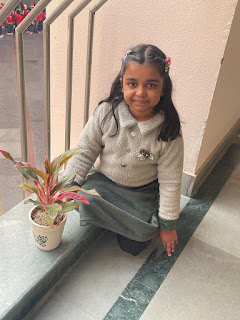
We have a wonderful birthday return gift policy in our school. The birthday boy/girl can give the return gift to nature. Nature has made us, and we can return something to it. According to our school policy, the birthday child can plant a sapling in the school garden and watch it grow with them. This makes them realize their responsibility of keeping the environment safe, green, and secure.


Recently there was a birthday in my class, and this child got the sapling in the pot. I asked her to come along and plant the same in the school garden, and she requested me to keep it outside the classroom in the corridor as it will receive the required sunlight and air. She also promised me that she will take care of that sapling and water it on regular basis. Other students said that photosynthesis will happen just outside the classroom. They were very excited and linked it with their prior knowledge. Now the next question, which was asked the birthday girl was if she is absent on any day or for days, who will take care and water the sapling? She thought and asked her peers. Almost everyone got ready to help her. It is just a wonderful feeling to share that we are able to keep our promise and not only the birthday girl, but the entire class takes care of it. This small thoughtfulness has brought unexpected changes to my class. These children at this young age are not only trying to save nature but learning to help each other. Also, understanding the academic concepts clearly.


Shalini Solanki

Gyanshree School, Noida


Thursday, July 21, 2022

Simplicity and Trust - Nitin Sharma

“Simplicity is the Ultimate Sophistication”

                                     - Leonardo da Vinci


Simplicity in life can be beautiful because it stops us from overthinking and overspending. A Simple life puts everything in order and harmony, which is essential for effective teaching.

One significant gain when you decide to simplify your life is the ease in recognizing the best path. The beauty of life as a whole grows through simple things. Similarly, teaching flows better when you have a simple and straightforward purpose. Simple solutions always take less time to finish than complex ones. In our classrooms, a teacher’s sincerity and humility should shine through in everything he says and does. Today’s scenario discusses new ideas in the education environment and focuses more on content. Indeed, some modifications are required to promote continuous growth, and it is best to keep it simple, so our classroom should be simple without distractions. 

Exercise on Simplicity

Garden visit to show the difference between Tap root and Fibrous root.

Students will be shown different types of plants in the garden; they will observe the pattern on the surface of the leaves and will be able to predict the types of roots.

Impact on Students: Better understanding (Learning by doing)


TRUST: Firm Belief 
Teachers who foster positive relationships with their students create a classroom environment conducive to learning. Moreover, a student who feels a strong personal connection with his teachers receives more guidance and praise. When the teacher-student relationship is vital, improvements are seen. Listen to your students what their needs are. Empathizing with your students goes a long way in building a trustworthy relationship.

Exercise on Trust :
Conducted one activity on the topic of Artificial Intelligence. Students were mentioned to do research work on different aspects of Artificial Intelligence. Groups were formed; each group was supposed to prepare one presentation and some charts, and a deadline was given.
Teacher’s Role: Facilitator
Each group was guided well regarding their sub-topic, and tasks were allotted.
Impact: Each group did an excellent job in their presentation and spoke well.
Learning: Teamwork, Trust, Creative Thinking and Critical Thinking.

ASSIGNMENT SESSION 4: SIMPLICITY AND TRUST, JOL Program by Learning Forward India.

Ms Nitin Sharma
Kamla Nehru Public School, Phagwara
JOL Cohort 2022

Saturday, August 28, 2021

Quality and love- Manmohan Kaur

Quality

1. A student who does a shoddy job with classwork and homework.

A) What, according to you, are the most important things to be kept in mind when dealing with such a case?

Ans. In my experience, this has been a widespread occurrence in every classroom. The first thing a teacher should keep in mind is that not all students function in the same way. Some grasp faster than others, while others do not pay much attention to their studies. Thus, every student requires personalized attention. This should be done with ample patience and tact.

Another fact that a teacher must not overlook is the environment provided to the student. A healthy environment will reflect on the students’ performance. This includes the classroom as well as the domestic environment. Parents of most of our students work jobs with long working hours and/or are uneducated. To add to it, intrafamily dynamics may also affect the overall mental health of the students. Hence, the teacher should be mindful of these factors.

B) Give an account of how you would approach the situation?

Ans. Taking the above-mentioned factors into account, I would take the following steps to deal with such a situation:

1. Firstly, I would lessen the amount of daily classwork and focus more on explaining to them the concepts of the study material.

2. I would identify their friends in class and have the students in question sit with them to share and solve each other's problems together.

3. Offering positive remarks, such as ‘Good work’, ‘Well done, ‘Excellent’, ‘Good Going’, ‘Keep it up’ etc., for any progress made can boost their morale.

4. Additionally, exhibiting their work on display boards would motivate them to work harder to seek their peers' admiration.

5. Keeping a check on the classroom environment is a must. I would look out for problematic behaviours among students, such as bullying, and school them about its effects.

6. Every month, an interactive session with their (students in question) parents shall be scheduled to update them on their ward(s) performance and assess the parents' attitude towards academics.

7. I would also ensure that the students know that they can contact their teachers after school hours. We as teachers can organise after-school handwriting improvement classes,doubt-clearance sessions or any other activity as per the students' needs.

8. If the students are struggling financially, I would provide them with school supplies such as notebooks, pencils, pens, etc.

9. It has been observed that students perform better when their parents take an active interest in academics. Hence, this is what I would aim to achieve with the parents.

10. Lastly, to let the students live a healthy childhood and enjoy other interests, I would assign them the least amount of homework. This would be crucial in preventing them from losing interest in their studies.


Love

2) Two underage students in a romantic relationship.

Ans. Romance is a kind of relationship between two people who are in love with each other. While the students at our school are pretty young, they are not aware of the concept of love.

Yet, in the many years, I have taught, I have not come across any two underage students in a romantic relationship. They experience love in all other ways. Even so, if I'm ever faced with such a situation, I would explain to them the meaning of romantic love. I would give them instances of all forms of love around them, for example, parental love, familial bonds and sibling affection. This would be necessary to make them understand that other than the bonds we are born into, choosing the romantic relationships one wants to commit to requires good decision-making skills, which comes with experience that the young students lack. It would also be beneficial to desensitize conservative Indian parents regarding this. Counselling them regarding their children's puberty in advance would give them ample time to prepare for their children's expected adolescent behaviour, including dating. This will help ensure the child's healthy growth in the most important years of their lives and build strong relationships with their own parents. 

It is important to note that being in a romantic relationship is nothing to be looked down upon but rather encouraged. However, it should be so only when the individuals are mature enough to think and consent for themselves. Thus, to conclude, this is how I would handle the situation in question.

Images from Shutterstock.com

- Manmohan Kaur@JMMS, John Martyn Memorial School, Salangaon, Dehradun

Friday, August 6, 2021

Thoughtfulness and Understanding - Urvashi Uniyal

Looking up another word for thoughtfulness in the dictionary will provide you with synonyms like attention to detail, kind-hearted, consideration, etc. It says thoughtfulness is the art of dealing with people sensitively and tactfully. It is the thoughtfulness that has led to new discoveries and the evolution of humankind. 

According to Confucius, “If there were one word that could act as a standard of conduct for one's entire life, perhaps it would be thoughtfulness.” For expressing our love or care to a person, first, we need to be thoughtful. We need to pay attention to the person’s likes and dislikes, needs and dreams, behaviour and attitude, and strengths and weaknesses. Only then we will be able to love and care for them. It might look like a heavy task in the beginning, but its fruits are delightful. A mother becomes a great mother only because she is thoughtful towards every need of her child. Similarly, every character can be great if they are thoughtful towards their environment and the people in their surroundings. Sometimes, you have to be thoughtful to other people who don’t really deserve it in life. Although they don’t deserve it, you have to choose to be thoughtful to them because it makes you a better person. It only takes a moment out of your day to be thoughtful to others. Just a simple, pleasant word, a gentle smile, or a good deed could end up meaning the world to someone else. 
Thoughtfulness makes the world a much better place.
Understanding is deeper than knowledge because many people know you, but very few understand you. People who understand others pick up emotional cues like non-verbal communication and body language and show sensitivity towards others and understand their perspectives. They also listen well to what people are saying and actively checking their understanding. Most people do not listen with the intent to understand; they listen with the intent to reply.

Understanding others does not mean that you have to agree with their feelings or point of view. Instead, it means that you recognize their point of view and accept that it is different from yours. Train yourself to ask the question, "How does this situation appear to the other person?" The goal here is not to be a mind reader or know with certainty what the other person is thinking. All you need to do is imagine what it would be like to be that person and make some reasonable guesses about what that person is thinking or feeling. Once you understand people well, it will be your second nature to be thoughtful and empathise with them.

- Urvashi Uniyal, The Doon Girls School Dehradun

References: The thoughtful me family encore; MBTI: understanding self and others

Sunday, May 16, 2021

Freedom and Peace - Reah Sikand

We often hear words such as freedom and peace, and every individual has their own interpretation of these words. Freedom for some could be sharing their point of view; for some, it could be attending a dance class or music class, and for some, it could mean wearing the clothes they like. When we teach kids freedom, it mostly means giving them space and the right to make their own decisions, they will definitely make mistakes and go wrong at times, but that is the best way for them to learn what freedom means. If we as adults keep spoon-feeding our kids, our kids will never be independent. Kids need their space as much as adults do; they don’t need people telling them what to do all the time. They definitely need to be guided by adults, but they also need to make their own choices.

I knew a kid called Sara, who was 6 years old, and her parents were very strict with her and never let her have junk food, so when her parents would not be around, she would eat so much junk that she would get sick. She knew she didn’t have the freedom to eat junk with her parents, so any chance she would get, she would eat so much junk that she would fall sick. We need to help kids become responsible citizens, and for this, freedom is important. Sometimes we adults go wrong too, and kids should have the freedom and right to correct us. 

Peace everybody's need for their mental health and physical health. Peaceful kids are happy kids; peace is essential for people to be happy. If the environment you stay in and work at is peaceful, you will definitely be a happy person. Sometimes we need to compromise a little and push our egos aside for a peaceful environment. Kids look up to adults as their role models, and when they observe our values, they automatically learn them from us. We need to help kids understand that fighting and hitting is not the only way to resolve an issue. We need to teach them ways like communicating their problem with each other, and talking it out would be more helpful. We as teachers sometimes get angry with them and sometimes raise our hands so for them they think it’s normal to shout and raise their hand, for kids to learn values from us we adults need to understand these values and work on them, kids will learn by observing us. 

Peace and freedom are essential for all of us, and with these values, we can become better human beings, better teachers and better parents. 


Reah Sikand
Drama Teacher at The Doon Girls School - India

Joy Of Learning PLP Cohort 2020-21 www.LFIN.Academy

National Drawing Day - Kusum Sharma

National Drawing Day is celebrated on May 16 of every year. Drawing is a form of visual art in which the individual uses several drawing instruments to mark the paper or another two-dimensional medium. Tools like graphite pencils, pen, ink, inked brushes, wax colour pencils, charcoal, pastel, chalk and other kinds of erasers, markers, styluses and much more will be used. National Drawing Day tells you that everything inside you is valuable and deserving to be shared with the world. The day is also there to bring much-needed appreciation and awareness to artists and illustrators.

Drawing is one of the important forms of expression within the visual arts. It is concerned with marking lines and areas of tone onto any material where the accurate representation of the visual world is expressed upon a plane surface. Traditional drawings were monochrome, while modern coloured-pencil drawings may cross a boundary between drawing and painting.

Celebrating the day is quite easy and very simple to remember. The annual event will be conducted every year, and it will encourage the people to try drawing and sketching in the inspiring and beautiful environment of the country. You can invite families, children and friends to come and help to create a large-scale drawing. Or simply draw a picture that you loved most and then show them to friends and family members.
 
Courtesy- https://happydays365.org/drawing-day/national-drawing-day-may-16/
Kusum Sharma
ksa@fabindiaschools.in
The Fabindia School

Saturday, May 1, 2021

Humility - Prerna Rathod

Humility means being humble. You respect others and are always down to earth. It is one of the important values which helps us to build our character. When a person is humble, he is loving, caring, helpful, patient towards others while dealing with them. He will always think of others and do what is good for them. He will never be angry with anyone or will never make fun of others or laugh at them. He will be empathetic towards others and do what is best for them and understand others' feelings. A humble person will never have an ego problem. He will always remain happy in good or bad situations. 

As Educator, it is our duty that we should try to teach students to be humble and teach them its importance. This value will help them to be sensitive towards the society and environment. Thus, it will help to build a good society. He will be a good citizen of our country. This will help him to take the correct decisions in life and be successful. Humility helps us to build different values, which are an essential part of life. Each one of us must be humble in our life to lead a better and happy life.

Prerna Rathod 
The Fabindia School 
prd@fabindiaschools.in

Wednesday, April 7, 2021

Simple Living and High Thinking - Bharti Rao

Modern Times has brought a change in the lifestyle of the people. They have changed their way of living. The emergence of technology and new inventions has made their life easier and materialistic. This has confined them in the four walls of their office or home.

They have lost their simple joys somewhere like spending time with families, friends, relatives etc. They do not go and spend their time in the natural environment or play outside or read books. This is destroying their ability to think high. The new lifestyle has led to various diseases like obesity, diabetes, cancer etc.

Due to this, people are overburdened, stressed, full of anxiety and negative thoughts. To maintain a lavish lifestyle, one spends more than he earns. To meet his lavish lifestyle, he has to take a loan or make compromises. One who lives a simple lifestyle doesn’t have to compromise or take a loan or be stressed about monetary joys. If you live simply, you will get time to think about the other important aspects. You will not be stressed. Instead, you will be peaceful at heart. High thinking means to think positively and for the betterment of oneself and humanity. 

If you are not stressed or worried, it will positively affect one’s life, so you should always live simply. If you eat healthy food, exercise properly, think positively, stay happy, it will lead to happy & healthy life. I would like to end by quoting, ‘A person should never be judged by his clothes; for simplicity lies in simple living & high thinking.’  

Bharti Rao
The Fabindia School
bro@fabindiaschools.in 

Blog Archive