
Showing posts with label tips. Show all posts

Saturday, May 6, 2023

Happiness and Tolerance - Saumya RPKM

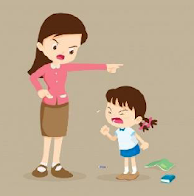
An Unhappy Student:

As an educator, we had an experience with an unhappy student struggling with personal issues and could not focus on academics. We approached the student with empathy, actively listening to his concerns and providing emotional support. We also referred him to the school's counsellor for professional help. In addition, we worked with the student to develop a plan to address his academic challenges and provided extra resources to help him catch up on missed work.

My advice to educators dealing with unhappy students is to create a safe and welcoming environment in the classroom where students feel comfortable expressing their emotions. Be patient, pay attention to their worries, and offer the proper resources and support. Encourage the student to seek professional help from school counsellors or mental health professionals and work with them to develop a plan to address their academic challenges.

An Intolerant Student:


As an educator, we have not had an experience with an intolerant student, but we may encounter such a situation. If a student shows intolerance towards their peers, we would first address the behaviour with a one-on-one conversation. We would clarify that intolerant behaviour is unacceptable in the classroom and emphasize the importance of treating others with respect and dignity. If the behaviour continues, we will involve the school administration to take appropriate disciplinary action. 
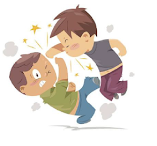
I advise educators dealing with intolerant students to create a classroom culture that promotes inclusivity and respect for all individuals. Encourage kids to be accepting of others and open-minded by teaching them about the consequences of bigotry. To make sure that all kids feel comfortable and respected in the classroom, deal with intolerant behaviour quickly, consistently, and, if necessary, with the help of the school administration.

How to deal with students?

➢ Dealing with students involves a combination of patience, communication, and understanding.

➢ Here are some simple tips on how to deal with students: Be patient: Students may take time to understand concepts, so it is essential to be patient with them.

➢ Use straightforward language.

➢ Stay away from jargon and explain ideas in ways students can grasp.

➢ Actively listen: Pay close attention to what students are saying and show them that with care. This fosters trust and fosters a conducive learning atmosphere. By doing this, a relationship of trust and respect is developed.

➢ Be approachable: Encourage the students to ask and be approachable. This helps build a relationship of trust and respect.

➢ Provide feedback: Give constructive feedback to the students to help them understand where they need to improve and how to do so.

➢ Celebrate success: Celebrate the students' achievements, no matter how small they may be. This helps boost their confidence and encourages them to continue learning.

These pointers will help to deal with the students and assist them in realizing their full potential.
Saumya (Soft) @ RPK School Moradabad
Asha Singh, Nidhi Narula, Beena Singh, Shefali Johri, Ekta Sharma, Rajni Gupta and Rashmi Wright

Images sourced from https://www.dreamstime.com/

Friday, April 17, 2020

Some effective video conferencing tips: Sugata Mitra

https://earlyed.asia/speakers/prof-sugata-mitra/
Thank you Scoonews
People use all sorts of methods for video conferencing. Skype, Zoom, WhatsApp are common methods used by many.

However, you will often hear it said that ‘It's not like the real thing’, meaning the experience is not really like a face-to-face conversation. This is mostly because of the way in which we do video conferencing. If you are talking to someone holding up a tiny phone with the other persons face like a postage stamp, well, that’s not going to feel like the real thing, will it? If you are listening to a tinny little voice on headphones, that’s not going to be like the real thing either. If the person you are talking to is looking somewhere else and not at you, that’s not like the real thing (most of the time!).

Well, here are some ways you could get the experience of video conferencing to become a little more real.

The screen: This should be big enough so that faces can appear in life size. A computer screen of about 20 inches diagonal is the minimum that will do this. A smart TV will work even better. The person whose face you are looking at should hold up a foot/metre scale next to their face. On your side, take a similar scale and put it against the one in the image. If the two matches, you’ve got life-size. If you don't have a scale, use a standard bottle or something.

In a school, you could use a projected screen if two classes are interacting. Get the image to be life-size, using the method described above. If you are projecting using a traditional projector, people’s heads will come in the way. Use a ‘very short throw’ projector. These are so close to the screen that you can’t come in the way. They are a bit expensive, though.

Audio: Use HiFi speakers. They are getting better all the time. Bose sells a tiny Bluetooth speaker that produces incredibly lifelike audio. You can almost feel the presence of the person you are speaking to. Use microphones that are tiny and invisible. Don’t use headphones, they make you look as though you are speaking from the International Space Station.

Camera: This is tricky. Most cameras are unobtrusive but they are usually on top of the screen. So the person you are talking to appears to be looking over the top of your head. This can’t be helped, but you can reduce the problem by looking at the camera instead of at the image of the face on the screen. To the other person, you will then look as though you are looking directly at them. It takes a bit of getting used to. If you are using a projected screen, you can try to fix a tiny camera in the centre of the screen. This will solve the problem.

Don’t wear clothes with checks or stripes, they produce what is called ‘jitters’ on the other screen.

Maybe you will get some of the vibes of a real conversation back into cyberspace!

Courtesy

Description

Sugata Mitra via Facebook 
Professor of Educational Technology at the School of Education, Communication and Language Sciences at Newcastle University, England. He is best known for his "Hole in the Wall" experiment and widely cited in works on literacy and education.

Blog Archive