Showing posts with label friends. Show all posts

Saturday, March 21, 2026

Student Engagement and Classroom Behaviour

Learning Forward Saturday

To reflect on managing classroom “war” and fostering “peace.”

Key Takeaways

  • Distinguish “Notes” from “Reflections”: Reflections must be personal experiences and feelings, not generic theory. This distinction is critical for collaborative learning.

  • Engage Bored Students with Differentiated Learning: Boredom, especially among high achievers, disrupts learning. Differentiated teaching provides customised challenges to keep all students engaged.

  • Be “Friendly,” Not a “Friend”: Maintain a professional boundary to preserve respect and authority. A teacher’s role is a guide (marg-darshak), not a peer.

  • Make Every Student Feel Valued: Simple actions like noticing absences or giving small responsibilities build trust and create a supportive environment where all students feel seen.

Topics

The Problem: Classroom “War”

  • “War” is student energy and expression, not just indiscipline.

  • Students often test new teachers, creating chaos.

  • A new teacher’s non-traditional approach can be a key advantage, as they lack the preconceived notions of a veteran.

The Solution: Fostering “Peace”

  • Immediate De-escalation:

    • Distraction: Use a sudden, unexpected action (e.g., clapping or singing) to break the cycle of chaos.

    • Non-Reaction: A calm, controlled response signals authority and prevents escalation.

  • Building a Culture of Value:

    • Personal Connection: Notice absences and ask about well-being.

    • Inclusive Responsibilities: Assign small tasks (e.g., writing the date) to quiet or overlooked students.

    • Active Listening: Give all students your full attention, which shows their thoughts are valued.

    • Appreciation: Acknowledge and praise good behaviour and effort.

  • Preventing Boredom with Differentiated Teaching:

    • Boredom is a primary cause of disruption, especially for high achievers who finish work quickly.

    • Differentiated Teaching: Plan lessons with customised challenges for all student levels—above-average, average, and below-average.

    • Customised Learning: Provide varied activities to keep every student engaged and prevent boredom-induced misbehaviour.

The Challenge: “Notes” vs. “Reflections”

  • A key challenge was that many submissions were generic “notes” (theory, prescriptions) instead of personal “reflections” (experiences, feelings).

  • This distinction is critical for collaborative learning, as it shifts the focus from abstract knowledge to practical application.

Next Steps

  • All Teachers:

    • Write a reflection on this session, focusing on personal impact and specific takeaways.

    • Prepare to discuss Differentiated Teaching and Learning in the next session.

  • Sandeep:

    • Share a video example of an effective reflection on the group WhatsApp.

FATHOM AI-generated notes, read with care

Friday, May 26, 2023

Courage and Patience - Shalini Solanki


A Fearful Student

I had an experience with a fearful student in my class during this session. This student was new in the school and was struggling to settle in the classroom. He would not speak or respond to anyone in the class. I had to remind him to submit his things to me or eat during the lunch break. He would never share anything in circle time or enjoy any co-curricular activities. I observed him for a few days and thought of speaking to his mother to know about him. I gave a routine call to his mother. To my surprise, I got to know different attitudes of this child from his mother. I got an idea about his discomfort and challenges in the class.

The next day I went to my class and started speaking to him about my personal life, likes and dislikes. Some other students also started discussing with their friends and family members. He then said about his friends and teachers from his previous school. I asked him to sit with his peers and try to make friends. I sensitized other students by taking a story about ‘The first day in my new school’ and discussed the difficulties that can be faced by any child who joins a new school. I asked the new child about him not getting involved with other students and activities. He told me that he is scared of the new environment and teachers. He thought his teachers would scold him if he was going to ask anything in the class or give wrong answers. He observed the happy faces of his teachers and peers and how comfortable everybody seemed to be with one another. He started taking the initiative, laughing, sharing and discussing in the school. He made many friends. I saw a totally different personality in this child. He was intelligent, attentive, and expressive, and his writing was praiseworthy. Everybody in the class helped this new child to overcome his fear. He was ultimately settled and happy.

My advice to educators:

1. Try to identify the problem of a child.
2. Speak to him/ her and try to solve the problem.
3. Sensitize students and create an environment of acceptance.
4. Give time and help the new child overcome his/ her fear
5. Make the classroom environment happy and welcoming.
6. Don’t jump to any conclusion.

An Impatient Student

There are many reasons for an impatient behaviour social, emotional, physical and mental. I experienced such behaviour in my class a few years ago. A student was always in a hurry to complete every task. He would never wait for his turn and always used to leave his written work incomplete. Even after regular reminders, he continued with the same attitude. He was an intelligent child, but the quality of work was impacted because he was in a hurry and did not complete it with patience. Once, during the circle time discussion, he shared that he doesn’t want to wait or write for whatever he knows already. He was impatient because he wished to challenge his work. He would want to wait to answer the questions unknown to him and write his own ideas rather than writing something discussed in the class. He was always excited to help others in their work. So I asked him to help his peers with their problems but only after finishing his work neatly. That way, his work was completed, and his curiosity was cared for. He was more than happy to help others and find ways to explain things to his peers.

My advice to educators:
1. Try to identify the problem of a child.
2. Some children need challenges. Teachers must give them opportunities.
3. Keep motivating your students.

Shalini Solanki
Gyanshree School
JOL Cohort 2022

Saturday, February 11, 2023

My Experience in the Happy Teachers Program - Rishona Chopra


 Joy Of Learning (JOL) is based on The Little Book of Values: Educating Children to Become Thinking, Responsible and Caring Citizens. Learning happens through these values.

Appreciation, Caring, Cooperation, Courage, Freedom, Friendship, Happiness, Honesty, Hope, Humility, Love, Patience, Peace, Quality, Respect, Responsibility, Simplicity, Thoughtfulness, Tolerance, Trust, Understanding & Unity.

These values make up our life. We don't have to do anything significant to master these. Just opening a door for someone, bringing a smile to someone's face, making friends with someone, trusting someone, understanding someone, and other little acts can do it all.

All these values have an essential meaning in my life. But the one I connected to the most was - Humility and Appreciation. I am very competitive, and this value gave me the essence of appreciation and the happiness it provides. 

The greatest thing is; I get to see all these values from the teachers' perspective. I get to see what they think while dealing with children like us. 

I hope to do another session like this again!

Rishona Chopra 
Grade VI
Gyanshree School

Tuesday, November 1, 2022

Hope and Friendship - Shalini Solanki

Hope and Friendship go hand in hand. These two values make the world move with the courage to face difficult situations and times. A friend is the one who gives us hope to rise whenever life is unfair. Friendship is a  bright house of hope where no one is left alone in the darkness of loneliness. 

A student who has lost all hope and has no friends in school 

In every teacher's life, there are times when he/ she gets to meet a child with less confidence, hope and sometimes No Hope. This reminds me of a student in the current session of my class. I met her for the first time a week after this session's beginning. She was a quiet child with no friends. Though she was not a new student but still hesitant to speak with anyone. I went to say to her, but she was not really comfortable talking to me. I thought of giving her some time, assuming her being uncomfortable in the new class and meeting her new mentor. We started revising the concepts of the previous grade and observed that she got restless in class with the thought that the teacher might ask her a question. I did exactly what she was scared of. I asked her a question regarding numbers, and she was quiet. She was so negative and hopeless that she didn't focus on the question. I was just asking her to recognize a simple number. She knew the answer already but didn't have trust in herself that she could give the correct answer. I didn't pressure her but tried to learn more about her from the previous year's mentors and get in touch with the parents. I knew that she was irregular in school, because of which she was missing concepts. Her father is in sales and generally out of town, and her mother has delivered a baby. Nobody has time to speak to her. As she is irregular in school, she has no friends. She had no confidence, hope or friends.

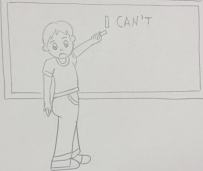
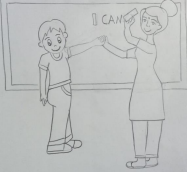
I decided to do something to change her mindset. I used to ask her questions and move on to the other students very quickly without saying anything to her or giving her any look after receiving no answer from her. Then, I would call her separately at my table in every period for every subject. I would make her understand the concepts and discuss the answers separately. I became her friend and created a trust that I would never make fun of her, and together, we will learn everything. She started giving me the answers, and gradually, she became confident enough to answer in front of the entire class. She now positively takes any feedback. The full class is her friend now. She knows that we are there to help her whenever she needs help and support her in every situation. She is sure that no one will make fun of her and treat her as inferior. She is now at par with other students. The magic of friendship brings her to school every day. She is bright and full of hope. Here,  we got support from her parents as well. They have been sending her regularly to school. She is not missing on concepts, which has created hope that She  Can and She Will….


Shalini Solanki

Gyanshree School

Sunday, October 30, 2022

Hope and Friendship - Laxmi Kant Bhatt


Student loneliness due to lack of friendship may seem like a predictable phenomenon, especially when living away from home. However, it is a serious epidemic that is spread worldwide. The cause of this can come from potentially obvious and surprising sources, which can lead to devastating changes in student behaviour.

One of the reasons students these days are under anxiety and depression is that they are becoming hopeless due to losing confidence in themselves. It is one of the significant issues in student life that people fail to understand.

I once had an incident with a hopeless and friendless child.

There was a child who had been promoted to class 9th with flying colours. He was a well-behaved student with a good academic score. But he suffered a setback after coming to senior school as 9th standard is a class with an increased syllabus and subjects. He had scored bad in some of his main subjects which had led him to lose confidence in him and become hopeless. Due to this he stopped talking to his friends and used to be upset all the time.

Eventually he lost all of his friends and had a behaviour change in him. He also stopped with his hobbies too. One day he was sitting alone in the library and I had a light conversation with him. He talked a little but was not fully open with me.I got to know that he had lost his hope. So I asked him about his hobbies.He told me that he had a keen interest in cricket.

We talked about cricket and I noticed that he had good knowledge about the sport. So I took him to play cricket. We played for an hour and the coach really liked his  game. I suggested his name for the upcoming interhouse competition. He was a little relaxed and excited after the session. I talked to the house master too to give him a chance to showcase his talent. He agreed and decided to keep him. Though their team lost the match but he played very good. Everybody appreciated him for the way he played.After this, he got a little relaxed towards his studies and gained a little confidence in him again.

His behaviour started improving and he reconnected with his classmates as he got praised for his game. I kept on talking to him and encouraging him in his small victories too.

This way, we can help many students and encourage them to perform better and not lose all hope in them. We should support them in all their victories, even the smallest of them. 

Laxmi Kant Bhatt
The Doon Girls' School

Wednesday, October 26, 2022

Hope and Friendship - Nitin Sharma

 
A student who has lost all hope

As we know, hope sustains life. Without hope, darkness seems to be all around.

I would like to share one incident from my teaching experience about an encounter with a child who lost all hope in life. Minki was a thirteen-year-old girl studying in the class tenth and was an average student. It was the time of Diwali break that the school was closed. But then, even after the break, Minki didn’t come to school for quite long. Later, I got unprecedented news from one of my colleagues about the sudden demise of Minki’s father due to a silent attack.

A month passed, and she still didn’t attend school. Being in the board class, the main concern was her academic lag. So, I called her mother and talked about her absence from school. She kept on saying that Minki would attend the school soon, but...

Having passed another week, One day, I finally decided to see her and know why she did not come to school. Upon meeting her, I came to know that after her father’s death, this girl had lost all her hope to move ahead due to her bond with him; moreover, he was the sole bread earner. Minki’s mother had tried to console Minki many times that she would make the best possible effort to run the family and not let them suffer. But the girl had lost all her faith and wanted to discontinue her study. With all my best possible efforts, I persuaded that girl to join the school and continue her study to eventually support her family. She then joined the class the next day, but she kept saying she wouldn’t be able to clear the exam. Since she was the very lovable daughter of her father, she couldn’t cope with the significant loss. She always seemed to be disturbed. Seeing her this way, I consoled Minki and motivated her to do something for her father’s sake. All her teachers were supportive of her and encouraged her to move ahead. Whenever she needed help, all were ready to assist her. Even some of the students were quite helpful to her. They helped Minki to complete her work and even during revision time. Eventually, She appeared in the exam and got good marks in the board exam.

Impact: The child was able to come out of a challenging situation with consistent efforts by the teacher.

The teachers dealt with the students with love, care and encouragement.

Advice to the Educators: Values like Patience, love, and care help deal with such situations.

A student with no friends in the school

“A real friend walks in when the rest of the world walks out.” — Walter Winchell.

Here I would like to share the story of a girl.

Sara was a new student in her class. She joined the school during the Remote Learning Era. After the pandemic guidelines were eased, schools reopened, online classes were no more, and all students were called for offline classes. It was observed that Sara used to stay alone, and even during the lunch break, she would sit and eat alone. She always had complaints about other students in her class. Later, when the students were asked about the complaints against them, they were all found innocent. And it was found that Sara was not able to adjust herself in the class due to social immaturity. She couldn’t talk well with a group of students. In this context, the School counsellor was involved, and she had taken some counselling sessions for Sara. Later, some improvement was seen, and we saw Sara moving with her friends in the school playground and during Lunch time. She started sharing her food with others. Her mother was also requested to help her cope by taking her to some social gatherings and letting her spend some time in the park or with her nearby friends to overcome this hesitation.

Impact: Sara became confident and a cooperative student.

Advice: Please try to help the child adjust to new surroundings. Be empathetic, helpful and kind.

Nitin Sharma
Kamla Nehru Pubilc School, Phagwara

Friday, October 14, 2022

Hope and Friendship - Rishona Chopra


There is no substitute for correct thinking when a difficult situation is in front of you. You think negatively but try to act according to the spiritual knowledge you have read. That will not make you successful in overcoming the situation. Also, your inner habits of creating thoughts of fear, pessimism, hopelessness and impatience will not reduce, although you may temporarily feel positive based on what you have read or learned.

Hope is important as it changes our negative thinking to positive. Hope is important in the classroom as it helps improve our self-esteem and confidence. Hope rises from expectations. The expectations we have created our hope. We expect to have a good day in school, creating our hope to have a good day.

Sometimes, to be positive, we can think of affirmations:

1. I am a soul full of all qualities and powers... I nourish each cell of my body with my qualities and powers, making my mind and body healthy and filled with positive energy... My complete positivity makes my immune system strong and my life long...

2. I am powerful and pure energy situated at the centre of the forehead...I radiate the beautiful white rays of my purity and power to my physical costume...My entire physical body is cleansed... All my body systems experience good health...

 3. I am a soul with positive thoughts, feelings and attitudes, which make my aura beautiful and radiant...My aura influences my physical body to fill with beautiful vibrations...These vibrations always protect my body...

 4. I radiate my vibrations of peace and stability to everything I eat and the medicines I take for my body...They absorb these vibrations and benefit my mind and body by making them healthy, happy and robust... I always attract positive health help at the right time and in the right way...

 5. I am a blissful being, the child of God - The Ocean Of Bliss...My mental and emotional lightness influences my physical organs and makes them light and relaxed ... Others who meet me and see me get inspired to bring fun and health into their lives

Hope is when I think positive,
Affirmative thoughts, 

Probably in my tough times,
Just want something that rhymes,
With my thoughts,
I just want to untie all the knots.
When hope is heard,
The hard times fly like a bird!
Even in my dream, 
I think of hope's long stream.
The tough times shall pass,
As they soon break like glass.

I would rather walk with a friend in the dark, rather than walk alone in the light.
- Helen Keller

Friends are companions for life, a family that we choose for ourselves. It's, of course, essential to building a good relationship with them, right? Some of us might look at friendship as a bond we share with our best friends, but it is not just a relationship we build with our friends but everyone around us. In the company, there is no jealousy, and there is no expectation. Friendship just exists; it's a relationship you really can't describe.

It implies a friendly and compassionate attitude towards all, and it's essential to have good social skills. Even Swami and Friends, the book is all about friendship.

Friends are something you never know about,

They are like your sibling, no doubt.
Rajam and Mani and their mischiefs,
But they ain't no thief.
They are friends who stay in sorrow,
But make you feel scared for tomorrow.
Yes, they will support you in nothing,
But they will prepare you for everything!
In a classroom, friends are essential,
They will never make you feel unimportant.
A company to make you smile,
A smile that will stretch a mile!

Here is my story full of positivity:
It was a happy morning; I felt blessed. I woke up and meditated. It was my first day of school, and I was so excited. It was not at all difficult for me. I made new friends. The teachers were fun, and I learned a lot of things. I played in the park and did my homework. I was smiling throughout the day and was positive. 

When was the last time we smiled for an entire day with nothing going wrong? Today let us smile and be full of hope! 


Rishona Chopra
Grade VI
Gyanshree School

Wednesday, September 15, 2021

Brewing Knowledge Book Club - 29th Aug 2021 Session

Reading from the book My Good School Where Passion Meets Education by Sandeep Dutt
Section I

The What, The Why And The How Of Teaching

- Performance Scores Must Be Honest 

- People Process And Outcomes

Mukta Sharma, [29-Aug-2021 at 6:15:10 PM]:

Good evening everyone, the book reading session on performance and people, process and outcome were really enriching.  Discussion on assessment in totality considering all the facets of it and, yes, highlighting the role of the teacher as a change agent was a treat. Thanks a lot, Mr Dutt fir putting up this show. 

Looking forward......


Amandeep Walia, [29-Aug-2021 at 6:17:42 PM]:

Wonderful session on performance and people and process.Thank you, sir, for allowing me to read.


Divya Agnihotri, [29-Aug-2021 at 6:53:15 PM]:

...forward. 😊😊


Kalyani Chaudhuri, [29-Aug-2021 at 7:49:36 PM]:

The key people in the process of education have shared their learning today about performance and its outcomes. Technology bridged the distance. Curious educators create curious classrooms, and the boldness to challenge the status quo for assessments is paving a new way for the Indian Education system. Let us keep learning with LFIN. Thanks, Mr Dutt and the Brewing Knowledge Team, for this purposeful evening.


Monisha Datta, [29-Aug-2021 at 8:10:53 PM]:

Why are we encouraging students to score high over actual understanding? Shouldn't all children have the right to know instead of just score? 

Shouldn't knowledge be permanent and not just class, syllabus and curriculum-based? 

What do we as Educators do to ensure that our students' performance is a barometer of actual learning, not just factual knowledge? 


As we progressed through today's book reading session, I felt a sense of satisfaction as I heard Educators reflect on what they were doing at their schools. They questioned their methods and wished to brainstorm and develop better ways to make students perform better, not just by achieving high marks but also by achieving actual and effective knowledge. 


Listening to everyone's thoughts and seeing them reach out to one another for suggestions was such an amazing expression of collaboration. 

It made me feel that reading together in communities is the best and the correct way to grow.


Each one had a value add a suggestion, and the conversation moved from student performance to understanding the importance of people in the process to achieve performance.


Nothing can be achieved if we as Educators do not hold a lamp out for each other and a better lamp than a book that speaks directly to the teachers. 


Thank you, Brewing knowledge club, for this book reading session encouraging lateral thinking among Educators.


Nibbrati Rathore, [29-Aug-2021 at 8:18:18 PM]:

My reflection 

The line that struck me was - What is beyond 100% marks? 


It is not uncommon to see many class toppers not become highly successful while many backbenchers get fly-high jobs. Why does this happen?

A few years ago, I went to a reunion party of my college class. Along with making fun of our growing love handles, I noticed something interesting. Many of my classmates who were academically brilliant in college were not doing much with their lives. Conversely, many of my friends who were backbenchers seemed to be quite successful with high flying corporate careers or running their own businesses.

Spare a thought and think about it; I am sure many of us would be having similar observations. 

Conventional wisdom tells us that students should get high marks in school to get into a good college, then get high marks in college to get offered a good job, leading to a successful career.

However, considering there is no correlation between a students’ academic achievement and their success in life, it seems this model is fatally flawed.

Research suggests that students need to develop strong communication skills, solid problem-solving skills, work well with others, a proactive attitude and a professional work ethic if they hope to do well in any work environment.


I believe skills are beyond 100% marks. 

Thence I would like to mention our new program - The Internship Program for students(mainly) which focuses on identifying and refining the skills in students. 

September Book Reading

Next two chapters:

1. Choice Of Curriculum &

2. Building Schools With Quality.


Clubhouse
Tune in to follow our book reading sessions.


Reading Program on Zoom

The Members meet for 60 minutes on the last Sunday of the month. ZOOM will work as our studio. Members meet to read and reflect. 

Tuesday, June 29, 2021

An Encounter With Metacognition - Nibbrati Rathore

 “I cannot teach anyone anything. I can only make them think.” - Socrates.

If you could trigger thinking in children, you have introduced them to the first step of metacognition. Mostly the thinking process is concealed because people have little understanding of how they think. Concisely we can say - thinking is an internal conversation weighing up different viewpoints. And learning is just a consequence of thinking.


Here is a little story on how metacognition can help and how we are already using it in our classroom. Certainly, we can refine and improve our strategies.


CHAPTER: SHIVA


A student named Shiva took admission in grade 3 under the mentorship of Ms Priya. Shiva was a quiet and shy child. He was a loner, and to make him sit at a place was a nightmare for Ms Priya. He used to score low in almost all the subjects. But could solve grade 7 algebraic expressions on the board.


Does he remind you of Einstein?


Ms Priya thought and devised a roadmap to bring change in Shiva.

  1. Connect with the Parent Despite her repeated efforts, Ms Priya could not make Shiva gain any interest in studies or sports. Sensing some family problems, Ms Priya invited his father, Mr Raman, for an interaction. Mr Raman came with his bullets ready, to which Ms Priya chose simply to listen and observe. She sensed a disruption in the family which led Shiva caged into his thought bubble.
  2. Name it to tame it- Ms Priya started spending time with Shiva during lunch breaks, talking and sharing. When she felt Shiva has started opening, she took his storytelling sessions. Shiva used to set a narrative to which Ms Priya gave names, slowly Shiva started naming his feelings and emotions. And then he started illustrating the incidences which made him upset. Ms Priya knew that Shiva was running away from his feelings to stay normal, but this eventually made him rigid. The whole-brain approach of Ms Priya helped Shiva to connect with his inner unknown feelings and develop horizontal integration between the right and left brain. - By term 2, Shiva started becoming friends with his classmates.
  3. Ringa Ringa Roses:  As Ms Priya could not get enough help from Shiva’s parents, she took other subject teachers and the H.M into confidence and shared about Shiva, H.M and all the subject mentors held each other’s hands, sat, and discussed ways to help Shiva. Keeping an account of Shiva’s work, his illustrations, his behaviour with peers and every minute detail was penned by the teachers as anecdotes. This gave teachers enough to support planning their strategies. And now it worked better. - A team is always stronger than an individual.
  4. Responsibility – The day Shiva heard his name as “The Word Wall Monitor”, his face lit with joy. This was the first time Ms Priya could see all his teeth and a spark in his eyes. She understood, children need encouragement and validation. By now, Shiva has understood how he can make friends, why sharing lunch is so much fun, how to ask for help, and how to help someone with his homework. Also, by now, he could analyse that he could not understand few topics because of how they were taught.  - Shlearned that he understands best by writing. So he started taking notes, and that helped.
  5. Budding scientist – Shiva made a model on the flow of electricity using conductors in grade 3. This amazed every teacher, and he was lauded for his work. Slowly Shiva realised that he can understand everything which has logic. - He started connecting even grammar topics with examples and logic. 

And slowly, we saw a bud unfurling and blooming.

Now Shiva is in grade 5, and the genius is scoring satisfactory grades but doesn’t leave a chance to amaze the audience with his writings and models. He loves to write now and can express and manage his emotions well. 


Our HM, Ms Priya, the subject mentors, didi - bhaiyya, and even Shiva’s classmates have contributed. 


Reflection
The way that we learn information is determined by the processes that we put in place, and if you are analysing how you are learning the information or how you are thinking about it, you are there. Here if Ms Priya had employed her strategies in any random fashion, it wouldn’t have worked. So for every child, there is a unique formula, which either he knows, or you may know, decoding the formula by the child is metacognition.

- Nibbrati Rathore is an educator at the Gyanshree School, Noida

Blog Archive