Showing posts with label activities. Show all posts

Saturday, January 10, 2026

Educational Activities and Learning Experiences


Learning Forward Saturday
Reviewing educational findings and planning new teaching strategies.

Key Takeaways
  • Shift from feedback to "feedforward" to guide students on how to improve their work, not just mark it wrong.
  • Systematically teach reading using two methods: phonics (sound-symbol association) and sight reading (recognising whole words like "the").
  • Move beyond copying to foster creativity by having students compose original stories, even from pictures, to demonstrate proper application of learning.
  • Launch "Wisdom Mandali" next year, a teacher-led initiative to share stories and lead sessions, with Neelashi M in a supporting role.
Topics

The Problem: Ineffective Feedback & Reading Instruction
The session began with a review of prior findings on effective teaching.

Ineffective Feedback:

Current practice (e.g., Saroj's) is real-time correction during class.

Drawback: This creates idle time for students while they wait for the teacher, reducing productive learning.

Ineffective Reading Instruction:

The group identified a need to move beyond simple decoding.

Rationale: Reading comprehension requires more than just sounding out words; it involves understanding context and meaning.

The Solution: "Feedforward" & Systematic Reading Instruction
"Feedforward" for Improvement:

Brinda introduced "feedforward" as a more effective alternative to simple feedback.

Principle: Guides students on how to correct mistakes and improve work, rather than just identifying errors.

Implementation: Use rubrics to set clear expectations and empower students to self-correct.

Systematic Reading Instruction:

Brinda outlined a two-pronged approach for compelling reading:

Phonics: Reinforce sound-symbol association (e.g., the letter 'A' makes the 'ah' sound).

Sight Reading: Teach students to recognise high-frequency words as whole units (e.g., 'the') to build fluency.

Action: HP will lead a dedicated teacher training session on these methods.
Application: Fostering Creativity & Engagement
Writing Beyond Copying:

A key recommendation is to move beyond copying exercises to give students opportunities to compose their own texts and express ideas.

Rationale: Original composition is the ultimate test of applied learning.

Creative Storytelling:

Gulabee's "market" activity showed how open-ended questions can spark student stories.

Brinda's Suggestion: Provide broad prompts (e.g., "Write a story about this picture") instead of leading questions to encourage greater imagination.

Thematic Learning:

Sunita Tripathi requested new, time-efficient ideas for small classes.

Brinda's Suggestion: Use a single theme (e.g., "Winter Season") for 10–15 days to integrate activities across subjects (English, Science, Math) and maximise learning time.

Future Initiative: "Wisdom Mandali"
Neelashi M announced a new initiative for the upcoming year: "Wisdom Mandali."
  • Purpose: A teacher-led forum for sharing stories and leading sessions.
  • Role: Neelashi M will provide background support, empowering teachers to take the lead.

Next Steps
Minakshi: Send adolescent mapping printing work to Neelashi M.

Brinda: Plan and lead a dedicated teacher training session on phonics and sight reading.

Neelashi M: Plan a future session with HP to provide teachers with concrete, implementable pedagogical methods and samples.

Saturday, December 6, 2025

Learning Forward Saturday

Quick recap

The meeting focused on teaching English language skills to students through various classroom activities, including verb usage, silent letters, and interactive exercises. Brinda and Neelashi discussed plans for future teaching sessions and agreed to meet in Delhi to coordinate further activities. The group also covered teaching methods and classroom enhancements, emphasising the importance of creating engaging learning environments and proper English language instruction.

Next steps

  • Brinda and Neelashi: meet next week to plan future Saturday sessions
  • Brinda: show Neelashi around the school in Noida on a weekday, including the prep section and skilling academy
  • Sakshi: Share photos of classrooms with well-designed classroom libraries for the Learning Forward Saturday group
  • All teachers: create classroom library corners with age-appropriate children's stories and books
  • All teachers: Set up word walls in classrooms for vocabulary revision
  • Teachers: Use the Learning Forward Saturday group to ask questions and share lesson plans with each other

Summary

Teaching Plans and Collaboration Meeting

Brinda discussed plans to teach Damsharaz and related activities to students, focusing on verbs and adverbs. She and Neelashi agreed to meet in Delhi next week to plan further Saturday sessions and potentially visit the school in Noida. Brinda introduced Reena, the principal of Arthur Foot Academy, and other participants to the group. The conversation ended with a discussion on respecting each other and following guidelines for teaching practice.

Classroom Knitting Activity Session

The meeting focused on a classroom activity involving 11 participants, with Neelashi emphasising the importance of keeping cameras on during the session. Brinda guided participants through various activities, including knitting, and encouraged them to practice and perform simple tasks as guests. The discussion included instructions in Hindi and English, with participants engaging in activities like knitting and stitching, and Brinda requesting a repetition of the word "knitting" for clarification.

Silent Letters in the English Language

The group discussed silent letters in English, focusing on words such as "know" and "knowledge." Brinda explained how silent letters can change the pronunciation and meaning of words. The participants practised identifying and pronouncing silent letters in various words. The conversation concluded with Brinda encouraging the group to volunteer and take action, while also mentioning something about Rinajikari and Bhartikha.

English Verbs for Daily Actions

The meeting focused on teaching English verbs related to everyday actions. Brinda guided the participants through examples of verbs like "making roti," "rolling chapati," and "applying lipstick," emphasising correct usage and pronunciation. Participants practised using these verbs in sentences, with Brinda providing feedback and encouragement. The session aimed to improve English language skills by reinforcing verb usage and sentence structure.

Verbs and Adverbs Practice Session

The class practised identifying and using various verbs in context, with Brinda guiding students through actions like dancing, writing, and eating. Students were asked to remember the verbs they learned, which included knitting, making, dancing, cooking, writing, eating, closing/shutting, and applying makeup. Brinda explained the difference between adjectives and adverbs in describing actions, using examples like "cooking nicely" versus "cooking like an expert."

Enhancing Classroom Learning Techniques

The meeting focused on teaching methods and classroom activities, with Brinda and Neelashi discussing the importance of creating a library corner in classrooms and using interactive activities, such as guessing games, to enhance learning. They emphasised the need for teachers to revise key words and sounds in English, particularly through phonetic methods. They highlighted the correct use of capital letters for proper nouns and at the beginning of sentences. The session also covered creating word walls and the importance of teachers learning alongside their students to better understand phonetic sounds and teaching techniques.

AI can make mistakes. Review for accuracy.

Friday, October 31, 2025

Learning Forward Saturday


Lesson Planning Strategy - hosted on Friday the 31st of October 2025!

Neelashi and Minakshi discussed various teaching activities and lesson planning strategies, focusing on incorporating games, memory exercises, and interactive methods to engage students and improve learning outcomes. They emphasised the importance of structured lesson plans that accommodate different subjects and activities while considering students' learning styles and needs.  the importance of structured lesson plans that accommodate different subjects and activities while considering students' learning styles and needs. The conversation ended with plans for teachers to develop lesson plans in groups, with a focus on incorporating Hindi language instruction and coordinating activities for implementation.

Next steps

  • Lalita, Sakshi, and Rahima: Submit two items to Neelashi - finger ring and original storybook
  • Lalita: Start creating lesson plan for the coming week
  • All three teachers : Create lesson plans for five days covering Hindi, Math, English, Activities, and Games
  • Minakshi ji: Send picture of Lalita's lesson plan to Neelashi and post it on the group for documentation
  • All three teachers: Exchange and review each other's lesson plans
  • Lalita: Decide which story to tell and prepare questions in advance, including critical thinking questions
  • Lalita and Sakshi: Use Rahima's activities in their classes
  • Sakshi: Prepare materials for counting activities before class
  • Rahima: Prepare questions using internet resources for introducing the number 1 concept
  • All three teachers: Decide together when to send completed lesson plans to Neelashi by tomorrow

Summary

Word Association Game Discussion

Neelashi and Minakshi discussed a game activity involving word association and memory, where participants were asked to recall words related to a theme. Minakshi clarified that the game involved recalling nouns and verbs, while Neelashi explained the rules and encouraged participants to focus and maintain a steady heart rate. They also discussed the importance of a structured lesson plan, with Neelashi emphasizing the need to improve plans based on past experiences and the specific needs of different subjects and activities.

Lesson Planning and Implementation Strategies

The meeting focused on lesson planning and implementation strategies for the upcoming week. Neelashi and Minakshi discussed the importance of creating detailed lesson plans that incorporate activities for body coordination, reading, math, and English, as well as incorporating games and drawing. They emphasised the need to observe students' learning styles to tailor teaching methods effectively. Minakshi and Neelashi also addressed the importance of implementing lesson plans consistently and reflecting on their effectiveness to improve future planning.

Game-Based Teaching Strategy Discussion

Minakshi and Neelashi discussed plans for a teaching session, focusing on using games and activities to engage students. They decided to divide the teachers into groups and have them develop lesson plans, with an emphasis on incorporating Hindi language instruction. Neelashi suggested that Meenakshi would circulate among the teachers to provide support and gather feedback. The session was scheduled to last 10-15 minutes, with plans to reconvene later.

Lesson Plan Progress and Challenges

Neelashi and Minakshi discussed the progress of a lesson plan, with Arthur noting that while it would be beneficial in the long run, the current implementation was challenging due to the participants being "raw" to the process. Arthur mentioned being occupied with work related to the Anvil Day function, which Neelashi confirmed was not a problem.

Art Corner Lesson Planning Discussion

मीनाक्षी and Neelashi discussed plans for an art corner and lesson activities. They agreed to review a lesson plan with Lalitha and discuss potential improvements. Neelashi requested that Minakshi send a picture of the lesson plan to the group for documentation purposes. They also briefly touched on ticket availability and a new experience related to a project.

Lesson Planning and Teaching Strategies

Neelashi and Minakshi discussed lesson planning and teaching strategies, focusing on incorporating activities and questions to enhance student engagement and comprehension. Arthur was tasked with preparing and presenting a lesson plan, which Neelashi emphasized should include critical thinking-based questions and factual content. They also discussed the use of visual aids and interactive methods to teach numbers and counting, with Neelashi suggesting the use of internet resources for additional support. The conversation ended with Neelashi asking Minakshi to coordinate with other teachers to finalise the lesson plan and activities, with a plan to review them before implementation.

AI can make mistakes. Review for accuracy.

Saturday, October 11, 2025

Learning Forward Saturday

Early Childhood Development and Joy of Learning For Teachers 

Neelashi and Minakshi discussed the importance of maintaining focus during breathing exercises and emphasised the significance of consistent practice for students. They explored suitable books and content for nursery classes, focusing on basic skills and developmental activities while analysing the appropriateness of educational materials for young children. The discussion concluded with plans for implementing educational activities through various methods and addressing concerns about teachers who were absent from completing their assigned tasks.

Next steps

  • Rahima is to write down the four points from the National Mission document in her notebook.
  • Rahima will create a weekly lesson plan that includes math activities, drawing activities, and an introduction to Hindi stories.
  • Rahima plans to implement circle time in her class starting next week.
  • Rahima is to create and implement the math game activity with students divided into equal teams.
  • Rahima is to establish rules for the art corner in her classroom.
  • Minakshi to ensure Rahima implements circle time and the math activity.
  • Minakshi to ensure Rahima creates and follows a lesson plan.
  • Minakshi to try to get a portable microphone from Sandeep sir or purchase one from AFA.
  • Minakshi to ensure absent teachers take notes from Rahima and implement the same activities before next Saturday.

Summary

Breathing Exercise and Team Support

Neelashi and Minakshi discussed the importance of maintaining clarity and focus during a breathing exercise, emphasising the need to clear one's mind and feel relaxed. They stressed the importance of consistent practice and its impact on students. Neelashi expressed gratitude for Minakshi's efforts in organising and supporting teachers, stating that her presence is a boost for the entire team.

Nursery Education Content Review

Neelashi and Minakshi discussed activities and tasks related to teaching nursery classes, focusing on identifying suitable books and content for young children. Neelashi emphasised the importance of understanding nursery expectations and making informed decisions about what to teach, including activities like colour and number recognition. She instructed Minakshi and Rahima to analyse the books together, assess their suitability for nursery students, and discuss developmental activities typically taught to young children. The task involved evaluating the books' effectiveness and deciding whether they were helpful in nursery education, with Neelashi expecting a detailed analysis and discussion from both participants.

Early Childhood Education Standards Discussion

Minakshi and Neelashi discussed the appropriateness of books for young children, noting that while some books help set standards, they may be too advanced for nursery students. They agreed that children should focus on basic skills, such as writing curves and straight lines, rather than covering extensive number ranges. Neelashi emphasised the importance of children using books independently and encouraged Minakshi to explore a document related to the National Mission for Education, which aims to improve literacy and numeracy among children.

Early Childhood Education Concepts

Minakshi and Neelashi discussed the importance of teaching basic concepts to children, including recognising letters and corresponding sounds, as well as understanding numbers, objects, and sequences. Neelashi emphasised the need to go beyond rote teaching and ensure children understand the logic and reasoning behind concepts. They also discussed the lack of awareness about what needs to be taught and the need for improved educational resources, including books. Minakshi mentioned the potential benefits of teaching history and regulations, highlighting the importance of understanding different systems prevalent worldwide.

Educational Activities for Children Implementation

Neelashi and Minakshi discussed implementing educational activities for children, focusing on introducing concepts through finger rhymes, stories, and math exercises. They emphasised the importance of creating lesson plans and establishing rules for the classroom corners. Neelashi suggested using simple math activities, such as addition, and teamwork exercises involving objects. They also discussed the need for teachers to take notes from Rahimaji and implement the activities by next Saturday. Minakshi raised the issue of absent teachers not completing assigned tasks, and Neelashi agreed that action would be taken if teachers continue to miss activities without valid reasons.

AI-generated post, E.&.O.E.

Saturday, September 27, 2025

Learning Forward Saturday

To discuss teaching strategies and classroom management techniques for early childhood education.

Key Takeaways

  - Drawing is a valuable learning activity for children, not just art

  - Fine motor skills development is crucial and can be encouraged through various activities

  - Creating a print-rich environment enhances learning and engagement

  - Innovative attendance methods can make routine tasks more engaging for students

Topics:

Drawing as a Learning Tool

  - Teachers initially thought that children who draw aren't learning, but this view was challenged

  - Detailed drawings by children often include various elements (e.g., dog, house, family members)

  - Drawing activities can be used to teach complex concepts (e.g., human anatomy)

Fine Motor Skills Development

  - Importance of proper pencil grip discussed

  - Cylinder shape of baby bottles designed for easy gripping

  - Activities suggested:

      - Using clay or playdough to improve grip strength

      - Employing tweezers for picking up small objects

      - Creating a chart with 100 pockets for number placement exercises

Print-Rich Environment

  - Emphasised creating visually stimulating classroom spaces

  - Ideas shared:

      - Large alphabet charts with associated images

      - Weekly rotation of featured letters (A-E, then F-J, etc.)

      - Punctuation and capitalisation rules displayed on walls

Innovative Attendance Methods

  - Goal: Make attendance-taking more engaging and educational

  - Suggestions included:

      - Using plant or nature themes

      - Incorporating math concepts

      - Integrating language learning (e.g., food names, ABC's)

Addressing Distracted Students

  - Discussed strategies to keep students focused during lessons

  - Emphasised calling students by name to maintain attention

  - Suggested using interactive elements to keep students engaged

Next Steps

  - Teachers to implement 2-3 new strategies in their classrooms over the next week

  - Create better learning environments based on the discussed ideas

  - Minakshi to focus on improving students' writing skills, including the correct use of capital/lowercase letters and phonetics

  - Plan to order or create a counting game for use across different age groups

  - Develop charts for English grammar rules to be displayed in classrooms

Host: Neelashi Mangal, supported by Minakshi Prasad
Learning Forward Sessions are curated with a focus on helping teachers focus on ECCE.

Saturday, May 6, 2023

Happiness and Tolerance - Siddhi RPKM

Dealing with Challenging Students
Think of two 2 situations where you as an educator were faced with (preferably natural)/ might face the challenge of dealing with:

How did/will you deal with the student?
A) If it was a real-life situation, were you successful in helping him/her overcome their problem?
B) What is your advice to educators who want to inculcate these values in their students?

Situation 1: Unhappy Student

"Happiness is contagious. Spread this among people surrounding you." -----Invajy

As a teacher, we must always teach students what is right and wrong. But sometimes children feel unhappy if they do not want to do something their teacher has asked them to do. This more prominently applies to little kids pampered mainly by their parents. That's why they need to be taken care of by the teacher according to their moods.

Recently, a similar situation was faced by one of our teachers in her class. One of her students wanted to skip the lunch. So, the child made an excuse that he was having a stomach ache and was missing his mother. Therefore, he insisted on going back to his home. The very first day, when he did that thing, the teacher asked him to finish lunch so that he won't feel the pain, and after that, he would be allowed to go back home. But then, again, on the second day, he did the same thing, and the teacher again asked him to finish his lunch without any excuses. But when on the third day, he did that thing again. The teacher realised that it had become his habitual activity, and he just made excuses not to finish his lunch daily.

On that day, the teacher told him to have some portion of his lunch to be healthy and strong if he wanted to finish only part. For that whole day, he was so happy in class; he talked to everyone nicely and didn't ask to go back home. With time, the child began adjusting to the class by interacting and observing his fellow students.

Advice to educators:

If you have an unhappy student, you must try and understand the situation he/she might be going through instead of imposing your perspective on them. According to an old saying:

"To get a better pickup, we must step back. Sometimes we must also listen to the child's perspective to make an unhappy child happy."

Situation 2: Intolerant Student


An intolerant student, the term itself should never be an impression in any teacher's mind about any student. However, we all face such an adverse issue wherein we may encounter such behaviour in a student. They may be exhibiting very inappropriate behaviour. There may be innumerable complaints against this student from a teacher and their classmates, and no amount of counselling / or any other strict action to rectify the student's behaviour seems to change their behaviour. Any behaviour or issue can never be diagnosed, judged or handled without knowing the reason behind those actions. The reason should be based on something other than any particular act. Different situations and scenarios that might have happened earlier at school and home should be considered. A child who is overpampered at home or has no listener will exhibit behaviour to gain attention. Usually, this kind of behaviour reflects a negative
outcome.

Let's discuss a situation of a student who was never interested in listening to any kind of explanation of the chapter but in spite was always ready to put up the questions whether related to the topic or not, so I, as an educator, was forced to think that if he is too curious to know every detail of every case, or he is just trying to seek the attention of everyone, so I just thought of an idea why not to engage him in something which can use his energy and hire him, so I asked him to maintain a notebook which we will discuss in class and utilise it in class activities or quizzes. So he was happy and felt confident that he got a huge responsibility. Slowly and gradually, he collected a piece of good information about many topics and used to note down the queries aside and discuss them later. This developed his confidence in the teacher; once the bond of trust sets in, rectifying the child's behaviour will be smooth and, most importantly, effective.


Advice to Educators:
My suggestion to all my fellow teachers is never to give up on any child but to give them your time, patiently listen, and understand the reason for their behaviour and not judge them just on their superficial behaviour. We, teachers, have this innate ability to make that impression in the minds and lives of our students, and we surely can be their guides who will help them become better human beings.

Siddhi @ RKP School Moradabad
Sanskriti Tondon, Lovely Singh, Priyanka Ruhela, Soni Bhatnagar, Manjeet Patil, Sadhana Negi and Swati Saluja

Saturday, April 1, 2023

Thoughtfulness and Understanding - Welham Boys' School


A. An important component of thoughtfulness is showing concern. Elaborate on 3 tools you would like to use in your classroom to inculcate thoughtfulness about the right things among your students. 

I want to use the following three tools in my classroom to inculcate thoughtfulness about the right things among my students:

  1. Mindfulness-Based Stress Reduction: It has been demonstrated that practising mindfulness and deep breathing techniques help to lower stress, improve focus, and improve wellness in general. I aim to teach students how to control their emotions, be present at the moment, and create empathy for others. I do this by adding mindful breathing techniques. For instance, to assist the class in relaxing and tuning into their thoughts and feelings before a lesson or activity, I could lead them through a 3–5-minute breathing exercise.
  2. Keep a thankfulness journal: Studies have shown that practising appreciation boosts good feelings, lowers stress, and enhances mental health. I want to include gratitude journaling to inspire kids to pay attention to the good things in their lives and develop empathy for others. Students could list three things they are glad for each day, share them with a partner, and talk about the qualities they value in one another.
  3. Experiential Learning: Real-world examples can be used by teachers to assist their students in comprehending how their actions can affect others and the environment. They can demonstrate the adverse effects of careless behaviour and the advantages of being mindful via news articles, films, and case studies.

B. To understand the world around you, you need to develop empathy. Give examples of specific activities/exercises you'd like to conduct in your classroom to inculcate empathy among your students.

I would conduct the following activities/exercises in my classroom to foster empathy among my students:

  1. Storytelling: Sharing personal narratives or experiences is a great technique to foster empathy and understanding for other people. Students may have a greater sense of empathy for others by being encouraged to tell their own stories and listen to those of their peers. For example, I would ask students to describe when they faced a problem or overcame a challenge.
  2. One-Act Play: During one-act play, students can experience what it could be like to be in another person's shoes and be in a new position or have a different point of view. Students can start to gain a more profound knowledge of other people's thoughts, feelings, and experiences by participating in role-playing activities. For example, I might have them act out various situations like peer mediation, conflict resolution, or exercises to develop empathy.
  3. Social Service Projects: Students get to learn about many cultures, viewpoints, and experiences by participating in social service initiatives. Students can learn empathy for others and a more profound knowledge of their community's problems and difficulties by participating in service projects.

- Neelima Parmar, Monika Gupta and Vandana Sahay
Welham Boys’ School

Friday, October 14, 2022

Responsibility and Cooperation - Ruchi Chaudhary

Responsibility is essential because it can help build bonds with teachers and classmates and shows leadership that you are a valuable student. 

Teachers value children who exhibit responsibility because they know they can trust you to complete tasks on time and submit high-calibre work. Responsible Teachers and students usually establish schedules and set priorities to ensure they can discover the best ways to multi-task day after day.

I always encourage my students by saying that focus on becoming more responsible, so they can experience unparalleled growth. It Is often said that your thoughts become your actions. But without taking responsibility for your life, those thoughts often just stay on that mental stage and aren't translated into action.

Use simple words to explain responsibility - for example, you can tell your students that a duty they are expected to do on their own without being told is a responsibility, like completing everyday tasks or keeping their belongings in order. Also, teach them that responsibility and consequences go hand in hand. For example, let's assume it is the responsibility of a child to Maintain discipline in class. If he/she maintains it regularly, they learn a great virtue of life. 

Learning Cooperation is necessary for a child's social and emotional development. Being able to work together with others to reach a goal or overcome a challenge will set a child up for future success.

As an Activity In-Charge, I planned such activities where students complete their tasks by cooperating with each other. Recently we had many Interhouse activities like board decoration, Quizzes, skits, Sports activities etc. Through those activities, children learn how to cooperate and understand its value.

Through Cooperation, members of the group are not only rewarded based on the success of the entire group but are also individually accountable for their own work. The task or activity is structured in a way that requires the input and participation of every group member. As a result, all of the group members learn from each other.

Ruchi Chaudhary 

Mussoorie Public School Happy Teachers JOL Cohort 2022


Saturday, July 9, 2022

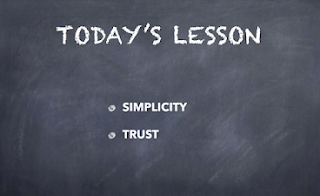
Simplicity And Trust In The Classroom - Rishona Chopra


Simplicity
is having no complexes and focusing on the right things. It is essential to have Simplicity in the classrooms because there are several distractions, and we possibly can't focus on two things simultaneously. That is why it is important to have studies presented engagingly so that instead of useless distractions, we find this better than daydreaming in class! Also, there are several complications that our mind creates and some phobias which might trouble us. It's essential to increase our focus and concentration on one thing. Simplicity is connected to Humility. Simplicity is when we are humble. 

Another part of Simplicity is Minimalism. Your room would probably be filled with things you don't use or don't bring any value to your life. Imagine a life without those unnecessary things. Pretty plain and boring. Right? Not really. Humans have created a belief that is to love things and use people. Loving things will give you temporary happiness because as soon as things are finished, we crave them again and plead for them, and if we don't get it, we are disappointed or angry. While on the other hand, if we love people with a true heart, happiness lasts forever. People crave things so much and so that without them, they are not able to survive.

An exercise I would carry out in my classroom on Simplicity is: - "Poet Tree" Activity: Taking my class outside — asking them to observe things around them based on a theme; Later, children can record it in poems written by them.

- I would take them on a trip and afterwards ask them questions about what they noticed on the way, And write their experience and write the way to the place.

- How can you focus on utilizing things and keeping things simple at home. Make them tell what they have at home and out of that what they need and what they don't use - their wants.

The impact on students would be that they could focus more and be more attentive. It would make them know about minimalism.

Trust is a firm belief in reliability, truth, ability, or strength.

An exercise I would carry out in my classroom on Trust is:

- Make students explain the quote - Trust is when actions meet words.

- Conduct a classroom discussion on the value of Trust means to children, and instances where they have gained/lost Trust.

The impact on students will be that they will learn that Trust needs no complications and know how to show Trust in their actions.

Simplicity and Trust are connected. We need Simplicity to have Trust. When we trust someone, we make too many complications; we should learn to make it simple.

"I know God will not give me anything I can't handle. I just wish He didn't trust me so much."

- Mother Teresa

Rishona Chopra Grade VI Gyanshree School My Good School Intern

Saturday, August 28, 2021

Quality and love - Bharti Dangwal

Quality

1. A student who does a shoddy job with classwork and homework?

There are many ways to tackle such problems. These students firstly need special attention and personal guidance. They are to be handled with care. The teacher and student must build trust among themselves. As a teacher, I will first talk to the student to gain his/her trust. Then I will try my best to tell or make the student realize the importance of classwork and homework. I will give individual time to the child. I will talk to the parents so they can help the child at home. I will try to keep the students engaged in activities. This will help students to focus on their work. I will give interesting and enjoyable work to the students. This will help the students to learn with fun. The more interesting the activities are, the more fun will be learning.

Love

2. Two underage students in a romantic relationship?

As we all know, when puberty hits, a student goes through many adolescent changes like physical, social and emotional. Romantic relationships can bring many emotional ups and downs for the child and sometimes for the whole family. These changes distract the child and make him lose his concentration in studies. But being strict with the students or denying them entry into any relationship can affect them psychologically. 

As a teacher, the foremost thing I can do is talk to them and show them that I support them. By talking, I can counsel the students. We can find ways in which neither the students are harmed nor the relationship. 

I will talk to the child about his/ her romantic relationship and make him feel comfortable sharing it with me. This will help the students to take the right steps and move in the correct direction. I will not criticize the relationship; otherwise, the students will drive away from me. The more they will share with me, the better I can help them with their life ahead.

 Image: Weheartedu.com

- Bharti Dangwal@JMMS John Martyn Memorial School, Salangaon, Dehradun

Saturday, May 1, 2021

Why are Human resources important for a nation? - Swabhi Parmar

Courtesy: borgenproject.org
Human resources must be considered both from the angle of assets and the liabilities connected with the attainment of economic development. For the attainment of economic development, proper utilization of both natural and human resources is very much essential.

Proper utilization of natural endowments and the level of production of national wealth depend very much on the extent and efficiency of human resources.

But too much population will again eat up all the fruits of development. Thus from the point of view of economic welfare, it is essential to study human resources in detail. It should be equally stressed that human beings are the vital instrument of production. At the same time, fruits of all economic activities are rested on the betterment of conditions of living of human beings.

Thus given its importance, it is quite essential to know both in quantitative and qualitative terms the size, rate of growth, composition, distribution, and all other demographic features of the population of India. The process of acquiring and increasing the number of persons who have skills, education, and experience is critical for the country's economic and political development.

SwabhiParmar
The Fabindia School
spr@fabindiaschools.in

Friday, April 9, 2021

Happiness and Tolerance - Agile Alphians

Happiness comes from good deeds. When we do something good for others without expectations, we get satisfaction; that joy is everlasting. When we behave humbly with all the people around us, we experience great pleasure. We meet numerous people every day, who look happy from outside but they are sad from inside. Many people think that if they become wealthy, they will be satisfied forever, which is not correct. Happiness is a state of mind. If you are at peace with your self, you will be happy.

Happiness comes from the inside; one can buy many things with money, but not happiness. Tolerance is also one of the essential things to live a healthy and prosperous life. But tolerance has a limit. We as a teacher feel very pleased when our students perform well in their studies and Co-curricular activities. We deal with unique students.

Happiness and Tolerance are co-related with each other. If we have tolerance, then we will obtain satisfaction. There was a boy Manoj, he a very naughty. He used to harass his parents and his brother constantly. Manoj was studying in class III. He never obeyed his parents. In school, he used to be very calm and composed. When his parents came to know through Manoj’s friends, they visited the school and informed his teachers about his home behaviour. One by one, all the teachers talked with him and told him to behave nicely with his parents. They told him to respect all the people around him irrespective of their ages. From that day onwards, he started acting well at home also. Thus, this story gives a strong message that tolerance leads to happiness. 

We want to share one more critical and unique example. Nowadays, many people are getting vaccinated. When they take the vaccine, they have pain sometimes and fall ill for one or two days. But they tolerate the pain and suffering, but after two days, when they get alright, they feel happy. This example also shows us that Tolerance leads to Happiness.

Agile Alphians at Alpha Beta School Jaipur - Arti Rana, Shefali Kapoor, Anurag Sharma, Shekhar Ravindra Ghodeswar and Ajay Vijayvargi

Friday, September 18, 2020

My Good School - By Invitation Only

My Good School standard core curriculum helps empower every individual, we invite schools to join the global community of Good Schools.
Service | Skill | Sport | Study

  • Empower students by creating an environment for their personal and social development.
  • Encourage students to become involved in activities beyond just study; this helps develop confidence, knowledge and networks.
  • Experiential learning is a critical factor in the student's progressing successfully through adolescence.
  • Digital Portfolio
  • Choice of Activities
  • Find your own Coach/Mentor 
  • Work with Peers
  • At Your Pace 
  • Parental guidance
  • Prepare College Applications
  • Skills for life
  • Secure Online Dashboard
  • Anytime-anywhere School
To express your intention to join the list of Good Schools, simply send an email to Kalyani Chaudhuri, Director My Good School <info@goodschools.in> with a 100 to 200 word write up about your school, please.

Wednesday, July 22, 2020

Veena Solanki - My Good School

Veena's daughter studies at The Fabindia School, the nursery where My Good School took form. A school helps prepare us for life. Not only can we learn the basic skills to read, write, and do arithmetic but we can learn about peoples, places, and nature. My Good School empowers students by creating an environment for the personal and social development of an individual. Experiential learning is made possible through activities beyond just study, this brings to life learning that would otherwise be theoretical and uncoordinated. The idea of the children doing their own self-reflection, their being able to choose and work on what they love doing makes all the difference. My Good School helps build relationships and strengthens school culture, to further improve the learning outcomes and prepare children for life. Longingness for nature, helping attitude to her peers, excitement to look at the world with a new lens every day and head to school with a sense of belonging, all this has brought learning to real life.


Listen to the Story

Tuesday, July 14, 2020

RP Devgan: Homeschooling - a possibility

A few weeks ago before the lockdown, in one of my articles, I had mentioned the possibility of Home Schooling in India. The idea was met with a fair amount of scepticism. Now with three months of Lockdown and hours and hours of online classes, I wonder if the thinking has changed, even if ever so little.

My first experience of meeting a ‘home-schooled’ child in India in the late nineties was a pleasant one. A young couple, family friends, had decided to bring up their daughter at the Tiger Resort they were running in a Wildlife Sanctuary. The girl grew up in the forest, had a menagerie of her own and birds and animals for company. She lived a free, happy life, unaware of the travails of a city school. My wife and I met her when she was about nine years old. The parents needed some advice for she was going to write the entrance exam for a renowned residential school. She turned out to be a charming girl full of incidents and great knowledge of flora and fauna. She had never been to school and carried no baggage whatsoever of competition and expectations. We were extremely pleased to meet a most unusual family. Needless to say, she qualified for the entrance examination and joined the school. Presently, after her graduation
she is getting married and moving to Australia.

My second experience of ‘home-schooled’ children, three of them, was when I went to visit my wife’s cousin about 10 years go, in a village beyond Santiniketan. His NGO runs a school for the Santhals and other tribal groups of that area. Married to a British girl they have two sons and a daughter. The children aged between 7-10 years attended the same village school, dressed the same way and went to school barefooted. I spent a week with them, visited the school every day, played cricket and football with all the children and even crossed a river to pluck local fruit. The three children would return home at 4 pm and had access to the internet. They were then homeschooled by their parents on various subjects.

All three wrote the IGCSE  privately and are now in England. The oldest one has graduated from the University of Warwick in Discrete Maths and Economics, the daughter is to join London School of Economics this September and the youngest sibling will finish his ‘A’ levels next year. This is a great example of ‘Home Schooling’ carried out in a village in West Bengal.

As Principal of an International School in Bali, I would admit a few children every year; children who had never been to school till the age of 11 years. The most interesting of them was a 12-year-old girl whose class for three years, had been her father’s yacht. She had sailed with her parents around the oceans and seas, stopping at any island they fancied. The yacht had been her classroom and the oceans and seas her playground. She had the most fascinating tales to tell about her adventures at sea, her meeting with all kinds of people and sampling different kinds of cuisines. At the age of 12, she was a very confident young lady and I would often make her address the school.

Back to the present and the Lockdown continues. I have been observing that almost every school has been conducting online classes. Over the past three months, I have heard educators and numerous experts giving their views on the future of education, almost creating paranoia among parents and students.

Young, educated parents with two children think of the cost of fifteen years of schooling which is staggering and to add to this, there is no guarantee of the quality of education provided. Would it then be wise to ‘home-school' our children? With knowledge and information available on the Internet through Google and other portals, it seems a possibility. If a couple can balance their act in between their professional lives, it can be done.

Online schooling during the Lockdown has benefited some children. Children who are introverts, under the pressure of peers, bullies and teachers, have found online teaching a boon. These children are at peace and have found the joy of learning. Children who are always short of sleep are relaxed. There is no rush in the mornings and breakfast is enjoyed. Sensible parents have chalked out a timetable where the child has enough time to study and indulge in things that interest him. Some have gradually made fitness a way of life by exercising regularly. It has given children time to pause and think.

Of course, there are many limitations but then there are solutions too.

With education becoming expensive and in most cases with no guarantee of quality, ‘Home-schooling’ could be an alternative. Sometimes for no fault of their own, schools cannot provide facilities in sports, art, music, theatre and other activities. It is possible that Homeschooling overcomes these deficits.

Parents have the choice of the number of years the child needs to attend school. After all, we as Homo sapiens are gregarious by nature and it is important to live with our fellow beings and learn about adaptability, relationships, compassion and tolerance.

A time has come for the parents to pause and think about what is best for their children. Just attending school because everyone is doing it may need a rethink. Education is changing and changing fast. With knowledge and information accessible easily, schools will have to change from educators just teaching their subjects to paying more attention to pastoral care, life skills and values.

In my opinion, children who eventually lead a happy and meaningful life will have to be good at adaptability and building relationships. Though no one can tell what to expect in the years to come, I sincerely hope that as a human race we do not lose our sense of values and lead a meaningful life that makes a difference.

- Rajinder Pal Devgan, Chairperson Learning Forward India
With near five decades of experience as an Educationist and having served as a School Leader for schools in India and overseas, Mr Devgan brings in rich experience as an administrator, sports person and champion for teachers.

More parents are now choosing to homeschool instead of sending their children to public or private schools. Learn more about the homeschooling movement and what's involved when parents educate their kids at home.
https://www.parents.com/kids/education/home-schooling/homeschooling-101-what-is-homeschooling/

Wednesday, April 29, 2020

Happiness and Tolerance - Kusum Sharma

Values are very important for everyone because they help us to live a respectful life and play a key role in our overall development. Happiness is a sense of well-being and joy and helps in leading a satisfying life. Happiness for me is being surrounded in a positive and joyous environment. For example, if all the students near me are enjoying and happy, I feel happy.

If happiness is all around us than educators are better connected with children and as a result learning process becomes easier. Nowadays students are pressurized by the parents to excel in academics, leaving behind all other important things like sports, skills etc. which ultimately led them to live pressurized life at a very young age.

Educators can be a game-changer in this scenario by connecting with each student personally and create a healthy competitive environment as well as most importantly help them to find their passion. There are more ways to reduce their pressure like engaging them in skill, service and sports activities. If a person is happy then it's easier for him to be tolerant and can accept everything with patience. If a person is tolerant he will be respecting others opinion in spite of quickly judging them. There are a few ways to foster tolerance in students. Children should be felt special, safe and loved, and also by creating learning opportunities about a new place, people and culture will make them tolerant.

To create happiness and Tolerance in The Fabindia School, we teachers are connected with the students individually, respect their opinion and have given them to choose any skill activities through clubs and societies. And also lots of sports events are organised to foster tolerance in them.

Kusum Sharma
The Fabindia School

Wednesday, January 17, 2018

गुणवत्ता ग्राहकों द्वारा परिभाषित होती हैं

1. अभिभावक अध्यापक से बहुत सी उम्मीदें रखते हुए अपने बच्चों को हमारे पास पढ़ने के लिए भेजते
 हैं ।अध्यापक को उनकी उम्मीद पर खरा उतरने की पूरी कोशिश करनी चाहिए
2. अध्यापक को बहुत ही मेहनत से विद्यार्थी को पढ़ाना चाहिए ।पढ़ाने के अलावा आस - पास के
 वातावरण का ज्ञान भी देना चाहिए
3. अध्यापक पढ़ाई के अलावा कुछ गतिविधियों के द्वारा भी बच्चों का ध्यान आकर्षित कर सकते हैं।
4. पाठ को नाट्य रूप मे भी समझ सकते हैं इससे विद्यार्थियों को पढ़ाई मे आनंद आएगा।
5.इस प्रकार पढने से विद्यार्थी मे जो गुण उत्पन्न होंगे वो उनकी गुणवत्ता होगी C:\Users\PC-2\Desktop\qe_unicef1.pngC:\Users\PC-2\Desktop\play-and-learn-picture.png
हमारी सीख ; आइसक्रिम मेकर ; लेखक - सुबीर चौधरी

समूह अध्यापकगण :आयशा टाक, प्रेरणा राठौड़, सुरेश नेगी & स्वाति सूद - The Fabindia School

Blog Archive