Showing posts with label diversity. Show all posts

Friday, February 28, 2025

Reflection - Masterclass 2024 - Kapila Yadav

 Affection vs Rejection
From a child's perspective, affection manifests as warmth, attention, and consistent care, drawing them in with a sense of security and belonging. Children are attracted to positive reinforcement, gentle touch, and genuine interest in their thoughts and feelings. On the other hand, rejection, characterized by neglect, harsh criticism, or emotional unavailability, creates confusion and distress, pushing them away. This disconnect can lead to behavioural issues and a sense of inadequacy. Love, therefore, acts as the best medicine, fostering healthy emotional development and resilience. By nurturing a child's need for affection, we lay the foundation for their overall well-being and future relationships.
From a child's perspective, affection is a powerful force that nurtures their emotional and psychological growth. When parents or caregivers provide consistent love, attention, and positive reinforcement, children feel valued and secure. Simple acts such as hugs, listening actively, and showing genuine interest in their activities and feelings make a significant impact. These gestures attract children, encouraging them to open up and develop trust.

Conversely, rejection, whether through neglect, harsh words, or emotional absence, can be deeply unsettling for a child. Such negative experiences distract them from forming healthy attachments and can lead to feelings of worthlessness and anxiety. Rejection disrupts their sense of safety and can hinder their ability to form trusting relationships in the future.
Ultimately, love is the best medicine for a child's well-being. It fosters a nurturing environment where children can thrive emotionally, socially, and cognitively. By prioritizing affectionate interactions, we support their development and help them build a foundation of confidence and empathy that benefits them throughout their lives.

What makes a Good School?
A good school is more than just a place of learning; it's a sanctuary where dreams take flight. Beyond children's laughter, it's the nurturing embrace of dedicated teachers who sow seeds of knowledge and compassion. It's the echo of encouragement in every corridor, reminding students of their potential and worth. A good school resonates with empathy, understanding the struggles of each child and offering support without judgement. It's a haven where diversity is celebrated, fostering an environment of acceptance and inclusion. In every classroom, there's a symphony of curiosity and discovery, where minds are ignited and imaginations soar. A good school is a tapestry woven with the threads of perseverance and resilience, teaching students to rise above challenges and embrace growth. It's a place where failures are seen as opportunities for growth, and success is measured not only in grades but in character development. Within its walls, friendships blossom, forming bonds that last a lifetime. It's where mentors inspire greatness and instil values that extend far beyond academic achievement. In the heart of a good school, kindness reigns supreme, cultivating a culture of respect and empathy. It's a beacon of hope for those who dare to dream, providing the tools and guidance needed to turn aspirations into reality. A good school is a sanctuary of safety and security, where every child feels valued and protected. It's a cornerstone of the community, bridging gaps and fostering unity among diverse backgrounds. Ultimately, a good school is a sanctuary where hearts are nourished, minds are enriched, and futures are transformed with love and dedication.

Why Relationship Matters?
Relationships with parents, caregivers, siblings, and peers provide children with the emotional support and security essential for healthy development.
Secure attachments formed in early childhood serve as a foundation for building trust, empathy, and resilience. Through interactions with others, children learn to regulate their emotions, express themselves, and develop a sense of belonging.

Meaningful relationships stimulate cognitive growth by providing opportunities for language development, critical thinking, and problem-solving. Collaborative activities and play encourage creativity, imagination, and the exploration of new ideas. This is majorly observed when kids begin schooling.
Positive relationships serve as models for prosocial behavior, teaching children empathy, kindness, and cooperation.

By observing and interacting with others, children learn appropriate ways to express themselves, resolve conflicts, and navigate social situations. 
On the other hand, Broken relationships can disrupt the sense of security and stability that children rely on for healthy development. Changes in living arrangements, routines, and family dynamics can leave children feeling uncertain about their future and their place in the world.The stress and upheaval caused by broken relationships can interfere with children's academic performance and social interactions. They may struggle to concentrate in school, form trusting relationships with peers, or participate in extracurricular activities due to emotional distress or instability at home.

In conclusion, relationships are the cornerstone of children's development, providing them with the love, support, and guidance they need to thrive. By nurturing meaningful connections with family members, peers, and other caregivers, we can empower children to reach their full potential emotionally, socially, and intellectually. As Teachers, we have a profound responsibility to cultivate environments where every child can experience the transformative power of positive relationships.

Fire In The Mountain, Run… Run… Run…
As a teacher, I can't help but feel a sense of concern and responsibility amidst the rising tide of new diseases and health challenges. It's disheartening to see how quickly we can move from one crisis to another, barely catching our breath before another threat emerges. However, amidst this turmoil, I also find solace in my role as a guide and educator. I believe that education is key to combating these issues. By raising awareness about diseases and promoting preventive measures, we can empower individuals to take control of their health and reduce the burden of these illnesses.

Furthermore, addressing the underlying social determinants of health, such as poverty, inequality, and lack of access to healthcare, is essential for creating a healthier and more equitable world. By tackling these root causes, we can create conditions that support overall well-being and resilience in the face of health challenges.
In my role as a teacher, I will continue to educate and empower my students to become advocates for health and agents of change in their communities. Together, we can work towards a future where everyone has the opportunity to lead healthy and fulfilling lives.

Love Learning vs Hate Learning
In the context of school, love and hate can manifest in various ways. Love might be seen in the bonds formed between friends, supportive relationships with teachers, or a passion for learning. Conversely, hate could arise from conflicts with peers, dislike for certain subjects, or frustration with the educational system. Both emotions can significantly impact a student's experience and academic performance. In school, love can be evident in the camaraderie among classmates, the admiration for inspiring educators, or the joy of discovering new interests and talents. Love can also encompass the sense of belonging, acceptance, and encouragement that students receive from their peers, teachers, and mentors.

On the other hand, hate in the school context may stem from bullying, discrimination, or exclusion experienced by students. It can also arise from struggles with certain subjects, academic pressure, or dissatisfaction with school policies and practices. Negative experiences in school can lead to resentment, frustration, and disengagement among students.
Ultimately, fostering a positive and supportive school environment can help cultivate love, while addressing issues such as bullying and academic challenges can mitigate feelings of hate and dissatisfaction.

To Copy or Not to Copy

Facebook, Instagram, X and to top it all we have been in a whirlwind of Shorts and Reels. In today’s hyperconnected world, teenagers are constantly exposed to influences—from social media trends and peer pressures to unrealistic academic expectations. The urge to “copy” has never been stronger. Whether it’s mimicking fashion styles, adopting online personas, or even cheating in exams, adolescents often find themselves in a whirlwind of comparison and conformity. But is copying always harmless?

The need to fit in is a natural part of adolescence. Social acceptance feels like survival, and the fear of missing out (FOMO) can push teens to imitate influencers, celebrities, or even their high-achieving classmates. Academic pressure, too, plays a crucial role. Many students, overwhelmed by expectations, resort to dishonest means—plagiarizing assignments, copying during exams, or even faking achievements on college applications. They justify it as a shortcut to success, unaware of the long-term consequences.

However, this relentless need to copy can have damaging effects. When teenagers fail to meet the unrealistic standards they set for themselves, it breeds anxiety, low self-esteem, and in severe cases, depression. The inability to “be like others” or “achieve perfection” can create feelings of worthlessness. Social media, with its curated images of success and happiness, only worsens the situation. Some teens, trapped in a cycle of self-doubt, take extreme steps, leading to a tragic rise in suicide rates.

It is crucial to instill self-awareness and critical thinking in young minds. They must learn that originality and self-acceptance hold more value than blind imitation. Schools, parents, and society need to foster environments where failure is seen as a learning experience, not a disgrace. After all, true success comes from authenticity—not from being a copy of someone else.

Affection vs. Rejection

Affection and rejection—two contrasting forces—play a defining role in shaping a child’s emotional and psychological growth. A child who receives warmth, encouragement, and support from parents and teachers grows with a sense of security and confidence. On the other hand, rejection, whether in the form of neglect, criticism, or lack of emotional connection, can leave deep scars, sometimes leading to antisocial behavior and emotional instability.

Affection acts as a positive reinforcement in a child’s life. When parents express love through words, gestures, or simply by being present, children feel valued. This sense of belonging fosters resilience, self-esteem, and emotional intelligence. Similarly, a teacher’s encouragement—be it a pat on the back, words of appreciation, or patient guidance—motivates students to excel. A child who feels loved and supported is more likely to develop healthy relationships, face challenges with confidence, and make ethical choices.

I have seen this firsthand in my own classroom. A few years ago, I had a student named Rohan who was struggling with academics and often isolated himself. He had faced constant criticism at home, making him believe he was not good enough. Instead of reprimanding him for his poor performance, I chose to acknowledge his efforts, no matter how small. I encouraged him, told him I believed in him, and helped him set realistic goals. Slowly, he started participating in class, seeking help without fear, and even making friends. By the end of the year, he had not only improved academically but also found confidence in himself.

Conversely, children who experience rejection—whether through emotional neglect, harsh criticism, or lack of positive reinforcement—often struggle with self-worth. They may seek validation from the wrong sources, leading to a range of issues, from low academic performance to aggressive or withdrawn behavior. Many troubled youth share a common history of emotional rejection, reinforcing the idea that childhood affection is not just a luxury but a necessity.

The solution lies in creating nurturing environments at home and school. A simple “I believe in you” or “You did great today” can work wonders. A child who is nurtured with love becomes a responsible, compassionate adult, while a child who faces rejection often struggles to find their place in the world. The choice is ours—affection or rejection, growth or destruction.

Kapila Yadav
Sunbeam International School

Monday, September 23, 2024

Overcoming Fear - Sunbeam School Suncity

In a vibrant classroom where diversity reigns supreme, students with varied learning styles, personalities, and traits come together to form a dynamic community.
A shy and talented student blessed with a creative voice has penned a poem. Yet, fear of judgment and intimidation keeps her from sharing her masterpiece with her peers and teacher. Her hesitation is palpable.

With gentle encouragement and reassuring words, the teacher coaxes the student to overcome her fear.

Finally, the student mustered the courage to share her poem, her voice trembling yet resolute. The class offered warm applause and genuine admiration, and the teacher's pride and praise further bolstered the student's confidence.

This scenario underscores the significance of creating a safe and inclusive learning environment.

As educators, we must strive to create classrooms where diversity is cherished, and empathy is the guiding principle. By doing so, we empower each student to grow into a compassionate, creative, and confident individuals.
Narrator - Khalid Zafar 
Teacher - Carol Henrick 
Student- Mohini Rai 
Sunbeam Suncity (School & Hostel) Varanasi

Monday, January 29, 2024

What Makes A School? - Gitika Kapoor


In the 21st century, the concept of a school has transcended the traditional brick-and-mortar institution. It now embodies a holistic and dynamic environment that nurtures students in mind, body, and soul. The COVID-19 pandemic has further accentuated the need for schools to adapt and evolve, moving beyond physical classrooms to embrace virtual and hybrid learning models.

What truly makes a school in this era is the ability to foster a sense of community among students, teachers, and parents, irrespective of physical proximity. It lies in the cultivation of creativity, critical thinking, and adaptability, enabling students to thrive in an ever-changing world. A school in the 21st century is a safe space where diversity is celebrated and inclusivity is the norm, where every student is valued for their unique abilities and contributions.

Moreover, a school is not just a place for academic learning, but a hub for emotional and social development. It offers a plethora of extracurricular activities that promote teamwork, leadership, and good mental health practices. It integrates technology seamlessly into its curriculum, equipping students with digital literacy and preparing them to navigate an increasingly interconnected global society.
In light of the pandemic, a school is also an institution that prioritizes and ensures the safety and well-being of its stakeholders. 

It implements robust health and safety measures, while still maintaining an engaging and enriching learning experience. A school recognizes the importance of mental health support, providing resources and counselling services to help students cope with the challenges brought on by the pandemic.

In essence, a school in the 21st century, post-pandemic, is an inclusive, innovative, and adaptable space that fosters a love for learning and prepares students to become active global citizens. It empowers individuals to embrace uncertainty, embrace change, and constantly seek knowledge and growth. It is not confined to physical boundaries, but extends beyond, connecting learners from different corners of the world. A school becomes a beacon of hope, guiding and inspiring generations to reach their fullest potential amidst the complexities of the modern era.

Gitika Kapoor 

Sunbeam International Varuna
Masterclass 2024 Reflections

Friday, January 19, 2024

School! A New Vision - Ankit Khare


A School serves as a multifaceted institution that contributes to the holistic development of individuals and prepares them for active participation in society.

Here are several vital aspects that define a school's purpose:

  1. Education and Learning: The primary purpose of a school is to provide education and facilitate learning. Students attend school to acquire knowledge, skills, and competencies in various subjects.

  2. Socialisation: School is where students interact with peers, form friendships, and learn social skills. It is an environment where they engage with a diverse community, promoting tolerance and understanding.

  3. Preparation for the Future: Schools aim to prepare students for future challenges in higher education and the workforce. They equip students with the skills and knowledge necessary for success in their chosen paths.

  4. Cultural and Civic Education: Schools contribute to cultural literacy and civic education. Students learn about their culture, history, and societal responsibilities, fostering a sense of belonging and civic engagement.

  5. Critical Thinking and Problem-Solving: Schools provide an environment where students can develop the necessary thinking skills and the ability to solve problems. They are encouraged to question, analyze information, and think independently.

  6. Character Building: Character education is an essential aspect of schooling. Schools often emphasize honesty, respect, responsibility, and perseverance to help shape students' character.

  7. Creativity and Innovation: A school is a space that encourages creativity and innovation. Through various subjects, projects, and extracurricular activities, students have opportunities to express themselves and explore their creative potential.

  8. Inclusion and Diversity: Schools strive to be inclusive and celebrate diversity. They provide equal opportunities for students from different backgrounds, fostering an environment of acceptance and understanding.

https://hi2ankitkhare.blogspot.com/2024/01/school-new-vision.html Ankit Khare

Thursday, January 18, 2024

Sunbeam School, Varanasi

Tuesday, October 10, 2023

Humility and Appreciation - Samridhi RPKM

When someone has humility, it means that they have a humble or modest view of themselves. In other words, they don’t think they’re the centre of the universe.

A famous quote about humility reads, “Humility is not denying your strengths, humility is being honest about your weaknesses.” Our students can do a self-reflection exercise on humility by journaling about their strengths, weaknesses, and humility.

We can give our students a lesson on intellectual humility. This humility type is the acknowledgement that you don’t know everything. Developing this type of humility can be especially important for our students who are constantly expanding their knowledge.

Be an example of humility: As in anything, our students will imitate our behaviour. The more we can live in a humble way, the more our students will absorb from us.

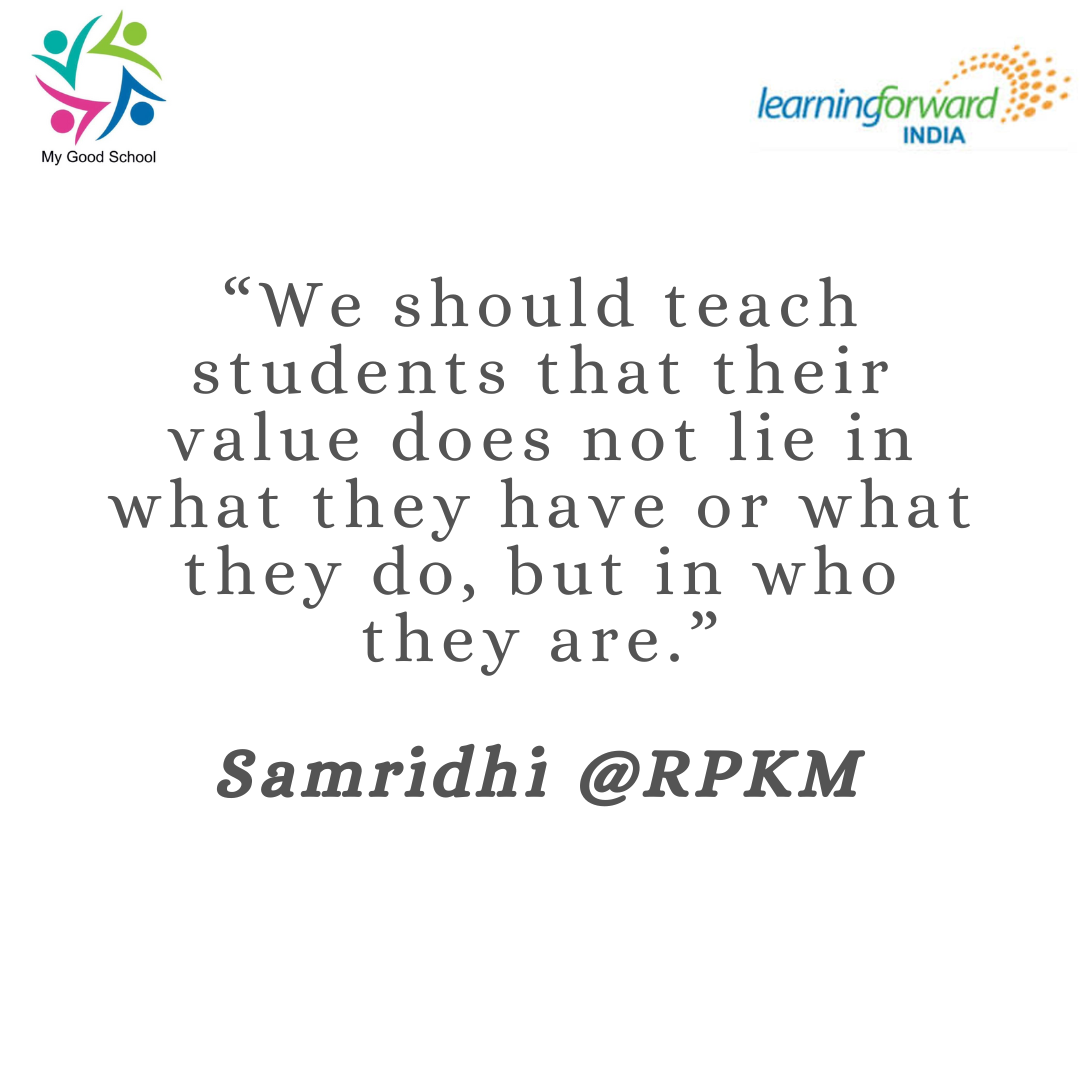
We can build our students up and teach them where their true value lies: most of the time, when students are looking for attention, it is because they are not receiving enough feedback or positive attention. The more that we can give them honest, positive feedback, the better. 

Also, teach them that their value does not lie in what they have or what they do, but in who they are. This way, we can teach our students the truth about themselves. Coach them on how to respond to praise. Just as we teach them to say “Please” and “Thank you,” we need to teach students the appropriate, humble response to praise. The more prepared they are, the more graciously they can respond.

Don’t confuse “humility” with “humiliation.” Try not to humiliate the students. Humiliation does not help, since it is something that can hurt a child rather than help teach the lesson of humility. If the students need correction, be sure to correct them, but in a way that is as loving, patient and personal as possible. This can help prevent the harm and resentment that intentional humiliation breeds.

We need to teach our students to serve. Among the many activities we do with our students are some that imply service. There are so many ways we can serve, and so many people that need simple acts of service: the poor, the elderly, family members, friends or classmates. If you are able to incorporate various “service projects” into your life, service will become a habitual behaviour for your students, and they will be more sensitive and open to the needs of others.

Appreciation is the act of recognizing and valuing someone's efforts, qualities, or achievements. In the classroom, it can be a powerful tool for fostering a positive learning environment and encouraging student growth. 

Here's how we can use it in the classroom:

  • Encourage Effort: Appreciate students for their hard work and perseverance, even if they haven't achieved perfect results. This motivates them to keep trying.
  • Recognize Achievements: Celebrate students' successes, both big and small. Acknowledge their accomplishments to boost their self-esteem.
  • Feedback: Provide specific and constructive feedback, highlighting what students did well. This reinforces positive behaviour and helps them understand their strengths.
  • Peer Appreciation: Encourage students to appreciate each other's contributions, creating a supportive and inclusive classroom atmosphere. Appreciation can have a significant positive impact on students in various ways:
  • Motivation: When students feel appreciated for their efforts and achievements, it can boost their motivation to excel academically and socially.
  • Self-esteem: Genuine appreciation can help students develop healthy self-esteem, as they learn to value themselves and their abilities.
  • Engagement: Students who receive recognition for their contributions tend to be more engaged in the learning process and are more likely to participate actively in class.
  • Confidence: Appreciation can build students' confidence in their abilities, making them more willing to take on challenges and persevere through difficulties.

Teachers play a crucial role in showing appreciation towards students. Here are ways in which teachers can effectively express appreciation:

  • Celebrating diversity: Recognize and appreciate the diverse backgrounds, experiences, and talents that each student brings to the classroom.
  • Positive reinforcement: Use positive reinforcement techniques to reward good behaviour and academic achievements.
  • Open communication: Keep the lines of communication open, allowing students to express their thoughts, concerns, and ideas freely.
  • Empathy: Show empathy and understanding towards students' challenges and difficulties, offering support and encouragement.
  • Surprise gestures: Occasionally, surprise students with small gestures of appreciation, such as handwritten notes or awards for outstanding performance.

By actively practising these strategies, teachers can create a classroom environment where students feel valued and appreciated, which can have a profound impact on their motivation, self-esteem, and overall learning experience.


Samridhi @ RPK Moradabad

Seema Kulshreshtha, Rakhi Gupta, Saraswati, Gurpreet, Meeta Gulati, Anju Gupta, Saloni.

Thursday, June 1, 2023

The Challenges and Opportunities for Education Reform


Recording of the Interaction of Secretary, Department of School Education and Literacy, Ministry of Education Govt. of India with CBSE Schools
#cbse #cbseboard #live #livestream


Sunday, August 14, 2022

Responsibility and Cooperation - Anvesha Rana

Responsibility and Cooperation go hand in hand and are the two fundamental pillars of any classroom. A classroom always bursting with creativity, energy, and innovativeness is an uncontrollable power in need of the right master, a teacher. A class is a team; after all, it is a group of young learners who connect with each other to create something new and then critically analyze what could be done better; they take responsibility for their actions in case something is done wrong and then empathize with others to only cooperate more.  

Responsibility is accountability for owning up to your things and words, whether they were correct or incorrect. We are held responsible for others and for ourselves. Responsibility is the ability to respond and not react; it is to calmly anchor the ship without blaming others and by simply sharing the credit. Trust is perhaps the most crucial aspect of being responsible. Unless and until you are not accountable, you will never be trustworthy. 

We can teach students responsibility by assigning group tasks where each child needs to contribute. In my class, we often need to do group presentations on different topics, so we split the subtopics among ourselves. This way, all the bases are covered, and we can go in-depth about each subtopic; plus, all the members in the group are equally working. So, responsibility can be ignited in a team set up by simply doing what you are supposed to do. 

When someone is not responsible, rather than punishing them, we should make them realize and reflect upon the consequences of their actions so that they can empathize with others and never repeat the same mistake. If they were in a team and didn't prepare their part, the entire team would suffer because the team trusted them enough to hand over a task, but they broke the group's trust by not doing what was supposed to be done. How will he feel if that group member is asked to imagine himself in a similar situation where he is ready with his part, but a fellow team member has not prepared anything? 

When many young learners brainstorm upon a topic, it yields better results than when they work alone; this is Cooperation. It teaches us to trust, friendship and responsibility. When we cooperate with someone, we will only build trust, and once we build trust, we will be friends who will be trustworthy enough to be responsible. 

Our strength lies in our unity, and unity lies in our diversity. Imagine if we were all the same. How monotonous it would be, but our differences are what bring us closer. Close enough to respect others, learn from others and cooperate with others to achieve a common goal. 

Responsibility and Cooperation both arise from love and passion. If we love our education and are passionate about our profession, then only passion will meet education. Our Responsibility and Cooperation lie in loving what we do. 

Anvesha Rana, 
Grade 10-B, 
Gyanshree School. 

Saturday, January 9, 2021

William N Bissell: Sandeep is a lifelong student of My Good School!

Foreword for the book

My Good School
Where Passion Meets Education 

Sandeep is a passionate educator. He is one of those individuals who have dedicated his life to making the greatest impact on the greatest number of people. The way he has chosen to do that is by helping schools and teachers implement programs that will help students to become lifelong learners.  


He believes in the idea that if you can change a child’s life, you can change the life of their family, their community and indeed their nation. He has live up to his motto for the last 35 years of his life in helping teachers improve their skills, helping school administrators understand how to deliver the best learning outcomes, helping school heads foster communities of curiosity, openness, learning and creativity in their schools. 


Sandeep has taken his lifelong experiences and summarized them in this thoughtful, provocative and very readable book.


I have had the pleasure of watching Sandeep’s work in the school I founded 30 years ago and the proof of his work lies in watching the graduates of the school who came from a small rural community do extraordinary things with their life. 


He has shown that regardless of where one is born, ones social or economic status, a good school can transform a child’s life by helping them learn and develop into ethical responsible global citizens. 


This book explains how schools can achieve significantly better teaching standards, foster a sense of community and help each student reach their fullest potential.


Sandeep does a great job of framing the issues that educators / school owners and administrators faced, also where they must focus their energy. As he said at the beginning of Chapter 2 - “A country is as developed as its Education sector. We in India should make ‘affordable quality education’ our development mantra and this alone will help us thrive as a great nation. No matter what path we take on the road to economic development, the quality of education will always be a speed breaker”. 


Sandeep’s book is an invaluable read for policy makers, school owners / administrators and teachers as it takes a 360 degree view of all aspects of what it takes to build great schools. The emphasis he places on the development of a strong culture of teacher’s training is reminiscent of Henry Adam, who said – “ A teacher affects eternity and one can never tell where their influence stops”. 


Applying the ideas in this book will transform how schools can deliver outstanding learning outcomes. I can say this as I have watched Sandeep apply this idea at The Fabindia School over the last 10 years as Chairman of the board.


Sandeep is able to do this successfully as he is a lifelong student. I hope you enjoy this book as much as I did.”


William Nanda Bissell

Chairman of the Board, Fabindia


Published by Rupa Publications  

Photo of Mr William N Bissell courtesy Neha Parmar 


Thursday, October 22, 2020

Happiness And Tolerance - Visionary JMMS

If someone asks, What’s Happiness? The answer for that would be Happiness is something which is around us; we just need to have the real eyes to realize that feeling from within. And if we’ve to draw happiness children would be the best portrays of happiness. Oscar Wilde one of the known authors has said  
“Happiness depends upon us", in Hindi “प्रसन्नता हम पर ही निर्भर करती है|”

The word tolerance means to be patient, have the willingness to accept the differences around you. To recognize, respect and embrace the diversity that’s tolerance for us. This tolerance can intake our actions to contribute, to create a healthy and happy life.

A teammate of ours who says,” tolerance sometimes builds among these children at an early age which eventually bring us at a blissful state.” Her story fits into these two values.

Tolerance Promotes Happiness

A girl joined grade 2 in our school in the midterm session of the academic year. She was confident, quite artistic and loved to participate in outdoor activities. After a week one of her classmate complaint that she never carries the lunchbox and has lunch of other students. A teacher asked her the reason she smiled and replied “madam my lunchbox is with my brother”, on that the teacher thought she might have her lunch early. Next day during the lunch break the helping staff noticed her lunchbox was empty and her friends without creating a fuss were happily sharing the lunch with her. Later the helping staff find out the reason and told the whole story of that girl to the Class teacher.

The girl had a younger brother in the pre-primary section and both the siblings use to leave home early for school along with the other students of their neighbourhood. They use to come to school by walking which took almost an hour. Most of the times they skip their breakfast which makes the younger brother felt a bit cranky with hunger and he troubled his sister on their way to school. She simply tolerates his behaviour, to reach school on time she let him have her lunchbox which worked as a result of gratification. 

On the other side, her classmate who had grumbled with the girl's behaviour was now happily sharing the meal with her without expecting anything in return. Its proved that if we spread happiness without expecting anything in return it’ll always pay back to us. The school principal also gets to know about this incident. And this thing compels the school to realize there could be other students too who might be missing out their breakfast or not bringing lunch because of some reasons. As the students in our school are underprivileged, our school then took the decision of providing the students with a morning snack just before the assembly as well as offering supplement lunch in the school. 

Sometimes we just need to have the ability to sense our pure thoughts, and then we have to implement it through our action and those actions will reach the perfect state of happiness. We as an adult get to learn to a lot from these children. Although they don’t have a clue as to what they are doing, unknowingly and without a clue they allow us to explore to do things. The girl displayed her tolerance by love and care towards her younger brother and her classmates accepted her behaviour of not carrying lunchbox by sharing their food with a desireless state of mind. Tolerance always helps to create a balanced environment which peacefully allows us to gain happiness. Hence, it's true to say “Tolerance promotes Happiness.”

-: Visionary JMMS @ John Martyn Memorial School, Salan Gaon, Dehradun -  Ambika Gurung, Parineeta Negi, Manmohan Kaur and Bharti Dangwal  

Saturday, September 26, 2020

Happiness and Tolerance - Dynamic DGS

In any country, it is important that schools teach children the right values; tolerance, being a very important one. In society, we need tolerance and acceptance of religion, eating habits, culture. Children in schools, at an early age, should be taught diversity and how to live with each other happily. Diversity is all about understanding our individual differences - culture, habits and customs. It came as a shock to me to see in schools, the level of intolerance of different kinds, some as early as primary school.

Tolerance plays an important part in promoting social equality in school. Every person has the right to follow one's own religious beliefs, eat the kind of food one likes and children from an early age must be taught to respect the differences while interacting with each other. Peer pressure should be a positive influence.

As a teacher, one has to lead by example and be a role model. One should be careful of the advice one gives and explain to the children the advantages of tolerance and living happily as a community. Tolerance in diversity eventually leads to happiness.

Residential schools are second homes for children. A home away from home. Interaction between a teacher and the student is not restricted to the four walls of the classroom. For long hours of the day they are together in the class, dining hall, infirmary, games field, swimming pool, auditorium, dormitories. The teacher deals with all kinds of traits in children and it is only by being tolerant, compassionate that one is able to reach out and bring happiness in the child’s life.

Happiness is about being nice and spreading it all around. Happiness is beyond any mathematical equation or a rocket science that can be solved or invented. It is neither complicated nor so simple to understand.

Sometimes all the child wants is someone to listen to her and these small gestures like listening to what children have to say can make them so happy. Instead of punishing a child or getting angry we should try and understand why the child is behaving differently or not concentrating in class.

In a school, a child cannot be happy if the teacher is disgruntled, not really happy with her colleagues or her mentors. We are the idols for children and they do what they see, so we should give them what they should see, good behaviour.

Dynamic DGS @ The Doon Girls' School, Dehradun - Shilpika Pandey,  Reena Gusain, Rachna Bharrdwaj, Meenakshi Panwar, Reah Sikand & Sumali Devgan

Wednesday, August 19, 2020

Independence Day - Swabhi Parmar

Every year on 15th August, India celebrates Independence Day. India became an independent country in the year 1947 from British rule. Each one of us is born free, dies free and wants to live free. India achieved its Independence with great struggle and effort. Several freedom fighters and many great men sacrificed their lives to achieve the nation’s freedom from the grip of British rule. The movement of independence in India was started by the Indian freedom fighters under the leadership of Mahatma Gandhi. 

These freedom fighters endured a severe struggle in order to achieve the nation’s freedom. 15th August is celebrated with high enthusiasm in order to pay honour to our legendary freedom fighters, who sacrificed their lives for our motherland. Independence Day motivates us to love our country and be forever willing to sacrifice our lives for its honour and integrity. Being a part of such a beautiful nation one must not forget these sacrifices. We must honour and preserve the integrity and dignity of the country. We should maintain the slogan of unity in diversity.

There is a saying that if you want to see change then first change yourself. Because it always starts with us. Freedom is not only a privilege but it is the duty of each and every being of the nation to respect our motherland. We can truly enjoy freedom when we will be free from social differences and many ill practices which happens in the nation. This should not be motivated at any cost. If you expect equality then you should be capable to give equal treatment to everybody. So you must give respect to take respect. On this note, I wish you a very Happy Independence day. Let's spread positivity and peace all around.

Swabhi Parmar
The Fabindia School
spr@fabindiaschools.in

Sunday, June 14, 2020

School, Diversity and Multiculturalism: Monisha Dutta

Image: LifePage.IN
It is an accepted fact that India is an extremely diverse country with multiple languages, dialects which change every 500 km you travel, cuisines, faiths and beliefs. To add to this, the complexity of a deep-seated caste system of our social fabric. And if we factor in the issue of ‘class and its inequality’, we won’t find a more complex social diversity across this world in one country. Our policymakers have tried to address this issue through a plethora of government policies and rules related to caste and class like reservations of jobs and other such moves. In fact, the constitution enshrines the concept of Equality to all.

When we see the ground reality of our society, despite all our good intentions, we are driven by societal practices and behaviour which tend to only enhance biases and prejudices. While we claim through slogans like ‘Unity in Diversity’, however, discrimination based on all forms whether caste, class, region, religion, language continues to prevail. In fact, individual identity is defined by each of these in our society. There is no respect for diversity. We just tend to tolerate it and live with its practices in our day to day lives, without even being conscious of it.

As we all know, all this exists, but what is the solution to make our nation and society respect the diversity of our land and people.

This brings us to a very pertinent question. Where do we learn about social behaviour? Our responsibilities, our rights, our duties? Where is all this taught?
Schools! That’s where we learn this. Or do we?

There’s a subtle difference between schooling, Education and knowledge. While we know that knowledge is imparted in schools, however, the concept of schooling has a slightly different connotation.

A reference to Cristopher Winch a British philosopher of Education would be helpful. In his paper on the Aim of Education, he says that the “ fundamental perspective on education is that it needs to serve a purpose and that education cannot be purely for its own sake, in isolation to the societal needs and societal expectations from an individual”. 

And this is where schools come in. 

Sunday, May 31, 2020

Dignity of labour: RP Devgan

With the lockdown , children are spending all their time at home with the parents. It is a good time as any to pass on two qualities the children can benefit from in their later years. The qualities being Dignity of labour and Adaptability.

Some of the children coming from affluent homes who have not been to boarding schools are very snobbish about menial jobs. They feel it is below their dignity to do them. For example, sweeping and washing dishes or digging in the garden would be considered sacrilegious. 

In my experience, it is largely the parents who are to blame for these kind of thoughts. I have known of children who go home after school and expect the domestic help to take of their shoes. In the day schools I have headed, the first thing I did was to stop all students below 18 years of age coming to school driving a two wheeler or a car. Once I caught a boy guilty of driving - parking his car 100 yards away from school. I suggested that since he didn’t live too far, he could easily take a cycle rickshaw to school. His reply stunned me when he said that only poor people used cycle rickshaws. Such is the mindset of many of our younger generation who are born with a golden spoon in their mouth. It is upto the parents and then the school to drill some humility in them. Now is the time for parents to teach their children that no work is below anyone’s dignity. We are all human beings and should be able to do our own work; especially now  during lockdown when no outside help is available the children must share the household chores.

I must admit that most residential schools do a good job of teaching dignity of labour to the children. In one particular school all the workers went on a lightning strike and the students, staff and their wives ran the school till the workers put up their hands and came back to work. During those days, everyone got together as a team and worked, right from cleaning toilets to cleaning the campus, washing utensils and cooking meals. It’s genuine social service boarding schools do that make the students self reliant.
Adaptability
In todays world if you adapt, you succeed, if you don’t, you perish.
Lockdown is a good time to learn the great skill of adaptability . Adaptability is the skill to make the best of what you have and do so happily. The world is not going to change for you so the sooner you learn to adapt the happier you will be. Children at home today have learnt to adapt even without making an effort. With a complete lockdown , fast food has not been  available. Those who thrived on ‘Fast food’ had to stick to ‘ Mama’s cooking’. 

It's a part of life that when there is no choice, one has to adapt. Indian students not willing to adapt often suffer when they go overseas to study. The biggest hurdle is the food they eat. To expect rajma chawal or parathas at every meal is just not possible. It’s in school that they should learn to accept and eat all kinds of food and be prepared for the future. The same goes for adapting to different cultures and people.

Once again diversity comes in. Children and students who can handle diversity adapt easily. 

- Rajinder Pal Devgan

Chairman of Learning Forward India

Tuesday, May 26, 2020

ANNOUNCEMENT from Learning Forward India

Diversity Inclusion Belonging 

@School (DIBs)


For School Culture to thrive the three most important qualities are Diversity, Inclusion and Belonging.

  • Diversity improves tolerance, empathy and critical thinking.
  • Inclusion or Inclusive education provides a friendly atmosphere which helps in empowering students and Staff.
  • Belonging is acceptance and pride of the Institution.
These strong feelings build up confidence and belief.

Rajinder Pal Devgan
Chairperson Learning Forward India
www.LearningForward.Org.in

Blog Archive