What do you do when you're told that you must respect everyone? Learn if Respect is unique and different for everyone in this video by Sneha Chakravorty from Sunbeam Suncity, Varanasi.
Friday, May 24, 2024
Respect - Sneha Chakravorty
What do you do when you're told that you must respect everyone? Learn if Respect is unique and different for everyone in this video by Sneha Chakravorty from Sunbeam Suncity, Varanasi.
Wednesday, May 1, 2024
Affection Vs Rejection - Vani Vij
Affection plays a crucial role in a child's development. It fosters a sense of security, self-esteem, and trust, which are fundamental for healthy emotional and social development. Children who receive affection tend to have better emotional regulation, empathy, and overall well-being. It also strengthens the bond between the child and their caregivers, providing a stable foundation for future relationships and personal growth.
But Over-affection to a child can potentially lead to dependence, lack of independence, and difficulties in developing healthy boundaries. It might also inhibit the child's ability to navigate social relationships or cope with challenges independently. Additionally, excessive affection without appropriate boundaries can hinder the child's development of autonomy and self-reliance.
Rejection can have profound effects on a child's development. It may lead to feelings of low self-esteem, worthlessness, and inadequacy. Children who experience rejection may struggle with forming healthy relationships, have difficulty trusting others, and may exhibit behavioural problems or emotional instability. Rejection can also impact cognitive development and academic performance, as children may become disengaged or lose motivation. Long-term effects of rejection can include issues with self-confidence, anxiety, and depression. However, it's important to note that the impact of rejection can vary depending on the child's resilience, support system, and coping mechanisms.
While rejection is typically seen as a negative experience, it can sometimes have positive outcomes for a child, depending on how it is handled and perceived. In some cases, experiencing rejection can foster resilience, perseverance, and adaptability in children. It can teach them important life lessons about dealing with setbacks, managing emotions, and overcoming adversity.
For example, experiencing rejection in a competitive activity or social situation can motivate a child to work harder, develop new skills, or seek out alternative opportunities. It can also help them learn to navigate disappointment and setbacks, which are important skills for resilience and personal growth.
However, it's crucial that children receive adequate support and guidance from caregivers or other trusted adults to help them process and learn from rejection in a healthy way. Repeated or severe rejection can negatively affect a child's self-esteem and well-being without proper support.
Monday, April 8, 2024
Love Learning Vs Hate Learning - Chandrani Singh
Love vs. Hate: Exploring the Dichotomy of Human Emotions
Introduction: Love and Hate represent two powerful and contrasting emotions that have shaped human experiences throughout history. While love is often associated with warmth, compassion, and connection, hate evokes feelings of anger, hostility, and division.Understanding Love: Love is a multifaceted emotion that encompasses a spectrum of feelings, ranging from romantic love to platonic affection and empathy. It fosters bonds between individuals and communities.
Manifestations of Hate: Hate, on the other hand, arises from a deep-seated aversion or hostility towards individuals, groups, or ideologies perceived as different or threatening. It is indeed a very intense word that fuels discrimination, and violence, tearing apart the fabric of society and perpetuating cycles of conflict and injustice. I don't want to talk much about hate, though in my personal life, I have been hated by many people.
Love empowers individuals to form deep connections, cultivate empathy, and find meaning and fulfilment in their lives. It promotes emotional resilience, conflict resolution, and personal well-being, serving as a source of strength during times of adversity. In contrast, hate gives rise to feelings of resentment, anger, and isolation, spoils mental health and erodes interpersonal relationships. Its toxic effects can lead to cycles of retaliation and suffering, perpetuating a cycle of violence and conflict.
Conclusion: In the intricate varieties of human emotions, love and hate stand as opposite poles, yet deeply interconnected that shapes our perceptions, actions, and relationships. Recognizing the profound impact of these emotions, individuals and societies must strive to cultivate love and empathy while confronting and challenging hate and prejudice. By embracing the transformative power of love and rejecting the corrosive influence of hate, we can aspire to create a more compassionate, equitable, and harmonious world for future generations.
War Vs Peace - Gitika Kapoor
But in times of war, the serenity of the classroom is shattered by the clamour of discord. Conflict arises, tensions mount, and the once tranquil atmosphere becomes a battlefield of competing interests and agendas. The teacher is no longer a facilitator of learning, but a mediator of disputes, a referee of disagreements, and a solider in the fight to maintain order and control.
In war, teachers are forced to navigate a minefield of challenges, from disruptive students to bureaucratic red tape. They must constantly be on guard, ready to defend the sanctity of education against the onslaught of distractions and disruptions. Their patience is tested, their resolve is strained, and their passion is threatened by the spectre of burnout and exhaustion.
But despite the hardships of war, teachers persevere. They endure the chaos and the conflict, knowing that their dedication to their students and their commitment to their craft will ultimately prevail. And, in the end, it is their unwavering belief in the power of education, their unshakeable faith in the potential of their students, and their unwavering commitment to the cause of learning that ultimately triumphs over adversity.
In the end, war and peace are the yin and yang of the classroom, each playing a vital role in shaping the experiences of teachers and students alike. While peace allows for growth and harmony, war brings challenges and opportunities for growth. Both are essential in the journey towards enlightenment and empowerment, serving as tests of resilience and dedication. And, it is through perseverance and belief in the power of education that teachers can navigate the complexities of conflict and create a symphony of learning that will resonate for generations to come.
Tuesday, March 5, 2024
War & Peace - Swati Kesharwani
A person reflecting on my own experiences, I have indeed been both the "different" person joining a new school and the one welcoming others into my space. When I joined a new school as a student, I vividly remember feeling a mix of excitement and apprehension. In some instances, I was warmly welcomed by my peers and teachers, which made the transition much smoother. However, there were also times when I felt like an outsider, struggling to find my place amidst established social circles. As a teacher, I have also been in the position of welcoming new students into my classroom. I have always made a conscious effort to create a welcoming and inclusive environment, ensuring that new students feel valued and supported from day one.
Looking back, the pros of my own experiences joining a new space include the opportunity for personal growth, the chance to make new connections and friendships, and the exposure to different perspectives and cultures. However, there were also challenges, such as feelings of loneliness, the pressure to fit in, and the need to navigate unfamiliar social dynamics. In terms of welcoming others into my space, the pros include the satisfaction of making someone feel welcomed and included, the opportunity to learn from others' experiences, and the chance to broaden my own worldview. However, there may have been instances where I could have been more proactive in reaching out to new students or creating opportunities for them to connect with their peers.
As for possible learnings from these experiences, I have come to appreciate the importance of empathy, open-mindedness, and inclusivity in fostering a sense of belonging and community. I have learned that small gestures of kindness, such as offering a friendly smile or striking up a conversation, can make a big difference to someone who is feeling uncertain or alone. Moving forward, I aim to continue creating welcoming and inclusive spaces where everyone feels valued and respected.
If I imagined myself in Roma's place, faced with a high-risk scenario in the classroom, I would approach it with a calm and composed demeanour, while also being vigilant and proactive in addressing the situation. I would prioritize the safety of all students, quickly assess the level of risk, and intervene appropriately to de-escalate the situation. I would also make sure to follow up with the students involved, offering support, guidance, and resources as needed to prevent similar incidents in the future. Overall, the session on high-risk behaviour adds valuable insights and strategies that I can incorporate into my own approach to handling such situations in the classroom.
Masterclass (2024)
Friday, March 1, 2024
Fire on the mountain..Run, Run, Run - Kapila Yadav
As a teacher, I can't help but feel a sense of concern and responsibility amidst the rising tide of new diseases and health challenges. It's disheartening to see how quickly we can move from one crisis to another, barely catching our breath before another threat emerges.
However, amidst this turmoil, I also find solace in my role as a guide and educator. I believe that education is key to combating these issues. By raising awareness about diseases and promoting preventive measures, we can empower individuals to take control of their health and reduce the burden of these illnesses.
Furthermore, addressing the underlying social determinants of health, such as poverty, inequality, and lack of access to healthcare, is essential for creating a healthier and more equitable world. By tackling these root causes, we can create conditions that support overall well-being and resilience in the face of health challenges.
In my role as a teacher, I will continue to educate and empower my students to become advocates for health and agents of change in their communities. Together, we can work towards a future where everyone has the opportunity to lead healthy and fulfilling lives.
Monday, February 12, 2024
Joining a new organisation as a Principal - Paul Puthenveetil Variath
| Image by Gino Crescoli from Pixabay |
Joining a new organisation or welcoming someone into your existing institution entails many opportunities and challenges. When considering the prospect of joining a new space, one of the primary advantages lies in expanding networks. Such expansion broadens opportunities for collaboration and partnerships, potentially leading to fresh perspectives and ideas that can invigorate our endeavours. Moreover, engaging with a new space provides invaluable learning opportunities, facilitating acquiring new skills, knowledge, and insights. Additionally, access to resources, funding, or infrastructure may be granted upon joining, enhancing your capabilities and visibility within relevant communities.
However, integration into a new space may present challenges, such as adapting to its unique culture, norms, and dynamics, which may require time and effort. Furthermore, aligning objectives with those of the new space and managing competing priorities can be daunting tasks, potentially resulting in conflicts or inefficiencies. There's also the possibility of relinquishing some degree of autonomy or decision-making authority, raising concerns about independence and the risk of uncertainty regarding outcomes.
I experienced a similar situation when I joined as a principal at SOS Hermann Gmeiner School, Chaubeypur- a school owned and managed by the SOS Children's Village of India- the premier childcare NGO in the world. The first year was definitely the most challenging one. I had a few teachers (the old veterans, as I may call them) who constantly troubled me with opposing anything new I proposed, though I had the support of the majority.
Another challenge was dealing with the unruly students who were least bothered about adhering to the school's rules and regulations. The third challenge was an Assistant director who was a thorn in the flesh. The fourth one was finances. The school needed more self-sustaining and depended on grants from the Central Office to meet various expenses, including salaries.
After reviewing the situation, I decided to deal with the problems of teachers first as I felt that they were the backbone of any school, or for that matter, of society. I spent several brainstorming sessions with them and agreed upon a plan - Working for good academic results and setting examples for acceptable behaviour and spoken language from the part of the teachers and from my end, representing their issue of low salary to the management.
I fulfilled my commitment within a month as the SOS management hiked the salary by 15% (if my memory is correct), considering my recommendations based on convincing data. This boosted the morale of the teachers, and they stood by me for all good reforms that were to happen henceforth. To my surprise, the old veterans left the organisations one by one. At the end of the session, we received a reasonable result of 97% passing in the board examinations, and for a 100% passing result, we had to wait for another 2 years.
Managing the students was much easier once the teachers were guided on the right track and convinced of their role as nation-builders. I always emphasised character building as the main focus and creating good human beings and global citizens as the objective of education. We worked with students and parents as a team, counselling and mentoring them occasionally. My active intervention in classroom teaching, from the notebook cross-checking, calls to parents, etc., to class observations, sent a significant message to the parents that we are determined to make their child a good, responsible citizen.
Soon, the news of academic reforms spread far and wide, and admissions poured in large numbers, resulting in higher income and zero deficit. Over 3 years, I could make the school self-sustaining with a minimum fee hike. From the consecutive years, we found substantial surpluses which we used for the infrastructural development of the school.
The Assistant Director lost ground in the school and, on my request, was transferred to the Delhi office, giving me a free hand to manage the school's affairs. I completed 15 years of successful service and retired from the organisation in 2022.
To navigate these opportunities and challenges effectively, it is crucial to prioritise effective communication, establish clear expectations, and embrace diversity and inclusion. Furthermore, cultivating adaptability, flexibility, and a commitment to continuous evaluation and feedback can lead to desired improvements and enhance overall effectiveness. By embracing these principles, joining a new space or welcoming another into your existing space can be a rewarding and enriching experience for all involved parties.
ADDITIONAL DIRECTOR-QCR&D
Email:qcghead@sunbeamschools.
Paul is part of the Masterclass 2024 Cohort
REFLECTION - Food for thought!
Have you also been on the other side of welcoming a 'different' person into your world? How did that go?
Based on the session, reflect a little on what could have been the pros and cons of your own experience joining a new space and welcoming another joining your space.
Saturday, February 3, 2024
Why Relationship Matter? - Annie Mahajan
Relationships are like the magic that makes life feel special. They're the people who stand by you when things are tough and share the happy moments with you.
Imagine them as your favourite song, always playing in the background, making everything better. Think of relationships as your safe haven, a place where you can be yourself without any worries. It's like having a bunch of friends or family who understand you, cheer you up when you're sad, and celebrate your victories. These connections turn ordinary days into extraordinary adventures.
When life gets confusing, relationships are like a guide, showing you the way. They're the friends you share secrets with and the ones who make you feel less alone. It's not just about having someone around; it's about having people who make your life richer, more colourful, and full of love. Relationships are the heartbeats that make your journey through life truly meaningful.
Sunbeam Lahartara
What Makes a School? - Leena Bhattacharya
1. Uniform
2. Educators
3. Learners
4. Timetable
5. Playground
For me, school is a sacred place which should be revered. It forms the formative years of a child which in turn lays the foundation of a good pathway for them.
I prefer the word educators over teachers as I believe that educators teach not only a particular subject but also educate children on basic life skills and moral values.
I also believe in calling students learners as I think students apart from learning subjects also learn the importance of friendships, mutual understanding, respect, obedience, diligence, perseverance and other valuable skills needed in various social settings. Therefore schools are a sacred place for an educator, a learner and society in general.
Leena Bhattacharya
Sunbeam Suncity
Thursday, February 1, 2024
My School Chronicles: What School means to me!
In the dance of life, certain melodies resonate louder than others and so is my experience with school. When I close my eyes and think of school, five vivid images unfurl - the playground, the library, Meghna ma'am, and the camaraderie with friends.
I stroll through halls of learning, beneath the morning sun.
When I think of school, a canvas unfurls,
Brushed with hues of laughter, where the heart twirls.
Playground: Where joy took flight -The school playground holds a special place in my heart. It's where scraped knees and joyous victories intertwined. I recall the exhilarating rush during the annual sports day, the thrill of scoring goals in football matches, and the shared laughter on swings during breaks. The playground was not just a patch of grass, it evolved into a space where classroom conflicts found resolution, newfound friendships blossomed, secrets were exchanged, and plans for exciting adventures were hatched.
Sports fields witness dreams taking flight,
In victories and defeats, we learned to stand upright.
The anthem of camaraderie, echoing in the hall,
In the mosaic of memories, where we stand tall.
The Library: A Sanctuary of Imagination- For me, the library was a haven of quiet enchantment. The scent of old books, the hushed whispers of students engrossed in their reading, and the soft creaking of wooden shelves created an atmosphere where imagination soared. I recall discovering a dusty volume that transported me to far-off lands and ignited a love for storytelling that still burns brightly.
Exams were storms, we cleared with a pen,
In the sanctuary of study, where dreams began.
The scent of paper, the rustle of the page,
In the library of reminiscence, we find our age.
Meghna Ma'am - The Guiding Light: Meghna Ma'am, the embodiment of a passion for education, left an indelible mark on my academic journey. Her encouragement taught me that education is not just about grades, it's about igniting a thirst for knowledge.
Teachers, like beacons, illuminate the way,
Their words, like lanterns, guiding night to day.
Chalkdust dances, like secrets in the air,
Lessons etched in notebooks, with tender care.
Friends: The Pillars of School Life: What would school be without friends? The echoes of our laughter still resonate in the corridors of my mind.
Friends like constellations, scattered across the years,
In the book of recollection, their laughter still appears.
Playground echoes, with the rhythm of our glee,
In the realm of memory, where we long to be.
What School Means to Me: School, for me, is more than a brick-and-mortar institution; it's a furnace of growth, discovery, and lifelong connections. It's where I not only gained knowledge but also learned invaluable life lessons. The playground taught me the spirit of teamwork, the library nurtured my love for learning, Meghna Ma'am inspired me to dream, and friends became companions in my odyssey.
As I journey through life, the lessons learned within those school walls remain a compass, guiding me with the wisdom of yesterday and the promise of tomorrow.
When I think of school, a nostalgia-filled song,
A melody of youth, where we all belong.
The corridors may fade, the classrooms may close,
But in the heart's corner, school forever glows.
……..I miss those days….I miss those days
Monday, January 29, 2024
What Makes A School? - Gitika Kapoor
What truly makes a school in this era is the ability to foster a sense of community among students, teachers, and parents, irrespective of physical proximity. It lies in the cultivation of creativity, critical thinking, and adaptability, enabling students to thrive in an ever-changing world. A school in the 21st century is a safe space where diversity is celebrated and inclusivity is the norm, where every student is valued for their unique abilities and contributions.
Moreover, a school is not just a place for academic learning, but a hub for emotional and social development. It offers a plethora of extracurricular activities that promote teamwork, leadership, and good mental health practices. It integrates technology seamlessly into its curriculum, equipping students with digital literacy and preparing them to navigate an increasingly interconnected global society.
In light of the pandemic, a school is also an institution that prioritizes and ensures the safety and well-being of its stakeholders.
In essence, a school in the 21st century, post-pandemic, is an inclusive, innovative, and adaptable space that fosters a love for learning and prepares students to become active global citizens. It empowers individuals to embrace uncertainty, embrace change, and constantly seek knowledge and growth. It is not confined to physical boundaries, but extends beyond, connecting learners from different corners of the world. A school becomes a beacon of hope, guiding and inspiring generations to reach their fullest potential amidst the complexities of the modern era.
Gitika Kapoor
Sunbeam International Varuna
Masterclass 2024 Reflections
Thursday, January 4, 2024
Wanted Back-Bencher and Last-Ranker Teacher- A Hug From A Friend
― Kavita Bhupta Ghosh, Wanted Back-Bencher and Last-Ranker Teacher
Being a good teacher is not easy. It's a challenging profession with lots of responsibilities that may go unappreciated. To be a teacher, having an open mind and a continuous zeal for advancing one's learning is essential. And one way to keep the passion for learning alive in teachers is through reading.
This book is an example for all teachers who want to delve deeper into their profession. The book challenges and covers almost all the stereotypes and topics for a teacher. It also inspires teachers to think and go beyond conventional teaching methods.
With the help of this book, teachers will realise the importance of creating an inclusive and safe environment for students. It will also help teachers embrace every student. This book will also help teachers learn the power of emotional intelligence and empathy in teaching to support and provide necessary guidance to students.
In a world where academic achievement is considered necessary, this book encourages teachers to focus on the holistic development of their students and help them improve overall.
To sum up, "Wanted Back-Bencher and Last-Ranker Teacher" is a book that every teacher must read. It will help them explore and inspire both themselves and their students.
We are reading this book for our Masterclass at The Teacher's Academy. Why not join us online and read with us #JoyOfLearning #HappyTeachers #MyGoodSchool #GoodSchools Alliance
PLP@LearningForward.org.in
Sunday, December 3, 2023
Freedom and Peace: Arya RPKM
FREEDOM
Q. When you were a student, what were the 3 most critical instances where you felt that more freedom at your disposal would have allowed you to realize your goals /potential in a better way? Do you think any of those circumstances exist even today?
A. 3 instances where I felt that more freedom would have allowed me to achieve my goals in a better way are mentioned below-
INSTANCE 1
A few years back when I was in college studying Fashion Designing, I was given an assignment. The assignment was to prepare a range of garments inspired by Jaipur’s heritage. But just cause I couldn’t join my friends on the Jaipur trip as I had to manage secondary data. While others researched everything by visiting the places and meeting the people, I just searched everything on Google and did my assignment. Since I couldn’t go to Jaipur due to some family reasons, my assignment was affected and so were my marks.
INSTANCE 2
After completing my post-graduation, I got a job offer from a well-known fashion brand. The only problem was that they wanted me to shift to Mumbai. But I didn’t have the freedom to shift to Mumbai because that was the year 2021 i.e.; my parents didn't allow me due to increasing Covid 11 virus cases. I lost a great job opportunity which could have been my career’s turning point.
INSTANCE 3
It was the 2015-16 academic year of my school, I was in class 12th. I was in my school basketball team. There was a state-level tournament in Delhi. Because my preboards were coming next month, my teacher suggested I stay back and work on my academic results rather than attending the tournament. There I had to choose between the two most important one-time opportunities of my life. I still wish I had the freedom to grasp both of them.
Talking about the present, no such instances occur now. Even if in future any such circumstances happen, I am sure to handle the situation more wisely so that I won’t have any regrets later.
PEACE
Q. What is it about human behaviour, according to you, that causes people to give up peace and adopt violence?
Human behaviour leading to the adoption of violence is often influenced by various factors, including socio-economic conditions, cultural norms, and personal experiences. Individuals may resort to violence as a means of expressing frustration, asserting power, or dealing with perceived threats.
In classrooms, fostering a peaceful environment involves addressing multiple dimensions. Firstly, educators can incorporate conflict resolution and emotional intelligence training into the curriculum. This equips students with skills to manage conflicts peacefully and empathize with others.
Moreover, promoting open dialogue and understanding diverse perspectives can reduce misunderstandings that may escalate into violence. Creating a safe space where students feel heard and respected contributes to a positive classroom culture.
Additionally, teaching subjects that emphasize critical thinking and ethical decision-making can empower students to make choices that contribute to a peaceful society. Encouraging collaboration over competition and instilling values of tolerance and empathy can further shape individuals prioritising peace over violence.
In essence, a comprehensive approach within classrooms that combines education on conflict resolution, emotional intelligence, and ethical decision-making can play a crucial role in shaping peace-loving individuals.
From
Arya @ RPK School Moradabad
Dhiraj Gupta, Naina Soni, Rekha Kapoor, Suman Singh, Sandeep Negi, Naushaba Sami and Isha Sharma.
Saturday, October 28, 2023
Happiness & Tolerance - Vandana Sharma
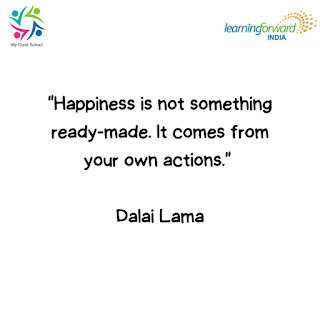
This quote highlights how happiness comes from within and is not dependent on external factors. It also emphasizes how unhappiness can make life difficult by causing us to focus on what we lack rather than what we have, and how it can lead to a negative self-image and an obsession with others' opinions. Ultimately, the key to happiness is finding contentment and fulfilment in oneself and one's life.
As an educator, I love doing my job with complete sincerity and commitment. I try my best to understand the needs of the students and deal with them most appropriately so that they succeed in their paths. Overall, being an educator can be a challenging yet rewarding experience, as it allows us to make a positive impact on the lives of the students and communities.
There are a lot of challenges while upgrading ourselves and working day and night for our students. One of the biggest challenges is failing to understand the needs of a student. I generally overcome every challenge efficiently because of my compassionate attitude.
In my teaching career, I came across a student who literally gave me a different outlook to understand problems. I would like to share that experience.
I met a three-year-old student who just started his first year in primary school. He had always been a shy and introverted child who struggled to make friends. He found it challenging to speak up in class, and as a result, he needed to catch up on his studies.
As the school year progressed, He began feeling increasingly unhappy. He felt isolated and excluded from class, so he dreaded going to school. He felt embarrassed and ashamed about his struggles and was afraid to ask for help.
Despite my efforts to engage him in class and provide extra support, his grades continued to suffer. He started to act out in classes and became disruptive, which only made him feel worse. I noticed that he seemed unhappy. I tried speaking to him to find out what was going on, but he didn't want to talk about it.
Eventually, I reached out to his parents to discuss his behaviour and academic performance. Together, we tried to develop a plan to support and address his needs. I gradually developed an understanding and convinced his parents to cope and start engaging him in activities that he liked. With the help of his parents and a counsellor, he began making progress. He learnt new coping strategies and social skills, and he started feeling more confident and happy in school.
In this scenario, his unhappiness is related to his struggles with socializing and academics. By working together, I, his parents, and a counsellor were able to provide the support he needed to overcome his challenges and thrive in school. He made me understand how important it is to understand the needs of a student and engage him in his interests throughout his educational journey to make him feel better and smarter.
There could be different meanings when describing an intolerable student. To be honest, I have never come across an intolerable student. Though if I have to describe an intolerable student, I would say, an intolerable student is a student whose behaviour is not acceptable and creates a negative impact on the learning environment.
This behaviour can range from disruptive, disrespectful, or aggressive behaviour towards peers, teachers, or school staff. Intolerable behaviour can cause harm to students, themselves, and the learning environment as a whole.
It's important to address intolerable behaviour early on to prevent it from escalating and to ensure a safe and positive learning environment for all students. Hypothetically, if I had to deal with an intolerable student, I would do the following:
1. Identify the root cause: Understanding the root cause of the student's behaviour is essential. It's important to talk to the student, listen to their concerns, and try to understand what's causing their behaviour.
2. Set clear expectations: Set clear expectations for behaviour and consequences for breaking the rules. Make sure that the student understands what is expected of them and the consequences of their actions.
3. Use positive reinforcement: Positive reinforcement is an effective strategy for encouraging positive behaviour. Praising the students when they display positive behaviour can help reinforce that behaviour.
4. Use consequences: Teachers can use consequences when the student exhibits intolerable behaviour. Consequences should be clear, consistent, and fair.
5. Provide support: Provide support to the student by offering resources and counselling. Working with the student to identify their strengths and areas of improvement can help them develop a positive attitude towards school and learning.
6. Involve parents: Involving parents in the process can be helpful. Parents can provide insight into the student's behaviour at home and be a valuable ally in developing a plan to address the behaviour.
7. Be consistent: Consistency is key when dealing with intolerable behaviour. Students need to know what to expect and what will happen if they continue to exhibit such behaviour.
My suggestion to all my fellow educators:
Building relationships with students is crucial for effective teaching and learning. Take the time to know your students, their interests, strengths and weaknesses and create a positive learning environment for their success.
Encourage positivity, respect, and inclusivity in the classroom. With gradual efforts and a "never give up" attitude, every educator can achieve their goals and the students can achieve success in their educational journey.
Vandana Sharma @KNPS Phagwara, India
Friday, October 27, 2023
Happiness & Tolerance - Sharda Pullabhatla
I am also one of the admission team members at our school. Every day I meet students from various schools of different classes with different mindsets, skills and hobbies. Last week I met a girl child who hadn’t cleared her grade IX final exams in her previous school.
She wanted to be admitted to grade IX in our school. Her parents were very tense and worried about her being very quiet and shy. They said that until grade 7 she was an active and enthusiastic girl. However, after the lockdown, she has changed a lot and does not want to talk to anyone.
Gradually, she became lonely and this resulted in her inattentiveness to her studies. As a result, she could not score well in grade IX exams. While I spoke to her she expressed her sadness about not having friends. She said she was unhappy because she did not have friends to share her feelings and thoughts.
During her interaction, I motivated her to stay happy and keep smiling. I also told her that we would make new friends for her in this school. Her buddies in class will help her settle down in this new school. She may share moments of joy and happiness with them.
Even our school Principal motivated her very much and encouraged her to perform well in class. Be happy and do every work with zeal. She told her to forget the past and put her efforts into the present task.
She was admitted to our school. I met her every day for one week. Gradually, I noticed changes in her. It's almost 15 days since she joined our school. She is paying attention in her class studies, sharing lunch with friends, making new friends and has started smiling as well.
Educators who wish to inculcate the value of Happiness in their students may refer to these points:
i) We should always support students.
ii) Lend an ear to their issues and concerns.
iii) Make them understand the positives and negatives of the situation and then resolve the issues.
An Intolerant Student -
Early morning after the assembly while students were settling down for their periodic assignment, suddenly we heard a loud noise from a teacher. I ran towards the classroom from where the disturbance was coming. Two teachers were already scolding two students involved in the quarrel.
On investigating the matter, we found out, that one of them had posted some abusive/unwanted comments on the social media account of another classmate. As a result, the first student was irate and held his collar and asked him to apologize. Instead of apologizing he commented by saying - “I have done the correct thing”.
We made both of them sit in different rooms, gave them a glass of water, heard the complete situation and counselled them about their behaviour and approach. We spoke to them about the method they have used to solve this situation. Also asked the students to write a realisation letter, promising this shall not repeat and they shall be more tolerant in future. I also made them say sorry to each other and shake hands.
After a week, just went to meet them and gauge the situation. While I observed them, they were not talking to each other, but then the quarrel had come to an end. My advice to teachers who wish to inculcate the value of tolerance in their students shall be –
I) Consider every situation as separate.
II) Take action based on a case-to-case basis.
III)Share different stories and situations where people demonstrated 'the value of tolerance to achieve victory and succeeded with students during class.
IV)Be friendly with students.
V) Be tolerant of students.
Sharda Pullabhatla @KNPS Phagwara
Friday, September 29, 2023
What it takes to spread the joy of learning at schools
"Having eyes, but not seeing beauty; having ears, but not hearing music; having minds, but not perceiving truth; having hearts that are never moved and therefore never set on fire. These are the things to fear."- Totto Chan.
There are two bittersweet incidents of "Learning" from my primary school years that had a role in shaping my personality today.
When I was in Primary school, I remember participating in a 400-meter race. I was excited about it. I don't remember practising for it, or my teacher encouraging me, but I ran 400 meters to the best of my abilities on the day of the competition.
Even though I gave my best, I was not happy with the result. I had lost the race. I remember feeling upset, those last few seconds of failure were painful. After that day, I dreaded sports. I often look back to that day and wonder "What could have happened if only I received the right direction?"
I am sure I'd have felt different if my teacher encouraged me before and after the competition. If only he told me that it's okay to lose but don't forget to give your best, or how to not be disheartened by failure and learn from it. Maybe I’d have loved participating and challenging myself. But, alas, it did not happen.
The second incident is about my English teacher and how she inspired me. I remember Sangeeta Ma'am coming to the classroom and reading us a story in English for the first time. She had such a good accent and enthusiasm for the language that she inspired me to learn English on my own. Her passion for the English language stayed with me even after she was gone.
Studying in a Hindi Medium School did not faze me or stop me from learning English. I never thought English was a difficult language to learn. I used to learn it every time I could, consciously putting in effort. Even though she was not there to help me much, she ignited a fire of learning in me.
From my personal experiences, learning is a lifelong process, it brings you happiness and peace.
It's about life, it's about us cherishing learning different things including becoming self-aware. Learning can help us define our values or positively shape our thoughts and actions. But before knowing how to spread the joy of learning, one must understand "Why learning is important." "What's the reason or motivation for one to learn something new?"
For me, it can be intellectual satisfaction or fun, it can be introspection, curiosity, reflection, competition and much more. But, learning can help one stand one’s ground, and become resilient.
I read a book once called "Totto-chan" where the author talks about the unorthodox methods of learning while simultaneously interacting with the surroundings and observing everything with curiosity. A teaching method where teachers have faith in the abilities and potential of the students and let their heart follow their passion.
I believe teaching kids/students needs "Dedication, Passion, and Commitment." One cannot be good at teaching if one does not like learning. We need to understand that learning does not mean acing classroom subjects, it means learning about things that can enhance the quality of life intellectually, emotionally and professionally.
Everyone, including a teacher, has a huge responsibility in the early stages of school since a teacher must establish the right direction, mindset, and guidance for the child. One must exude enthusiasm and not make learning taxing for the child. One must have a creative side and zeal to explain, accept and understand students.
I strongly believe that teachers should have a twinkling and flexible persona. To spread the joy of learning at schools, teachers must help students think out of the box and focus more on experiential learning.
Neetu Koranga
My Good School
Friday, September 8, 2023
A fearful and Impatience Student: Siddhi RPKM
As teachers, we must always teach students what is right and what is wrong.
But sometimes children hold fear of a few things in their mind because they have seen, experienced or heard something inappropriate about them.
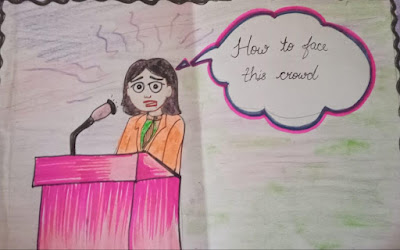
Recently, a similar situation was faced by one of our teachers in her class. One of her students was not courageous enough to meet the mic, so whenever the teacher asked him to participate in such activities or to conduct the morning assembly with his peer group, he always tried to escape the situation by making excuses. It forced the teacher to find the reason behind his behaviour. She came to know that he fears facing the mic. He did not want to become a laughing stock to other students if he failed to talk flawlessly.
This was a challenging situation for the teacher. She tried to encourage him and helped him practice how to face the mic and overcome his fears by taking the help of his parents, mirror, etc.
The teacher also told him the benefits of speaking his heart out. Gradually, the child practised and learned how to face the mic. He overcame his fear.
Advice to educators:
If you have a fearful student, you must try to understand the situation he/she might be going through. As a teacher, you should not impose your perspective on him/her.
A teacher must try to motivate and encourage the child after listening to the child's perspective about his/her fear. An educator must be careful of his/her way of promoting the child so it doesn't feel insulting or uncomfortable for the child to face his/her peers. This may help an educator make a fearful child fearless and courageous to face future difficulties simultaneously.
An impatient student is more challenging to deal with than a fearful student. Impatient students are hyper and impatient. They must be trained gradually to wait and think before speaking or doing any task. They should be taught that everyone will get a chance to speak or volunteer, and they must be patient enough to wait their turn. Teachers should remember that two students with different needs and personalities should not be compared with each other, as every student is unique.
As a teacher, we face many such situations in our day-to-day life. So, let's discuss one of them:
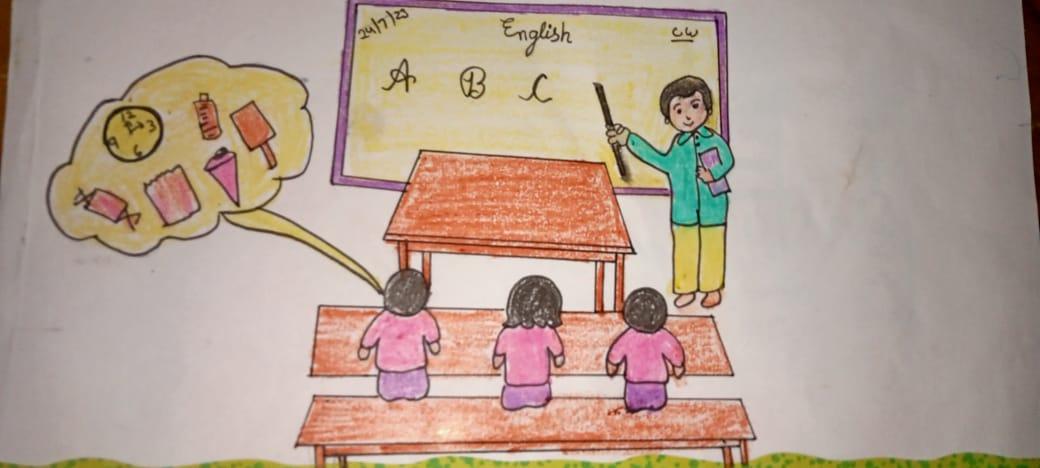
A boy in the class was very impatient as he used to continuously ask the dispersal time of every teacher or classmate every two to three minutes. He was always ready to go home; he never concentrated on the classroom discussions and used to be desperate about his after-school plans. Due to this, sometimes it was challenging to deal with him.
So, the teachers discussed how to deal with this situation and decided to interact with the child or his parents to find out why he behaved. The teachers came to know that he never wished to go to school. His parents used to tell the child they would have a party or go for an outing after he returned from school. It ultimately helped the teachers know the exact reason for such behaviour.
So, the teachers started to comfort the child in the school by having different activities which developed the child's interest to come to the school and have fun with studies in another way.
Advice to Educators
My suggestion to all my fellow teachers is never to give up on any child and to give them your time. Patiently listen, understand the reason for their behaviour and not judge them just on their superficial behaviour. We, teachers, can make a positive impression in the minds and lives of our students- We can be their guides who help them become better human beings.
A story connecting courage and patience:
Throughout our teaching career, we have experienced many situations in which we have shown courage and patience for our students.
- A boy in a class used inappropriate language with his peers. Not only this, but he also warned them not to complain regarding his behaviour to the teachers.
- However, one of his peers gathered some courage and told the whole situation to the teacher. She patiently counselling the child without saying anything related to the incident.
- In this way, the child showed courage- to tell the truth to the teacher while the teacher maintained her patience and mended the ways of the boy who used to use inappropriate language to others.
Siddhi @ RPK School Moradabad
Sanskriti Tandon, Priyanka Ruhela, Lovely Singh, Swati Saluja, Soni Bhatnagar, Manjit Palit, Pooja Arora.
Blog Archive
-
▼
2026
(146)
-
▼
July
(32)
- Reflections from Emerging Literacies Session - 18t...
- When You Grow Up, You Might Not Have A Job
- Heart Versus Mind - मंजुला सागर
- मुस्कान, संवेदनशीलता और संतुलित शिक्षण की प्रेरक स...
- संवेदनशील शिक्षा और विवेकपूर्ण जीवन का संतुलन - सु...
- My Reflection for the Emerging Literacies Session ...
- A Good School, Twice Defined
- Potato Crisps at the Learning Forward Retreat 19-2...
- Cheeselings at the Learning Forward Retreat 19-21 ...
- Reflection on Good School Alliance Training 19-21 ...
- Taking my Learning Forward - thank you note from K...
- Thinking Beyond Labels: Lessons from the Liberal S...
- What Does It take to Make Happy Teachers?
- The Retreat was a treat!
- संवेदनशील शिक्षक: शिक्षा से पहले समझ - सुनीता त्रि...
- Is Your Child Ready to Face the World?
- The Learning League
- Team Sunbeam reflects on the Learning Forward Retr...
- Reflections from the Learning Forward Retreat at D...
- Reading the World Before Facing It: Is Your Child ...
- Spark-Plugs @School
- India must look backward to move forward
- Jammu Literacy Project Workshop and reading ‘Disil...
- “Heart vs Mind” reading ahead teenage behaviour an...
- Disillusionment: Embracing Change Through Lifelong...
- Teaching Beyond Textbooks for the 21st Century- Re...
- मन सही सोच देता है और हृदय सही दिशा - मंजुला सागर
- Introduction to Emerging Literacies and "21 Lesson...
- Heart vs Mind Part 1 - Student discipline and teen...
- Heart Vs Mind - Sunbeam School Mau
- शिक्षा का वास्तविक उद्देश्य - सुनीता त्रिपाठी
- Welcome to Ballia - Literacy Project for Educators...
-
▼
July
(32)
.png)


.png)
.png)
.png)
.png)