Showing posts with label fearful student. Show all posts

Wednesday, November 15, 2023

Courage and Patience - Sharda Pullabhatla


Reflection 1 - A Fearful student 

Where there is fear, there can’t be any learning. This is the philosophy which I strongly believe in. Students who fear going to school, cannot pay full attention to what is being taught in the class and their minds are preoccupied with unknown and imaginary fears which dissuade them from letting their imagination go free. 

I encountered such a student from Grade 6, who was often dropped off at school by her father. She used to wail and used to get literally dragged into the classroom by her father. I never liked this as it made me think about what makes her dislike the school in general and her classroom in particular. 

Then I decided to sit in her classroom and observe what goes on in the class. I observed that she was leaning on her desk and looking out of the window, totally disinterested in the proceedings in the class. I being the coordinator, instructed the teacher to make her read from the textbook. When her name was called out by the teacher, she was trembling. She struggled to read even a line properly.  Further, when she was asked a few questions, she had no clue. I asked the student to follow me to my office. 

When she came to my office, I made her comfortable by offering her a few cookies. Initially, she was a  bit reluctant, but later she took a cookie. I could see that she was a bit comfortable then. I asked her about her interests, hobbies and what she liked to do in her free time. She told me that she was very good at drawing. I gave her a white sheet of paper and asked her to make a sketch of mine. She thought I was joking, but when I pushed her a bit she started sketching. Within a few minutes, she showed me the sketch.

Though it was a bit caricaturish, she did an amazing job. I congratulated her on that and wrote her name below the sketch and went with her and put it up on the Art Wall. She felt proud and I could sense that feeling of achievement in her eyes. I then rewarded her with candy.  I also told her that she should make a drawing and bring it to me every day. She just nodded her head.  I couldn’t decipher what she meant by that, but to my surprise, her father did not have to drag her to her classroom the next day. She hopped out of their car and ran inside the school gate. She had a paper neatly rolled up in her hand and she directly came running to my office to give me her drawing.  This time she drew the school building. I gave her a warm hug and rewarded her with candy. This practice continued and now she is one of the best artists we have got in our school. She has won several awards by participating in various competitions. 

Educators must identify the strengths of the students and work on them, rather than forcing them to learn everything. Results are important, but making the student love the learning environment and develop a sense of belongingness in the school environment is the beginning of the entire learning process.

Reflection 2 - An Impatient Student 

Patience is a virtue, but impatience can be a superpower when it comes to learning. I realised this when I met a student from Grade 8.  

Teachers regularly used to complain about him as he was never seated in one place and used to roam around the class, disrupting the usual proceedings. His impatient nature irked the teachers greatly as he never liked sitting in his place. I then asked the teachers about his academics. They had no complaints about that. In fact, they appreciated his academic performance and further, they added that his work is always complete and he was one of the first students to submit his work. I then got intrigued to figure out the cause of his restless behaviour in class. 

I decided to call him to my office and ask him how he felt in the class, as he was a new admission.  He was in a different school till Grade-7. Then I asked him what was the difference between his previous school and our school. Then he said that in the previous school, the students, who finished the classwork first were allowed to walk around the class and help the other kids. We did not have a similar practice in our school. In fact, I understood that the student’s behaviour was not out of indiscipline or insolence, rather it was a practice which was deeply ingrained within him by the previous school. In fact, this was a good practice. 

I encouraged the student and let him go. In the next teachers' meeting, I shared this best practice with all the teachers and our principal. Everyone liked the idea. We adopted it and we could see that students felt more engaged, responsible, and involved. This made the learning environment much better. 

Things may not be the way we see them. We need to go deeper and do a root-cause analysis. This helps us understand the students' behaviour and connect with them and can make our teaching and learning places more effective and livelier.

Sharda Pullabhatla @KNPS Phagwara

Thursday, October 26, 2023

Happiness & Tolerance - Pooja Seth

Dealing with a Disruptive Student

I had a student in one of my classes who was disruptive. He often interrupted the class by talking out of turn, distracting other students, and being generally disrespectful to the teacher and other students. 

I addressed the behaviour in class by setting clear boundaries and expectations for how students should behave. I also spoke with the student privately to understand their behaviour and provided them with resources for managing their behaviour, such as counselling services and strategies for self-regulation. 

I also collaborated with the student's parents to develop a plan for supporting the student's behaviour in and out of class. Over time, the student's behaviour improved, and they became more engaged and respectful in class. 

Advice to Educators:

My advice to educators dealing with disruptive students is to address the behaviour immediately by setting clear boundaries and expectations for how students should behave.

Try to speak with the student privately to understand their behaviour and provide resources for managing their behaviour. Collaborate with the student's parents to develop a plan for supporting the student's behaviour in and out of class. 

Finally, be patient and consistent in enforcing boundaries and supporting the student's growth and development.

Pooja Seth @KNPS, Phagwara (India)

Friday, September 8, 2023

A fearful and Impatience Student: Siddhi RPKM

As teachers, we must always teach students what is right and what is wrong. 

But sometimes children hold fear of a few things in their mind because they have seen, experienced or heard something inappropriate about them. 


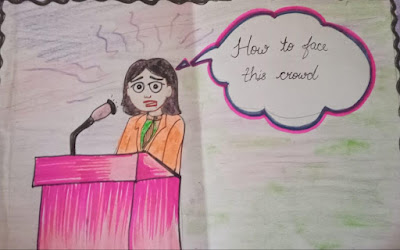
Recently, a similar situation was faced by one of our teachers in her class. One of her students was not courageous enough to meet the mic, so whenever the teacher asked him to participate in such activities or to conduct the morning assembly with his peer group, he always tried to escape the situation by making excuses. It forced the teacher to find the reason behind his behaviour. She came to know that he fears facing the mic. He did not want to become a laughing stock to other students if he failed to talk flawlessly. 


This was a challenging situation for the teacher. She tried to encourage him and helped him practice how to face the mic and overcome his fears by taking the help of his parents, mirror, etc. 


The teacher also told him the benefits of speaking his heart out. Gradually, the child practised and learned how to face the mic. He overcame his fear. 


Advice to educators:


If you have a fearful student, you must try to understand the situation he/she might be going through. As a teacher, you should not impose your perspective on him/her. 


A teacher must try to motivate and encourage the child after listening to the child's perspective about his/her fear. An educator must be careful of his/her way of promoting the child so it doesn't feel insulting or uncomfortable for the child to face his/her peers. This may help an educator make a fearful child fearless and courageous to face future difficulties simultaneously.


An impatient student is more challenging to deal with than a fearful student. Impatient students are hyper and impatient. They must be trained gradually to wait and think before speaking or doing any task. They should be taught that everyone will get a chance to speak or volunteer, and they must be patient enough to wait their turn. Teachers should remember that two students with different needs and personalities should not be compared with each other, as every student is unique. 


As a teacher, we face many such situations in our day-to-day life. So, let's discuss one of them:


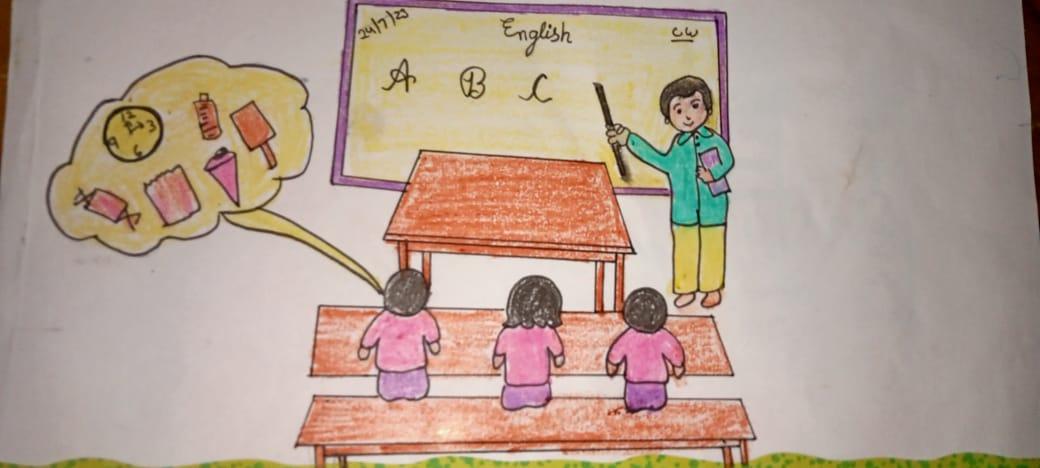
A boy in the class was very impatient as he used to continuously ask the dispersal time of every teacher or classmate every two to three minutes. He was always ready to go home; he never concentrated on the classroom discussions and used to be desperate about his after-school plans. Due to this, sometimes it was challenging to deal with him.


So, the teachers discussed how to deal with this situation and decided to interact with the child or his parents to find out why he behaved. The teachers came to know that he never wished to go to school. His parents used to tell the child they would have a party or go for an outing after he returned from school. It ultimately helped the teachers know the exact reason for such behaviour. 


So, the teachers started to comfort the child in the school by having different activities which developed the child's interest to come to the school and have fun with studies in another way.


Advice to Educators


My suggestion to all my fellow teachers is never to give up on any child and to give them your time. Patiently listen, understand the reason for their behaviour and not judge them just on their superficial behaviour. We, teachers, can make a positive impression in the minds and lives of our students- We can be their guides who help them become better human beings.


A story connecting courage and patience:


Throughout our teaching career, we have experienced many situations in which we have shown courage and patience for our students.

  • A boy in a class used inappropriate language with his peers. Not only this, but he also warned them not to complain regarding his behaviour to the teachers.
  • However, one of his peers gathered some courage and told the whole situation to the teacher. She patiently counselling the child without saying anything related to the incident.
  • In this way, the child showed courage- to tell the truth to the teacher while the teacher maintained her patience and mended the ways of the boy who used to use inappropriate language to others.

Siddhi @ RPK School Moradabad

Sanskriti Tandon, Priyanka Ruhela, Lovely Singh, Swati Saluja, Soni Bhatnagar, Manjit Palit, Pooja Arora.

Wednesday, August 9, 2023

A fearful and Impatient Student: Saumya RPKM

What is fear? 

Fear is a powerful and primitive human emotion which alerts us to the presence of danger. It is the good side of fear but on the other side, too much fear can harm self-confidence, it can prevent from achieving heights of success by destroying reality or being grounded in false beliefs. 


A fearful and impatient student 


There was a child in my class who used to stammer. He found it impossible to participate in any competition like poem recitation or elocution etc. When he stammered, he got anxious and when he got anxious he stammered even more. He used to sit still in the corner, knowing all the answers and just watching other kids— never participating in the activities. He also never participated in any conversations for fear that he might stammer. 


He was known as a good listener, but the fact was he just avoided talking because he knew what would happen if he spoke. I observed him for a few days to know the reason behind his behaviour: why he was so shy or different from others?


One fine day, I got to know about his stammering issue. I started talking to him, being friendly with him but he didn't involve himself much. It didn't stop me from encouraging him. I used to encourage him and provide him with chances to speak so he could regain his confidence.


It took time but his stammering lessened which boosted his confidence. Through encouragement, he got the courage and strength to face his fear and regain his lost confidence. In the teaching profession, we see these kinds of children who are struggling with speech issues. But with patience and consistency, teachers can help them. 


Advice to educators: As an educator, I and my group would like to suggest- 


  1. Teachers should deal with these kinds of children (lack of confidence, shyness etc.) with calmness. 
  2. Teachers should encourage children by giving them as many chances as possible. 
  3. Teachers should teach them the attitude of never giving up in difficult or frightening situations (like exams, competitions etc). 
  4. Teachers should boost children's morale so they can stand up on their feet firmly (without hesitation). 


"Courage is the Power of the mind to overcome fear" - Martin Luther King JR. 


Patience is the art of concealing your impatience.


In the past, I encountered an impatient student who was eager to move ahead with the lesson. To address their restlessness, I took a moment to talk with the student privately after class. I listened attentively to their concerns and empathised with their desire for more challenging material. 


I acknowledged their enthusiasm for learning and explained that while I understood their feelings, it was crucial to ensure that all students grasp the foundational concepts before progressing. 

To keep the student engaged, I promised to explore more advanced topics in the near future and encouraged them to take an active role in class discussions. 


This way, they could contribute their knowledge and potentially spark deeper conversations. By validating the student's eagerness and providing a plan for future learning, I aimed to channel their impatience into positive motivation for academic growth. 


Patience is the skill to accept or tolerate delay without becoming annoyed or anxious and without responding in disrespect or anger. 


Experience has taught me, that we undo ourselves through impatience. 


"To lose patience is to lose the battle" - By Mahatma Gandhi 


Saumya @ RPK School Moradabad

Rashmi Wright, Ekta Sharma, Rajni Gupta, Shafali Johri, Asha Singh, Beena Singh, Nidhi Narula

Tuesday, August 8, 2023

Fearful Student and Impatient Student: Avighna RPKM

Dealing with Challenging Students 

Think of two situations where you as an educator were faced with (preferably natural)/ might face the challenge of dealing with: 


  • A fearful student

  • An impatient student


Q. How did/will you deal with the student? 

A) If it was a real-life situation, were you successful in helping him/her overcome their problem? 

B) What is your advice to educators who want to inculcate these values in their students? 


Situation 1: A fearful student 


There was a student who was very dull and a slow writer, it was really hard to even make her utter a single word. The teacher was facing a troublesome time while working with her. 


So after many counselling sessions, it was found that the child was being abused and threatened by her parents for being a dull student. They were using all sorts of strictness on that 7-year-old girl for not being a bright child. Once her palm was all tortured with a pencil tip and she showed it to her teacher and told her everything. 


The teacher talked to her parents and made them understand that not all students are perfect score holders and that their methods are unjust and cruel. They need to be patient and loving towards her if they want to see her perform well.


The violence had made her submissive. They understood everything and felt very guilty. After that, they stopped forcing her and showed her affection. Both teachers and parents started praising her for every little thing she accomplished. 


The results were all fruitful. After some time, she gradually improved and did better in her academics. She was finally feeling safe and appreciated as every child should. 


Situation 2: An impatient student. 


According to us, there are many situations we all have faced in our teaching journey. Here are a few examples of when we have witnessed impatient students: 


•When they're waiting for their exam results. 

•When they're waiting for a friend who's running late. 

•When they're stuck in traffic and running late for school. 

•When their computer or phone is taking too long to load or download something. 

•When they're waiting for a package to arrive and it's taking longer than expected. 

•When a student is waiting for the bell to ring at the end of the day but it's taking too long. 

•When a student is waiting for their teacher to grade their assignment but it's taking longer than expected. 

•When a student is waiting for their turn to speak during a class discussion but other students keep interrupting them. 

•When a student is waiting for their school's sports team to win a big game but it's a close match and the outcome is uncertain. 

•When a student is waiting for their turn to perform in school programs but they're nervous and anxious. 


A) If it was a real-life situation, were you successful in helping him/her overcome their problem? 


Yes, we all were successful in helping these students in overcoming such situations by - 

• Trying to understand the motives for their impatience and finding ways to help them manage their frustration. 

• Encouraging them to take a step back and consider the situation from a different perspective. 

• Suggest some mindfulness exercises to help them stay calm and focused. 

• Trying to find ways to make the waiting process more engaging and enjoyable for the student.

   For example, listening to music or reading a book while they wait. 

• Reminding them of the benefits of being patient and encouraging them to stay positive.  


B) What is your advice to educators who want to inculcate these values in their students? 

Create a supportive and encouraging learning environment. Teachers should be patient, understanding, and compassionate toward their students. They should also provide opportunities for students to practice facing their fears in a safe and controlled setting. Additionally, educators can use positive reinforcement to help build students' confidence and self-esteem.


Avighna @RPK Moradabad, India

Ritika, Shwetank Singh, Evon Anthony, Neeru, Saymeen, Swadha, Deeksha


A fearful student & an impatient student: Aadhya RPKM

Situations where you as an educator are faced with the challenge of dealing with -

1. A Fearful Student 

2. An Impatient Student 


How did/will you deal with such kinds of students? 


As teachers, we deal with both kinds of students; In case of a fearful student, we can initiate the conversation. To understand the situation, we can do the following things: 


1. Asking about their fears - We usually  ask the child to speak up about his/her fears. What are the challenges or fears that he/she is facing? As teachers, we will try our best to help the student to overcome that fear. 


2. Connect with parents and ask them the reason- If the child does not respond about his/ her fears, we will try to connect with his/her parents to understand the actual reason behind the fearful behaviour of the child.


3. Identify the possible solutions- As teachers, we will try our best to find out the best possible solutions for helping the child. 


4. List the pros and cons of each solution- To remove the fear from the fearful student, we should make a list of all the pros and cons of the solution. It is to help teachers and the student to be mentally prepared for the consequences.


5. Create an action plan - To deal with such kinds of students, a teacher needs to prepare an action plan so the student can be more frank and outspoken to the teacher. 


6. Implement the action plan - After creating an action plan, every teacher must try their best method to implement the action plan. 


7. Help them to build self-confidence - To remove the fear from the fearful student, the teacher should be very open and frank. The teacher should  encourage such students to actively participate in all classroom activities. This will help the student develop self-confidence; His/her morale will also boost. 


Impatient Student

How to deal with impatient students- 


1. By praising them: By saying “Thank you for waiting so calmly for your turn”. For impatient students, it is one of the best ways to praise them to make them feel appreciated by their teachers. With time, they will self-generate this feeling of being praised and their habit of being impatient will slowly decrease. 


2. Help them to develop self-control - This method will be initiated by the teachers by keeping extra classes or some activities which will initially improve self-realisation and self-control among the impatient students. 


3. Motivate them to meditate daily to build inner calmness- It is one of the best and most important ways to deal with an impatient student. There must be 3-4 minutes of meditation sessions daily before starting the classes to help students develop inner calmness.


4. By telling them stories on how waiting for things sometimes makes us happier in the long run - We can deal with such kinds of students by telling them moral stories or stories which will prove beneficial for developing self-confidence subsequently leading them to become a good child with good moral values and positive attitude. 


5. Teach them to concentrate on learning rather than focusing on the outcome - To deal with such students, a teacher needs to teach them that learning is more important for them than the result or the outcome they seek in learning. We should teach them that learning improves their vision for achieving higher goals in life. 

Aadhya @ RPK Moradabad, India Deepa Khanna, Rachna Bisht, Asma, Farida, Sushma, Kulmeet, Krishangi.


Blog Archive