Showing posts with label praise. Show all posts

Saturday, April 4, 2026

Shifting from Competition to Cooperation

Masterclass with Sandeep Dutt

Reading The Courage To Be Happy by Ichiro Kishimi and Fumitake Koga

To explore the book’s core argument: shifting from competition to cooperation.

Key Takeaways

  • Praise is manipulation, not support. It creates a vertical, dictatorial relationship where the praiser judges the praised, fostering competition for approval.

  • Competition is a “disease” that makes others enemies. It corrupts goals, leading to unfair tactics and a focus on defeating rivals instead of achieving personal bests.

  • The solution is cooperation, built on “community feeling.” This inherent human need for connection stems from our physical weakness, which forces us to cooperate to survive.

  • Problem behaviour is a symptom of a sick system, not a bad individual. The focus must shift from treating the individual to fixing the competitive environment.

Topics

The Problem: Praise & Competition

  • The book argues against praise as a manipulative tool that creates a vertical, dictatorial relationship.

    • Example: A teacher’s praise (“It’s changed my opinion of you”) was a judgment from above that belittled the student’s full potential.

  • This praise-based system fosters competition for the leader’s favour, turning peers into enemies.

    • Analogy: A marathon where the goal shifts from finishing to defeating rivals, leading to “gamesmanship” and unfair conduct.

The Solution: Cooperation & Community Feeling

  • The alternative is a democratic classroom built on cooperation and “horizontal relationships.”

    • Horizontal relationships: All people are equal, regardless of ability or achievement.

    • Goal: See others as comrades, not rivals.

  • This model treats problem behaviour as a symptom of a sick environment, not a bad individual.

    • Analogy: A classroom with “pneumonia” (competition) needs a systemic cure, not just individual treatment.

  • The foundation for this cooperation is “community feeling”—an inherent human need for connection.

    • This need stems from our physical weakness, which forces us to cooperate to survive.

    • Conclusion: Our civilisation and power are direct results of our weakness, making cooperation a fundamental principle of life.

Next Steps

  • Sandeep Dutt: Continue reading the book on April 11 at the My Good School Retreat in Jaipur.

  • Manisha Khanna & Jugjiv Sir: Lead Sunday School on April 5 at 10:30 AM, reading “The Whistling School Boy” (Ruskin Bond) and “What You Are Looking For Is In The Library.”

  • Shalini: Read the “Youth” part in the next session on April 11.

 FATHOM AI-generated summary, read with care.

Saturday, March 21, 2026

The 5 Stages of Problem Behaviour

Masterclass with Sandeep Dutt 

To analyse the five stages of problem behaviour from The Courage to be Happy by Ichiro Kishimi and Fumitake Koga.

Key Takeaways

  • Problem behaviour escalates through 5 stages, each driven by a goal to secure a “special position” and rooted in a “love-starved” feeling.

  • Rebuke is ineffective; it often reinforces the behaviour by fulfilling the student’s goal of being recognised, even when it’s negative.

  • Intervention must match the stage: early stages respond to respect, while late stages require professional help.

  • The teacher’s role is critical for prevention, as most problem behaviour stops at Stage 3 (Power Struggle).

Topics

The 5 Stages of Problem Behaviour

  • Stage 1: Demand for Admiration

    • Goal: Gain praise and a privileged position.

    • Behaviour: Acting as the “good child” or “honour student.”

    • Risk: Motivation collapses without praise, leading to cheating.

    • Intervention: Show respect to convey inherent worth, focusing on small, everyday details.

  • Stage 2: Attention Drawing

    • Goal: Stand out by any means when praise fails.

    • Behaviour:

      • Assertive: Mischief (e.g., noise, ridiculing) to be a “class clown.”

      • Passive: Dramatic drop in achievement (e.g., forgetting, crying).

    • Rationale: Prefers negative attention (rebuke) to being ignored.

    • Intervention: Convey worth through respect; this is the last stage where direct teacher intervention is effective.

  • Stage 3: Power Struggle

    • Goal: Prove might through open resistance and disobedience.

    • Behaviour: Provocation, foul language, rule-breaking, or passive refusal to engage.

    • Teacher’s Trap: Reacting with anger creates a “racket of anger” that escalates the conflict.

    • Intervention: Get off the “court” immediately by refusing to engage in the power struggle.

  • Stage 4: Revenge

    • Goal: Seek “love’s revenge” on those who wouldn’t provide love; seeks connection through hate.

    • Behaviour: Repeating disliked actions, stalking, self-harm, or social withdrawal.

    • Rationale: Accuses others (“it’s your fault”) and finds success in their worry.

    • Intervention: Requires an impartial third party (another teacher, parent, specialist) because the student will escalate behaviour with the original teacher.

  • Stage 5: Proof of Incompetence

    • Goal: Announce incompetence to avoid further hurt and disappointment.

    • Behaviour: Despair, self-deprecation, lethargy, and rejection of all assignments.

    • Rationale: “Don’t expect anything from me.”

    • Intervention: Requires a specialist. This stage is difficult to reverse, even for professionals.

The Ineffectiveness of Rebuke

  • The Cycle: Rebuke provides only temporary quiet. The teacher must constantly yell, proving that it is an ineffective educational tool.

  • The Paradox: Problem behaviour often implies a wish to be rebuked, as it fulfils the goal of being recognised as “special.”

  • The Deterrent Fallacy: Punishment fails as a deterrent in education because the student’s underlying goal is to be noticed, making the punishment itself a form of reward.

Next Steps

  • All Participants:

    • Read the chapter “War vs Peace” from Wanted Backbencher Last Ranker Teacher by Kavita Ghosh.

  • Sandeep Dutt:

    • Continue reading The Courage to be Happy on March 28, 2026 - VIOLENCE IN THE NAME OF COMMUNICATION

FATHOM AI-generated summary, read with care.

Saturday, February 7, 2026

Why We Return to Teachers


Masterclass with Sandeep Dutt

To introduce the book The Courage to be Happy by Ishiro Kishimi and Fumitake Koga, and its core themes.

Key Takeaways

  • New Book Study: The group is starting The Courage to be Happy, the sequel to The Courage to be Disliked, to explore Alfred Adler’s psychology of happiness.

  • Book’s Premise: The book opens with a teacher (Harshita) who, after three years, is disillusioned with Adler’s ideas, finding them impractical in the real world.

  • Core Conflict: The teacher’s main struggle is with Adler’s “no praise, no rebuke” principle, which she feels led to an unruly class and forced her to revert to traditional discipline.

  • Central Theme: The philosopher’s response is that the teacher’s problem stems from a misunderstanding of Adler’s concept of “love,” which is presented as the ultimate test of courage.

Topics

Book Introduction: The Courage to be Happy

  • Context: The sequel to The Courage to be Disliked, this book continues the dialogue between a Philosopher (Sandeep Dutt) and a Youth (Harshita Dalawat).

  • Goal: To find “true contentment” by exploring Adler’s psychology, which the book’s authors claim was 100 years ahead of its time.

  • Key Adlerian Concepts from Book 1:

    • All problems are interpersonal.

    • Freedom is being disliked.

    • Happiness is a choice in the “here and now.”

The Teacher’s Dilemma

  • The Youth (Harshita): Now a teacher, she is disillusioned with Adler’s ideas after three years of trying to apply them in a classroom.

  • Core Problem: The “no praise, no rebuke” principle, which she followed faithfully, resulted in an “unruly class.”

  • Result: She felt forced to abandon Adler’s methods and revert to traditional discipline (rebuke, punishment), viewing Adler’s philosophy as “quackery” and “empty idealism.”

The Philosopher’s Response

  • Adler’s Ideas as a Prescription: The philosopher compares Adler’s ideas to “eyeglass lenses”—a tool that can broaden vision for some but may not be a universal fit.

  • The “Stairway of Understanding”: The philosopher argues that the teacher has not yet found the correct path to understanding Adler.

  • The “Biggest Choice in Life”: The philosopher identifies the teacher’s core issue as a failure to make this choice, which is defined as “love.”

    • Adler’s “Love”: Not a simple emotion, but “the harshest and most courage-testing task of all.”

    • Happiness as a Journey: It requires continuous effort, not a magical, one-time event.

Discussion: Why We Return to Teachers

  • Initial Responses: Participants cited reasons like clearing doubts, seeking advice, or sharing success.

  • Philosopher’s Correction: These are secondary reasons. The primary, unspoken motivation is “love.”

    • Rationale: Love is the pure, powerful bond that attracts students to a true teacher, distinguishing it from a transactional relationship with a tutor.

    • Connection to Adler: This bond of love is the fundamental principle of Adler’s philosophy.

Next Steps

  • All Participants:

    • Read The Courage to be Happy for the next session.

    • Reflect on the concept of “love” in the teacher-student relationship.

  • Diana L Kahmei:

    • Recruit a teacher to join the Masterclass.

  • Minakshi Prasad:

    • Confirm Sunday meeting details with Vikram.

Saturday, December 20, 2025

You Are Not the Centre of the World

Read And Lead - Masterclass 2026

The meeting discussed the book "The Courage to Be Disliked" by Fumitake Koga and Ichiro Kishimi. We elaborated on the concept of community feeling, emphasising horizontal relationships over vertical ones. The discussion highlighted the pitfalls of praise and rebuke and advocated encouragement and gratitude instead. The session also addressed the importance of contributing to the community in building self-worth and courage. Participants shared their thoughts on applying these principles in various contexts, including education and work.

Key Takeaways

  - Reject Vertical Relationships: Avoid praise and rebuke, as they create a manipulative hierarchy. Instead, establish horizontal relationships grounded in mutual respect.

  - Practice Encouragement: Replace judgment with gratitude ("Thank you") to acknowledge effort and foster courage. This affirms a person's value without creating dependency.

  - Find Belonging Through Contribution: A true sense of worth comes from feeling beneficial to the community, not from external validation.

  - Use the "Larger Community" Principle: When facing hardship, remember the world is bigger than your immediate problem. This perspective provides a refuge and prevents minor issues from becoming overwhelming.

The "Rolling Stone" Analogy

  - The session began with a reflection on the "rolling stone" analogy from the previous week's reading.

  - Meaning: A person who seeks constant validation loses their "sharp corners" (individuality) and becomes powerless, carried away by societal currents.

  - Contrast: True freedom involves standing firm and speaking up, not conforming to the herd.

"You Are Not the Centre of the World"

  - The book's core premise: while you are the protagonist of your own life, you are a member of a community, not its centre.

  - Self-Centred View: Treating others as existing to serve you (the "prince/princess" complex) leads to disillusionment and resentment when expectations are not met.

  - "Globe vs. Map" Analogy:

      - Map: A flat, subjective view with one's own location at the centre.

      - Globe: A spherical, objective view where every point is a potential centre, illustrating that no single person is the absolute centre.

  - Active Contribution: A sense of belonging is earned through active contribution, not passive presence. It requires asking, "What can I give to this person?"

The "Larger Community" Principle

  - Adler's concept of community is infinite, extending beyond immediate circles to include the entire universe.

  - Purpose: To provide a refuge when struggling in a smaller community (e.g., school, workplace).

  - Application: When facing adversity, listen to the "voice of the larger community."

      - Example: If a teacher is authoritarian, remember that in the larger community of human society, you are equals. This perspective empowers you to object to unreasonable demands.

Vertical vs. Horizontal Relationships

  - The book advocates for rejecting vertical relationships (hierarchy) in favour of horizontal relationships (equality).

  - Vertical Relationships:

      - Praise & Rebuke: Both are manipulative tools that create a hierarchy.

          - Praise: A judgment from a "superior" to an "inferior."

          - Rebuke: The "stick" to praise's "carrot."

      - Intervention: Forcing your will on another's task, driven by a belief in your own superiority.

  - Horizontal Relationships:

      - Encouragement: The alternative to praise/rebuke. It is assistance that respects task separation.

      - Gratitude: Expressing thanks ("Thank you") acknowledges effort without judgment.

          - Why it works: It allows a person to subjectively feel they are beneficial, which builds courage.

          - Contrast with Praise: Praise forces adaptation to another's values, limiting freedom.

Discussion & Application

  - Teacher-Student Dynamics: The group discussed how praise creates an unconscious vertical hierarchy in the classroom.

  - My Good School Model: The organisation was cited as an example of a horizontal structure.

      - Key Elements: Openness, accessibility, and a focus on challenging opportunities over direct praise.

      - Rationale: Providing challenging work demonstrates confidence in a person's ability, fostering internal fulfilment.

Next Steps

  - Gurdeep:

      - Share the Otter AI summary and bookmarked page in the WhatsApp group.

Wednesday, May 3, 2023

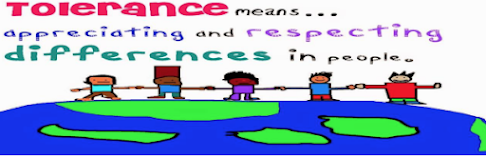
Happiness and Tolerance - Ashtalakshmi RPKM

Image copied from www.dreamstime.com

Dealing with hate and intolerance in the classroom is a crucial issue for teachers, as it can negatively impact the learning environment and the well-being of all students.

Teachers should establish clear expectations and guidelines for behaviour in the classroom, including a zero-tolerance policy for hate speech or discriminatory behaviour.  

Address incidents promptly: When an incident of hate or intolerance occurs, it's essential to address it promptly and directly with the students involved. This can be done privately or in front of the class, depending on the situation.

Encourage dialogue and understanding: Teachers should create a safe space for students to have open and respectful conversations about sensitive issues. Encouraging dialogue can build empathy and understanding among students.

Model respectful behaviour: Teachers should model respectful behaviour in the classroom and avoid making insensitive or discriminatory comments themselves.

Involve parents and school administrators: In severe incidents of hate or intolerance, it may be necessary to involve parents and school administrators to provide additional support and resources.

Addressing hate and intolerance in the classroom requires a proactive and ongoing effort from teachers, students, and the wider school community. By promoting respect and understanding and responding promptly and appropriately to incidents.


Once, I encountered an intolerant student who often showed verbally and physically abusive behaviour. My classroom's atmosphere was deteriorating because of him. He used to cry whenever I addressed his problem but would not say anything. He used to seek attention. Whatever the situation was, he wanted to be the talk of the class. From my experience, I suspected that he quest for validation and attention from everyone.

Upon meeting his mother, I got to know about his family's condition that his father is suffering from cancer, due to which he's often neglected by his family. He subconsciously chased attention so much that the consequences didn't matter. I started motivating him to give his best and made sure to constantly hear his heart out. Within a few days, he started showing improvement. So, there's always a reason behind everything, and we should pay more attention to the journey and how we can change someone's behaviour rather than just the outcome. The classroom should be a place where each student should feel safe and appreciated.

When talking to an agitated student:
  • Introduce yourself if you still need to learn the student.
  • Maintain a calm and reassuring voice. 
  • Speak calmly, but only do some of the talking. 
  • Allow the student to vent.
  • Ask questions; this shows that you are concerned. 
  • When asking questions, use the student's name.
  • Listen carefully to the student's concerns and take them seriously. 
  • Paraphrasing what the student says can help show that you are listening.
  • If emotions escalate, acknowledge them. "I can see that you're angry about the ..."
  • Maintain appropriate eye contact. 
  • A direct and uninterrupted stare may feel threatening to the student.
  • Be natural in your gestures and speaking tone.

Tolerance Requires Virtue
Tolerance, in and of itself, is not a virtue. If a student tolerates drinking and driving, his tolerance is not virtuous. Tolerance is neutral. Tolerance derives its value from what the student takes and how the student expresses his tolerance and intolerance. This involves character.

When a student uses a racial slur, his problem is not a lack of tolerance but a lack of kindness and a problem with pride (the root of belief in racial superiority). When a student makes fun of a classmate's point of view during a class discussion, his problem isn't a lack of tolerance but a lack of courtesy.

When one student spits on another student because he thinks his schoolmate is gay, tolerance isn't the issue so much as self-control. Proper tolerance is the outgrowth of moral character qualities such as kindness, patience, courtesy, humility, love, self-control, and courage. Even intolerance should be expressed through these qualities.

Students need to be taught that tolerance arises from character. If they don't understand this, they will think they are being tolerant when they are actually only expressing indifference ("whatever") or apathy ("who cares?"), or even recklessness ("Why not?"). Improperly taught "tolerance education" can disarm students of their proper convictions.

When students are happy, they are better able to solve problems, they are more open to critical thought and reasoning, their focus is more in tune, and their ability to retain and recall information is heightened. A happy child is likelier to be motivated at school, collaborate and build friendships with classmates, and troubleshoot and solve social and academic dilemmas. Biologically, happiness and other emotions are critical in cognitive functionality and processing.

Teachers need the knowledge to teach successfully in different areas, for example, feedback and praise, handling mistakes, student questions, and clearly structured lessons. Also, areas reducing anxiety, motivation, humour, and active learning time are essential for teachers.

Praise is most effective when it is sincere and natural. They should use appropriate gestures and actions to accompany them. Teachers should motivate the students so that the students are more likely to pay attention. To be respectful towards the children is also very important. To react positively to wrong answers is a way to teach simply. The relationship between students and their parents is necessary. Students like it when the teacher uses their names. The classroom climate is so important. Creating a positive classroom climate is why children like to go to school and want to learn.

Ashtalakshmi @ RPK School Moradabad
Ritu Goyal, Poonam Sharma, Meenakshi, Sonia Gupta, Tabinda Jabeen, Charu Sharma and Krishangi Sharma.

Blog Archive