

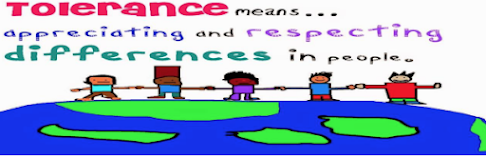
Image copied from www.dreamstime.com
Dealing with hate and intolerance in the classroom is a crucial issue for teachers, as it can negatively impact the learning environment and the well-being of all students.
Teachers should establish clear expectations and guidelines for behaviour in the classroom, including a zero-tolerance policy for hate speech or discriminatory behaviour.
Address incidents promptly: When an incident of hate or intolerance occurs, it's essential to address it promptly and directly with the students involved. This can be done privately or in front of the class, depending on the situation.
Encourage dialogue and understanding: Teachers should create a safe space for students to have open and respectful conversations about sensitive issues. Encouraging dialogue can build empathy and understanding among students.
Model respectful behaviour: Teachers should model respectful behaviour in the classroom and avoid making insensitive or discriminatory comments themselves.
Involve parents and school administrators: In severe incidents of hate or intolerance, it may be necessary to involve parents and school administrators to provide additional support and resources.
Addressing hate and intolerance in the classroom requires a proactive and ongoing effort from teachers, students, and the wider school community. By promoting respect and understanding and responding promptly and appropriately to incidents.
Once, I encountered an intolerant student who often showed verbally and physically abusive behaviour. My classroom's atmosphere was deteriorating because of him. He used to cry whenever I addressed his problem but would not say anything. He used to seek attention. Whatever the situation was, he wanted to be the talk of the class. From my experience, I suspected that he quest for validation and attention from everyone.
Upon meeting his mother, I got to know about his family's condition that his father is suffering from cancer, due to which he's often neglected by his family. He subconsciously chased attention so much that the consequences didn't matter. I started motivating him to give his best and made sure to constantly hear his heart out. Within a few days, he started showing improvement. So, there's always a reason behind everything, and we should pay more attention to the journey and how we can change someone's behaviour rather than just the outcome. The classroom should be a place where each student should feel safe and appreciated.
When talking to an agitated student:
- Introduce yourself if you still need to learn the student.
- Maintain a calm and reassuring voice.
- Speak calmly, but only do some of the talking.
- Allow the student to vent.
- Ask questions; this shows that you are concerned.
- When asking questions, use the student's name.
- Listen carefully to the student's concerns and take them seriously.
- Paraphrasing what the student says can help show that you are listening.
- If emotions escalate, acknowledge them. "I can see that you're angry about the ..."
- Maintain appropriate eye contact.
- A direct and uninterrupted stare may feel threatening to the student.
- Be natural in your gestures and speaking tone.
Tolerance Requires Virtue
Tolerance, in and of itself, is not a virtue. If a student tolerates drinking and driving, his tolerance is not virtuous. Tolerance is neutral. Tolerance derives its value from what the student takes and how the student expresses his tolerance and intolerance. This involves character.
Tolerance, in and of itself, is not a virtue. If a student tolerates drinking and driving, his tolerance is not virtuous. Tolerance is neutral. Tolerance derives its value from what the student takes and how the student expresses his tolerance and intolerance. This involves character.
When a student uses a racial slur, his problem is not a lack of tolerance but a lack of kindness and a problem with pride (the root of belief in racial superiority). When a student makes fun of a classmate's point of view during a class discussion, his problem isn't a lack of tolerance but a lack of courtesy.
When one student spits on another student because he thinks his schoolmate is gay, tolerance isn't the issue so much as self-control. Proper tolerance is the outgrowth of moral character qualities such as kindness, patience, courtesy, humility, love, self-control, and courage. Even intolerance should be expressed through these qualities.
Students need to be taught that tolerance arises from character. If they don't understand this, they will think they are being tolerant when they are actually only expressing indifference ("whatever") or apathy ("who cares?"), or even recklessness ("Why not?"). Improperly taught "tolerance education" can disarm students of their proper convictions.
When students are happy, they are better able to solve problems, they are more open to critical thought and reasoning, their focus is more in tune, and their ability to retain and recall information is heightened. A happy child is likelier to be motivated at school, collaborate and build friendships with classmates, and troubleshoot and solve social and academic dilemmas. Biologically, happiness and other emotions are critical in cognitive functionality and processing.
Teachers need the knowledge to teach successfully in different areas, for example, feedback and praise, handling mistakes, student questions, and clearly structured lessons. Also, areas reducing anxiety, motivation, humour, and active learning time are essential for teachers.
Praise is most effective when it is sincere and natural. They should use appropriate gestures and actions to accompany them. Teachers should motivate the students so that the students are more likely to pay attention. To be respectful towards the children is also very important. To react positively to wrong answers is a way to teach simply. The relationship between students and their parents is necessary. Students like it when the teacher uses their names. The classroom climate is so important. Creating a positive classroom climate is why children like to go to school and want to learn.
Ashtalakshmi @ RPK School Moradabad
Ritu Goyal, Poonam Sharma, Meenakshi, Sonia Gupta, Tabinda Jabeen, Charu Sharma and Krishangi Sharma.


