Showing posts with label violence. Show all posts

Saturday, March 28, 2026

Violence as an Immature Communication Strategy


Masterclass

To reframe violence as an immature communication strategy and advocate for student self-reliance. Reading from the book The Courage To Be Happy by Ichiro Kishimi and Fumitake Koga

Key Takeaways

  • Violence is an immature communication strategy. It’s a low-cost, high-effort shortcut to force submission when verbal consensus fails. This includes non-physical acts, such as rebuking, which Adler called “anger that pulls people apart.”

  • Shift from cause to goal. Instead of focusing on who is to blame (“bad person” vs. “poor me”), guide students to focus on “What should I do from now on?” to foster responsibility and self-reliance.

  • Educators must foster self-reliance. The core task is to help students gain the awareness that they can accomplish things on their own. This requires a horizontal relationship, not a vertical one built on authority.

  • The reward is the feeling of contribution. Expecting student gratitude hinders self-reliance. True happiness comes from contributing to their growth, not from being thanked.

Topics

Violence as an Immature Communication Strategy

  • Violence is a shortcut to force submission when verbal communication fails to achieve consensus.

  • This includes non-physical acts, such as rebuking, which is a low-cost attempt to force submission.

  • Adler’s view: “Anger is an emotion that pulls people apart.” It invites contempt and reveals the adult’s immaturity, undermining respect.

The “Triangular Column” Framework

  • This framework helps analyse conflict by identifying three perspectives:

    1. “That bad person”: The perceived aggressor.

    2. “Poor me”: The perceived victim.

    3. “What should I do from now on?”: The forward-looking, goal-oriented perspective.

  • Focusing on the first two only yields excuses. The goal is to guide students to the third perspective.

Fostering Self-Reliance

  • Problem: Adults often hinder self-reliance by creating dependence.

    • Reason 1: Fear of losing authority in a vertical relationship.

    • Reason 2: Self-protection—avoiding responsibility for student failures.

  • Solution: Create a horizontal relationship where students can make their own decisions.

    • Separation of Tasks: Don’t intervene in tasks where the student bears the final responsibility.

    • Support, don’t control: Provide knowledge and experience, but let students choose their own paths.

Next Steps

  • Gurdeep Kaur: Write a reflection on the quote “Anger is an emotion that pulls people apart.”

  • All Participants:

    • Join the “My Good School” session tomorrow.

    • Continue the discussion in the WhatsApp group.

  • Sandeep Dutt: Resume the masterclass on Saturday, April 4, from the current bookmark.

FATHOM AI-generated notes, read with care.

Saturday, May 22, 2021

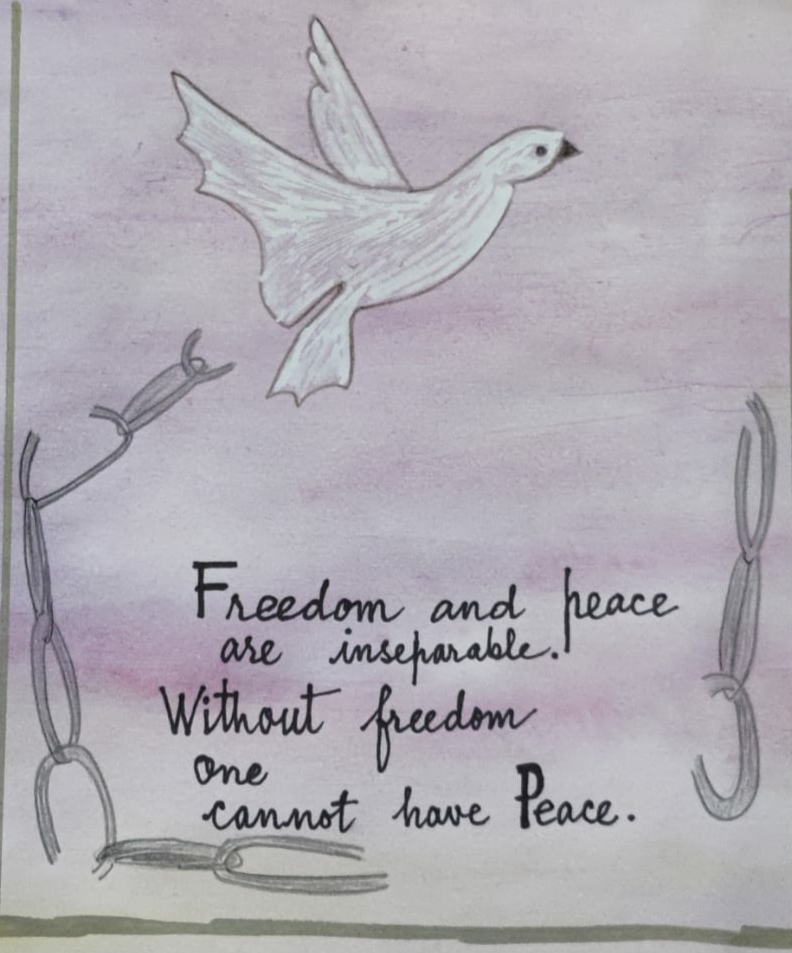
Freedom and Peace - Achievers JMMS

FREEDOM AND PEACE 

The right to act, speak and think freely can very well define freedom. Freedom allows us to be ourselves. It is the state of not being controlled by somebody else.

Peace is a situation in which there is no war or violence. It is the state of being calm and quiet. Peace is the quality of being Absent from disturbance. 

This is the story of freedom and peace. It is the story where the child realises his strength with the help of a teacher.

Achievers JMMS @John Martyn Memorial School, Salangaon, Dehradun 
- Sweta Thapli, Meena Kukreti, Dolly Pharasi, Jyoti Joshi, Nisha Pundir and Chandra Prakash.

Monday, May 3, 2021

Freedom and Peace - Dynamic DGS

Freedom is a mighty word...it is the power to think and act in a way that we feel correct. The word freedom could mean different things for different people. For some going for a dance class or singing in a class could be freedom, while for others wearing a certain type of clothes could mean freedom. Children do need to be supervised, but they also need the freedom and space to grow. Adults sometimes inhibit the children with their prejudices and opinions. We need to give them the freedom and independence to think and make choices. We want children to be their own individuals when they grow up. Of course, they might err at times, but that is the only way they will learn. When we allow children some freedom, we convey that we trust them, and they respect that trust. If there are too many restrictions, they tend to become rebellious at times. Thus it’s important to allow certain liberties, but one should also know where to draw the line.

जीवन बंधनों  में बंधकर जीना है अगर,

करना है अपना हर स्वप्न दरकिनार अगर,

तो लगने लगेगी हर सांस एक बोझिल 

सफर।

टूटे हुए सपनों की एक इमारत भर ।

इसलिए.........

जिंदगी की जिंदगी से मुलाकात होनी चाहिए, 

खुशियो की भी आपस में बात होनी चाहिए, 

अस्तित्व है जीवन में कुछ ये एहसास  होना चाहिए, 

पंखों को उड़ने के लिए आकाश  नहीं नया कोई चाहिए, 

बस  थोड़ा पर फैलाने के लिए आजादी पर अधिकार होना चाहिए ।।

Peace means a calm and composed state of mind. Peace is harmony, freedom from quarrels, wars, arguments; it is inner contentment . . . which is very essential for mental health. We tend to focus on physical health, but very few of us realise the importance of mental health. A calm and peaceful mind helps us think clearly and make better decisions and keep a healthy environment. Kids need to be corrected when they go wrong, but they don’t need constant nagging.


There should be no bullying amongst children for them to be peaceful. Thus all schools should have zero tolerance for bullying.  Children should be assured that they are safe.  Teachers need to introduce this word right from the beginning of school to be familiar with ‘peace’. We also need to teach the kids to resolve issues and fights without hurting each other.


A peaceful state of mind allows new thoughts and ideas to be developed easily. When people learn compassion and tolerance, only inner peace can be achieved and then there will be no place for hatred, anger, selfishness. How can one forget the role of meditation! Yes, meditation helps in bringing peace and attaining divinity. Practising meditation regularly alleviates stress-related problems, deeply relaxes the mind and rejuvenates the system. This peace will then radiate, create a ripple effect and indeed lead to global peace.


Let's remember this equation:-

peace of mind = calmness, tranquillity, serenity =happiness, So what is the relationship between peace and freedom?


To achieve anyone, the requisite of the other is a must. As Pope John Paul II has rightly said that we should not accept violence as the way of peace. If we respect true freedom, the peace that results will be based on justice," a peace founded on the incomparable dignity of the free human being." Whatsoever may be your field, whether you are at home or in a public space, if you feel free to express your thoughts or ideas and not succumb to outside forces, then you will attain peace of mind and body.


Dynamic DGS @ The Doon Girls School, Dehradun - Reena Gusain, Reah Sikand, Meenakshi Panwar, Rachna Bharrdwaj and Sumali Devgan

Blog Archive