Showing posts with label bullying. Show all posts

Sunday, February 2, 2025

War vs Peace - Aakash Agrawal

Schools are designed to be sanctuaries of learning, growth, and development. But beneath the surface of textbooks and classrooms, a constant struggle plays out: the battle between war and peace. This isn't a literal war with weapons, but a metaphorical one fought with words, actions, and attitudes, impacting the very soul of the school ecosystem.

The Seeds of War:


"War" in this context represents the negative forces that can disrupt the harmony of a school environment. These can include:

* Bullying: Physical, verbal, or cyberbullying creates a climate of fear and intimidation, undermining students' sense of safety and belonging.

* Cliques and Exclusion: Social divisions and exclusion can lead to feelings of isolation and alienation, hindering students' ability to connect with their peers.

* Discrimination: Prejudice based on race, religion, gender, or other factors can create a hostile environment, denying students equal opportunities and respect.

* Teacher-Student Conflict: Power imbalances and communication breakdowns can lead to strained relationships, hindering effective learning and creating resentment.

* Academic Pressure: Excessive focus on grades and competition can create anxiety and stress, undermining students' well-being and love of learning.

The Pursuit of Peace:


"Peace," on the other hand, embodies the positive forces that foster a nurturing and supportive school environment. These include:

* Empathy and Kindness: Encouraging students to understand and appreciate each other's perspectives fosters compassion and respect.

* Inclusion and Diversity: Celebrating diversity and creating a welcoming environment for all students promotes a sense of belonging and acceptance.

* Conflict Resolution: Teaching students healthy ways to resolve conflicts peacefully equips them with essential life skills and reduces aggression.

* Positive Teacher-Student Relationships: Building strong, supportive relationships between teachers and students creates a foundation of trust and mutual respect.

* Collaborative Learning: Encouraging teamwork and cooperation fosters a sense of community and shared responsibility for learning.

Conclusion- The struggle between "war" and "peace" within our schools is a constant, subtle, yet incredibly impactful dynamic and is a necessary evil.

Aakash Agrawal
Sunbeam School Varuna, Varanasi

Monday, May 3, 2021

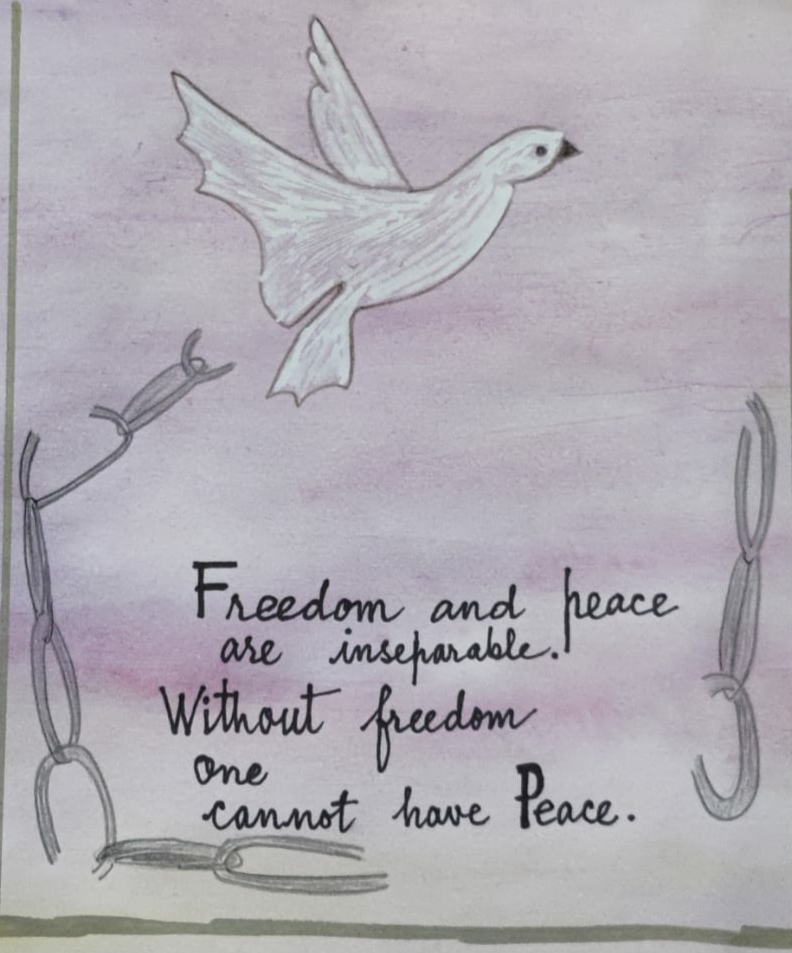
Freedom and Peace - Dynamic DGS

Freedom is a mighty word...it is the power to think and act in a way that we feel correct. The word freedom could mean different things for different people. For some going for a dance class or singing in a class could be freedom, while for others wearing a certain type of clothes could mean freedom. Children do need to be supervised, but they also need the freedom and space to grow. Adults sometimes inhibit the children with their prejudices and opinions. We need to give them the freedom and independence to think and make choices. We want children to be their own individuals when they grow up. Of course, they might err at times, but that is the only way they will learn. When we allow children some freedom, we convey that we trust them, and they respect that trust. If there are too many restrictions, they tend to become rebellious at times. Thus it’s important to allow certain liberties, but one should also know where to draw the line.

जीवन बंधनों  में बंधकर जीना है अगर,

करना है अपना हर स्वप्न दरकिनार अगर,

तो लगने लगेगी हर सांस एक बोझिल 

सफर।

टूटे हुए सपनों की एक इमारत भर ।

इसलिए.........

जिंदगी की जिंदगी से मुलाकात होनी चाहिए, 

खुशियो की भी आपस में बात होनी चाहिए, 

अस्तित्व है जीवन में कुछ ये एहसास  होना चाहिए, 

पंखों को उड़ने के लिए आकाश  नहीं नया कोई चाहिए, 

बस  थोड़ा पर फैलाने के लिए आजादी पर अधिकार होना चाहिए ।।

Peace means a calm and composed state of mind. Peace is harmony, freedom from quarrels, wars, arguments; it is inner contentment . . . which is very essential for mental health. We tend to focus on physical health, but very few of us realise the importance of mental health. A calm and peaceful mind helps us think clearly and make better decisions and keep a healthy environment. Kids need to be corrected when they go wrong, but they don’t need constant nagging.


There should be no bullying amongst children for them to be peaceful. Thus all schools should have zero tolerance for bullying.  Children should be assured that they are safe.  Teachers need to introduce this word right from the beginning of school to be familiar with ‘peace’. We also need to teach the kids to resolve issues and fights without hurting each other.


A peaceful state of mind allows new thoughts and ideas to be developed easily. When people learn compassion and tolerance, only inner peace can be achieved and then there will be no place for hatred, anger, selfishness. How can one forget the role of meditation! Yes, meditation helps in bringing peace and attaining divinity. Practising meditation regularly alleviates stress-related problems, deeply relaxes the mind and rejuvenates the system. This peace will then radiate, create a ripple effect and indeed lead to global peace.


Let's remember this equation:-

peace of mind = calmness, tranquillity, serenity =happiness, So what is the relationship between peace and freedom?


To achieve anyone, the requisite of the other is a must. As Pope John Paul II has rightly said that we should not accept violence as the way of peace. If we respect true freedom, the peace that results will be based on justice," a peace founded on the incomparable dignity of the free human being." Whatsoever may be your field, whether you are at home or in a public space, if you feel free to express your thoughts or ideas and not succumb to outside forces, then you will attain peace of mind and body.


Dynamic DGS @ The Doon Girls School, Dehradun - Reena Gusain, Reah Sikand, Meenakshi Panwar, Rachna Bharrdwaj and Sumali Devgan

Blog Archive