Showing posts with label life-skills. Show all posts

Friday, March 17, 2023

Simplicity And Trust - Sukhpreet Kaur

Simplicity and Trust

Greater happiness comes with simplicity than with complexity – Buddha

Simplicity is the essence of happiness. 

Happiness is opening the gate of satisfaction and helping us to make our surroundings positive. Simplicity is in our actions and gives reflection to others. This reflection generates trust between two.

Trust is in our actions. 

In a trustworthy relationship, it is easy to convey our thought process without any barriers. Trust means to believe in oneself, others, etc. We need to inculcate these values in our students as it plays a major role in our life.

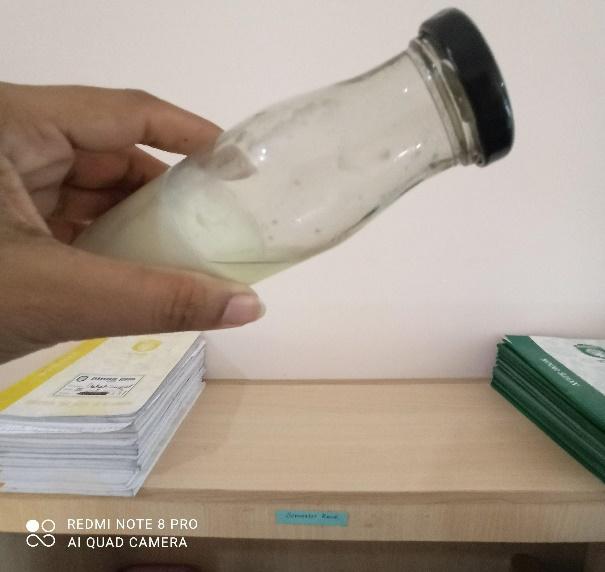
In grade 5, I did one activity on simplicity. It was my science class and we started with hands-on activities to understand the concept of changes around us. The activity on curd making was the first task which I gave to students. It was simple yet important for everyone in daily life. I gave instructions as a facilitator to my students that we can set curd even in the school. I performed this activity and students learnt the art / technique of setting curd. They learnt about the temperature check, hotness of the milk and necessary conditions to make it possible. They were super excited and happy. These simple activities inculcate values.
Trust

The well-being of students has a direct impact on their progress. So, happy students learn better. As a teacher, we play a crucial role in their social-emotional well-being and development. We can create an engaging classroom environment with collaboration and respect. Team-building activities are perfect for teaching life-skills to students.

Circle time is a time for important social interactions among young children. Ithelps develop positive relationships between kids through engaging and fun activities. During circle time, students of grade 5 did one activity of trust and happiness. Students were divided into pairs. They did the activity of blind-walk. In this activity one student who is in the front will be blind folded and he has to rely on the other partner. The person takes the other for a walk by holding their hand or arm and talking to them as they go. This activity with blindfolds can progress by: Making the route they take more complex with regards to turns and twists. I gave a twist to the activity. In the beginning the activity was done between the friends. Same activity was performed between those who rarely talk to each other. This strengthened a bond among students.

Sukhpreet Kaur
Gyanshree School

Wednesday, March 25, 2020

Can Ethics and Values be taught?

Teaching Ethics and Values is the biggest challenge in today’s time but it’s the need of the hour. Before going further let's understand about both the terms.

Ethics is about our actions and decisions. When one acts in ways which are with our beliefs (whether secular or derived from a moral authority) we will characterize that as acting ethically. When one’s actions are not congruent with our values - our sense of right, good and just - we will view that as acting unethically.

Values are our fundamental beliefs. They are the principles we use to define that which is right, good and just. Values provide guidance as we determine the right versus the wrong, the good versus the bad. They are our standards. Typical values include honesty, integrity, compassion, courage, honour, responsibility, patriotism, respect and fairness.

Rushmore Kidder’s research identified 5 core moral values:
u Honesty
u Respect
u Responsibility
u Fairness
u Compassion

There is a major debate that whether ethics can be taught at all. This debate is on since the past 2500 years. It goes when Socrates debated that ethics can be learnt. Plato arrived in an equivocal conclusion regarding the same. Different psychologists and researchers gave different views.

Eric Ericson gives eight psycho-social stages and each stage revolves around a certain psychological and moral issue- trust vs mistrust, intimacy vs isolation, social responsibility vs stagnation.

Piaget links moral development with cognitive development. Some believe that ethics and values growth originates from the natural process of maturation and depends on age. Others suggest that moral and value development is independent of a person’s age.

Piaget believed that a sense of moral values is developed with other cognitive attributes. He divides it into 2 stages:

  • Heteronomous morality and Autonomous morality
  • The adults according to their convenience use a mix of both approaches.
“Values are the seeds from which all behaviour grows.”

The first school of value education is home and first teachers are parents. Homes that focus on value development develop value centred children. Parents who treat others with respect and humility, their children follow their footsteps. But after that parents must correct their children consistently for any misdeed or disrespectful behaviour.
We must instil as a parent and educators that cooperation and collaboration are the most important virtue to be taught. More than the competition, we must focus on collaboration and cooperation.

In today’s scenario all the above-mentioned thoughts and values are expected from schools and parents seldomly want to do anything practically on this issue. All these values are expected from teachers.

I face this on a daily basis where parents say something at home and say a different thing at school. There is always a contradiction in their statement. They are so scared of their children. To correct them. On the other hand, there are other extremes who believe in “spare the rod, spoil the child”. For any big or small mistake, the use the rod. So, the child gets punished for anything and everything. Children start taking values/ ethics as a burden and when you try to explain them they perceive it as a lecture or a boring session.

According to Theodore Roosevelt “ To educate a person in mind and not in morals is to educate a menace to society.”

Ethics is ultimately about the relationship. It is about people and relationships with one another.

The right approach is to have parents and teachers on the same side and work towards the betterment of children and society at large and the biggest step is to be role models for our younger generation and practice what we preach and preach what we practice.

- Vasudha Neel Mani <vneelmani@gmail.com>

Blog Archive