Showing posts with label poetry. Show all posts

Monday, October 27, 2025

The Productive Failure - Sunanda Singh Rathore


Assignment 1 – The Productive Failure

When Students Decoded ‘If’: A Journey Through Struggle and Discovery

While preparing to teach Rudyard Kipling’s ‘If’, I paused before making my lesson design, wondering how to begin. It is a beautiful poem. I wanted my children to experience each and every emotion portrayed in the poem.

I remembered Manu Kapur’s idea of Productive Failure—how learning becomes deeper when students are allowed to struggle before being given answers. That day, I decided not to “explain”, but simply wrote the word ‘IF’ on the board and asked students what came to their mind when they saw this small, two-letter word.

The students were perplexed yet curious. Hands slowly began to rise. Responses included:

  • Imagination

  • Hope

  • It feels like advice

  • Strictness

  • Failure

I smiled and wrote their words on the board. The word IF had already started unfolding its meaning through their minds.

After a few responses, I shared the context—Kipling writing to his son in a world full of uncertainty. Suddenly, lines found meaning. “Triumph and Disaster” were no longer just vocabulary—they became life moments. The poem transformed from a list of “If you can…” to a quiet message about character, patience, and dignity.

What Productive Failure Looked Like in Real Time:

  • Students reacted based on instinct initially, not careful thought.

  • Wrong answers were welcomed and reused as stepping stones.

  • Students progressed through feeling → confusion → connection → clarity.

  • Children built understanding actively, not passively listening to a lecture.

  • Shifted focus from answer-seeking to critical thinking and reflection.

  • Students asked meaningful questions like, “Why does the poet ask us to smile even when we lose?”

That day, ‘If’ by Rudyard Kipling was discovered—slowly, imperfectly, and beautifully, exemplifying Manu Kapur’s idea that learning begins with a stumble, not a definition.

Assignment 2 – The Productive Failure

Mastering Adverbs through Inquiry-Based Learning

Grade Level: VI
Topic: Understanding and Using Adverbs
Duration: Two sessions of 40 minutes each
Learning Objective: To enable students to identify, form, and use adverbs correctly in sentences, improving writing fluency and descriptive language skills.

Background:
During a review of student writing samples, I observed that Grade VI students struggled with correct usage of adverbs. Common issues included confusing adverbs with adjectives or using them incorrectly in sentences. This indicated a conceptual gap between understanding adverbs and applying them in writing.

Methodology (Planned Approach):

Session 1 – Exploration Stage:

  • Provided a short paragraph with blanks and asked students to fill in words describing the verbs (e.g., She sang ___).

  • Students were not given explicit instructions about adverbs.

  • Observations: Many students used adjectives instead of adverbs or incorrect forms (e.g., She danced gracefully instead of She danced gracefully).

  • This confirmed misconceptions and created a body of common errors for later reflection.

Session 2 – Reflection and Guided Discovery:

  • Read some incorrect sentences and discussed ways to describe actions correctly.

  • Cleared confusion about the difference between adjectives and adverbs.

  • Explained the function of adverbs.

Key Activity – ‘Adverb Factory’:

  • Students received verb cards (run, read, write) and adverb suffix cards (-ly, -wise).

  • Worked in pairs to create adverbs, discussing changes in meaning and usage.

Overall Findings:

  • The average number of errors per student dropped, showing immediate improvement.

  • Students moved from guessing to applying a rule-based understanding of adverbs.

Teacher’s Reflection:

  • Hands-on discovery reinforced abstract grammar concepts.

  • Errors in the pre-test created a “need to know”, resolved through the engaging Adverb Factory activity.

  • The approach fostered a deeper, more confident grasp of adverbs.

Student Feedback:

  • “I never knew adverbs were so cool! I can describe things better now.” – Yashika

  • “I liked creating adverbs with suffixes. It helped me understand how they work.” – Arush

By using a Productive Failure approach, students were empowered to take ownership of learning and develop a deeper understanding of complex concepts.

Sunanda Singh Rathore
Sunbeam School Lahartara

Friday, June 6, 2025

Exploring Journeys Through Art, Poetry, and Music

 Meeting Purpose

To explore the theme of "Journeys" through creative lenses, including poetry, art, and music.

Key Takeaways

  • Creative works can reflect literal and metaphorical journeys.

  • Technical skill enhances, but shouldn't suppress, artistic creativity.

  • Primitivism values raw, simple forms in both visual and musical expressions.

Discussion Highlights

Poetry on Journeys
Brinda Ghosh shared three impactful poems:

  • "Roads go ever on" by J.R.R. Tolkien – Blends physical and metaphorical travel.

  • "The Journey" by Mary Oliver explores themes of self-discovery and personal transformation.

  • "Night Drive" by Seamus Heaney – A physical journey that evokes emotional reflection.

Art Composition Techniques
Mr. Ghosh emphasised:

  • The importance of fitting the subject harmoniously within the frame.

  • Avoiding awkward edge cuts and balancing negative space.

  • Creating unified, intentional compositions.

Primitivism in Art and Music
Jatin Soni introduced primitivism:

  • Celebrates unsophisticated, elemental styles.

  • Influences: Picasso, Rousseau (visual); Stravinsky's The Rite of Spring (musical).

  • Characteristics include rhythmic emphasis and inspiration from tribal motifs.

Next Steps

  • Continue exploring "Journeys" in upcoming sessions.

  • Invite broader participation.

  • Potential summer break next week due to vacations.

Please share your takeaway, such as a composed poem, artwork, or musical reflection, at mk@learningforward.org.in. Creativity has the power to bring people together, spark meaningful conversations, and energise us with fresh perspectives.

Thursday, May 29, 2025

Nature as a Muse for Stimulating Creativity

 Overview: Thoughtful Thursdays Session

The recent "Thoughtful Thursdays" session delved into the theme "Nature as a Muse" across literature, imagination, and music. The discussion began with an exploration of how nature has inspired legendary poets such as William Wordsworth, Mary Oliver, William Blake, and Emily Dickinson. Mary Oliver's poem "The Owl Who Comes" stood out for its profound symbolism. In contrast, Blake's "Tiger" and Dickinson's "A Bird Came Down" offered rich spiritual and imaginative reflections on the natural world.

The session then transitioned into stimulating creativity in children, using engaging activities like imagining an ice cream seller or visualising scenes under a banyan tree. These exercises demonstrated how vivid imagery and storytelling can cultivate a child's imaginative thinking.

The day concluded with Jatin Soni's musical segment, focusing on the concepts of melody and harmony. Using John Pickle's "Canon in D" and live demonstrations with various instruments, he illustrated how dynamics, timbre, and compositional techniques bring richness to music, much like metaphors in poetry.

Action Items

  1. ๐Ÿ“š Compile a collection of contemporary nature-themed poems to be shared in the next session.

  2. ๐Ÿ“ Create a lesson plan that leverages nature-inspired poetry to spark creative expression among students.

  3. ๐ŸŒฟ Plan a nature observation field trip where students can explore, reflect, and create poetry or art based on their experiences.

Session Outline

1. Nature as a Muse in Literature

  • Nature is described as a sensory feast, rich in poetic devices such as metaphor and allegory.

  • Romantic poets drew inspiration from nature for spiritual renewal and introspection.

  • Wordsworth saw nature as a healer, while Shelley saw it as a force of change.

2. Classic and Contemporary Poetry Exploration

  • Mary Oliver's poetry is celebrated for depth and subtlety ("The Owl Who Comes").

  • Blake's "Tiger" examined nature's duality and divine creation.

  • Dickinson's "A Bird Came Down" offered a delicate portrayal of nature's quiet wonders.

3. Nurturing Imagination and Creativity in Children

  • Encouraged imagination through visualisation exercises, such as scenes under a banyan tree or an ice cream seller's world.

  • Discussed the importance of narrative focus, using a central figure or idea in storytelling and visual art.

4. Music as Expression and Structure

  • Jatin Soni explained music composition, dynamics, and the importance of handwritten music for emotional expression.

  • Introduced transcription as a technique to sharpen auditory memory and composition skills.

5. Understanding Melody and Harmony

  • Clarified melody as a single, flowing line and harmony as a blend of multiple sounds.

  • Demonstrated these using human voices and instruments like the violin and flute.

  • Use " Canon in D" to showcase layered harmony and musical storytelling.

Next steps
  • All participants are to practice listening to music while focusing on the constant pulse or rhythm.
  • All participants are to provide feedback on the session to help improve future meetings.
  • Jatin to share the link to the original Canon in D piece by Johann Pachelbel.

Thursday, May 22, 2025

MAP Musings: Music, Art and Poetry


Thoughtful Thursdays

To explore the enriching theme of Musings through the lenses of pastoral poetry, visual art, and foundational music theory.

Highlights & Key Takeaways

  • Pastoral Poetry beautifully weaves the relationship between human emotion and the natural world, often idealizing rural simplicity and serenity.

  • Art Appreciation focuses on how to analyze and create compelling artwork by understanding composition, focal points, and spatial balance.

  • Music Theory introduces essential elements such as staff notation, clefs, dynamics, and the historical contexts that shape musical interpretation.

Pastoral Poetry

  • Traced its origins to ancient Greece and gained prominence during the Renaissance period.

  • Poems explored:

    • "The Laburnum Top" by Ted Hughes

    • "The Lake Isle of Innisfree" by W.B. Yeats

    • "After Apple Picking" by Robert Frost

  • Central themes: Deep connection with nature, the peaceful charm of countryside life, and the desire to escape urban complexity.

Art Appreciation

  • Discussed effective ways to begin a painting and techniques for evaluating visual art.

  • Emphasis on key artistic elements:

    • Composition

    • Focal point

    • Effective use of space

  • Example shared: A student’s artwork showing children playing beneath a banyan tree.

  • Highlighted the importance of balancing filled and empty spaces to enhance visual harmony.

Music Theory Essentials

  • Staff Notation: The five-line system used to write music.

  • Clefs:

    • Treble Clef – represents higher pitches

    • Bass Clef – represents lower pitches

  • Dynamics: Indicate volume variations, such as piano (soft) and forte (loud).

  • Historical Context: Understanding the era enriches interpretation—e.g., comparing the styles of Bach and Chopin.

Next Steps

  • Continue exploring pastoral poetry themes in future sessions
  • Delve deeper into art appreciation techniques
  • Further discuss music theory concepts in smaller, more digestible segments

Reflection

Thank you for showing how music, literature, and art beautifully mirror one another.

In music, soft notes like pianissimo and pauses create a mood of calm or reflection. Similarly, in poetry, soft sounds like “shhh” ( Mary Howe's poem) or the use of ellipses slow down the pace and evoke quiet emotion. In painting, empty or negative spaces serve the same purpose...drawing the eye and creating a sense of stillness. All three forms evoke  emotions. 

Wondering how deeply connected the arts truly are!  Even in dance the measured foot movements and eyes and other facial expressions  convey different emotions and expressions .

Thankyou for today's learning.

Meenakshi Bhardwaj 
Gyanshree School Noida

Thursday, May 15, 2025

เคชाเคจी เคฌोเคฒा เคงीเคฐे เคธे

 
Image sourced from Google Search

เคชाเคจी เคฌोเคฒा เคงीเคฐे เคธे,
"เคฎैं เคนूँ เคœीเคตเคจ เค•ी เค†เคธ,
เคฎुเคเคธे เคนी เคนเคฐ เคšीเคœ़ เคšเคฒे,
เคฎुเคเคธे เคนी เคนै เคนเคฐ เคธांเคธ।"

เคจเคฆी, เคเคฐเคจा, เคคाเคฒ เคฌเคจा,
เค•เคญी เคฌเคจा เคฎैं เคฌเคฐ्เคซ เค•ा เคคเคจ,
เคฌाเคฆเคฒ เคฌเคจเค•เคฐ เค‰เคก़เคคा เคซिเคฐूँ,
เคฌเคฐเคธ เคชเคก़ूँ เคœเคฌ เคนो เคธाเคตเคจ।

เคชौเคงों เค•ो เคฎैं เคธींเคšเคคा เคนूँ,
เคช्เคฏाเคธ เคฌुเคाเคŠँ เคนเคฐ เคœीเคต เค•ी,
เคฎाँ เค•े เคœैเคธे เคฒाเคก़ เค•เคฐूँ เคฎैं,
เคจ เคนो เค•เคฎी เค•िเคธी เคšीเคœ़ เค•ी।

เคชเคฐ เค…เคฌ เคฎैं เคนूँ เคฅोเคก़ा เคฆुเค–ी,
เคฎुเคเค•ो เคฒोเค—  เคธเคฎเค เคจ เคชाเค ,
เคฌเคฐ्เคฌाเคฆी เค•ी เคนเคฆ เค•เคฐ เคกाเคฒी,
เคฌूँเคฆ-เคฌूँเคฆ เค•ो เคคเคฐเคธाเค।

เคธंเคญाเคฒो เคฎुเคเค•ो เคช्เคฏाเคฐ เคธे 
เคธเคฎเคाเคคा เคนूँ เคนเคฐ เคฌाเคฐ,
เคจा เคฐเคนा เค…เค—เคฐ เคฎै 
เคงเคฐเคคी เคชเคฐ เคคो เคœीเคตเคจ 
เคœाเค“เค—े เคนाเคฐ।

เคธुเคฎเคจ เคธिंเคน

Water as a Rejuvenator

Thoughtful Thursdays 

The meeting began with condolences extended to Sandeep Dutt for the loss of his mother, followed by a discussion on the theme of water as a rejuvenator in various aspects of life and religious texts. The team then delved into the art of watercolour painting, Chinese watercolour painting, and the composition of melodies that evoke specific emotions and create an ambience. The conversation ended with a discussion on the importance of understanding the story behind music, the role of instruments in making the desired sound and mood, and the connection between nature and art forms.

A Sanctuary for the Soul

Imagine a place where music, art, and poetry come together. A space where expression flows freely- without fear, without judgment. Where ideas and perspectives aren't just welcomed, but celebrated. Where thoughts and emotions are treated like fine wine- swirled, savoured, and deeply appreciated. 'Thoughtful Thursdays', by Mrs. Brinda Ghosh, in collaboration with 'My Good School', is a meeting point for art and poetry enthusiasts united by a shared passion for creativity. From lyrical ballads to original compositions, from tributes to great poets like Rabindranath Tagore to intimate personal reflections, each gathering blends warmth, empathy and imagination.

With Mrs. Ghosh's poetic sensibility, Mr. Subhasish Ghosh's artistic finesse, and Mr. Jatin Soni's musical insights, every session becomes a multisensory experience. In a world often overwhelmed by noise and distraction, 'Thoughtful Thursdays' offers a rare haven where beauty, meaning, and connection thrive.

Videos for reference:


Thursday, May 1, 2025

Exploring Symbolism Across Art Forms

Music, Art and Poetry (MAP) Sessions are hosted by The Teacher's Academy

As a part of our Thoughtful Thursday MAP series, on the 1st of May 2025, Brinda led a discussion on symbolism in poetry, using examples from poets like W.B. Yeats and Robert Frost, and introduced a contemporary Arabian poet, Norma Shehab Rai. The team also discussed the importance of symbolism in art, the complexity of paintings, and the use of symbolism in music, with Jatin explaining the symbolism of the swan in classical music compositions. The conversation ended with a discussion on the interconnectedness and multidisciplinary approach in their sessions and plans for future sessions.

Symbolism in Poetry: Universal and Personal
Brinda led a discussion on symbolism in poetry, explaining that authors use symbols to convey their intended message. She noted that this is particularly common in poetry, as it allows poets to express various emotions and phases in life without repetition. Brinda also mentioned that particular objects and natural elements have become universal symbols, while others are more personal and private. She used examples from poets like W.B. Yeats and Robert Frost to illustrate the use of symbols in their work. 

Symbolism in Frost's "Dust of Snow
Brinda discussed the symbolism in Robert Frost's poem "Dust of Snow," focusing on the crow, hemlock tree, and snow. She explained how these symbols represent darkness, evil, and purity and contribute to the poem's message about the transformative power of small, insignificant acts. Brinda also mentioned other poems by W.B. Yeats, such as "The Lake Isle of Innisfree," which convey similar themes of nature and the human experience. Finally, she introduced a contemporary Arabian poet, Norma Shehab Rai, and her poem "Hugging the Jukebox," which explores the intersection of memory and the Caribbean Sea.

Alfred's Passion for Music
Brinda discussed the story of a 6-year-old boy named Alfred who learns all the words to all the songs on his grandparents' jukebox and sings them. The grandparents, who can't sing, are amazed by Alfred's talent and impact on the community. Despite his young age, Alfred's passion for music is evident, and he continues to sing even when he's put to bed. The story highlights the power of music and the impact it can have on people's lives.

Symbolism in Art and Poetry
Brinda discussed the importance of symbolism in art, using the example of a jukebox as a symbol in a poem. She emphasised that symbols create an atmosphere and leave a lasting memory. Mr. Ghosh then spoke about symbolism in art, noting that it is not a new concept for Indians, as seen in their gods and goddesses. He highlighted that European artists took liberties with symbolism, making it difficult to understand their intended meanings.

Abstract Paintings and Symbolic Music
Subhashish discussed the paintings' complexity and abstract nature, noting that they often depict imaginary animals and are difficult to understand without research. She mentioned that these paintings are not necessarily representative of the period and are not commonly used by other artists. Brinda also pointed out the use of gloomy and dreamy colours in these paintings. The participants were encouraged to share their thoughts and reflections on the paintings before moving on to Jatin's explanation of the usage of symbolism in music.

Poetry Reading Session With Teacher Reading Her Submission
Rohini Agarwal, who was present, read her poem. 

Swan Lake: Music, Poetry, and Sports
Jatin discussed the symbolism of the swan in various mythologies and its use in classical music compositions. He shared his inspiration for choosing the Swan Lake composition by Tchaikovsky, which was initially composed in 1875 and is considered one of the most challenging pieces for ballerinas. Jatin also explained the plot of Swan Lake, which involves a king falling in love with a woman cursed by a sorcerer to transform into a swan. He mentioned the movie adaptation of Swan Lake, which used the Black Swan character to represent the mental state of the performer rather than the original plot. Jatin then shared a figure skating performance based on the Swan Lake composition, highlighting elements like 32 spins to express the character's vulnerability. 

Interconnected Sessions and Personal Reflections
Brinda discussed the interconnectedness and multidisciplinary approach, emphasising the benefits of broadening horizons and making connections. She encouraged participants to share their reflections and suggested improvements. Sandeep stressed the importance of being prepared and optimising time during sessions. Minakshi shared her experience with a teacher interested in joining the sessions, and Sandeep advised downloading the Zoom app for easier access. 

AI-generated content may be inaccurate or misleading. Always check for accuracy.

Thursday, April 10, 2025

Thoughtful Thursdays: Interdisciplinary Explorations in Art


SESSION BRIEF
Brinda outlined the plan for the session, which included her introduction, Mr. Ghosh's presentation on art appreciation, and a musical performance by Jatin. The team discussed the connections between art, music, and poetry, the importance of both art and craft in various fields, and the need to nurture creativity and imagination in children. The conversation ended with Brinda expressing her hope for a successful retreat and the continuation of fruitful sessions, and the team wishing each other good luck and the continued success of their teaching endeavors.

๐ŸŽจ๐ŸŽถ Interwoven Inspirations: Exploring the Synergy of Art, Music, and Poetry

Meeting Purpose

In this week’s Thoughtful Thursdays, participants delved into how music, art, and poetry intertwine to deepen emotional resonance and meaning. The session blended performance with insightful conversation to reveal the rich interplay among artistic forms. The seamless integration of Music, Arts, and Poems created a powerful platform for expression and learning. 

The session beautifully demonstrated that when multiple forms of art are interwoven, understanding becomes easier, and learners are more engaged. It catered to various learning styles, inspiring people to explore, express, and evolve through a multi-dimensional lens of creativity.

✨ Key Takeaways

  • Art is not limited to canvas or stage—it's original, creative thinking expressed across disciplines.

  • Visual art and poetry often echo one another, enhancing interpretation and emotion.

  • Debussy’s Clair de Lune beautifully illustrates how music can embody poetic and visual sensibilities.

  • A blended format of discussion and performance showcased the enrichment that cross-artform exploration offers.

๐Ÿ–ผ️ Connections Between Poetry and Visual Art
Brinda Ghosh led a reflection on how poets and visual artists inspire each other:

  • William Carlos Williams’ poem based on Brueghel’s Landscape with the Fall of Icarus illustrated art-to-poetry translation.

  • Keats’ Ode on a Grecian Urn highlighted timeless lines like:
    “Heard melodies are sweet, but those unheard are sweeter”
    “Beauty is truth, truth beauty.”

๐ŸŒ Redefining Art
Subhashish Ghosh offered a broader lens:

  • Art = creative thinking (software), Craft = skills and technique (hardware)

  • Artists aren’t confined to galleries—innovators in any field can embody artistry.

  • Emphasized integrating creativity with technical ability across domains.

๐Ÿง  Nurturing Young Minds
A lively discussion explored how to unlock creativity in children:

  • Sandeep Dutt pointed out adults' tendency to prioritize words over forms.

  • The group explored how to promote fluid, imaginative thought in education.

  • Jatin Soni added that words themselves are symbolic, visual tools.

๐ŸŽผ Musical Highlight: Debussy’s Clair de Lune

  • Jatin Soni introduced the poetic origins of Debussy’s famous piece, inspired by Paul Verlaine’s poem.

  • A recitation of the English version of Clair de Lune set the mood.

  • The session concluded with a powerful video blending piano and interpretive dance, reflecting Debussy’s impressionistic spirit.

๐ŸŒŸMAPS continues to shine as a guiding light for everyone, where art, melody, and imagination beautifully unite. ๐ŸŽจ๐ŸŽถ๐Ÿ“œ

We’d love to hear your reflections, poems, or creative thoughts in the comments below. Let’s come together to celebrate the magic of music, art, and the written word! ✨๐Ÿ’ซ๐ŸŽถ

Manisha Khanna
GSA Ambassador

Thursday, March 13, 2025

Thoughtful Thursday - Poetry Session (03/13/2025)

Quick recap

The meeting focused on incorporating poetry and music into upcoming sessions, discussing the benefits of learning poetry, and exploring various poetic forms and devices. Participants shared insights on the symbolism of colors, the importance of nature in poetry, and the connection between poetry and music in different cultures. The session concluded with administrative matters, including certification requirements and plans for publishing poetry on their platforms.

Next steps

• Brinda is to share the poem "Regeneration" by Anne Ramsey with the group for all to read.

• Manisha is to have her daughter Sia share her poem "When the Scythe Descends" for potential publication in the weekly newsletter.

• Teachers to submit poetry for publication on the Happy Teachers Blog.

• Teachers, interns, and fellows to attend 20-25 hours of sessions per year and submit 5 submissions for certification.

• Attendees should sign up at www.gsi.in to receive the weekly Good Schools of India Journal via email.

• Teachers will share content from the sessions with their students for music and art appreciation.

Summary

Upcoming Sessions and Process Improvements

In the meeting, Sandeep, Isha, Nishita, and Brinda discussed the upcoming sessions and improvements to the process. Sandeep mentioned that they plan to incorporate music and poetry in their sessions starting in April, and on Fridays, they will combine reading and art. They also discussed the importance of registration for their sessions to ensure the right people attend. Brinda mentioned having a bad throat and cough but was excited about the upcoming sessions.

Exploring Poetry and Music Connections

In the meeting, Brinda discussed the progression from narratives to ballads and then to odes, a form of poetry often lyrical and set to music. She used the example of "Ode to the Nightingale" and "Ode to Aggression" to illustrate the tribute nature of odes. Brinda also mentioned the possibility of connecting poetry sessions with music sessions, as Jatin would be discussing Western Music. She then read an ode to the color red, explaining the symbolism and meanings associated with the color throughout history.

Exploring the Significance of Red

Brinda discussed the significance of red and its importance in various cultures. She emphasized the simplicity and beauty of the poem, highlighting the rhyme scheme and the poet's ability to convey complex thoughts straightforwardly. Brinda also touched upon the appreciation of poetry, suggesting that readers should focus on the rhythm, sound, and overall appeal rather than individual word meanings. She encouraged the team to share their thoughts and reflections on the discussed topics.

Poetry's Impact on Memory and Imagination

In the meeting, Minakshi and Brinda discussed the importance of learning poetry and its impact on memory and imagination. Brinda highlighted the benefits of learning poetry by heart, especially for Alzheimer's patients, and how it can help retain information. She also introduced the concept of poetic devices, emphasizing imagery in poetry. Nishita shared her experience using these concepts in her class, where students could vividly imagine and create artwork based on the poems. The conversation ended with discussing how to make poetry more engaging for children.

Palash Symbolism and Cherry Blossom Festivals

Sandeep and Brinda discussed the symbolism of the palash, or flame of the forest, and the ode to red or crimson. Brinda shared her experience of seeing many palash trees in bloom on her way to school and how they reminded her of the ode. They also discussed the celebration of cherry blossoms in Japan and wondered why similar festivals are not held for other flowers in India. Minakshi added that nature celebrates all these flowers in different seasons and that they should be celebrated in words as well.

Exploring Spring in Bengali Literature

Sandeep discussed the connection between poetry, music, and the ancient Indian music system, emphasizing the importance of imagination and exploration for teachers. Brinda and Pushpita shared their thoughts on celebrating seasons and flowers in Bengali literature, with Pushpita reading a poem about spring. The group agreed on spring's beauty and evocative nature and the importance of exploring and appreciating its emotions.

Poetry Session and Housekeeping Discussion

The poetry session concludes with Brinda reading an extract from Walt Whitman's preface to "Leaves of Grass." Sandeep discusses housekeeping matters, including hosting future sessions on Soundcloud and focusing Thursday and Friday sessions on teachers, interns, and fellows. He also outlines requirements for certification, involving attendance and submissions. A student named Sia attempts to share her poem but experiences technical difficulties. The group discusses publishing poetry on the Happy Teachers Blog and in their weekly newsletter. The session ends with expressions of gratitude and holiday wishes.

AI-generated content may be inaccurate or misleading. Always check for accuracy. 

Friday, March 7, 2025

We ❤️ Poetry with Brinda Ghosh - 6th March 2025

#ThoughtfulThursdays @ My Good School

Poetry sessions on Thursdays focus on listening to and appreciating poetry as a form of art. Poetry for pleasure and enjoyment, poetry as a stress buster and poetry to improve your own lifestyle- is the motive! 

The session on 7March’25, focussed on Ballads and the difference between Ballads and Narrative poems. While a short time was spent on understanding the nuances of  a Ballad, most of the session was utilised to make participants realise that poetry is an outcome of our own reflections and is sponataneous. Some personal compositions were shared by Saloni, Nibratti & Neena. The highlight was Oshi our Intern sharing her creation! 

Sandeep had rightly impressed upon teachers from GSA schools to join the session for their growth as teachers and so we hit a century- we had 102 participants! 

Brinda concluded the session urging participants to write and share their creations and read out Think Different - the Apple Anthem!

Last week's session: https://on.soundcloud.com/Y8JZGNeZmWVpt1Sy5

Ulysses, by Alfred Tennyson: https://www.poetryfoundation.org/poems/45392/ulysses

The Ballad Of East And West: https://www.kiplingsociety.co.uk/poem/poems_eastwest.htm

Oh, East is East, and West is West, and never the twain shall meet,
Till Earth and Sky stand presently at God's great Judgment Seat;
But there is neither East nor West, Border, nor Breed, nor Birth,
When two strong men stand face to face, though they come from the ends of the earth!

Realization, Enlightenment and the Life of Rapture by Ted Falconar: https://www.theosophical.org/publications/quest-magazine/realization-enlightenment-and-the-life-of-rapture. Book available at The English Book Depot: www.englishbookdepot.com

เคธเคฎเคौเคคा - Suman Singh https://www.happyteacher.in/2025/03/suman-singh.html


Here is a wonderfully rich introduction to the work of the great mystical poet, featuring the leading literary translations of his verse. Translators include Coleman Barks, Robert Bly, Andrew Harvey, Kabir and Camille Helminski, Daniel Liebert, and Peter Lamborn Wilson. The Rumi Collection also includes a biography of Rumi by Andrew Harvey, as well as an introductory essay by Kabir Helminski on the challenges of translating Rumi into English.

My Student, My Guide
Nibbrati Rathore

Friday, February 28, 2025

Poetry Session with Brinda Ghosh - 27th Feb 2025

#ThoughtfulThursdays
Update: Henceforth, the sessions will be from 5:30 PM onward.  

Ms. Brinda Ghosh led the poetry session, which discussed the importance of sharing personal compositions and exploring different poetic forms. 

Participants shared their poems, including Nibbrati's tribute to her students and Saloni's metaphorical piece on overcoming fear. 

Ms Ghosh explained the differences between free verse and blank verse, emphasising free verse's flexibility and emotional depth. She also introduced the concept of sinquain and shared her poem about her father.

The session concluded with a reading of Naomi Shihab Nye's "Kindness" and a call for participants to submit their poems for reading and publishing in our Good Schools India Journal.

Tune in on SoundCloud:
My Good School · Poetry Session 27020225 | Enjoy the recording on SoundCloud


Tuesday, July 13, 2021

NEED OF THE HOUR – to sensitize students: Brinda Ghosh

Why it is relevant to include poetry as part of every curriculum 

'A Poem Is 
Words turned upside down 
And suddenly- The Window Is New.'

In 1999 UNESCO declared the 21st of March as World Poetry Day, not to popularize poetry but because of the need to revive the age-old oral tradition of recitals and, more significantly, to restore a dialogue between poetry and other disciplines. Research has revealed how poetry enables society to regain and assert its identity by enabling individuals to communicate the innermost values of diverse cultures.

Pity that this intention of UNESCO still lies dormant, and teachers of poetry continue to use a forensic approach to dissect poetry, passing on the message to the students that poetry is as difficult to fathom as the mystery of the Sphinx. As a literature teacher and a lover of poetry, I feel the urgent need to sensitize our children and gear them to develop a powerful relationship with the rhythms, forms, and sounds of poems.

Poetry goes back to the crib, and we know of the existence of poetry in ‘front of the caves’ in almost all civilizations. It is, in fact, the foremost medium of communication, a genre whereby the most complex emotions of mind can be expressed most concisely and beautifully.

Today, this world, ravaged by political skirmishes, border disputes, wars, and emotional disturbance, requires schools and homes that teach children/students to develop finer sensibilities, teach them the skill to be mindful, and appreciate and deal with issues with them equanimity of the mind.

Only the inclusion of appreciating poetry will help. Though not scientifically proven, there is evidence that poetry (the right way) to develop skills that are more necessary for living and contributing to a peaceful and vibrant 21st century.

Poems can be taught to create multisensory experiences of the surrounding world and encourage students to see patterns and connections. This is, in fact, the way to teach students with special needs. The alliterative rhythm patterns of poetry make it easy and interesting for them to retain information. So much so that today reading and reciting poetry is recommended to senior citizens as an exercise for the brain and also as a preventive for Alzheimer's disease.

Poetry is not only written by poets who follow the canons of writing-it is, in fact, the easy flow of emotions. Poets use various techniques- metaphors, alliterations, analogies, imagery, rhyme and meter- to convey meaning. Practice in identifying and analyzing these functions leads students to develop their analytical and critical skills. Having learnt to read between the lines and analyze emotions, they get the knack of transferring the skill to other areas of learning. Thus the necessity to use poems in the science, social studies and maths classes too!

From early childhood, we use rhythm to get children to communicate more quickly and effectively. As we know, preschool children learn language by picking up phrases in chunks. Poetry shapes reading and writing and create a better understanding of all texts. A healthy outlet of emotions, poetry, with its economic diction, improves expression and teaches empathy. Teachers should bring the beauty of poetry to the class by connecting it with what the children are familiar with today and then lead them to see similar patterns in classical poetry. An imaginative teacher will use the internet and explore Slam poetry, Button poetry, or even encourage students to create their own by making them see the relevancy of words. And in this era of short messages and tweets, poetry may be an ideal vehicle to entice students to learn. Teachers can use popular culture to open internet windows that bridge the disconnect between the class and the world. Shared learning experiences with our students will create poetic sensibilities that will allow children to put language to use- to make it serve a deep internal purpose, to experiment with rhyme schemes to use poetic license ( like e.e. cummings who didn't believe in using capital letters) and more than anything else to find voice, representation and impact a community perhaps!

Mrs Brinda Ghosh - Principal Gyanshree School

A teacher must be a lifelong learner, and that is what Brinda is! She further believes that a teacher needs to be an influencer and experience the joy of being a practitioner. Brinda Ghosh, an MA, BEd, CIDTT by qualification, started teaching 42 years ago at Vikaasa Madurai. Has taught at every level of school - English teacher - taught at ICSE, CBSE, & CIE Affiliated schools.

Friday, November 29, 2019

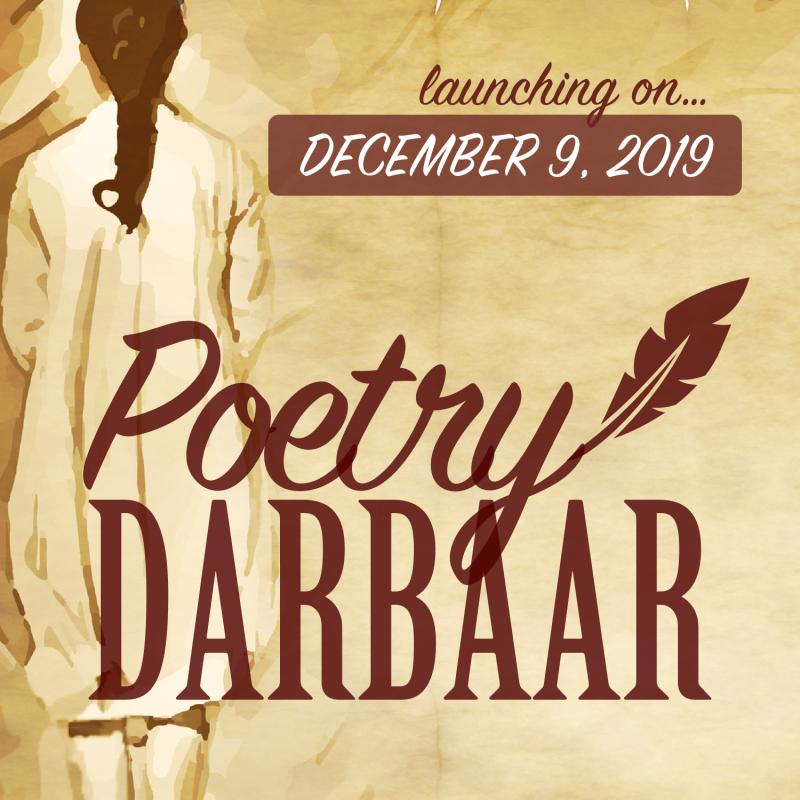
Lakshya Datta: Poetry Darbaar

Announcing the launch of our 5th podcast... Poetry Darbaar.
Find it on Spotify: https://spoti.fi/2Oqhwhx JioSaavn: https://bit.ly/2KZGIsO A poem is a song and a story, all at once. A poem is a thought and a feeling, all at once. A poem is a mystery and a discovery, all at once. A poem is new and old, all at once. Host Lakshya Datta (that's me!) invites you to listen to Launchora's brand new podcast "Poetry Darbaar" - an audio-series where you’ll hear the hashtagpoems, the hashtagshayaris, the hashtagkavitas, and the hashtagpoets of hashtagIndia. We’re going to travel across India and traverse through multiple Indian languages - including hashtagEnglish, hashtagHindi, hashtagUrdu, hashtagMarathi, hashtagPunjabi, hashtagBengali, and many more. Through live readings and conversations with poets, this show will attempt to explore answers to one question: where do the words come from? The first episode of Poetry Darbaar will come out on December 9, 2019, and it will feature Delhi-based poet Akhil Katyal. New episodes will be released every fortnight (biweekly). Tap on the link in our bio to follow the show on hashtagSpotify, or find it on hashtagJioSaavn, hashtagApplePodcasts or any hashtagpodcast app you prefer.
We hope you’ll join us on this new adventure. Welcome to the hashtagPoetryDarbaar.

Blog Archive