Showing posts with label goals. Show all posts

Saturday, February 28, 2026

The Subjective Past: A Narrative of “Me Now”

Masterclass with Sandeep Dutt

To explore Adlerian psychology’s concepts of empathy, teleology, and the subjective nature of the past.

Key Takeaways

  • Empathy is a Skill, Not Sympathy: Empathy is the active skill of imagining another’s life to understand their perspective, distinct from passive agreement (sympathy).

  • Teleology Over Aetiology: Behaviour is driven by present goals, not past causes. The past is a tool used to justify current choices, not a determinant of them.
  • The Past Is Subjective: Memory is a narrative constructed to affirm one’s “self now.” This explains why people recall strict teachers with gratitude (to affirm their current success) or resentment (to justify current dissatisfaction).

  • Respect Is Contagious: Educators must model respect as an equal to students. This practice, like courage, spreads and builds a foundation for all relationships.

Topics

Empathy vs. Sympathy

  • The session began by defining empathy as an active skill rather than a passive feeling.

  • Empathy: The skill of imagining another’s life to understand their perspective.

    • Example: To understand a student who doesn’t study, imagine their specific life circumstances (age, home, friends) to grasp their motivations.

  • Sympathy: Passive agreement with another’s opinions or feelings.

  • Actionable Insight: Educators must “dive in” and show concern for students’ concerns, interacting with them as equals to build respect.

Teleology: The Power of Present Goals

  • Adlerian psychology’s core principle is teleology—the idea that human behaviour is driven by present goals rather than past causes.

  • Contrast:

    • Teleology (Future-focused): We act to achieve goals.

    • Aetiology (Past-focused): We are determined by past events.

  • Example: A person with a “dark personality” isn’t a victim of a bad home environment (aetiology). They chose that personality to achieve the goal of avoiding hurt (teleology).

The Subjective Past: A Narrative of “Me Now”

  • The past is a subjective narrative constructed to affirm one’s “self now.”

  • Mechanism: To justify current choices, people select events from the past and assign meaning to them, while ignoring or erasing contradictory events.

  • Example: A man bitten by a dog initially recalled only the attack, which supported his view of a dangerous world. When his worldview shifted to a safer one, he recalled being helped by a stranger, creating a new, affirming narrative.

  • Application to Education: This explains why students recall strict teachers differently:

    • Gratitude: To affirm their current success.

    • Resentment: To justify current dissatisfaction.

History as a Manipulated Narrative

  • The group discussed how this subjective principle applies to collective history.

  • Insight: History is a “grand story” manipulated by those in power to legitimise their rule.

  • Examples:

    • NCERT textbooks are periodically rewritten to reflect current political sentiment.

    • British history curricula often omit colonialism.

  • Conclusion: The past, both personal and collective, is a tool for the present, not an objective reality.

Next Steps

  • Priyanka Rathore: Share handwritten notes from the session in the WhatsApp group for collective reflection.

  • All Participants: Review the session recording and notes before the next meeting.

  • All Participants: The next masterclass is scheduled for March 7, 2026.

Fathom AI Notes, read with due care.

Saturday, June 14, 2025

Merging Forward and Backwards Thinking in Education

Institutions are created with a bigger purpose. And it must serve a transformative purpose. But how. It should follow a comprehensive approach - Merging Forward and Backwards Thinking in Education.

Backwards Thinking: Start with the Nation, End with the Child

  • Start with Nation: What Citizens Do We Want?

The first step is to envision the kind of citizens the nation needs to be. What skills, values, and character traits should they possess to contribute to the nation's goals, whether it be economic growth, technological advancement, social harmony, or sustainability? 

  • Move to Society: What Role Will Citizens Play?

Once we have a clear vision of the ideal citizen, we then consider how these individuals will serve society. Education must equip students not only with academic knowledge but also with social responsibility, community service, and civic engagement. 

  • Design the School: How Will Education Foster These Goals?

The next step is to design an educational system that supports these larger societal and national visions. Schools must foster an environment that nurtures intellectual, emotional, and social development. 

  • End with the Child: Tailoring Education to the Individual

Finally, backwards thinking brings the focus to the child. The educational system should be designed to cater to the diverse needs of students, ensuring that each child receives the tools, skills, and knowledge needed to thrive in the world. 

Forward Thinking: Start with the Child, End with the Nation 

  • Start with the Child: Equip for Real-World Challenges

Schools must prepare students not just academically but also for the challenges they will face in society.  This includes developing critical skills like adaptability, communication, and collaboration. 

  • Move to the School: Implementing the Framework

Once students are equipped with the right mindset and skills, the school must adapt its curriculum to meet future needs, embracing innovative teaching practices, and ensure that schools provide an inclusive environment where students can thrive. 

  • Focus on Society: Preparing Students to Contribute

Schools must engage students in community service, global citizenship, and projects that address local and international challenges, ensuring that they are not only ready to succeed but also to make meaningful contributions to the world.

  • End with the Nation: Building a Workforce for the Future

The final goal of forward-thinking is to ensure that students are prepared to contribute to the nation's future success. 

To conclude, an institution must adopt an integrated approach that combines backward thinking (planning) and forward thinking (implementation), placing the child at the centre. As Shomie Das, the man who saw tomorrow, said, the meaning of education can be summed up in five words: the child at the centre, whether you look backwards or forward.

Saturday, March 29, 2025

Map of Success & The Last Lap : Masterclass Saturday March 29 , 2025


Chapter 20, Map of Success and Chapter 21, The Last Lap: Shomie Das The Man Who Saw Tomorrow by Naga Tummala

Q1. Failures are the stepping stones on the road to success. Instead of fearing failure, how can we help students develop a growth mindset where setbacks are seen as valuable learning experiences rather than obstacles? 

Q2. Success is not just about intelligence or talent but about the ability to take risks and adapt. How can we encourage students to step out of their comfort zones, take calculated risks, and embrace new growth opportunities?

Q3"Thank God I Was a Backbencher." The author reflects on how not following the conventional path led to unexpected opportunities. How can we, as educators, identify and nurture the potential of students who may not excel in traditional academic settings?

Q4. "The choice of place shapes our journey." The author highlights how location and environment influence success in The Man Who Saw Tomorrow. As educators, how has your conscious decision to participate in this book reading session contributed to your growth and impact as a teacher? How can the insights gained from this discussion further benefit your students?

The Last Lap 

Looking back, that was the only way this story could have been taken ahead further. Shomie’s journey from Sanawar to Dehradun to take charge as headmaster of Doon School was not only one of pride; it would also lead to his fullest development as an educator with a vision. His stint at Doon would also toughen him up as a person, making him uncompromisingly tenacious when needed. The beneficiary, needless to say, would be Oakridge. 

With this the biography section of the book closes and we are set to read the closing section Back To The Future.

Wednesday, June 22, 2022

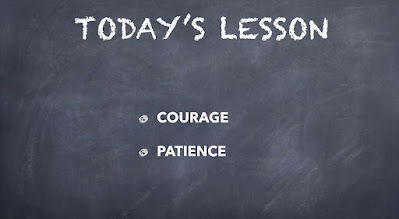
Courage and Patience - Nitin Sharma


1. A fearful student:

“Fear is a fundamental human emotion that can help us protect from danger and prepare us to take action. 

Here I would like to share the story of Sujal, who joined the school three years back. He used to sit at the last desk in the class. He was not very comfortable sharing his response with the teachers. After noticing, I met Sujal’s mother in this context a month later. After meeting them, I learned that in his previous school, in his class, 55 students were there, and no personal attention was paid. Sujal used to sit on the last seat and also had a short vision. His math teacher was very harsh and used to run the syllabus fast. Sujal had never matched his speed, so he kept lagging behind. His work remained incomplete, and he even got corporal punishment from the teacher. He kept telling his parents that he would no longer go to school. So, his parents decided to change his school. His mother burst into tears after narrating this incident, and also, the whole scene of corporal punishment was running before my eyes. I promised to help this child the best I could and requested my colleagues support him in overcoming his fear. 


2. An impatient student: 

Patience is not the ability to wait but to keep the right attitude while waiting. In today’s scenario, students quickly lose their patience in the classroom. Here I would like to share the story of one such student Manya of class VII, a very restless and outspoken girl. Her response in the class was good. Manya was in the habit of passing the comments on to others whenever reading was done in the classroom. She used to intervene by saying that she would do the reading alone and not give a chance to other students. Even though she was in the habit of disturbing the teacher in the class by passing small comments like this boy is saying this and that to me. Thus, the whole teaching environment in the class was disturbed by her. Many students in the class had written a letter regarding her behaviour and requested to take action against her. One day I called Manya and gave chances to others. She was responsible for class monitoring and helping the weak students to come ahead. 


How did/will you deal with the student? If it was a real-life situation, were they successfully helping him/her overcome their problem?

Yes, it was a real-life situation in both cases. To help the fearful children, the following steps were taken:

  1. All subject teachers were requested to hand holding, that is, to give sufficient time to complete their work. 

  2. Buddy was assigned 

  3. More exposure was given (involvement in the activities) 

  4. Good appreciation was given even for small response 

To help the impatient child:

  1. More responsibilities were assigned, such as helping other students. 

  2. Some actions of teamwork were assigned. 

Advice:

Courage and patience are very essential values not only in teachers but in our life also. These two values will help us to attain our teaching goals. As we know, patience usually wins in the end. A student needs to be courageous enough, and a teacher must be patient for effective teaching. 


Ms Nitin Sharma 

Kamla Nehru Public School, 

Phagwara 

JOL Cohort 2022

Wednesday, December 1, 2021

Never Give Up Hope - Prerna Rathod

Hope is a rope that is a lifeline for everyone. It is a ray of light when a person is in darkness. Hope makes us believe that nothing is impossible in this world. If you have faith in yourself and are ready to work hard, you can achieve success to complete the impossible task. Hope gives us wings to fulfil our dreams and help us create a path to achieve our goals. 

As Educators, we must inculcate this value of hope in our children. Life is very unpredictable, and sometimes we will face failure. So hope is the only thing that will help us to move on and restart our task again. We can give examples of great personalities like Albert Einstein, Charlie Chaplin, Walt Disney, etc., who didn't achieve success in one go. They faced many failures and then got a win. If we tell them their stories, then children will understand the importance of hope in our life.

I would like to give a real-life example. My aunt was diagnosed with cancer. All family members were worried and upset. My aunt was sad, and she gave up hope to live. But then, seeing her children, she decided to go through the treatment and fight cancer as her children needed her. So she took tratment. Though it was painful, she was successful in defeating cancer. She was cancer-free and now is with her family, safe and healthy. 

I would like to end with the quote, "Hope is such an energy by which any dark part of life can be illuminated". So let's carry "Hope" with ourselves.

Prerna Rathod 
The Fabindia School 
prd@fabindiaschools.in

Sunday, June 27, 2021

Unity and Caring – Anubhuti Sharma DGS

 “A smile is the light in your window that tells others that there is a caring and sharing person inside” – Denis Waitley

Everyone must play a role in circulating beliefs and practices to the youth, giving them a sense of solidarity. We as teachers endure a unique responsibility as students spend hours in our classroom. We always devote a lot of time to creating a classroom environment that fosters values that help children work together as a team. Let’s take a glance at some other techniques we can strengthen personality development in our classroom. To create a collaborative and caring classroom, we need to help children promote values like Courage, Patience, Happiness, Tolerance, Honesty, Unity and Caring. I tried to incorporate these values into my syllabus to help children learn and perform and suggested videos to encourage their learning.

Unity is a strength Video.

(Tap on unity, Click on the right side and open with open hyperlink)


We know that achieving certain goals are not only the hard work of an individual, but it is the unity among each member of the group towards their goals. Let us know from our little ones (Class 4 Students), what they have learned from the videos and what they have to say about unity?

Ishwar- Unity is strength. Always help your friends. Never be scared. We may seem weak from the outside but are strong from the inside. It is said, “United we stand, divided we fall.” We should travel in groups. Always be kind to others. Don’t bully people.

Swastika Unity is essential for any team or group. Only when we are united we can enjoy the taste of success. Unity is the essence of a group’s happiness. We should always remember that “unity is strength”. Unity means oneness or togetherness. You can’t break a heap of bricks, but you can break a single brick. A family is called a family only when the members live together. If we stand together, we can fight any problem.

Aashita There is power in unity. We can win every hurdle with Unity. If we are united, no one can destroy or harm us. We can win every obstacle in our life.

Shaayna “Unity is strength” means stay together in all situations. Unity has great value in every work of life. Without unity, we cannot do a single work. If we stay united, we can do everything. The development of our society and country depends on this spirit. Unity protects us from evil doing.  Individual players do not win any match. It is the unity that helps to get a victory from the stronger team. So, we should always stay in unity.

Srijit This video teaches us that unity is strength. We need to work together in our society. Unity gives us courage, hope and strength. When we get support from others, we can get the courage to fight together. When we are united, we can bring change. If we stand together, we can fight any problem.  Unity is essential for any team or group.

Rriana-Both the videos show us that teamwork is essential. If all of us stand together, we can defeat our enemies. Weak people or animals become strong when they work together. When everyone helps each other, they feel happy. Ants are such tiny animals; they defeated a giant pig by standing together; that’s why we should travel in groups. We are confident when we are together.

Tenzin Khandu- In the first video, people try to get food for themselves. They all look hungry and weak. They fought each other to get food, but nobody got food. When they started helping each other to get food, everyone got food. This shows everything is possible if we work in unity. In the second video, a shark attacks a group of penguins. A group of penguins worked in unity and saved themselves. A giant animal and a large bird also attacked a colony of ants and a group of crabs. They worked together, and they were safe.

Chahak- We should help each other. We should be polite. We should be kind. Unity is essential for our life and strength. It is always better to work as a team. If we are alone, we can do so little, but we can do a lot if we are together. Unity gives us courage, strength, and hope. If we are together, we can defeat our enemies. We should help others in hard times.

Student can adjust or give their best in any group when they care for all in the team. So when children enter into a school, initially they always think about themselves, but slowly and gradually when they work together in a team, they start caring about each other. I shared my thoughts, explaining that respecting someone means taking care to not harm someone's feelings. I asked children what they think it means to care about someone or something. I told them, if you are caring, you express it by being cooperative and generous. When you care about another person, you are not harsh but kind. They expressed their feelings in drawings. I talked about the ways people show they care every day. I discussed the things the children can do, such as taking care of parents and grandparents, looking after helpers, watering plants, feeding a bird or fish, taking time to listen to a friend, etc. I asked children to make a Caring Card for anyone they care about. 

Let us see how these little hands have tried to present their ideas through drawings.  


- Anubhuti Sharma
Joy Of Learning Cohort 2020-21
Learning Forward Academy
www.LFIN.Academy

Thursday, May 20, 2021

Handling Pressure - Prakash Dangi

Courtesy: newstodaynet.com
How do you handle stress and pressure? The easiest way to get started is to take ten minutes each day to prioritize and organize all the key things you need to accomplish. Once you have the big priorities identified, you can break down your large goals into smaller, more manageable incremental goals. At that point, you will have a plan for moving ahead. Focusing on accomplishing one task at a time can prevent you and others from feeling overwhelmed. With this in mind, try these tips to start thriving under pressure. 

It’s important to recognize the small steps that you and your team members are taking towards completing a larger project because it helps people feel good about their accomplishments, builds morale, and bolsters the team’s confidence while working through long-term initiatives.

Studies strongly suggest that having the ability to handle pressure successfully plays a significant role in their success and the organization they work for. People who work well in high-pressure situations have a few things in common, including the ability to resolve conflict positively and meet challenges with humour and determination. These leaders and employees have the self-awareness to know when they feel stressed and manage their responses to that pressure. 

Prakash Dangi  
The Fabindia School
pda@fabindiaschools.in

Thursday, December 31, 2020

Hard Work - Prakash Dangi

stickybranding.com
Hard work and punctuality are essential for a happy and successful life. They help in meeting the desired targets of one’s life. It plays a very important role in the life of a student. A student’s life is the building block of his future. He must practice punctuality and hard work in his daily life in order to achieve his goals and be successful.

These days, there is a lot of pressure on students. They are expected to be the masters in all fields. The cut-throat competition in their life cannot be left apart. They can overcome all this with organised work which adds to their efficacy. Organised work and punctuality go hand in hand. If a student does everything in time, by making and following a time-schedule ethically, he will never lag behind.

Hard work, which is the key to success, will help a student to enhance his skills. It will also increase his confidence which is a must for all students. A student must know the importance of time. The time that has once gone never comes back is an old saying and a student must keep it in mind. A student must know how to manage his precious time because student-life is the most important part of one’s life. And here if time is lost, it means everything is lost. 

He should not be taken in by others’ views. Rather he should be his own manager. And a good manager is one who does the right thing at the right time and at the right place. So, all of these three issues should be kept in mind by a student if he wants to establish good grounds for his future.

Prakash Dangi, The Fabindia School, Bali, pda@fabindiaschools.in

Saturday, December 26, 2020

SUCCESS - Byju Joseph

Success is something that we dream to achieve which is totally different for each one of us. It gives us a feeling of happiness or satisfaction when we gain it. It provides true meaning to our lives.

In order to succeed, the first thing that you need is to have a goal which needs to be attained. It can be anything towards which you have a particular interest or passion.

Secondly, you need to strive for it, being a passionate dreamer. Concentrate more and take up all the risks and pains to achieve it. Work damn hard for it. Give up everything for your dreams but never give up on your dreams. Everything starts with a small dream, so you have to be a dreamer at first. You know that just being a dreamer can do nothing because dreamers cannot be achievers but just dreamers. Only a few achieve their dreams or goals.

You need to be a believer because nothing will happen until you believe.  Others won’t believe but they will somehow make you doubt on your dreams. Always remember those dreams belong to you and it’s your responsibility to turn it into your reality. Others may or may not support you, you will be all alone but just know the path towards success is less crowded and you will be the one there and no one else.

The next thing you need to know is that hard work pays off. If you want to get something you need to give something at first. Here what you give is your hard work, your energy, your efforts, your time, your tears and it is going to pay off. You need to have your courage to handle, your patience and persistence. 

Nothing happens overnight. Everything takes time. Everything starts from nothing. So you need to make it out of scratch. You cannot build an empire in just one day. You need to hold on through your hardships and pain. Successful people know they are going to be successful no matter what,  that’s the faith that they have in their hearts. You should know that success is destined and your goal is your final destination.

Byju Joseph
The Fabindia School, Bali
bjh@fabindiaschools.in

Blog Archive