Masterclass hosted at Mayoor School Jaipur.To discuss Adlerian psychology and its application to education and self-reliance. Key Takeaways
TopicsThe Problem: External Validation & Dependence
The Solution: Self-Reliance & Teacher Happiness
Student Perspective & Social Media
Next Steps
| |

It’s all about helping teachers, educators, and students access the tools they need to embrace the joy of learning, including reading and critical thinking.
Saturday, April 11, 2026
Education and Self-Reliance

 Founder of Good Schools Alliance, author, educator, and adventurer empowering children to discover the magic of literature.
Saturday, March 7, 2026
War vs. Peace: Reading Chapter 2
Learning Forward Saturday
To read and discuss Chapter 2 of Wanted Back Bencher, Last Ranker Teacher.
Key Takeaways
The Brain’s Limits: The brain has a finite capacity for information. Overload prevents processing and memory formation, while physical movement is essential for oxygenated blood flow to the brain.
Respond from Intellect, Not Gut: Counter-aggression escalates problems and fulfils a student’s desire for attention. A calm, intelligent response maintains teacher control and de-escalates conflict.
Proactive Engagement: Roma de-escalated a chaotic class by proactively engaging students with compliments and small acts of care (e.g., clipping hair, offering tissues) and by building rapport before entering the room.
Turn Disruption into Dialogue: When a student made a provocative comment, Roma didn’t punish the student. Instead, she used it to spark a relevant discussion on relationships, connecting it to the day’s poem.
Topics
Staff Room: Teacher Perspectives
Experienced teachers (Sumita, Ranjita, Ria) discussed a difficult class, noting that only Sumita could control it.
Ria’s Frustration: Asked how to respond to “ridiculous” questions (e.g., “Why do we need math with calculators?”).
Counsellor Uttara’s Advice:
Validate the Question: Acknowledge the student’s perspective.
Provide a Smart Answer: Explain the value (e.g., math builds confidence, prevents over-reliance on tech).
Respond from Intellect, Not Gut: Avoid counter-aggression, which escalates conflict.
Classroom: “War vs. Peace”
Students delayed class and engaged in a water fight, makeup application, and skirt-folding to defy rules.
Roma’s Proactive De-escalation:
Greeted students individually in the corridor.
Offered tissues to a wet student (Jeevan).
Complimented a student’s (Supriya) eyes and clipped her hair.
Gently adjusted another student’s (Simi) skirt.
Outcome: These small acts of care built rapport, disarming the students before class began.
Counsellor’s Insights: Brain-Based Learning
Uttara explained the science behind student behaviour to Roma.
Brain’s Capacity: The brain can only absorb information for a limited time. Overload prevents processing and memory formation.
Need for Movement: Young learners require physical movement for oxygenated blood flow, which fuels the brain.
Recommendation: Integrate movement via theatrics, role-play, and educational visits.
Seating Arrangements: Varying seating arrangements (e.g., U-shape) break monotony and improve engagement.
Classroom: Handling a Provocative Comment
A student (Ajit) made a provocative comment about physical relationships.
Roma’s Response:
Avoided anger, counting to 10 to respond calmly.
Engaged the student directly, asking if physical relationships are the only important part of life.
Used the comment to launch a discussion on trust, faith, and respect.
Outcome: The discussion naturally led into the day’s poem, demonstrating how to turn a disruption into a learning opportunity.
Next Steps
All Participants:
Read the remainder of Chapter 2 for the next meeting.
Prepare to share personal stories of “war vs. peace” in the classroom.
Sandeep Dutt:
Renamed the WhatsApp group to “The Teacher’s Academy” for better searchability.
Next Meeting:
Date: March 14, 2026 (Saturday)
Time: 3:00 PM
FATHOM-AI generated notes.
Founder of Good Schools Alliance, author, educator, and adventurer empowering children to discover the magic of literature.
Sunday, September 21, 2025
Do learners work alone or together in small groups? - Swati Tripathi

Learners can benefit from both individual and group work, depending on the learning goals and objectives.
a) Individual Work:
- Promotes deep, focused processing and metacognition
- Builds automaticity and fluency for basic skills
- Facilitates reliable assessment of individual learners
b) Group Work:
- Produces elaboration and multiple perspectives
- Enables distributed cognition and complex problem-solving
- Develops communication, collaboration, and social problem-solving skills
When to Use Each:
- Individual work for:
- Remembering and understanding basic concepts
- Building foundational skills
- Assessing individual knowledge
- Group work for:
- Applying, analysing, synthesising, and evaluating complex information
- Developing teamwork, leadership, and communication skills
- Encouraging creativity and social learning
Designing Effective Tasks:
- Consider complexity, positive interdependence, and accountability
- Use scaffolds like worked examples, sentence starters, and graphic organisers
- Assign roles and rotate them regularly
Assessment Approaches:
- Formative: exit slips, quizzes, and teacher observation
- Summative: group artefacts and individual tests/portfolios
- Use rubrics to assess content understanding and collaboration skills
By intentionally combining individual and group work, teachers can leverage the strengths of both approaches to support learner growth and development.
How do we facilitate their problem-solving process
We facilitate problem-solving by structuring the process, modelling strategies, scaffolding with prompts, encouraging collaboration, and guiding reflection.
Without removing the productive struggle that fosters growth in learners.
Monday, February 24, 2025
Master Class or we can say a class for masters- Ankit Khare
Master Class or we can say a class for masters! Hello and Jai hind, everyone On this side, Ankit Khare From Sunbeam Sarnath, I am sharing my reflection on The Sessions, 📖 Wanted Backbencher and Lastranker Teacher. The discussions showcased inspiring success stories of individuals transcending academic struggles to achieve greatness. It emphasised that traditional education often overlooks diverse forms of intelligence, calling for educators to nurture students' unique capabilities rather than prioritising conventional academic metrics. This perspective shift validates alternative paths to success and recognises multiple intelligences.
Ankit KhareSunbeam School Sarnath
Saturday, October 26, 2024
Right VS Wrong - Sunbeam Varuna
Sunday, April 30, 2023
Happiness and Tolerance - Aarya RPKM

The student replied, "Ma'am, I miss my friends, cousins and grandparents. I have no friends here, and because of this, I cannot concentrate on my studies."
- Always treat your students with love and care.
- Never criticize a student In front of other students.
- Nothing is more important than the mental health of a child.
- They are like sunflowers; you are like a sun to them, 'A ray of hope.'
- A happy teacher is a good teacher, so try to be satisfied with them.
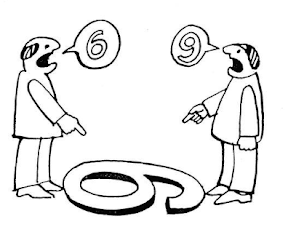
Both answers were different, and they again started arguing. Seeing this, I calmed them down and asked them to change their places.
Reyan replied, "Ma'am, this is 6."
1. We should always maintain our patience with students, no matter how bad our mood is.
Nishi, Manisha Bansal, Natasha Singh, Kalpana Saxena, Meeta Gulati, Shivani Mathur and Jyoti Singh.

Tuesday, July 27, 2021
Thoughtfulness and Understanding - Bharti Dangwal
Understanding is deeper than knowledge. Many people know you, but very few understand you.
This is one of the many thoughts that tells us that it is not necessary to have a lot of knowledge when understanding others. As nothing makes you a better person than being understanding towards others. A knowledgeable person doesn't need to always understand you. It needs a lot more than knowledge to understand others.
Understanding comes through communication, and understanding we find the way to peace.
Also, if you need people around you and your surroundings to be happy, you first need to understand them and empathize with them. Then, only you will be able to figure out their problems and needs.
As a member of the staff of my school, I know my students. I understand them, their behaviour, their mood, their problems, their attitude and their anger. Everything they are going through. I can do it as I try to understand them and think according to their perspective.
I am also fully aware of the behaviour changes of my family members. Their needs and problems. I know when my sons are happy or sad or angry. I am also able to figure out why they have those mood swings.
I also know how my cows are doing. What they need and why they are behaving strangely.
This is all because I am staying with them from the start. I have been taking care of them since I found them. I have always tried to understand them.
Understanding is fundamental and why it is important is because we live in a world that has become selfish and only thinks about ourselves. The emotions like anger, happiness, sadness, irritation, compassion, and understanding are part of the social world.
To maintain balance in the world, it is essential to have an understanding of nature.
Understanding brings kindness, happiness, compassion and cares to others. Understanding can also help us to reason out our anger also and keep ourselves and the other calm. All the emotions are interlinked with understanding.

Thoughtfulness
To be thoughtful means to be full of thoughts, and it also means to be considerate of others. It also indicates that we are kind or sympathetic towards each other.
We could also say that thoughtfulness includes doing good things for others without any selfish motive and expecting something in return. Sending flowers or gifts to others to make them happy, smile, or wish them whenever you meet them shows your thoughtfulness towards them. Thinking about others is also a part of thoughtfulness. It also means helping others in their difficult times or taking care of your family. Students need to have sympathy, kindness and care towards others, which can only come when they are thoughtful and think about others. For inculcating thoughtfulness in the student's many activities can be done in class, making a student kind, motivated, and helpful.
The activities such as teachers can narrate them moral stories or stories related to kindness or watch movies that motivate them or be aware of others. We can ask them to do role plays where they can show some kindness or the act of caring for others.
Teachers can have fun games for students regarding thoughtfulness. They can make a kindness tree in their class to write good things about their classmates every day. Each day they can write for different people. By doing such activities, they will know what others are doing for them and what they are doing.
Motivation can be inculcated in students through rewards or praises. For example, whenever the students answer in class, they can praise them or provide stars or stickers. The students can also appreciate the kid by giving positive feedback or giving applause to the student. Also, if a student gives a wrong answer, the teacher should not criticise him for the wrong answer but appreciate an answer, and the other students should not laugh or humiliate each other. In this way, students enjoy the class, but they get motivated to answer more and interact more.
So being thoughtful towards your surroundings is the best thing to make the world a better place for you and the people.
- Bharti Dangwal@JMMS, John Martyn Memorial School, Salangaon, Dehradun
Tuesday, March 30, 2021
Thoughtfulness - Rahul Thakur
 |
Monday, September 21, 2020
Positive Thinking - Jitendra Suthar

Sunday, November 24, 2019
Thoughtfulness

When he asked Buddha about this he replied: “If you can’t join a flower back to its original place, you have no rights to pluck it, same as when we can’t make someone happy – we are no one to make them cry”. By this bandit was in the feet of Buddha. It was his thoughtful nature that helped a bandit to convert into a good person.
They are pursuing the Learning Forward India Professional Learning Program
at The Fabindia School