Showing posts with label empowerment. Show all posts

Thursday, May 28, 2026

Educate Girls 15th Anniversary and the Power of Mobility

Read and Lead

To read from the book Educate Girls by Safeena Husain and discuss a chapter on the transformative power of girls’ education. 

Key Takeaways

  • The Power of Literacy: Education provides a critical defence against exploitation, enabling girls to navigate complex systems (e.g., government schemes, property contracts) and make life-saving health decisions.

  • Breaking Generational Cycles: Educating one girl creates a “new normal” for her family. Younger siblings gain more education than their elders, forging a path toward greater freedom and opportunity.

  • Empowerment Through Mobility: Education grants girls the freedom to travel independently, drive vehicles, and pursue careers, breaking traditional constraints on movement and work.

  • Leadership & Community Impact: Educated girls become community leaders (e.g., Sarpanch Arohi), using their positions to allocate resources and advocate for girls' education, creating a virtuous cycle of progress.

Topics

Educate Girls’ 15th Anniversary Tour

  • Objective: Verify the impact of Educate Girls’ work by meeting beneficiaries in person.

  • Scope: A 4,500 km tour across 16 districts in Rajasthan, Madhya Pradesh, and Uttar Pradesh.

  • Scale: Events drew 800–2,000 attendees, including 11,928 volunteers and 2,765 staff.

  • Significance: The massive turnout underscored the community’s deep commitment to girls’ education, a stark contrast to the organisation’s humble beginnings.

The Power of Literacy: Safety & Financial Security

  • Financial Protection: Literacy helps women avoid fraud.

    • Example (Sapna): Read a government pamphlet → refused to pay an illegal fee for the Swachh Bharat toilet scheme.

    • Example (Vijaya): Handled an aunt’s property paperwork → saved ₹20,000 in broker fees and gained valuable experience.

  • Life-Saving Health Decisions: Education enables informed medical choices.

    • Example (Samitha): Insisted on taking her sister Varsha to a registered hospital for a seizure, overriding her illiterate mother’s plan to use a village healer. Varsha’s life was saved.

    • Context: In 2017, ~80% of Indian women needed male family permission to visit a health centre.

Empowerment Through Mobility

  • Education grants girls the freedom to travel and work independently.

  • Example (Jyoti): Flew alone to Pune, Maharashtra, after her mother stated, “Because you are educated, you can travel alone.”

  • Practical Skills: Driving tractors or motorbikes can save hours of daily labour (e.g., collecting water), freeing up time for study and personal pursuits.

Leadership & Community Impact

  • Educated girls become community leaders who advocate for further progress.

  • Example (Arohi): Enrolled in school by Educate Girls in 2010.

    • Outcome: Became Sarpanch for seven villages → allocated the majority of the administrative budget to girls’ education.

Generational Change: A “New Normal”

  • Educating one girl creates a “new normal” for her family, with younger siblings gaining more education than their elders.

  • Example (Ganaki’s Family):

    • Eldest Sister (Pyari): Never attended school.

    • Youngest Sister (Ganaki): Pursuing a BA, drives a motorbike, and interprets soil test cards to improve farm yields.

  • Tension: Ganaki and her sister Hansi will marry next year on a traditional date (Akshya Trithiya), showing the ongoing clash between modern aspirations and community expectations.

  • Symbolism: Ganaki’s name (“Enough”) highlights the family’s initial desire for a son, making her subsequent achievements a powerful symbol of progress.

Next Steps

  • Brinda: Attempt to contact Safina (author) about joining next week’s meeting.

  • All: Meet next Thursday at 5:30 PM to finish the book.

FATHOM AI-generated notes

Monday, August 18, 2025

From Confusion to Clarity: The Productive Failure of Subject-Verb Agreement - Tanuja Jha


​The first time I introduced the concept of subject-verb agreement to my Class 7 students, it was a classic case of what I now understand as "unproductive success." The textbook's approach was a predictable, formulaic list of rules: "Singular subject takes a singular verb," "Plural subject takes a plural verb," and so on. We spent a week drilling the rules, doing worksheets, and correcting sentences. The students, diligent and eager to please, learned the rules and applied them with remarkable accuracy on their tests. I felt a sense of triumph—they had "gotten it."

​Yet, a week later, when they were asked to write a short story, the same errors reappeared. Sentences like, "The boys plays in the park" and "The cat run fast" were scattered throughout their writing. The knowledge hadn't stuck; it was just a temporary, performance-based understanding. My initial "success" was a shallow one, a mere memorisation of rules that didn't transfer to real-world application. It was a classic "failure" in the sense that Manu Kapur describes: the absence of a genuine struggle to build deeper understanding.

​Inspired by Kapur's work, I decided to embrace this failure productively. I realised my previous mistake was in giving them the solution (the rules) before they had even identified the problem. The next day, I didn't mention any rules at all. Instead, I presented them with a challenge.

​I wrote a series of sentences on the board, some correct and some intentionally wrong. For example:

​The boy reads a book.
​The birds sings in the morning.
​My mother cook a delicious meal.
​They are my best friends.
​She is my sister.

​I then divided the class into small groups and told them, "Your job is to figure out what's wrong with some of these sentences and why. There are no rules in the textbook to help you with this. You have to figure out the pattern on your own. Talk to each other, look at the words, and see what you notice."

​Initially, there was a quiet murmur of confusion. The students were accustomed to being given the answer, rather than discovering it. This was the "productive failure" phase: a moment of cognitive struggle and perplexity. Some students were quick to point out that "sings" in the second sentence sounded wrong." Others noticed the pattern of an "s" at the end of the verb in some sentences but not others. A few groups even started making their own incorrect guesses, which I encouraged as part of the process. I moved between the groups, gently prompting them without giving away the answers. "What's different about 'boy' and 'birds'? What's different about the person who is 'my mother' and 'they'?"

​This open-ended, exploratory phase was rich with peer interaction and active struggle. It was a space for them to fail—to propose an incorrect rule or make an inaccurate observation—and then correct themselves through discussion with their peers. This wasn't about right or wrong answers yet, but about the active process of problem-solving and pattern recognition.

​After a good 15 minutes of this productive struggle, I brought the class together. One group's spokesperson, a girl named Leena, bravely stood up and presented their hypothesis: "We think that if the first word is just one person or one thing, the verb has an 's' at the end. But if it's more than one, it doesn't."  Another student, Akash, added, "And for 'is' and 'are', 'is' is for one person, and 'are' is for many."

​At that moment, the textbook's rules didn't need to be memorised; they were discovered. The students had, through their own struggle and collaboration, constructed the rules themselves. Now, when I introduced the formal terminology like "singular" and "plural" and the concept of subject-verb agreement, it wasn't a foreign concept. It was a label for a pattern they had already identified and understood.

​The retention and application were far more robust this time. When they wrote their next stories, the grammatical errors were significantly fewer. And when they did make a mistake, they could often self-correct because they had an intuitive feel for the concept, not just a memorised rule. This classroom experience validated the core premise of Kapur's work. By allowing students to struggle with a problem and "fail forward" into a solution, we empower them to build a deep, lasting understanding. The "failure" was the very ground upon which authentic learning was built.

Tanuja Jha 
Sunbeam School, Varuna

Friday, May 23, 2025

Let's Talk About Education


Brewing Knowledge Friday, 23rd May 2025
The book reading session focused on exploring education's broader meaning and impact beyond traditional academic measures, with discussions centred on personal development, self-confidence, and the importance of collaborative learning environments. Sandeep and the group delved into how education should empower individuals to understand themselves and their place in the world, emphasising the need for emotional intelligence, spiritual insight, and moral development. The session concluded with plans for future reading sessions and discussions, highlighting the importance of connecting learning to real-life experiences and encouraging participants to continue learning through shared resources and ongoing dialogue.

Key Takeaways:

  • Education is not just about acquiring degrees but about self-awareness, emotional intelligence, and moral grounding.

  • Learning is a continuous, collaborative journey rooted in real-life application and personal growth.

  • Quality education cultivates confidence, critical thinking, and responsible citizenship.

Discussion Topics & Insights:

1. What Education Does

  • Empowers individuals to be confident, expressive, and emotionally resilient.

  • Encourages introspection and spiritual insight alongside academic growth.

  • Emphasises that education should liberate the mind, not restrict it to systems and certifications.

2. Learning: From Isolation to Collaboration

  • Learning thrives in a collaborative classroom environment.

  • Progression of learning: Connect → Communicate → Collaborate → Create.

  • Authentic learning happens when concepts are connected to practical, real-world experiences.

3. Reflections on Education

  • Education is a lifelong pursuit—an ongoing transformation, like chasing the horizon.

  • It plays a vital role in shaping individuals into empathetic, responsible citizens.

  • Periodic reflection is essential to align learning with life and growth.

Next Steps:

  • Reading Assignments:

    • Personal and Social Development at School

    • Real World Learning

  • Action Items:

    • Participants are to write and share personal reflections with the group.

    • Engage with the provided resources (reading sheet, video recordings) for deeper learning.

    • Intentionally apply insights in classrooms to foster meaningful, joyful learning experiences.

Education is a transformation journey—let's embrace it with purpose and passion. Please comment below to share your thoughts and reflections. Let's strive to be #HappyTeachers who shape not just minds but lives.

How about wearing the steel Educator Badge with pride? If you wish to order one, please email Surinder at Sales@ebd.in.


Wednesday, November 8, 2023

Honesty & Respect - Indu Mehta


What are the most common instances of dishonest behaviour shown by students in the class?

Dishonest behaviour can vary among students, here are the most common instances of dishonest behaviour shown by students in class:

  • One of the most common forms of dishonest behaviour is cheating during tests or exams. This can involve copying answers from another student's paper. 
  • Sometimes students submit work that someone else wrote, whether they paid for it or not. They present work or ideas as their own without giving proper credit. This can include copying and pasting text from websites, books, or other sources. They submit someone else's work as their own.
  • Some students engage in dishonest behaviour by fabricating data or information in assignments or research projects. This can involve making up experimental results, falsifying survey responses, or manipulating data to support desired outcomes.
  • Students lie intentionally providing false information or misleading others. In an academic setting, this can involve lying to teachers or administrators about reasons for missed assignments, falsely claiming to have completed work, or providing misleading information to gain advantages.

It's important to note that these behaviours are not representative of all students and many students exhibit honesty and integrity in their academics.


2. How far is it true that you must show respect to earn respect in the classroom?

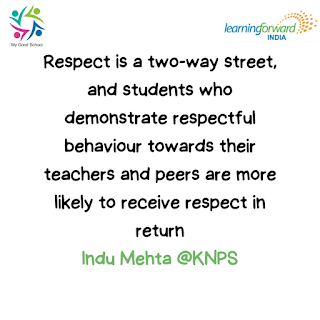
The statement "You must show respect to earn respect in the classroom" is generally true. Respect is a two-way street, and students who demonstrate respectful behaviour towards their teachers and peers are more likely to receive respect in return.

In my class, there was a student who consistently interrupted the teacher during lectures, talked back in a disrespectful manner, and disregarded classroom rules. Their behaviour showed a lack of respect towards the teacher and disrupted the learning environment for others.

On the other hand, there was another student who actively listened to the teacher, participated in class discussions, and treated both the teacher and fellow students with respect. The second student’s behaviour demonstrated a respectful attitude and contributed positively to the classroom environment.

In this scenario, it was likely that all the teachers and other students developed a more positive perception of the second student and her respectful conduct. All started listening to her opinions, assisting when needed, and engaging in respectful interactions. Conversely, the first student’s disrespectful behaviour led to strained relationships, lack of support, and potential disciplinary actions.

By showing respect to others, students can foster mutual respect and cooperation in the classroom. It creates a conducive environment for learning, encourages positive interactions, and helps build strong relationships between teachers and students as well as among peers.


Indu Mehta @KNPS Phagwara


Saturday, April 17, 2021

Lavalina Sogani "I am passionate about Education...

Listen to the story

You will love the stories shared by our happy teachers and passionate educators. We grow your people's capacity to improve student achievement and transform your school into a culture of trust and collaboration in less time with fewer resources. Each person in your school contributes to the culture of your school. School culture is built on the actions and interactions of the people. You make your school stronger by adding value to others and making others feel valued.

Episode #73: Sandeep Dutt, in conversation with Lavalina Sogani, founder of Vimukti, providing high-quality education free of cost to girls from low-income families living in urban slums of Jaipur. Convinced the community to send their daughters to school. Earlier, girls were either forced to take up some micro-level income-earning activity, work as domestic help or stay at home and look after siblings while parents went to work. VGS was looked upon merely as a place where girls got free meals. But as girls learnt to read and write, helped their parents with mathematical calculations and reading newspaper/letters, parents realised the importance of girl education. Girls who have completed vocational training programmes are now gainfully employed. Listen to her story of awe and inspiration, starting with 20 girls to near 750. They have tirelessly worked not just to educate girls but families.

Find out more: https://www.vimuktisanstha.org/

Photo courtesy: https://www.indianwomenblog.org/lavalina-sogani-of-vimukti-school-tells-us-how-she-is-bringing-progressive-education-to-jaipur-slums/

Sunday, July 28, 2019

Wanted Back-bencher Last-ranker Teacher

Learning Forward India PLP Session II - Kalpana Jain, The Iconic School

Sunday, July 22, 2018

Manisha Deora: Women Empowerment


In India, empowering women is very necessary as it brings gender equality. Men should not think that women are made only for the household work. They both should be treated equally. Women empowerment is also necessary for the bright future of the family, society and country because an educated woman can educate her whole family and thus the whole country. It is said that “if we educate a man, we educate a man only, but if we educate a women, we educate the whole family”.

Women should be given equal opportunities in every field like men and they should not be discriminated. Women cover almost half population of the country, it means that if women are uneducated, the half of the country is uneducated which brings poor economic condition. Women should be given more freedom and should have equal rights like men, so that they can become independent.

Nowadays, women are competing men by doing all the work together like household work, working in offices, etc. They become independent and can serve their whole family. Women empowerment means empowering women to take their own decisions independently.

Women must be educated and they should be given more freedom. It is very important for a democratic country. So let them involve in the development of our country.

Manisha Deora.
Educator, The Fabindia School, Bali

Blog Archive