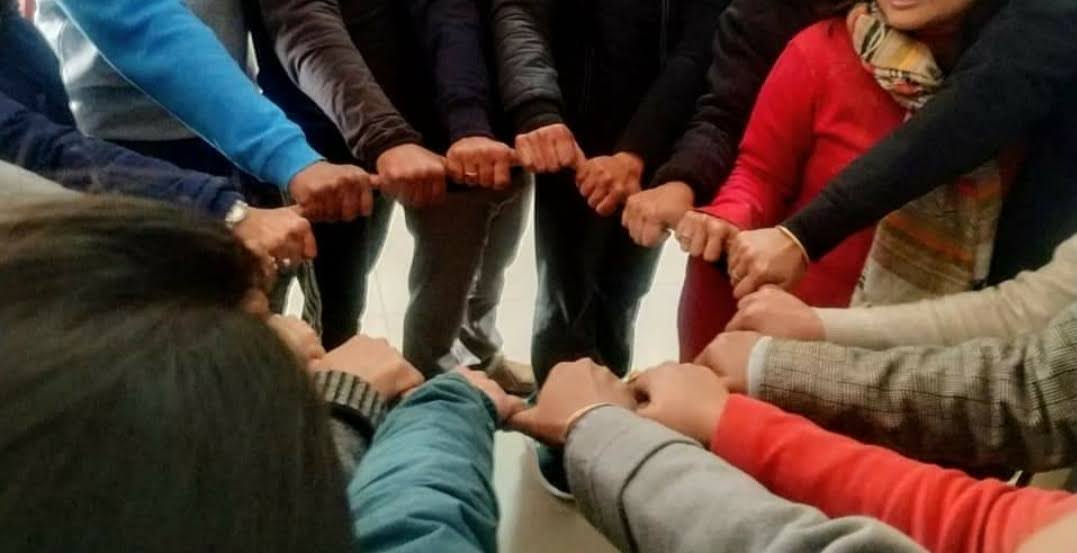
Showing posts with label teamwork. Show all posts

Saturday, December 13, 2025

Learning Through Reflection, Real-World Thinking, and Productive Struggle - Aprajita

Bringing Real-World Thinking into the Classroom

While teaching the Judiciary chapter to my Grade 8 Social Studies students, I wanted them to understand the decision-making process in the judicial system, rather than just memorise facts. Inspired by Productive Failure, I designed a role-play activity around a debate on whether exams in schools should be open-book or not.

Before starting, I clearly explained the roles: some students would act as judges, others as lawyers, and a few as witnesses, presenting their opinions. Each student understood their responsibilities, and the scenario was simple yet realistic, allowing them to engage with the topic actively. I intentionally did not provide all the answers, encouraging students to think critically, discuss, and decide on arguments collaboratively.

During the role-play, students initially struggled to present logical arguments, manage counterpoints, and reach fair decisions. Lawyers sometimes jumped to conclusions, witnesses exaggerated points, and judges had to deliberate carefully before making rulings. Despite these challenges, every student participated actively. The experience required them to reason, debate, and consider multiple perspectives, which made the abstract concepts of law, fairness, and decision-making tangible.

After the activity, we discussed the key points. I explained the correct judicial approach and the reasoning behind decisions. Students could connect their experiences to the real judicial system, understanding how judges weigh evidence, lawyers structure arguments, and witnesses contribute information. They reflected on their mistakes and successes, and many realized how fairness, logical reasoning, and teamwork are essential in any decision-making process.

The activity had a lasting impact. Students could now explain the role of courts, the responsibilities of judges and lawyers, and the importance of reasoned decisions with clarity. By experiencing a real-world scenario directly, they developed critical thinking, collaboration skills, and a deeper understanding of the Judiciary chapter. The struggle involved in the role-play made the learning meaningful and memorable, showing me how bringing real-world thinking into the classroom can transform abstract concepts into active learning experiences.

This exercise reinforced the value of Productive Failure in teaching. By letting students engage directly with a challenging scenario, I could make lessons interactive, foster problem-solving skills, and encourage students to take ownership of their learning.

Becoming More Reflective About My Teaching Practices

Teaching is a profession that constantly invites us to pause, observe, and refine our approach. Over the past year, I have learned that reflection is not an occasional exercise—it is an everyday practice that helps me understand my learners better and identify my own areas for growth. One of the most important shifts in my journey has been becoming more reflective about how I plan lessons, manage time, and integrate helpful tools meaningfully into my classroom.

I have always considered myself a well-prepared teacher, but there were days when my lessons didn’t unfold the way I had imagined. Sometimes discussions took longer than expected, or an activity needed more time than the period allowed. Instead of feeling discouraged, I began asking myself simple but honest questions: What slowed us down today? What worked well? What needs adjustment? This habit of quietly analysing my own teaching helped me notice patterns. I realised that my enthusiasm for making lessons engaging sometimes led to trying to fit too much into a single class. The content was good, but the pacing needed finer tuning.

Over time, I developed a more realistic rhythm—planning lessons with flexible spaces, keeping backup options ready, and allowing students enough breathing room to think, question, and respond. This shift didn’t reduce the quality of learning; in fact, it improved it. Students felt less rushed, and I felt more in control of the flow of the class.

Another area that made me reflect deeply was the use of digital tools. While AI and technology can enhance learning, I noticed that I often hesitated to include them because I didn’t want the lesson to lose its personal touch. However, reflection taught me that the goal is not to use technology for the sake of it, but to select what genuinely supports student understanding. I began integrating small, purposeful elements—like quick visual explanations, structured prompts, or digital maps in Social Studies. These additions didn’t overshadow my teaching; they complemented it. Students found certain concepts easier to grasp, and it increased the variety of learning experiences in the classroom.

What surprised me most was how these reflective habits affected the overall atmosphere of my classes. I became more attentive to the way students responded—where they hesitated, where they showed excitement, and where they needed a different method. Reflection made me calmer and more observant. Instead of reacting instantly, I learned to pause, interpret, and adjust. This not only improved the quality of my teaching but also strengthened my connection with the students.

Becoming a reflective teacher has not been about fixing weaknesses; it has been about understanding myself better as an educator. It has helped me recognise that every class, whether smooth or challenging, carries a message for me. Some lessons remind me of my strengths, while others quietly show me the next step I need to take.

Most importantly, reflection has made me a more confident learner. It reassures me that growth is continuous, and every improvement—big or small—adds value to my teaching and to my students’ learning. This journey has not only shaped my professional development but has also given me a deeper appreciation for the thoughtful, evolving nature of teaching.

Understanding the Value of Student Mistakes

There are moments in a classroom that gently reshape our understanding of how children learn. One such moment occurred during a Grade 3 Social Studies lesson while we were discussing an “Odd One Out” question that had appeared in their recent test. According to the chapter, the correct answer was very straightforward. Most of the students had chosen the expected option. But two children selected a completely different answer—one that didn’t fit the textbook pattern but reflected clear conceptual understanding.

When I went through their papers, their logic caught my attention immediately. They had linked the options to an idea we had discussed earlier, and their explanation showed that they were thinking beyond the lines of the book. Their reasoning was not a guess; it showed clarity and meaningful connection.

While discussing the answers with the class, I first explained the textbook-based answer so that everyone remained aligned with the learning objective. Then, I shared that two students had chosen a different option and that their reasoning was absolutely valid. This time, I intentionally mentioned their names. The way their faces lit up—surprise mixed with pride—was a reminder of how deeply children value recognition, especially for thinking differently.

The rest of the class also became curious. They wanted to hear why the alternative answer worked, and it opened a short but rich discussion about how ideas can be connected in different ways. It showed them that learning is not only about matching the exact line from the chapter—it is also about understanding the concept behind it.

This small moment helped me realise the importance of looking at mistakes more thoughtfully. A so-called “wrong” answer may actually reflect deeper comprehension. Since then, I’ve made a conscious effort to listen to a child’s reasoning before deciding whether the answer is incorrect.

It has also changed the quality of classroom discussions. Students now take ownership of their ideas, compare their reasoning, and understand that thinking differently can be valuable. They enjoy the process of explaining why they wrote something, and it has strengthened their conceptual clarity.

Those two Grade 3 students reminded me that learning isn’t linear. When children feel safe to express their understanding, even through an unexpected answer, we get a clearer view of their abilities. And when their effort is acknowledged openly—in front of their peers—it becomes a moment they carry with them for a long time.

Encouraging Teamwork Through Struggle Tasks

When the Grade 7 Global Perspectives presentation on SDG 2 and SDG 3 was announced, I immediately knew it would demand far more than subject knowledge from the students. They had to research global issues, create models, prepare stage scripts, design visuals, and finally present everything confidently in front of the audience. It was a complete cycle of inquiry, creation, and performance—challenging enough to naturally bring struggle, collaboration, and teamwork into the centre of learning.

At first, I noticed that many of them were excited, but their ideas were scattered. Some wanted flashy models, some wanted statistics, some wanted to narrate stories, and a few preferred to stay quiet and do background work. Earlier, I would have simply assigned roles to keep things smooth. But this time, I allowed the task itself to stretch them. I let them take the lead in planning and experience the small hurdles that come with group work—differences in opinion, uneven participation, and the pressure of meeting deadlines.

Slowly, something beautiful began to unfold.

They started relying on each other. They discovered who was good with research, who could organise the script, who was creative with the models (like the domino-effect model that demonstrated how healthy and unhealthy food choices impact the body and long-term life outcomes), and who could bring energy to the stage. The group became a space where their natural strengths surfaced without my constant intervention.

Their friendships deepened in the process. I saw students who rarely spoke to each other discussing ideas and adjusting plans. A few disagreements did arise, but instead of solving them for the students, I guided them to listen to each other’s point of view. That’s when they began understanding not only their own strengths and weaknesses but also those of their peers. It created a sense of empathy—something that Global Perspectives aims for.

The struggle tasks—deciding the final presentation layout, organising lines, and coordinating the model placement on stage—pushed them to communicate better. They realised that success on stage depended on teamwork, not individual brilliance. Even those who were initially shy became essential voices in the final preparation. By the end, the entire class was involved. No one was left out, and every student’s contribution was visible.

On the day of the presentation, watching them stand together, confident and proud, was a reminder that meaningful learning does not always come from easy tasks. It grows through challenges that require students to depend on each other, negotiate ideas, and take responsibility for a shared goal.

Their work on SDG 2 and SDG 3 went beyond the curriculum—they demonstrated how collaboration can strengthen understanding. They didn’t just talk about “good health” or “zero hunger”; they experienced the importance of collective effort, which is at the heart of solving global problems.

This assignment reaffirmed for me that struggle tasks, when thoughtfully integrated, build not only academic skills but also resilience, cooperation, and respect—qualities essential for lifelong learning.

Learning to Step Back and Observe – A Classroom Insight from “Grassroot Democracy”

While teaching the chapter “Grassroot Democracy” to Grade 6, I had an important realisation about how students internalise concepts. The chapter introduces students to the Gram Sabha, Gram Panchayat, and the idea that people at the local level make decisions for their own welfare. My lesson began the way I usually plan it—interactive questioning, examples from everyday situations, and structured note-making. The students were engaged and attentive.

However, during the discussion on the role of the Gram Sabha, I noticed something subtle. When I asked,
“Why is the Gram Sabha called the foundation of democracy at the village level?”
The class responded quickly, but the answers were too direct and memorised.

“Because all adults are members.”
“Because they check the Panchayat.”
“Because they approve the budget.”

These answers were correct, but they lacked depth. The reasoning behind the concept wasn’t fully visible. That was the moment it became clear to me that while the children understood the what, they weren’t yet connecting with the why.

This is where the approach of productive struggle—a key idea from the Productive Failure session—came to mind. Instead of giving them more explanation, I needed to give them space to think. So, I paused the textbook discussion and shifted to an activity that allowed them to make sense of the idea themselves.

I presented a simple scenario:
“Imagine our class is a village. We received funds to improve something in our classroom. Who should decide how to use it—only a few representatives, or everyone together? Discuss.”

Once I gave the instruction, I consciously stepped back to observe.
No prompting, no hinting, no interfering—just observing their natural thinking.

What I saw was far more meaningful than any ready-made answer. Students began discussing fairness, equal participation, and the importance of hearing everyone’s voice. Some connected it to situations in school—how decisions feel different when only monitors decide versus when the whole class is involved. A few pointed out that if only a small group decides, the needs of others may be ignored.

Their conversations captured the spirit of the Gram Sabha better than any direct explanation could. While observing, I could clearly identify who had grasped the core idea and who needed support—not because the answers were wrong, but because their reasoning became visible.

After the discussions, I stepped in to connect their ideas to the textbook concepts. This time, the explanation flowed naturally because they already had a base built from their own thinking.

Concepts like participation, accountability, and transparency started making sense in a more concrete way.

This experience reinforced for me that stepping back doesn’t reduce the teacher’s role—it makes it more purposeful. In the chapter on Grassroot Democracy, this small shift allowed the students to experience democratic thinking instead of just reading about it.

Learning to step back and observe is a practice I now use intentionally. It helps students think before they receive the final explanation, and it helps me understand their learning more deeply. It was a small change, but it made a noticeable difference in how the class connected with the chapter.

Aprajita
Sunbeam International, Varuna

Tuesday, July 1, 2025

Not All School Essentials Come in a Pencil Case! - Manisha Khanna


๐ŸŽ“ Case Study: The Invisible Tools of Class 6B

School: Gita Tatva Vidhyalaya
Grade: 6B
Project Theme: “Our Green Planet” – A class exhibition on environmental issues

Background:

Class 6B was preparing for its annual exhibition. Every group had to create a display on an environmental issue of their choice. One group—made up of five very different students: Tia, Arjun, Farah, Neil, and Riya—chose the topic “Waste Not, Want Not,” focusing on waste management and recycling.

But early meetings were full of frustration. Tia wanted everything to be perfect. Arjun kept interrupting. Farah barely spoke. Neil was more interested in doodling than planning. Riya tried to take charge but got ignored.

They had the glue, the cardboard, the charts—but they lacked something crucial.

What Made the Difference: The Unseen Essentials

๐Ÿ’ฌ Respect

In one heated discussion, Tia snapped at Arjun for not listening. That evening, she reflected and returned the next day with a quiet, “Sorry for yesterday.”
The group agreed on one rule: “No interrupting—every voice matters.”
From that day, everyone started listening.
➡️ Respect built the foundation for teamwork.

Confidence

Farah had great ideas but rarely shared them. One afternoon, Riya turned and said, “Farah, I think you have something to say—go on.”
Farah hesitated, then suggested turning an old shoebox into a 3D recycling bin. Everyone loved it.
➡️ Confidence grew when others believed in her.

๐Ÿ” Curiosity

Neil, while sketching for the poster, asked, “Why is plastic hard to recycle?”
This led the group to conduct further research and add a quiz section to their display. They even discovered a new type of biodegradable plastic and included it in their project.
➡️ Curiosity sparked real learning.

๐Ÿ’› Kindness

When Arjun missed a day due to illness, the team didn’t grumble. Instead, they left space in the model for him to contribute later and sent him a video update.
➡️ Kindness kept the group united.

๐ŸŽฏ Responsibility

As the deadline approached, they met early before school, divided tasks clearly, and checked every detail twice. No one blamed or waited for others to fix problems.
➡️ Responsibility meant showing up for the team.

Exhibition Day: More Than Just a Display

Their table wasn’t the flashiest, but visitors stayed longer. People loved how clearly they explained everything and how each member had a role. A judge remarked,

“This group shows what learning really looks like—not just knowledge, but collaboration.”

Reflection: What They Truly Carried

None of these students packed extra bags. What they did bring were invisible tools: their attitudes, their values, and their willingness to grow.

These five qualities—respect, confidence, curiosity, kindness, and responsibility—don’t weigh anything, but they carry us the farthest.

Inspired by the idea of abstract nouns—qualities we can't see, but feel—and the values that build strong character in every student.

Manisha Khanna


Saturday, April 1, 2023

Unity and Caring - Welham Boys' School


Unity and Caring amongst students are essential for creating a positive learning environment. When
students feel connected and have a sense of belonging, they are more likely to be engaged and motivated in their studies. It also promotes empathy and compassion, which can help reduce bullying and other negative behaviours. Encouraging students to work together and support one another can foster a spirit of cooperation and teamwork. This can be achieved through peer mentoring, group projects, and community service. By prioritizing unity and caring, students can develop strong relationships with their peers, feel valued and supported, and ultimately thrive academically.

Exercise: Human Knot
Ask students to stand in a circle and hold hands with two people not standing next to them. Instruct the students to move around and untangle the knot without letting go of each other's hands. Encourage them to communicate with each other, work together, and be patient until the knot is
untangled.

Observations:
a) Initial Responses: At the start of the exercise, some students may feel hesitant or unsure about holding hands with people they don't know well. They may also need help approaching the problem of untangling the knot.

b) Contribution: As the teacher or facilitator, you can provide guidance and encouragement throughout the exercise. You can remind the students to communicate effectively, work together, and stay patient. You can also offer suggestions and help to keep the movement moving along.

c) Impact on Students: The Human Knot exercise can positively impact students in several ways. Firstly, it promotes teamwork and collaboration, as students need to work together to solve problems. It also encourages communication and trust-building, as students must rely on each other to untangle the knot. Finally, the exercise can help to build a sense of unity and caring as students come together to achieve a common goal.

d)Takeaways: Some possible takeaways from the Human Knot exercise include:
The importance of communication and teamwork in achieving a goal.
The value of patience and perseverance in difficult situations.
The benefits of building trust and working together towards a common purpose.
The idea is that unity and caring can be fostered through shared experiences and challenges.

Incident: An incident took place amongst the students that can be seen as a learning or takeaway
from this exercise.

While playing soccer, one kid (let's call him kid 1) kicked the ball a little too hard, and another kid (let's call him kid 2) ended up hurting his arm. Kid 1 took Kid 2 to the hospital, and the arm was fractured. Kid 2's grandparents had come to take him for medical leave, and kid 1, along with some other friends, helped him pack, change and carry all his stuff for him. The grandparents were overwhelmed to see his peers' caring, united and helpful nature.

- Neelima Parmar, Monika Gupta and Vandana Sahay
Welham Boys’ School

Thursday, September 22, 2022

Humility and Appreciation - Maithreyi Venkataraman and Sukhpreet Kaur

"The roots of all goodness lie in the soil of appreciation for goodness." Dalai Lama

A humble person will undoubtedly be a person who will appreciate. To appreciate someone, one must look beyond oneself and recognise the other's effort and actions. One's level of appreciation indeed can vary by the quality of the job, but it should not qualify as the criteria for appreciation. 

Example. : With great excitement, a child who has attempted to draw scenery approaches his teacher and exhibits his work. That teacher must begin her feedback with a positive appreciation of the child's effort and then state how the child can improve the outcome.

Activity:  

The students planned and organised a class party for Teacher's Day. The party was a great hit, and the students' teamwork, hard work, and planning days were evident. As their grade mentor, I was overwhelmed with pride. The after-effect of the celebrations was not just loads of happy memories but also a dirty classroom. 

The children were now given this as an activity to clean up their classroom. They all participated without any apprehensions. I observed that they did have a few concerns, which they overcame with appreciation and motivation.

They enjoyed seeing a neat classroom after their effort. Now, this activity also made them realise the hard work put in by the cleaning staff, and they voluntarily went to thank the cleaning staff for keeping their classrooms always clean; they also apologised to them for increasing their work, dropping paper bits and promised to observe their part in keeping their classroom clean.

So, here are a few reasons why we should reward or appreciate students for their efforts. 

Sense of accomplishment - A sense of relief that the assigned task was completed and their hard work didn't go in vain gets inbuilt in the students. And with this thought, the mindset brings better, and they also receive what we all constantly seek: acceptance!

Overwhelming respect - Rewarded students get genuine appreciation and respect for just doing their best. 

Self-confidence - Rewarding someone for their work directly increases their level of self-confidence. 

Inclination towards learning - Success, when appreciated, turns into motivation, which brings zeal and enthusiasm to learn new things because how much you know and work determines how far you will go. 

Our learning: As grown-ups and mentors, we should trust more and criticise less. Students will always be more responsive when they are allowed to shoulder responsibilities.

-- Maithreyi Venkataraman and Sukhpreet Kaur, Gyanshree School

Wednesday, September 21, 2022

Responsibility and Cooperation - Maithreyi Venkataraman


Responsibility & Cooperation

Responsibility is a term we often hear in different phases of our lives, and it can be fulfilled in a limitless number of ways. This is one such value that every human is born with; it’s the cultivation and realization dependent on the environment in which one is nurtured. 

Let’s now take a moment to understand the easiest way to explain the term – ‘Responsible’ – it is the act of being brave enough to accept the consequences of one’s act .

Responsibility in other words is a position / duty given to a person to fulfill. Every person has varied responsibilities at the same time .Eg: A student holds the responsibility of representing his /her school, his/her family, his/her class and, more specifically, their section. At times, a child gets anxious on hearing this word out of fear. 

As they grow older, the responsibility of a person goes through a transitory phase. It is very important that a person be exposed to shouldering responsibilities at an early age. It develops a sense of confidence in a student and teaches them ways to accept and handle their success and failures in a very effective way.

Teamwork activities always encourage one to hone their skills to work in a cooperative manner. A simple activity that I held in my class was – rearranging the furniture of the classroom – I gave a task to the students of my class to rearrange the tables and chairs in a U shape pattern, but without speaking a word, I was amazed seeing the way they understood each other just by their gestures and cooperated with one another to complete the act successfully. I feel this was achieved as I did not appoint any leader to any group, but told the students that each of them is responsible for their own individual actions and for their actions as a whole. 

Ms. Maithreyi Venkataraman
Gyanshree School


Sunday, August 28, 2022

Responsibility and Cooperation - Nitin Sharma

"We are made wise not by the recollection of our past, but by the responsibility for our future." ― George Bernard Shaw. 


Responsibility is accepting that you are the cause and the solution to the matter. Responsibility is one of our character traits, which means that a person can respond to his action, take on some duties, and face the inevitable consequences of an activity that may occur. Responsibility is something every person should cultivate in himself. It should become a part of our personality. When you are responsible, it is easier to gain the respect of your people, and you get a decent place in our society.

Responsibility is not what you do for your children but what you have taught them to do for themselves that will make them successful human beings. Our children will not become responsible unless they have a responsibility, like everything else that starts at home. The foremost goal of teaching is to make them successful adults who contribute to society. Try to indulge your children in everything you do. Make them feel that their opinion is valued. When your children do something, praise their efforts. It will motivate them to do better.


How can you teach your students to be responsible in school, at home and outside? Give at least two examples in each case.

Children learn what they see, so be extra careful of your actions in front of them. Responsible teachers raise responsible citizens. By teaching your students to be responsible in the classrooms, you are also teaching them to be responsible at home and in their communities. In the class, discuss the various duties to be performed by the students at school. Each student can be assigned a job: note down the names of the uniform defaulters or turn off the lights and fans when everyone leaves the classroom.

At home, I'm responsible for packing my school bag, putting the books and notebooks according to the timetable and for the lunch box. Teach him that while coming back from school, you have to keep your shoes in the proper place and ensure that homework has been done sincerely.

We can guide to fulfilling the social responsibilities as a student like:

Keep the surroundings clean, and put the litter and put it in the bin. To keep a check on reducing energy and water consumption. Whenever they attend any function, such as a wedding, not to waste food and only take the desired amount.

How strong is the culture of cooperation in your classroom?

As a coordinator of class IX and X after Covid, it is noticed that students need to be more cooperative in their classrooms as for a long time they were alone at their home and some values of being cooperative in the class they have forgotten. Whenever a new student is there in the class, there is one buddy for that student for a week or more than that who takes care of that new student and guides him regarding the rules and regulations of the school. In the class, during lunch break, students share their food items. 

Many events and school functions allow students to collaborate and coordinate, through which students imbibe the very spirit of teamwork. Ms Nitin Sharma Kamla Nehru Public School, Phagwara JOL Cohort 2022

Monday, February 22, 2021

Responsibility and cooperation - Tarang JMMS

What is Responsibility?

Responsibility is the ability to respond and accept that you are the cause and the solution of the matter.

I am responsible for my words, my behaviour, my efforts, my mistakes, my ideas, my actions and the consequences of my actions.

Being responsible is something that is important because it allows you to be depended on even if others can’t be. When we are responsible it means that we are capable of making moral decisions on our own and we are ready to be answerable to others for our behaviour.

Responsible people are the ones that many look up to. Responsible people are always the ones who help out. This quality helps people to find a fondness and trustworthiness towards those who are responsible. Each step we take towards being responsible helps to raise our self-esteem and our relationship with others.

Cooperation on the other hand is also an important value because it allows people and groups to work together to achieve a common goal. Cooperation allows us to gain and exchange knowledge, ideas, thoughts and workload.

At school the children learn to cooperate through activities like playing together in teams, doing project work in groups and even simply building puzzles together enables children to learn how to work together. Part of cooperation is learning how to overcome challenges together.

Trust is the foundation of cooperative behaviour.

 In our school we always see the children picking up the dry leaves from the ground and putting them in the dustbin before the assembly. It has become their habit even the little ones help in cleaning the campus. As a part of the institution, it is our duty to keep it neat and clean. As teachers, it is our responsibility to teach the children these little responsibilities from a young age. When the little ones watch their elders even they try to contribute by cooperating with them.

 We all have our own Responsibilities.

As teachers, we are responsible person in society as we build the future of our nation. Other people can point it out to us but we can't point it out to anyone.

 It is believed that teachers are the epitome of knowledge. They have solutions for every problem. But what a teacher has is other teachers. Every teacher has her own perspectives but only by collaborating with each other we grow together and discover new areas and gain more knowledge.

Even the students help the teacher in the learning process. It's the responsibility of the teacher to impart knowledge. A teacher has the knowledge but the learners cooperate and collaborate and carry on the learning process.

Cooperation is not always an easy thing to achieve in the workplace, but the effort is worth it because it leads to a harmonious and productive space. Cooperation can make the difference between success and failure. When people dedicate more time to their duties in a cooperative manner, they are more productive and things get done more quickly and efficiently.

 'If we all don't grow, the boat won't go'

Tarang JMMS@John Martyn Memorial School, Dehradun- Neelam Bhardwaj, Dolly Pharasi, Shalini Gurung

Friday, January 29, 2021

Responsibility and Co-operation - FLYERS DGS

Responsibility means to accept that I am the reason and result of what I have done and what I am doing. The moment we take the responsibility of our own deeds in our lives, we can change the things in our lives. Because no one can live our lives and how much we try to blame others for our mistakes or deeds, it’s we who have made such choices or making such choices.

Cooperation means knowing or understanding one another. It means joining together to help others believe in something they might have just thought but could never have done. Cooperation is a joint effort that nobody can get in until unless everybody gets in. It is always observed that a group is much stronger than an individual.

เคœिเคฎ्เคฎेเคฆाเคฐी เค”เคฐ เคธเคนเคฏोเค—เคเค•เคคा เค•ी เคฎเคœเคฌूเคค เคฏเคน เคกोเคฐ

เค…เคธเคซเคฒเคคा เค•ी เคฐाเคน เค•ो เคฐोเค•เคธंเคญเคต เค•ा เคฏเคน เคชुเคฐเคœोเคฐ,

เคšाเคฐों เค“เคฐ เคนोเคคा เคฏเคน เคถोเคฐเคœिเคฎ्เคฎेเคฆाเคฐी เค”เคฐ เคธเคนเคฏोเค—,

เค…เคญ्เคฏाเคธ เค•เคฐें เค‡เคธเค•ा เคฐोเคœ,เคธเคซเคฒเคคा เค•ा เคฏเคน เคธंเคฏोเค—,

เคธเคนी เคฎंเคค्เคฐ เค•ा เคธเคนी เค‰เคชเคฏोเค—।

Responsibility and cooperation go hand in hand, and it's evident from birth to death. With the responsibility of Parents comes cooperation of child instinctively. The same in a class when a teacher is teaching and similarly in any relationship or work life.  A person learns to be responsible when he or she completes a task and gets a sense of achievement.  Our environment plays a vital role in shaping our values. I believe a child gets a sense of responsibility when there are mutual effort and cooperation between the parents, the teachers and the child himself. A parent asking his child to take care of the younger sibling or organising his own cupboard. Likewise, a teacher assigning a small duty of distributing notebooks in the class or making the child a monitor for a day starts filling a child with responsibility. A responsible and cooperative person is admired by everyone. No individual has sufficient experience or education to achieve his aim without the co-operation of others.

A child is not born being a responsible one. Yes, exceptions are there, as some people are very responsible by nature, so definitely their children will also have some of their qualities. So, some children may show responsible behaviour in their childhood, but that will come in practice over a period and with some events & observations. The children and even we experience and observe many situations or events that help everyone become responsible individuals. Many times we observe others and our observations help us to become a responsible person. We experience many situations every minute, and it is we, who take decisions to be responsible for the consequences. Sometimes others experience help us to be more responsible in future.  

Responsible people know that they have to take their duties seriously and cater to the world's demands, environment, society, country, children, family, and self. We can see an example of this right in front of us- the moment we were assigned the task of creating blogs, each month, we knew that it was our responsibility as a group to give our best and co-operate with each other. The JOL program is inculcating both responsibility, cooperation and a sense of team-spirit amongst us. Therefore, it is rightly said "Alone we are smart, together we are brilliant" - Steven Anderson.

Written with co-operation by FLYERS DGS - Vijaya Jugran, Nandini Arora, Urvashi Uniyal, Vandana Goel, Bhumika Vyas & Ritika Tyagi - at The Doon Girls' School in Dehradun.


Responsibility and Cooperation - Dynamic DGS

Responsibility and cooperation are two root factors of ‘learn together- grow together’.

Responsibility is something we need to learn as children. It means taking decisions and being in charge of your actions. When we are responsible for things it gives us a sense of pride. In my class, I like to give each child a certain task as this develops a sense of responsibility in them.

 Cooperation is a very essential value as it deals with teamwork and it is important for everyone to understand this. In a boarding school, we learn to cooperate with each other without even realising it. In my dorm, there were 16 girls and only one western-style toilet, and most preferred using that, but it was never an issue. Cooperation means adapting and adjusting with each other in order to attain a goal, build better relationships as well as create a friendly and peaceful environment.

In the classroom, through activities such as science experiments, nature walks, math projects, children learn to take care of their responsibilities and work with others to achieve the set goals.

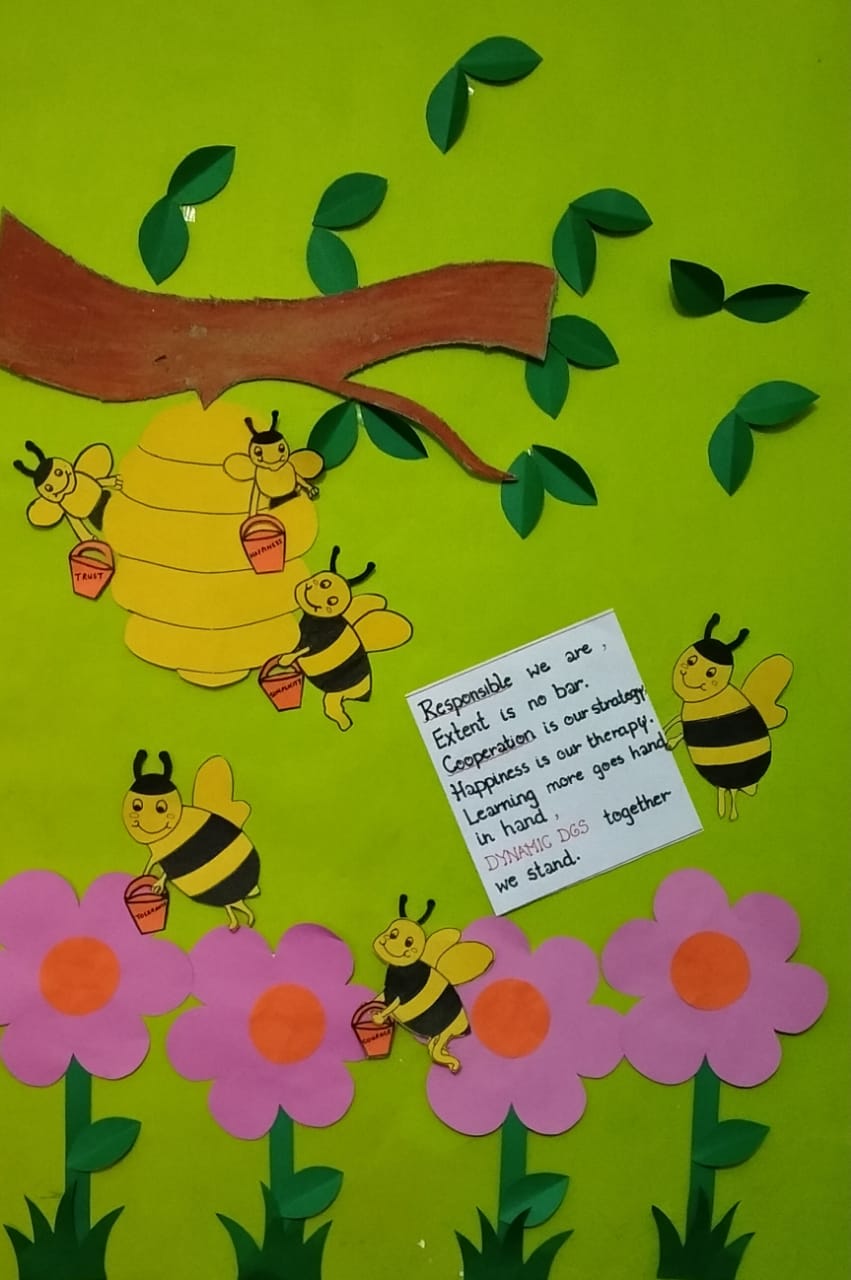
It may sound strange, but one of the most important things we can learn from honey bees is teamwork. They are a perfect example of teamwork. They cooperate in everything they do. If one bee suffers or falls behind, the others step up and do the work. Teamwork is the secret to their success.

At The Doon Girls’ School, the children have been learning the values of responsibility and co-operation by being involved in activities where they have been responsible for themselves, their environment and have carried out certain tasks.

They have sown seeds, watered them and have been looking after them each day. Another interesting way of showing responsibility towards the environment was to make compost (organic) by collecting dry leaves, fruit and vegetable peels and making an eco -friendly manure. Our children think about our environment and segregate biodegradable and non-biodegradable waste and e-waste.

School is a reflection of society. In this way, the school provides important ingredients in the form of values to society.

Dynamic DGS @ THE Doon Girls School, Dehradun - Reena Gusain , Reah Sikand , Meenakshi Panwar, Shilpika Pandey, Rachna Bharrdwaj & Sumali Devgan

Monday, October 19, 2020

Teamwork - Jitendra Suthar

Teamwork is two or a lot of individuals move to realize a selected goal. It’s one among the foremost vital things that you simply have to be compelled to learn from childhood. When individuals add a bunch, the work gets divided. Hence, one person doesn’t have to be compelled to do all the work. This is often one among the options of operating in groups.

One of the teachings that they teach in school is cooperation. It’s a lesson that you simply ought to always remember in your life. you may have to be compelled to add teams in your life. If you ignore the expertise of cooperation, you may face millions of difficulties. In a company, while not cooperating, no work is accomplished. everybody works in teams; the quantity of labour that's accomplished is over what a private alone is able to do.

When everybody works in groups, they deliver the goods with all the goals that the organization functions on. It makes things easier for each person in a company. Therefore, operating in groups helps everybody within the company. Each person within the team relies on the opposite members of the cluster. you'll learn a lot of things from the opposite individuals on the aspect once you work along.

Jitendra Suthar, The Fabindia School <jsr@fabindiaschools.in>

Thursday, July 9, 2020

Unity and Caring - Ajay Vijayvargi

` A family that dines together stays together. ` - how wonderfully the unity of a family is
defined, in today's scenario when each one of us we work round the clock, mostly online for hours together. Even when we are at home or at a party we all are busy fiddling our fingers on our mobiles. When we with our family to dine or watch televisions in our living room we are isolated even when we are together in a room. 

We are not united, but if we care for each other we will be together in all thick and thins – we will be united which in turn will protect us from all odds, we share our thoughts, feelings and care for each other. This feeling of being united will help the family in surviving ups and downs of life with courage and power. This feeling of being united at the workplace will help us in collaboration and teamwork yielding better results.

This feeling will only develop when we start caring for each other, compassionate, helping each other in times of need. It increases our self-esteem, self-worth and develops better social connections. If we care for someone, a small gift or holding hands, keeping a hand on his shoulder shows our togetherness with him in tough times, this will reduce his stress and will develop a strong bond of love giving a feeling of being united.  

These types of gestures in a classroom by a teacher to his students will develop a strong bond of unity and show that we care for each other.

Ajay Vijayvargi
The Fabindia School.
avi@fabindiaschools.in

Monday, May 25, 2020

Responsibility and Cooperation - Ajay Vijayvargi

Responsibility is one of the attributes that can be considered as one of the `Master
Attributes`, the question is how? If a person is responsible, he will be trusted by more people, a person who can be trusted will be liked and loved more, so he will be respected everywhere, these attributes will, in turn, make him courageous and give him opportunities to lead, which will make him a decision-maker, one who makes the decision for others will be simple and honest, a combination of all this will create an aura around that person i.e. he can be distinguished easily in the society.

 Responsibility means duty which can be towards oneself also along with family, society, country or towards the environment (Earth) and humanity. It can also be defined as an obligation, responsible for your words and action. Responsibility will develop leadership and teamwork, now this teamwork will lead to the other value `Cooperation`.

Cooperation will develop trust and collaboration within his teammates which will yield better learning, output with an increase in work efficiency and results; this will also develop harmony in relations and understanding between stakeholders. The simplest example of cooperation is a family where every member of the family bound by blood relations work together with responsibility  - kids do their studies, lady look after the house and all family members performing household chores happily and of course, the head of the family safeguarding the interests of all members, giving emotional and financial support.

Similarly, the examples of cooperation can be the organisation in which we work, between the leader and the masses and so on. Academicians and Educators cooperate for school betterment.   
  
Ajay Vijayvargi
The Fabindia School

Thursday, May 14, 2020

Responsibility & Cooperation - Super7 BHIS

THE CRUX OF TEAMWORK
As Michael Korda rightly said, "Success on any major scale requires you to accept responsibility... In the final analysis, the one quality that all successful people have is the ability to take on responsibility." Reflecting after Mr. Dutt’s Session, we had a mutual realisation that taking and shouldering responsibility comes from within. It is all about the one who takes the onus of an outcome.

A responsible person is one who can be trusted to act without needing strict supervision because they are accountable for their behaviour. Being given a responsibility boosts a person’s self-esteem and the desire to excel. A responsible person tackles difficult tasks without blaming others for any setbacks or predicaments. They are responsible for success or failure.

Student responsibility occurs when students take an active role in learning by recognizing the fact that they are accountable for their success – be it academics or sports. They demonstrate responsibility where they make choices and act in a manner that leads them towards their goals.

Responsibility is all about taking the onus.
 We cannot shy away by pointing fingers at others.
We can take the example of an athlete standing right before the event and reflecting on his performance in the past. At that point standing before the starting line, he is fully aware that only he is responsible for his performance in the race and no one else.

One of us remembers a 6th-grade student, Kabir who was very shy and sincere. He was usually an introvert and preferred to stay quiet. However, he was an excellent table tennis player. He took a 7-day leave from school to visit his grandparents. He had an important Inter-School Table Tennis Competition. He kept his Table Tennis Set in his locker and gave the keys to his close friend Rihansh fearing that he might forget to bring it on the D-Day. Two days later, Rihansh opened Kabir’s locker and in the process, the other classmates saw the set, snatched it and started playing. Inadvertently, both the bats were broken. Rihansh was scared and shoved the box inside the locker and locked it. On his return, Kabir was devastated to see his set broken. He refused to speak to anyone and left the classroom sobbing. It was then that the teacher came to know of the incident. She called Rihansh aside, spoke to him, made him realise how Kabir had trusted him but he could not deliver on his responsibility. Rihansh understood his mistake, realized Kabir's helpless situation and visited every classroom in search of a spare Table Tennis bat. At last, he found one and gave it to Kabir. The triumphant smile on Kabir's face after winning and the tight embrace of the two friends spoke of their love and amity.

It is important to support each other.
Cooperation is the process by which people work or act together for some common benefit. This is an essential element for co-existing in the present world.

Cooperation is a skill that all students should develop and enhance to succeed in a future professional environment. It not only enhances the ability of students to appreciate teamwork but also improves their knowledge. It helps them to improve their listening and communication skills. Along with all the listed benefits, it helps the students to discover their personality and accordingly build a better character.
We have come across scenarios in a classroom during break time where kids litter the floor with water or their food items. However, as a responsible member of the class, they should ensure that the room is always neat and tidy.  A teacher’s task during cooperative learning involves the stimulation of constructive interactions between learners. A perfect example of cooperation would be when the entire class waits patiently for a child to catch up with the learning and proceeds only when he is done. We have witnessed children sharing their tiffin boxes because someone’s food has spilt on the ground. This is a classic example of cooperation.

Rudransh, a student of Grade 4, BHIS opines that helping
his mother in household chores makes him feel responsible.

In millions of homes across the nation, during this current situation of lockdown, parents are juggling between professional and personal life like never before.
This is an ideal time to inculcate such values among children. Not all lessons need to be academic – they can be life lessons too. It is imperative that they learn to cooperate with others and even assist their parents in household chores.

Super 7 @ Billabong High International School, Thane
- Sayantani Mukherjee, Dimple Awasthi, Ritu Chitnis, Manjusha Saji, Jyoti Ramdhave, Vijaylaxmi Ramesh & Sumati Muthukumar

Blog Archive