Showing posts with label truth. Show all posts

Sunday, February 1, 2026

We walk on a long pole in the dark

Not all truths live in numbers.

Not all answers come from proofs.
Some truths whisper softly through feelings, courage, and connection.

Life is not a laboratory.
It is a journey of the heart.

We walk on a long pole in the dark, step by step, not knowing where it ends.
Yet we walk.
We question.
We search.

Because truth is not handed to us, it is discovered.
Some stop midway and accept ready-made answers.

But philosophy teaches us
to keep walking,
to keep wondering,
to keep asking - Why?

Growth begins where blind belief ends.

Happiness is not found in winning over others, 
nor in comparing lives.
It grows quietly when we contribute, 
when we care, 
when we feel useful to someone, somewhere.

We are not prisoners of our past.
We are not defined by yesterday.
Every day, we choose who we want to be.

Freedom begins the moment blame ends.

Courage is not loud.
It is gentle.
It is the small voice that says -
“Walk anyway.”
“Think for yourself.”
“Be kind.”
“Be different.”
“Be you.”

Perhaps that is the real lesson:
Not to seek a perfect life,
but a meaningful one.
Not to be liked by everyone,
but to live truthfully.

And to keep walking the pole…
even in the dark.

Akanksha Pandey
Sunbeam School Mughalsarai 

Wednesday, August 3, 2022

Simplicity and Trust - Ruchi Chaudhary


Truth is ever to be found in simplicity, and not in the multiplicity and confusion of things." - Isaac Newton Simplicity is a lovely idea, but in reality, it is often challenging to achieve.  
Being a different person in different situations may mean we do not accept who we really are. If we take our weaknesses and strengths and love ourselves, we are more likely to draw people and situations that are pleasing to us.
Simplifying our lives may be the best starting point to grow into better loving ourselves and others, leaving the unnecessary clutter behind. A teacher should be good at keeping things simple. He/She doesn't overcomplicate material and presents it in a very easily understood way.  

In today's world, simple has come to mean old, outdated, and not 'best practice'. Simple has come under fire because it isn't flashy enough and cannot be packaged and marketed for a profit. Unfortunately, I believe we're getting away from simple and replacing it with methods that clutter the mind and ultimately decrease knowledge retention.  

Simplicity is becoming a lost value in the classroom, and our students suffer.
I remember one of my teachers whose overall appearance was straightforward, simple and charming. Her appealing look must be due to her deep knowledge and always being approachable to the students. I always wanted to be as simple as she was.
Nobody loves to open up to a complicated person because it can make more tangles, but the scope to speak freely to someone solves all the hindrances. I find simple nature has become handy to manage difficult situations and remain in demand whenever there are some adjustment clashes. Not just the younger generation who need help but even the senior members use such person's service to solve any issue without dispute.
For me, simplicity is the most expensive ornament anyone can wear throughout life, and I cherish its reward by garnering genuine respect and love like my teacher has earned from all her students. One or two teachers would be so dear to every student because they made the teaching accessible and understandable.
Classroom Activity: Students can show simplicity in the classroom in many ways, including having students simply turn to one another and discuss a topic. The purpose of these techniques is to engage students and encourage their own knowledge construction. I just ask students to think about something for a few seconds, obviously something germane to the topic we're covering. Then, I have students pair up to have a sounding board for their ideas. Ultimately, I want them to come up with a well-developed response they can share with the class. After this activity, I showed them I was proud of them.
Always remember, Praise effort, not "smartness"! 
Trust
Trust is a two-way street earned over time through merit and based on actions. There is no singular action that will lead to developing a trusting relationship but multiple steps over an extended period to earn that trust. Building trust and establishing meaningful, cooperative relationships with your students will ultimately make your job easier.
Take the time to discover what your students like to do and incorporate their interests into your lessons. Establish a rapport and connection with them to engage them in class and show that you care about them beyond their performance in school. Always be willing to listen to your students. Be your students' biggest cheerleader. Never tell them that they cannot do anything. Help them accomplish their goals by familiarizing yourself with their specific needs and setting them on the path to success, gently nudging them in the right direction if they need it.

Ruchi Chaudhary Mussoorie Public School 

Happy Teachers JOL Cohort 2022

Friday, May 27, 2022

Honesty and Respect - Shalini Solanki

1. The most common instances of dishonest behaviour shown by students in class

There are some common instances of dishonest behaviour in class like not speaking the truth, making mistakes and not admitting, taking each other’s things and not returning, and blaming each other for any misbehaviour. I would like to share one instance in my class last year.

I still remember a child in my class from the previous session who was intelligent and enthusiastic. She was expressive and overconfident about her academic performance. She got her all spell check words correct the entire session without even a single mistake. She was happy with her performance in the class. Towards the end of the session, post the pandemic, our school opened offline for teachers and gradually for students. This child started coming to school. She was a very fun loving student. We had a good time with each other for about 2 weeks. She used to discuss a lot. Once she came in the morning and confessed that she never got all the words correct in spell check during the online classes, and she lied to everyone. This, she spoke in front of the entire class with confidence. We did not ask her why, but she wanted to tell herself. She did not get scolded. In fact, she was appreciated for having the courage and being honest to speak the truth.

There were specific reasons behind her behaviour:-

  • She was scared of getting judged.
  • Her mother used to hit her for any mistake, so she cheated to keep her mother happy.
  • She said that she used to pray to God to get me as her teacher since Grade K.G. and wanted to create the best impression in front of me. She never wanted me to dislike her.

Some common reasons behind dishonest behaviour:

  • Children want to create a good impression on their peers and teachers.
  • They do not want to get judged; hence they make a different impression in front of the class.
  • They are scared of losing friends and feel that speaking the truth or being honest may take them away from their friends.

Sometimes they are not honest because this is what they observe in their surroundings.

When children do not get a healthy response to their honest behaviour, they avoid speaking the truth.

When elders do not trust them, children avoid speaking the truth.

2. we must indeed show Respect to earn Respect in a classroom

It is essential to give Respect to everyone, including children, as Respect cannot be snatched but earned. We have always heard the phrase ‘Give Respect to Earn Respect. Earning needs hard work, patience, dedication, collaboration and confidence. We sometimes make mistakes assuming that ‘Giving Respect’ is not our job but receiving ‘Respect’ from everywhere is our right. It is 2-way traffic where coordination and collaboration are required.

I have an example of sharing from my class a few years ago-

A new angry child entered the classroom on the first day of the session. He didn’t ask for permission to enter the room; he didn’t wish his teachers and classroom nanny and threw his bag near the dustbin. He then came to me and said that he wanted to go back home and will not stay in the class. Now, I had to show that I was his teacher, got a little firm and asked him to go out of the class with his bag and ask for permission to come into the classroom. This child did not listen to me and started howling. This continued for many days. He was regular with his behaviour of not respecting teachers, and I was firm every time in making him follow the rules and respect everyone and everything in the classroom.

Things were not working, and then I thought of changing my strategies. I started wishing him myself; initially, he didn’t respond, but gradually he started wishing back. I appreciated his written work, drawing and involvement with his peers. Magic... He was a changed personality. Started wishing all the teachers, nannies and peers. He used to share many things and help everyone in the classroom. It has been 5 years now, and he still comes to wish me every morning. Sometimes, It is more important not to think like teachers but any individual struggling to adjust. We can’t even get closer to the insecurities that ultimately captured the child. We must give Respect, time and opportunities to others to receive the same.

Shalini Solanki
<shalini@gyanshree.in>

Monday, August 2, 2021

Thoughtfulness and Understanding- Nandini Arora

Thoughtfulness means being considerate or reflective. It is the state of mind when we think carefully about someone or something. It means thinking about others’ benefits and interests and making others happy. Thoughtfulness means offering service, giving attention, and make others feel comfortable. Being thoughtful we can make others feel better about themselves, make them feel special.

When we are careful about our thoughts, it is our thoughtfulness. Our thoughtfulness takes us to the path of serenity. 

When we become thoughtful for others, we create a difference in others’ lives. Our thoughtfulness helps us to discover the best in others as well as in ourselves. Our thoughtfulness leaves a great impression on others’ hearts. We can occupy the biggest space in others’ hearts by doing little things for them. Thoughtfulness is much more valuable than wealth.

When we talk about family, we are always thought of one another, which helps us to live healthy lives. Our thoughtful mind has many great thoughts, but they are useless if we do not plan our actions accordingly.

Understanding means showing compassion and sympathy towards others. As we all are unique, it’s better to understand others, rather than judging them. Being understanding we focus on the situation from other’s points of view. It is the state of mind when someone hurts you for some reason and you try to understand their circumstances instead of getting hurt or hurt them back and show maturity.

Self-understanding is very important because when we understand ourselves, we are able to experience ourselves as different individuals. Then we are able to empower our own strengths and improve our weaknesses.

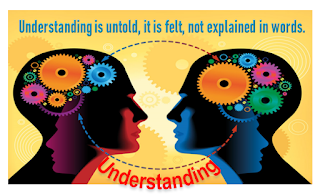
Mutual understanding is the great support of any relationship, it is important to be understanding but it will be the best to avoid misunderstanding because true love is born with understanding. When we love, trust and respect someone, we understand their untold stories.

Knowing and understanding are two different things. It is not necessary if we know something, we also understand it. We may know many things but there is no use in it if we do not understand them. It is true that we can know someone, but it is not possible to understand a person completely, because every person is different and has his own personality, truths, and stories that cannot be shared.

Thoughtfulness and understanding are best friends. They walk hand in hand. Thus, our understanding and thoughtfulness help us to overcome any difficult situation and provide us peace of mind and keep us free from tensions. Our life has become very fast, as we are running a race and moving faster than our understanding and thoughtfulness. We need to be thoughtful and understanding if we need to succeed in our lives.

- Nandini Arora, Flyers, Doon Girls School

Friday, January 22, 2021

Parakram Diwas 23rd January - Bharti Rao

Courtesy: jarranjosh.com
Netaji Subhas Chandra Bose was born in Cuttack, Odisha on 23rd January 1897. He ranked second in the matriculation examination and fourth in the Indian Civil Services (ICS) examination. He quit his ICS job and came back to India from England in 1921. He joined India's freedom struggle movement. He was a member of the Indian National Congress (INC). He introduced the famous slogan 'Jai Hind'. He revamped the Indian National Army (INA).

Netaji established Azad Hind Fauj, a military regiment designed to counter the British. He was the first one to address Mahatma Gandhi as Father of the Nation. Bose inspired millions of youths to join the struggle for independence with socialist beliefs and thoughts. His most famous slogan was "It is blood alone that can pay the price of freedom. Give me blood & I will give you freedom.' Netaji had once quoted that ‘Reality is, after all, too big for our frail understanding to fully comprehend. Nevertheless, we have to build our life on the theory which contains the maximum truth.’

The birth anniversary of Netaji Subhash Chandra Bose, on January 23rd, will be celebrated as 'Parakram Diwas' every year, was announced by Ministry of Culture. Ministry of Culture held a high-level committee, headed by Prime Minister Narendra Modi, to commemorate the 125th birth anniversary of Netaji Subhas Chandra Bose in a befitting manner national & international level this year and from now onwards Netaji’s birthday will be celebrated as ‘Parakram Diwas. 

Bharti Rao
bro@fabindiaschools.in
The Fabindia School

Friday, January 8, 2021

Technology : A Boon - Jitendra Suthar

Courtesy: medium.com
Technology is the most helpful style of science for the final population. In straightforward words, technology is from where we take the ideas of science and rework them into gadgets and devices that area unit is helpful to the nation as persons. Once we shop around, virtually everything may be a result of or a style of technology.

For example, the device you’re victimisation right away may be a style of technology created for communication or the white goods in your room may be a use of science that helps to stay your food contemporary and funky.
 
It isn’t straightforward to imagine our lives while not victimisation any style of technology. For the littlest of communications, we tend to show to our mobile phones. Even most of the food we tend to eat is pre-packaged in factories with the help of varied technologies. Thus, imagining a life without technology is not possible. It’s not solely a truth of life however additionally a necessity for all the people.

In fact, the smartphone, that is, a transportable which might connect with the web is changing into one amongst the fastest-growing and most accessible sorts of technology around the world. On a smartphone, you’ll be able to click pictures, browse the web, hear music, and use social media. With the appearance of smartphone technology, the sensible purpose of not solely communication along with your friends is met, however additionally such a large amount of others, as mentioned. Scientists have done such a lot to advance humans victimisation technology, and that we still have an extended thanks to go.

Jitendra Suthar
The Fabindia School
jsr@fabindiaschools.in

Tuesday, December 15, 2020

Courage is Essential for Life - Monika Vaishnav

Courtesy: Shutterstock.com
Courage is the ability to control fear in a situation that might be dangerous or unpleasant. We all know that we all have some challenges; nobody in the world has a perfect life or happiness all the time. So, courage gives us hope to live and fight for ourselves.  Having courage doesn't mean we can go and hit anyone or we can do whatever we want. Courage is to have a positive energy that gives us the strength to face the challenges we have in life. 

We need courage in many aspects of life. We need the courage to accept the truth and to stand by it, whether it is in our favour or not. A person needs lots of inner strength to accept his or her own mistake in front of others. It requires courage to start again after a failure in life, it is when we feel helpless. Sometimes, we have to decide in life, which can change our lives completely, and we can't do it if we don't have the courage to face further consequences.

Having courage doesn't mean a person is fearless, it means the person is ready to face it. It helps us to start believing in ourselves. It builds confidence in us. If we want to live a respectful life with self-respect, we can't live it without courage. It also helps us to smile and be happy in difficult times. If we take an example of the soldiers, it is their courage and love for their country, which helps them stand in front of our enemy and fight with them even if they know they may die. 

Monika Vaishnav
The Fabindia School
mvv@fabindiaschools.in


Monday, November 23, 2020

Honesty - A cherished virtue - Dr Mona Khanna

Amidst trickery and moral turpitude, incidents related to honesty restore our hope in good over evil. So, it did when the manager at Woodland Store in Delhi, Kohat Enclave branch, returned an envelope of INR 48,000 to me that I forgot at the counter while shopping for my son. I was fumbling through my purse to look for the credit card to make the payment, and that is when I accidentally took out the envelope containing the money and left it at the counter. It was only at night when I had to go home to catch the night train to Dehradun, and I wanted to give both the kids money, and I noticed that the packet was missing.

I went back to that area even though I wasn’t very hopeful. Despite the late hour, Woodland was open. I entered the store and asked them if they had found any packet. I could see the relief and smile on their faces. They told me that they had kept the store open anticipating the customer to return looking for the envelope. After asking a few questions regarding the envelope’s details, the manager handed over the envelope. I profusely thanked them and took out some money as a token of appreciation, but the entire staff refused to take any, saying they were only doing what their call of duty expected them to. I understood that their conscience would never let them do anything wrong.

I wrote a note of appreciation and later sent an email to their country head talking about the entire episode of leaving the strain of honesty intact. Honesty and respect are interlinked concepts. The above incident earned so much goodwill and respect for the staff of that store. To date, I never miss a chance to go back and show my gratitude to them.

We, as teachers, should strive to articulate expectations about academic integrity and the consequences of cheating. Explicit norms and expectations stating that dishonesty is not an acceptable trait should be laid down. Let us create a culture that rewards success beyond grades. If students are also rewarded for their honesty, hard work, determination, and respect for teachers and peers, they shall begin to value the process of learning. This kind of culture fosters academic honesty and discourages plagiarism.

As a little child, I was made to do this activity from The Abraham Lincoln Center for Character Development to instill honesty, which has left a lasting impression on my mind.

Activity – The Lie Trap

• Target grade level: till Grade 5

• Character quality: Honesty

1. Head outdoors with the kids and hunt for a spider’s web, watch how a bug becomes entangled in the web, catch a fly, put it in the web to see what happens, or find a video online of that occurrence instead. The more the insect struggles, the more entangled it becomes. If you are fortunate, you might even see the spider come and wind the bug up in a more sticky thread.

2. Ask students what happened every time the insect struggled and what happened because of that struggle. Explain that the same thing happens when we do not tell the truth and become entangled in lies.  Ask students if they think the insect regrets getting trapped in the web (and a lie) and what should have been done instead (tell the truth).

We all make a conscious effort to instil ethical standards and practices in our children. However, they take time to imbibe the same and do tend to falter occasionally (don’t we as adults?!?!). We should forgive their mistakes, resulting in self-realization, and help them take corrective measures. Once they have realized their mistake and borne the consequences, I am of the firm opinion that we should not judge them on their past moral failings. Our intention should be to correct the wrong and not the doer. The intention should be to use dishonest behaviour as a teachable moment. Teach them to be candid with a fault. The students should be taught to introspect, reflect, and learn from their behaviour. We, as teachers, should be instrumental in helping them transform as better human beings. They will turn into young men and women who shall hold their teachers in high regard for placing their trust in them. I vividly remember several students who have become exceptionally ethical, principled gentlemen of high integrity.

I always give the example of Abraham Lincoln as the epitome of honesty. To many kids, and even some adults, Abraham Lincoln remains “Honest Abe.” Lincoln was far from a perfect individual. He possessed human flaws and made many mistakes in his life, as we all do.  However, he learned from his mistakes and learned to compensate for his shortcomings. He honed and practised and developed them daily, and so should we. Powerful innumerable lessons from his life on honesty must be continuously encouraged and integrated into every fabric of society, and into both young and old. And let me pass along Lincoln’s own words on the topic- “Resolve, to be honest at all events; and if, in your own judgment, you cannot be an honest lawyer, resolve to be honest without being a lawyer. Choose some other occupation.”

I want to conclude with a piece of advice I gave to my tutorial group. The boys at the Doon School once asked me about the fine line between honesty and deception and how to ensure that they were treading the right path. I quoted from the famous collection ‘Letters from a Father to his Daughter’- “Let us make friends with the sun and work in the light and do nothing secretly. And if you do so, my dear, you will grow up a child of the light, unafraid and serene and unruffled, whatever may happen.”

- Dr Mona Khanna, Vice Principal at Unison World School, she has joined the PLP Cohort for the Joy Of Learning Program at the John Martyn Memorial School in Salan Gaon near Dehradun, India Dr Khanna's professional profile - linkedin.com/in/mona-khanna-244198175 

Image Courtesy https://images.app.goo.gl/ivrq3WTLbjDUZksk6 

Saturday, November 21, 2020

Honesty and Respect -Tarang JMMS

Honesty and Respect
Nothing ever goes away until it teaches us what we need to know. When we hear the word Honesty the first thing that comes to our mind is Truth. No lying just speaking the truth. Honesty is not just about telling the truth. It’s about being real with yourself and others in your words and actions.

Honesty sharpens our perception and allows us to observe everything around us with clarity. As educators if we look at the classroom situation, there had been many instances when the child had lied or had been dishonest with us. The most common lies that we hear are usually regarding homework.

Honesty builds Trust
One of our teacher recalls an incident. It was the last day of submitting the work and the students were to be allotted grades. One of the students came up to her, saying that she has completed the work but could not find her notebook. The teacher thought that the child was giving excuse and might have not done the work. But the child was sure on her words that she has done the work. When the class was getting over, a boy rushed into the class and handed over a notebook to the teacher. He was the brother of that girl, and by mistake, he had taken her sister’s notebook. The teacher opened the notebook and saw that the work was done. She was happy to see the honesty of the girl and how she was true to her words. 

Honest intentions in speech and actions gains the attention and respect of others. It was an exciting day at the school as the school was preparing for the Christmas celebration, which was on the next day. The class teacher of Class 3 was in the staffroom and was counting the gifts for her class. Two packets were missing from the box. She was taken aback as she had just packed all the gifts a few minutes ago before she went to the library. She searched everywhere and then straight away went to the ground where the students were playing. She asked all of them if anyone had gone to the staffroom as it was near the playground. The students replied NO, as she was going back, one of the student shouted ‘Ma’am, Anuj and Rohit went to get the football and came back very late. 

The teacher called both of them and asked others to continue with their play. Rohit looked worried and spoke up that when they were coming back after taking the football, they saw the door of the staffroom was open, and nobody was there so, they both went inside and saw the gifts. Anuj took out one packet and asked him to take one, and then they both quickly ran back and hide the packets in their bags. The teacher was shocked but was also pleased to hear Rohit's honest confession and asked them to return the gifts. She also told them not repeat this again in future.

Children often get attracted towards things and indulge themselves in stealing and in hiding the actions they follow the path of dishonesty. Children can learn through our actions and  roleplays that stealing is bad and dishonesty is the worst habit.

“Respect is a two-way street, if you want to get it, you’ve got to give it.” - R.G. Risch

Respect is the most important value taught to us. If we want to receive respect we should first start by giving respect. Respect is not for granted or given, which comes with a high position, respect must always be earned. In class, room respect plays a significant role. The respect should not only come from the student’s side but also from the teacher’s side. The teacher and student both should understand and acknowledge each other’s dignity. 

There was an incidence when a student was being rude with the teacher. The teacher could feel that something went wrong as he had never shown such kind of behaviour earlier. It was found out that the boy had been scolded for a mistake which he had not done. Soon the teacher found out that he was innocent and had been wrongly blamed. The teacher realised her mistake and apologised to the child. The child also apologized as he had no intentions of disrespecting the teacher. He just wanted to justify himself. A sorry doesn’t make you feel low or down on your character. On the other hand, it is the best way to show your concern and respect towards another person.

The teacher should make sure to listen and encourage each student’s opinion. Respect is a very important pillar of development in a classroom environment. It is only when the students respect the teacher would they follow and trust the teacher. When the students learn the value of respect in school, they continue to follow the principle of respect in their life further.

Tarang JMMS @ John Martyn Memorial School, Salangaon Dehradun - Neelam Bhardwaj, Dolly Pharasi, Shalini Gurung, Laavanya Joshi

Friday, October 30, 2020

Honesty and Respect - Dynamic DGS

According to ‘Science of Honesty’ psychology study, telling the truth in a situation where one is tempted to lie, can significantly improve a person’s mental and physical health.

Honesty is not just about telling the truth. It’s about being real with yourself and others about who you are. It’s the easiest thing you can practise to be happy and get respect.


Respect is not a gift. It has to be earned! It is also reciprocal. What we give is what we get. When we respect humanity, we automatically respect humans.


While all of this is true, both these values hold different meanings for different people in varied situations.


As part of one of the school’s inter-class competitions, we change the class display board every month to increase general awareness and encourage creativity. Students participate actively and work hard to make their class boards attractive. A few years ago during one such competition, a teacher reached the school early morning and was shocked to see that the display board had been tampered with. The damage was huge! The items were torn and thrown on the ground. The same incident repeated itself the following day. This upset her a lot. That’s when she thought as to who could be behind all of this and why? She had a word with all the classes and asked them to confess. Nobody admitted anything; instead, the children started accusing each other. Once again, she discussed the matter and promised them that whosoever admitted the truth, would not be punished. Later that day, one student came and confessed. He felt that this board made by the other class was better. He wanted his class to win as they had never won before. She asked him why he had not spoken the truth earlier? He replied that he was naturally afraid of being punished. But when he was honest about it with her, he realized his mistake. The teacher respected the child for revealing the truth, and he too felt better.


In a similar incident, a student spoke bad words about a teacher as the latter was stern with her. Instead of scolding, the teacher had a relaxed conversation with the child about the situation and tried to understand her emotions. It was this respect for another person’s views that the child finally apologized and could trust the teacher even better.


As adults, we do not give a chance to the children, to be honest. We react, not respond!


Another teacher’s experience with RESPECT was wonderful. At her workplace, the seniors respect everyone’s opinions, are approachable at any time of the day, and are open to changes. This has changed her approach to work in a positive way. The way humans speak, listen, and react, determines the respect quotient from the opposite side.


Respect can be taught to children by being good role models. When adults respect their choices, sit with them, and explain things, good things can happen. This is how the child’s abilities to do better can be improved. The elders can magically change their mindsets and let them blossom into beautiful humans. Age is never a factor as far as respect is concerned. It is for all, and it’s unbiased. Respect is an echo.


Dynamic DGS @ The Doon Girls’ School, Dehradun - Shilpika Pandey, Reena Gusain, Rachna Bharrdwaj, Meenakshi Panwar, Reah Sikand & Sumali Devgan.

Wednesday, May 13, 2020

Honesty and Respect - Manisha Deora

Honesty is not just about telling the truth, it's about being real with yourself and others about who you are, what you want and what you need to live your most authentic life. Honesty promotes openness, empowers us and enables us to develop consistency in how we present the facts. Honesty sharpens our perception and allows us to observe everything around us with clarity. Honesty has its advantages and disadvantages. This is normal. It is like the fact that if white exists; black must also exist in order to contrast. The good thing about being honest is that people keep their ideals and show who they are. They do not lie because of the fear of being judged. The disadvantage of being honest is that it will hurt others and that it might break up relations. Sometimes, people do not want to hear the truth and they get upset with the person that is telling them the truth.
Honesty is the main reason to trust a person. It is the instrument to talk with the truth and win other’s trust. A person that has won its friend's trust, is a person that is honest. The society, as well as its family members, will have confidence and feel that they can rely on the person.
Most people go through life and always hear about the word respect, but they don't know what it means. Respect is the esteem for or a sense of the worth or excellence of a person. There are things in life you need to hold in respect. Respect for yourself, respect for others and respect for property. Being respected by important people in our lives teaches us how to be respectful toward others.
Respect means that you accept somebody for who they are, even when they’re different from you or you don’t agree with them. Respect in your relationships builds feelings of trust, safety, and well being. It is essential to feel safe, to be able to express ourselves without fear of being judged, humiliated or discriminated against. Being respectful of others, being respected and respecting ourselves increases our self-esteem, self-efficacy, mental health, and well-being.
One of the best ways of showing respect to others is listening. Listening to another person's point of view is an excellent way of respect. We must allow a person to express his views even if we disagree with them. Another important aspect of respecting others is religious or political views.
Manisha Deora
The Fabindia School

Sunday, May 10, 2020

Honesty: Direct Proportional to Respect - Jitendra Suthar

Honesty means having moral principles, to which a person sticks forever. When a person is honest, the first principle is not to compromise with anything happening wrong. Being honest means keeping truth on top of everything.  

As per Human tendency, we all love the feeling of getting respect. Respect itself is a great value of kindness everyone should learn. Respect will bring a lot of change in one's life. A polite, kind & helpful person gets respected.
An incident of class, where there was a child who was always shy to express himself in front of the whole class. There were times when a teacher forced that kid to answer and express himself in front of everyone. The teacher observed that child for two weeks. After that, she decided to bring out the best of that child.
Later on, she started making him speak, read and explain whichever topic he felt was easy. She practised this for a week and every time he answered something, the teacher appreciated him. With this, that child started taking more and more part in-class activities. This built his confidence and made him respected more in class.
Kids in class are honest in any situation, only thing is we, as a teacher, should try to make them express themselves to get respect also and when these kids start getting respect, they automatically start building honesty. No one will be dishonest with others because gaining respect is not easy and once we get that respect and appreciation for our work, we always try to keep things going on.
Jitendra Suthar
The Fabindia School

Honesty and Respect - Prerna Rathod


Honesty means telling the truth and fighting for the right cause. A person who is honest will stand for truth in any situation. Respect means having due regard for everyone i.e. elders, youngsters, environment, teachers, etc.

Here comes the situation of my class. Ram and Shyam were best friends. One day, Yash, their classmate, brought an expensive pen to the class. He was showing his pen to everyone. Shyam liked the pen a lot. When the whole class went to play games, Shyam went to the class and stole the pen from Yash's bag. Ram was following Shyam and saw everything, but he quietly went back to the ground to play.

After the game lesson, everyone went back to the class. Yash could not find his pen, so he complained to me as I was having my lesson.  I asked everyone if they could find Yash's pen. All the students said no. I told them that, if anyone had taken it by mistake, then return it. If you can't give the pen in front of the class then quietly keep on my table. While going back home, Ram told Shyam that he had seen what happened during the game's lesson. Shyam told him that he liked the pen but couldn't buy it. So he took Yash's pen. Ram told him that stealing is not correct and if someone finds out then no one will respect him.

Next day Shyam quietly gave the pen to me and felt really bad for what he did. He even asked me not to reveal his name to his classmates, otherwise, he will be humiliated in front of the class. In the class, I gave the pen to Yash and told everyone that I was happy that Yash got his pen and my students knew the importance of honesty. I even told them that we should respect what we have and should never do bad deeds for our satisfaction.  I was also happy that Shyam realised his mistake and honestly accepted his mistake. I even felt happy that Ram motivated Shyam to accept his mistake.

Prerna Rathod
The Fabindia School

Honesty and Respect - Monika Vaishnav


Respect can not be defined in one word, we can see respect in many things. Respect is giving values or admiring other's views even if they are totally different from yours. Respect is appreciating the differences. Every person should have self-respect for herself or himself. It helps us to maintain our dignity. We should have respect for our elders as well as for our younger. We can show respect for others by taking care of them, being polite and honest with them.  

We can give them respect by listening to their opinions and understanding them.  We can't ask anybody to give respect, it comes with good deeds and good behaviour.

Honesty means being true to ourselves as well as others like friends, family, work etc. We should have respect for our work, that will make us punctual towards our work and will qualify it.

Honesty and respect are like reflections of each other because when we have respect for something, we become honest towards that and it doesn't matter, whether it is a person or work.  It also makes our relationship stronger. Same as if somebody does his work honestly, respect comes automatically. 

We must motivate children to be honest in life and respectful towards others by giving them small tasks. We should set an example in front of them so that they can see and learn from us. We should encourage the children to speak the truth even if they are wrong and when they confess their mistake we must appreciate their courage and also correct them so that they don't repeat it and can avoid such lies.

Monika  Vaishnav
The Fabindia School

Wednesday, April 22, 2020

Honesty and Respect - Innovators BHIS

"Honesty is the first chapter in the book of wisdom." -Thomas Jefferson.

I was relatively a new class teacher to Grade 6 as I had taken over the class midterm. The children were apprehensive about their new class teacher and wanted to create the best impression. They were to submit their first assignment to me, which happened to be an essay. I had told them that I would really appreciate the neat presentation of work. On the day of submission, there was one boy who had submitted the work in a brand new notebook.

Little did I know the actual reason behind it! His work was very neatly done, an absolute delight for any teacher. I showed his notebook to the class and asked them to applaud his neat work. The class obeyed, albeit after a tiny bit of hesitation. That struck me as being odd. I called this child and asked him the reason for using a new notebook. He said the previous one had no pages left for use. I asked him to get that notebook as I would love to see his earlier work, especially as he does it so well. To this, he nodded but the smile vanished from his face. 

The following day, before I could go to the class I had this boy waiting outside the staff room to meet me. The first thing he did was to handover the previous notebook to me and say, sorry. As I opened the notebook and looked at him, he rattled off the truth as to how he wanted to impress me so much with the first assignment that he had made his mother write it out for him. He was honest enough to concede that his mother had been unwilling. He chose a new notebook because his earlier handwriting would give away the truth. He confessed he had done this as his poor handwriting had never allowed him to win any appreciation in class. Now he was scared that he would lose his reputation, given his dishonest deed. I assured him that even though he was feeling low now, holding on to honesty was the best thing he could have ever done. I assured him that I will look up to him as a brave and honest child. This brought back the smile on his troubled little face. He learnt that honesty is being true to oneself. Honesty earns respect as we sail through our life and learn to accept things for what they are.

Innovators @ Billabong High International School Thane
-Bhumi Punjabi, Vaishali Phatak, Krishnakshi RaviShankor, Smita Bhobate

Blog Archive